Trump threatened to end offshore wind. Could he delay Central Coast projects?
READ MORE
How will a second Trump term impact SLO County?
Expand All
Editor’s note: This is the fourth in a series of stories in the lead-up to President Donald Trump’s inauguration aimed at exploring how a second Trump administration could impact SLO County, with coverage spanning key policy areas such as immigration, tariffs, education and more.
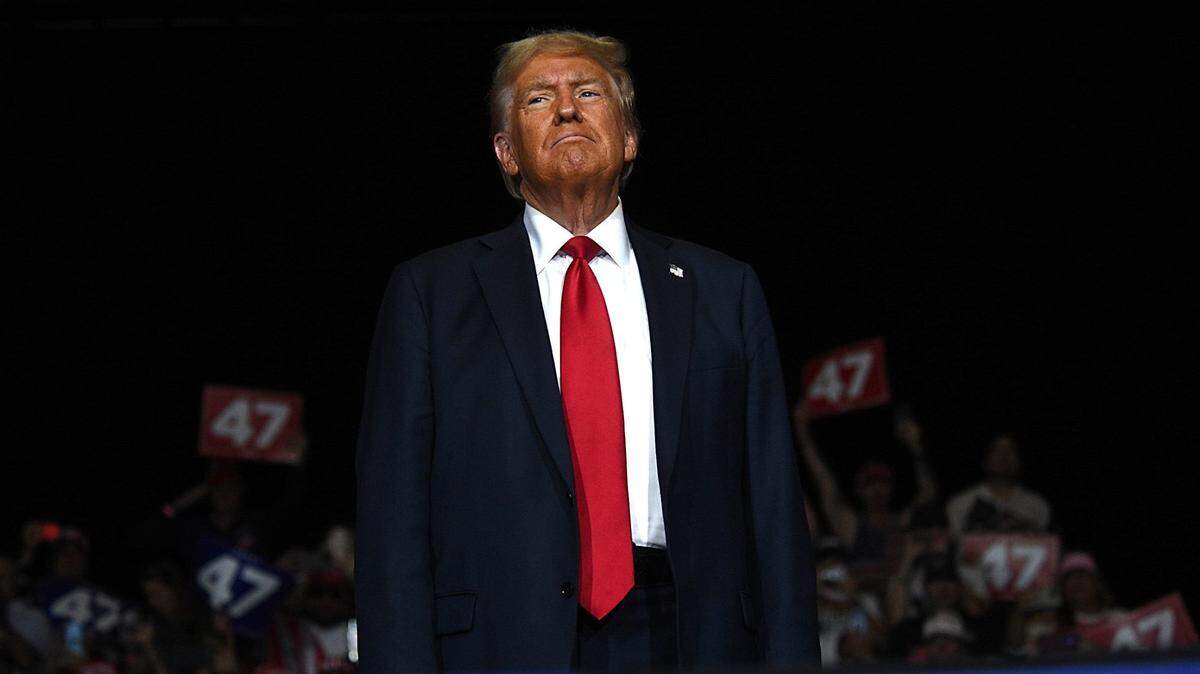
Soon-to-be President Donald Trump threatened to end the offshore wind industry on his first day in office.
“I’m going to write it out in an executive order. It’s going to end in day one,” he said in a May speech in New Jersey.
Trump doesn’t have the authority to detonate the entire industry with one executive order — but he could weaken federal support for offshore wind, such as by revoking tax credits granted to the industry.
On the Central Coast, offshore wind projects are in early phases of development and are years away from needing federal permits — so the Trump administration will likely have a limited impact on the local industry, according to industry group Offshore Wind California executive director Adam Stern.
“In a way, California has an advantage by not being ready yet to build the projects,” he said. “It can do all the preparatory work in terms of getting the ports and the transmission systems organized to accommodate offshore wind, and it can learn from the successes and setbacks from projects on the East Coast.”
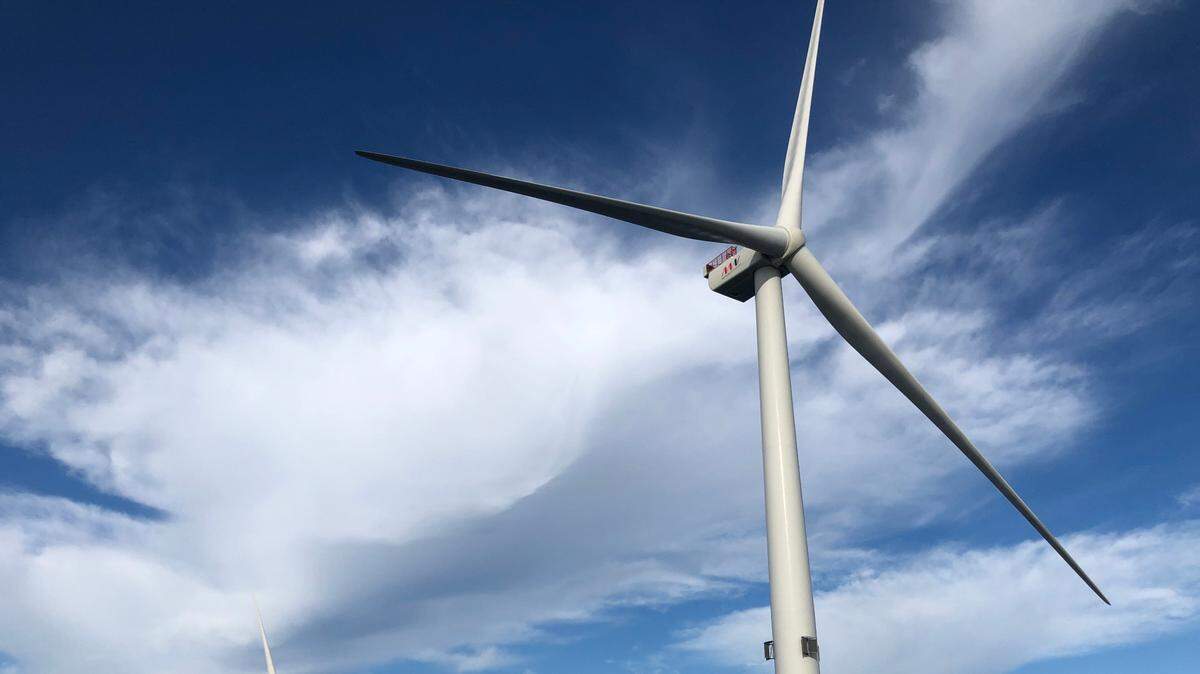
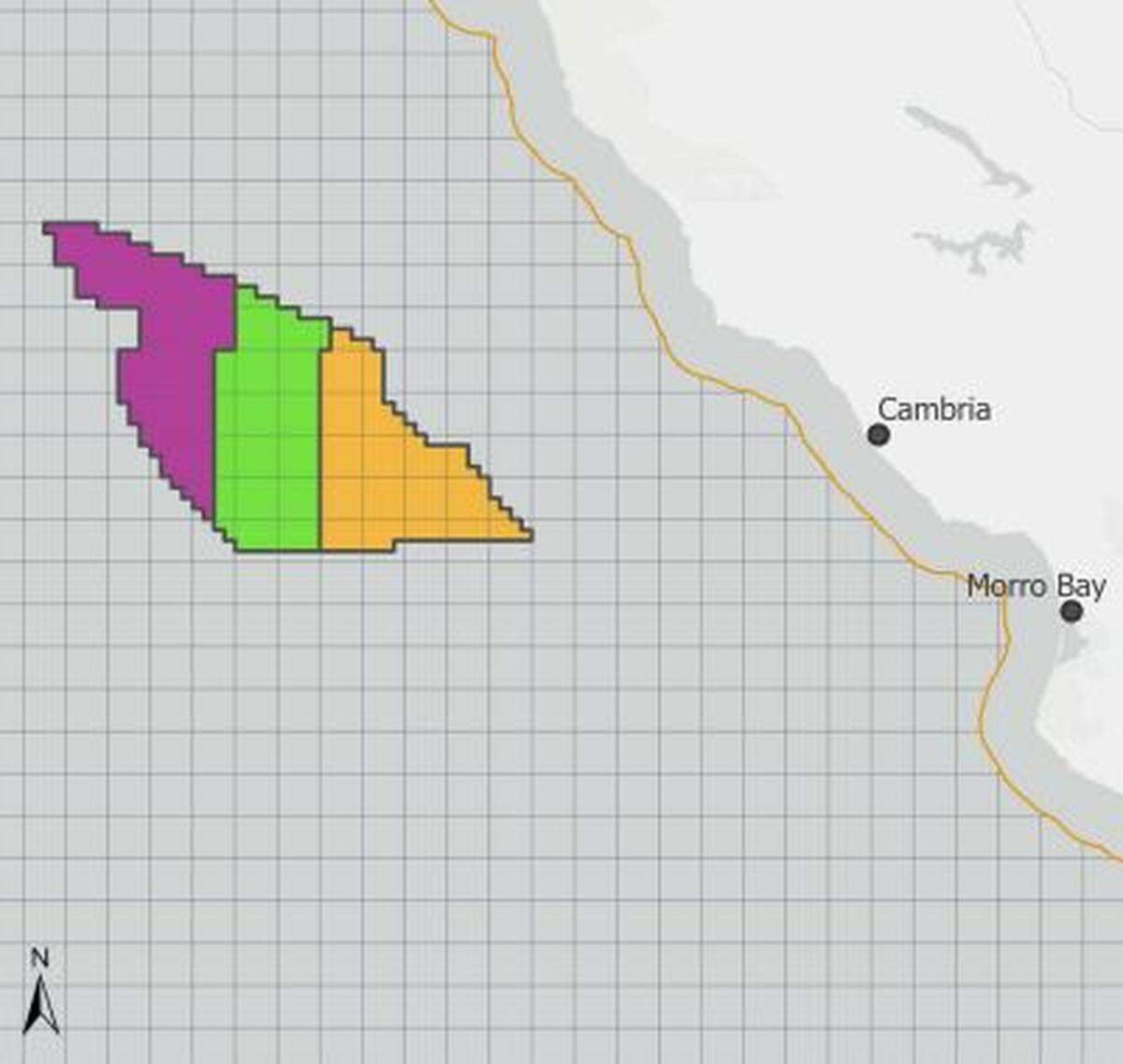
Three corporations hold leases to build floating wind turbines in the 376-square-mile Morro Bay Wind Energy Area about 20 miles offshore of Cambria and San Simeon.
Those corporations — Equinor, Invenergy and Ocean Winds — all plan to continue their projects as scheduled.
During the next year, Invenergy will plan future survey activity and engage with community members and lawmakers for the Even Keel Wind project, according to Senior Vice President Daniel Runyan.
Meanwhile, Ocean Winds will focus on community engagement and station two buoys in its lease area to study wind speed, wave height, sea surface temperatures and water currents to inform the design for the Golden State Wind project, CEO Tyler Studds said.
While Equinor will focus on its East Coast projects in 2025 — which are closer to completion — the corporation will analyze its seafloor survey data for the Atlas Wind project and continue to work with stakeholders on the Central Coast, an Equinor spokesperson said.
“Equinor has been present in the U.S. for over 36 years and working with a broad range of stakeholders across party lines to deliver substantial new energy sources to Americans,” a statement from Equinor said. “We will continue to do so with the incoming administration.”
Trump threatens to cut offshore wind funding
In a September speech at the Economic Club of New York, Trump said he would “terminate the Green New Deal” and “rescind all unspent funds under the misnamed Inflation Reduction Act.”
The Inflation Reduction Act offers a 30% tax credit to offshore wind projects and allocated $100 million to the development of transmission lines that would carry electricity to land, according to the Congressional Research Service. But Trump may not have the support he needs in Congress to repeal the law.
The political winds seem to blow in favor of the offshore wind industry, even within the Republican Party.
An August letter signed by 18 members of the House Republican Conference urged Speaker of the House Mike Johnson to preserve tax credits for the energy industry.
“As Republicans, we support an all-of-the-above approach to energy development and tax credits that incentivize domestic production, innovation and delivery from all sources,” the letter said.
Meanwhile, a resolution passed by the Western Governors Association in December endorsed offshore wind as “a strong economic and sustainable energy generation opportunity for the West.”
North Dakota Gov. Doug Burgum, Trump’s nominee for interior secretary, is a member of the association.
Republicans and Democrats alike seem interested in defending tax credits for offshore wind baked into the Inflation Reduction Act, Stern said.
“We’re hopeful that the new administration will include offshore wind in its all-of-the-above energy policy,” Stern said.
California offshore wind to focus on port development, state approvals
During the next four years, California must focus on developing port infrastructure, transmission infrastructure and planning for offshore wind power procurement, which is the process of the state buying the electricity.
Most of this work happens at the state level, and so far, California has been largely supportive of offshore wind, Stern said.
“The federal government has already done its part by issuing leases for five wind energy areas, inducing three off Morro Bay,” Stern said. “So, that’s a huge step forward and sets the stage for a lot of work at the state level that needs to happen to advance offshore wind.”
Over the summer, the California Public Utilities Commission proposed that the state would need 7.6 gigawatts of offshore wind energy by 2035 — setting the stage for the state to purchase power from the industry.
Additionally, California voters passed Proposition 4, a $10 billion climate bond that pledged $475 million to the development of port infrastructure for offshore wind.
Meanwhile, port development is moving forward.
The Port of Long Beach proposed to build 400 acres of new land as the foundation of an offshore wind assembly port, which will be used to build wind turbines before they are towed to the Morro Bay Wind Energy Area, the port’s senior director and chief harbor engineer Suzanne Plezia said.
Next, the port must complete an environmental review on the project. The port will lead the California Environmental Quality Act review process, and the U.S. Army Corps of Engineers will manage the National Environmental Policy Act review. The two agencies will create a joint environmental impact report, and a draft will be available to the public in the middle of 2025, Plezia said.
Eventually, the port must get a dredging and building permit from the U.S. Army Corps of Engineers, and an approval from the California Coastal Commission for an update to the port master plan, she said.
The port recently applied to the California Energy Commission for grant funding to cover some of the cost of the $4.7 billion project, and it will apply for Proposition 4 funding when that is available, Plezia said.
“The focus will mostly be on the state in particular over the next four years,” Plezia said. “There’s just a lot of work that California needs to do still in the planning and preparation of offshore wind.”
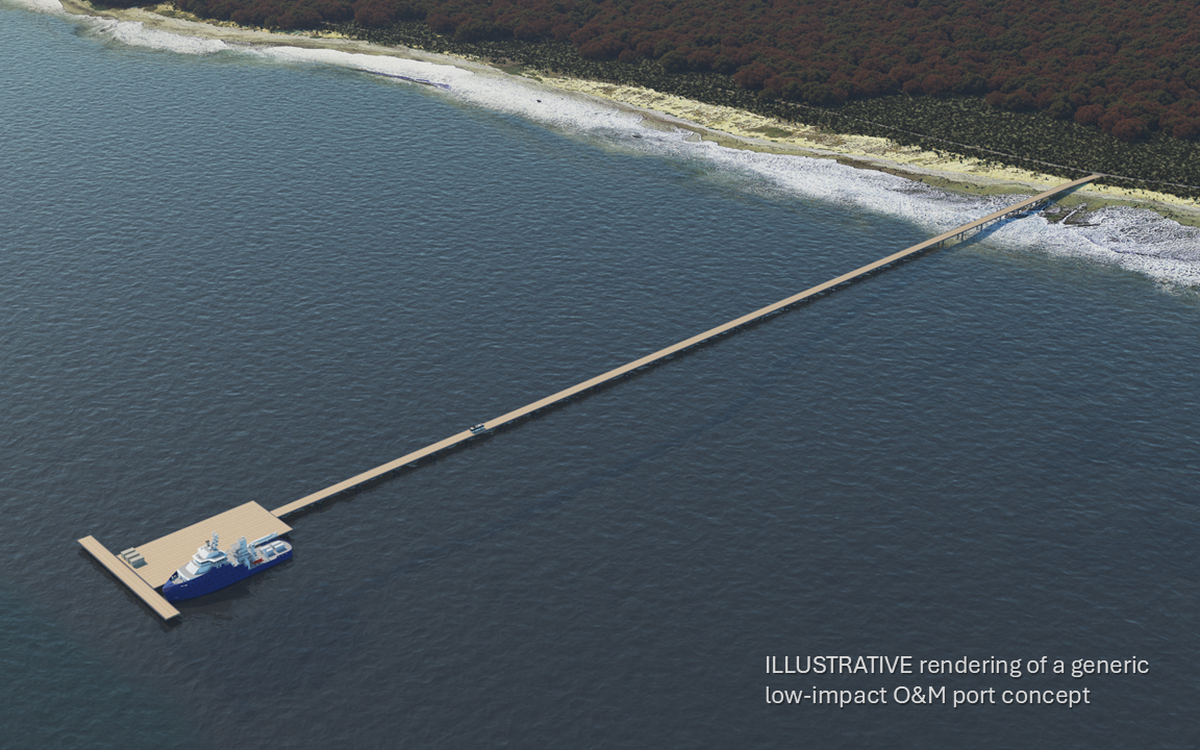
The other piece of the puzzle is building an operations and maintenance port, which will serve as a hub for monitoring the offshore wind farm in the Morro Bay Wind Energy Area and offer a place for maintenance vessels to dock.
The Ventura-based company Clean Energy Terminals collaborated with the Port San Luis Harbor District to study the potential of building that port in San Luis Obispo Bay.
The heart of the port could be a 3,000-foot pier, which would match the length of the Cal Poly Pier. It must be long enough to reach waters of about 40 feet deep to accommodate deep-water vessels, which would dock in a berth at the end of the pier.
After the study is completed by March 2026, the harbor district’s Board of Commissioners must vote separately to approve a design or permits for the project.
“Clean Energy Terminals is eager to continue our collaboration with the Port San Luis Harbor District to assess the feasibility of a low-impact O&M port in San Luis Bay,” CEO Brian Sabina said in a statement to The Tribune.
Coming up, offshore wind companies will apply to the State Lands Commission for a right-of-way lease on state lands and waters for export cables that will connect the wind farms to the California energy grid, according to Assembly Bill 525.
That lease application will trigger an environmental review process required by the California Environmental Quality Act.
Eventually, on a federal level, the companies will submit their Construction and Operations Plan to the Bureau of Ocean Energy Management, which will prompt a separate environmental review process under the National Environmental Policy Act.
According to Stern, it’s too soon to say how Trump’s administration will respond to the Construction and Operations Plans.
“It remains to be seen what positions the administration will take, but I think there’s a strong prospect for offshore wind being embraced as one of the key solutions in an all-of-the-above U.S. energy policy,” he said.
This story was originally published January 14, 2025 at 5:00 AM.