Biden banned new oil and gas leases on the Central Coast. Could Trump revoke protections?
READ MORE
How will a second Trump term impact SLO County?
Expand All
Editor’s note: This is the third in a series of stories in the lead-up to President Donald Trump’s inauguration aimed at exploring how a second Trump administration could impact SLO County, with coverage spanning key policy areas such as immigration, tariffs, education and more.
Donald Trump chanted “drill, baby, drill” like a mantra on the campaign trail last year, but the incoming president will have a difficult time fulfilling that promise in federal waters — especially on the Central Coast.
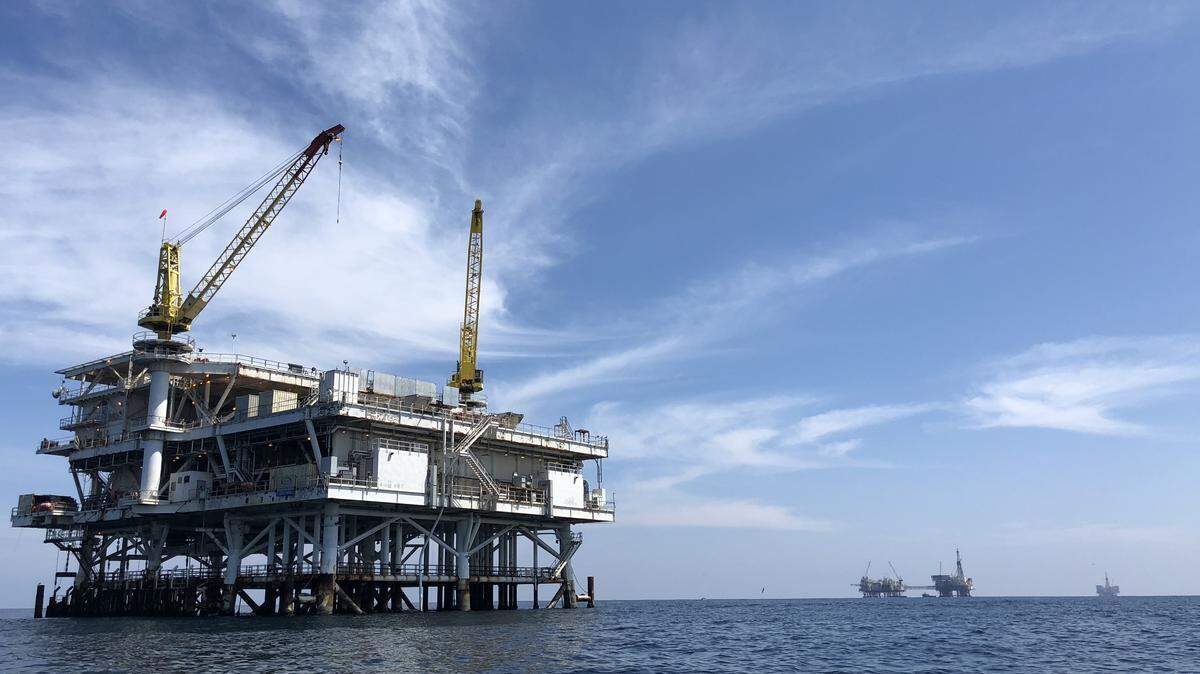
On Monday, President Joe Biden banned new leases for offshore oil and gas extraction on about 625 million acres on the eastern Gulf of Mexico, the East Coast and the coasts of California, Oregon and Washington.
Environmentalists celebrated the new protections, arguing that the United States must halt new fossil fuel extraction to reduce greenhouse gas emissions that fuel climate change.
“We’re in a climate crisis right now,” senior director of the Ocean Conservancy’s Arctic Program Andrew Hartsig told The Tribune on Tuesday. “As a matter of policy, we need to transition to a clean ocean energy future. So this action by President Biden sends a clear message that that’s the direction that we should head.”
But on Tuesday, Trump pledged to repeal Biden’s ban and re-open those federal waters for oil and gas exploration.
“It’s ridiculous. I’ll unban it immediately,” he said on The Hugh Hewitt show. “We have oil and gas at a level that nobody else has, and we’re going to take advantage of it.”
Trump could attempt to dismantle these protections — but that would likely spark a long legal battle that he’s not guaranteed to win, Hartsig said.
“There’s a good chance that it’s a durable action that will last through the next administration and set that stage for a transition to renewable energy,” Hartsig said of Biden’s ban on new leases.
Could Trump reverse the ban?
On Monday, Biden used Section 12(a) of the Outer Continental Self Lands Act to withdraw about 625 million acres of the ocean from land available for oil and gas extraction. The ban does not impact existing leases.
Then, at a press conference Tuesday, Trump said he will revoke the ban on his first day in office.
But reversing the ban won’t be as easy as the stroke of a pen, Hartsig said.
During his first term, Trump signed an executive order to reverse a similar Obama-Era ban on new oil and gas leases offshore of Alaska and on the Atlantic Coast.
Multiple environmental groups challenged Trump’s order in the United States District Court for the District of Alaska, and the judge ruled that a president cannot undo a ban on oil and gas leases made under Section 12(a) of the Outer Continental Shelf Lands Act, the decision said.
The Trump administration appealed the decision, but the case was thrown out when Biden took office and reinstated Obama’s ban.
This means the decision can’t be used as precedent for future cases, Hartsig said.
“Legally, it’s complicated,” he said. “Another court looking at this could read the decision and be persuaded by the arguments, but it’s not like a new court would be bound by that previous decision.”
When Trump takes office again, he could pass an executive order to revoke Biden’s protections from offshore oil and gas exploration. But Trump’s order would likely be challenged in court, and there’s no promise that a judge would support him.
“There’s nothing to stop him from, you know, signing a piece of paper that says, I hereby revoke President Biden’s oil and gas withdrawals,” Hartsig said. “But the impact of that action on his part would almost certainly be subject to litigation.”
Trump could, however, more easily reverse the ban with the support of Congress, Hartsig said.
Congress could pass a law that repeals Biden’s protections, mandates new lease sales in those areas or amends the Continental Shelf Lands Act to give the president the authority to revoke withdrawals.
“That would be the other way that these areas could be put back on the table for oil and gas,” he said.
Is the Central Coast protected from oil drilling?
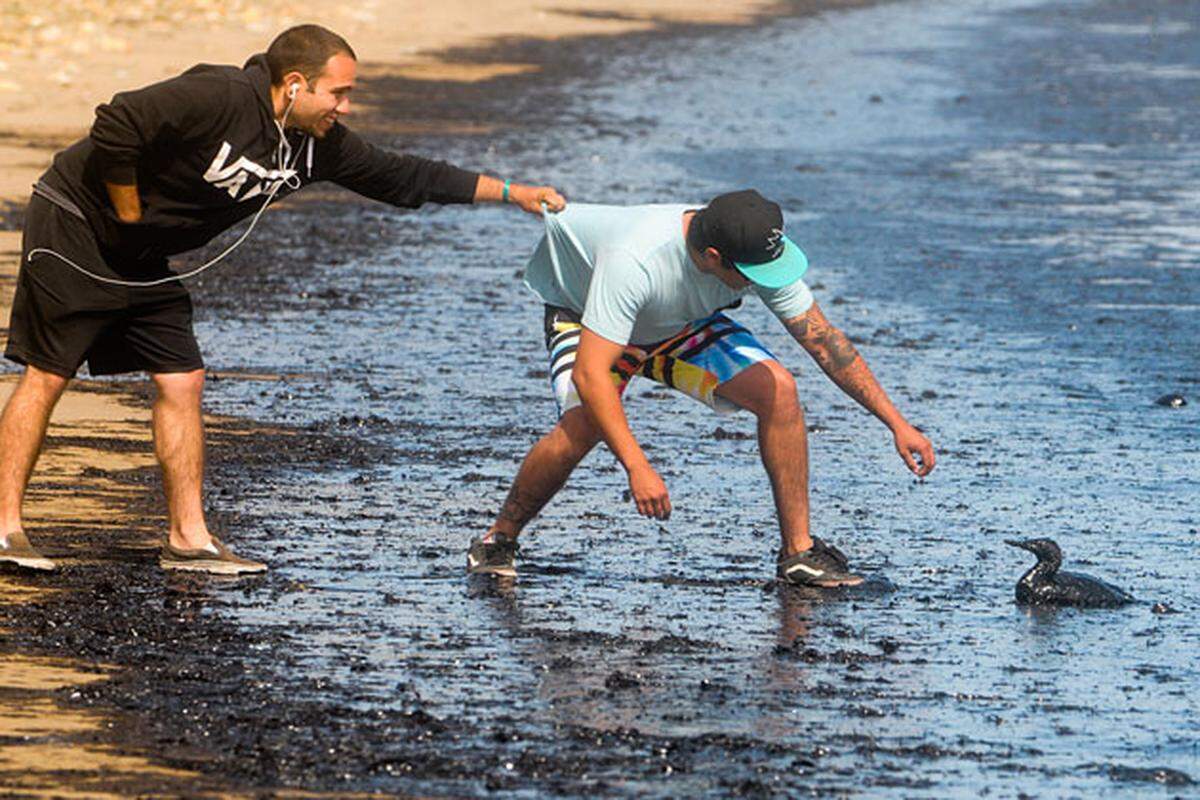
The Central Coast is no stranger to oil spills.
California first banned new oil and gas leases in state waters in 1969, just months after a Union Oil well spewed 4.2 million gallons of crude oil into the ocean offshore of Santa Barbara County. Spilled oil leached as far as Pismo Beach, according to the National Oceanic and Atmospheric Administration.
Biden’s ban expanded protections to federal waters — an initiative Congressman Salud Carbajal first pushed for in 2017 by introducing the California Clean Coast Act, which would have prohibited new oil leases in federal waters if it passed.
“The Central Coast knows all too well the damage and devastation that can come from an oil spill,” Carbajal said in a news release. “That’s why I made it my mission from my first bill in Congress to permanently ban offshore drilling off our coast. And with President Biden’s help today, this goal is now reality.”
While Biden’s ban protects the California coast from new offshore oil drilling, it does not impact existing oil and gas leases.
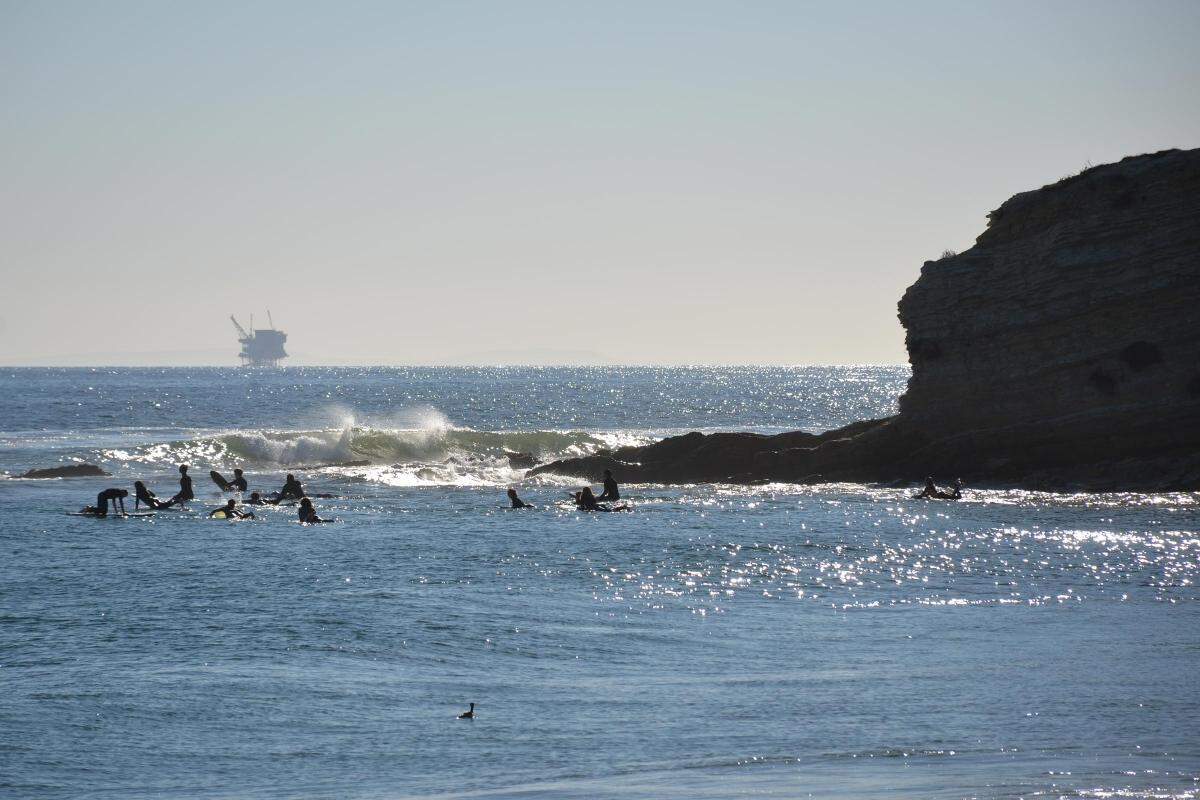
As a result, the ban does not prevent the Houston-based Sable Offshore Corp. from re-starting oil extraction at the Santa Ynez Unit offshore Santa Barbara County.
Those three offshore oil platforms and the attached Las Flores Pipeline closed in 2015 after the corroded pipeline leaked 450,000 gallons of oil near Refugio State Beach, according to the Center for Biological Diversity.
Sable Offshore Corp. bought the Santa Ynez Unit from ExxonMobil last year and announced plans to resume operations there, Noozhawk reported.
Sable Offshore Corp. will start hydrotesting the pipeline in January, it and plans to start drawing oil again from Santa Ynez Unit during the first quarter of 2025, according to a report the corporation submitted to the U.S. Securities and Exchange Commission on Dec. 17.
“Sable is committed to ensuring that every necessary upgrade and safety measure is in place prior to restart,” the corporation said in a statement sent to The Tribune on Friday. “Once these measures are completed, and after successful testing and inspection, operations at the Santa Ynez Unit and Las Flores Pipeline will resume. Sable is actively working with state and federal agencies to meet these goals.”
The Center will continue to fight plans to resume operations at the oil rigs, Center for Biological Diversity senior counsel Julie Teel Simmonds said.
On Jan. 3, the Center filed an amended complaint in court against the federal agency that extended the lease for the Santa Ynez Unit, she said.
“We have grave concerns that there is no way to make this pipeline safe,” Simmonds told The Tribune.
This story was originally published January 12, 2025 at 5:00 AM.