Did SLO County offshore wind project stall because Trump was elected? Company explains pause
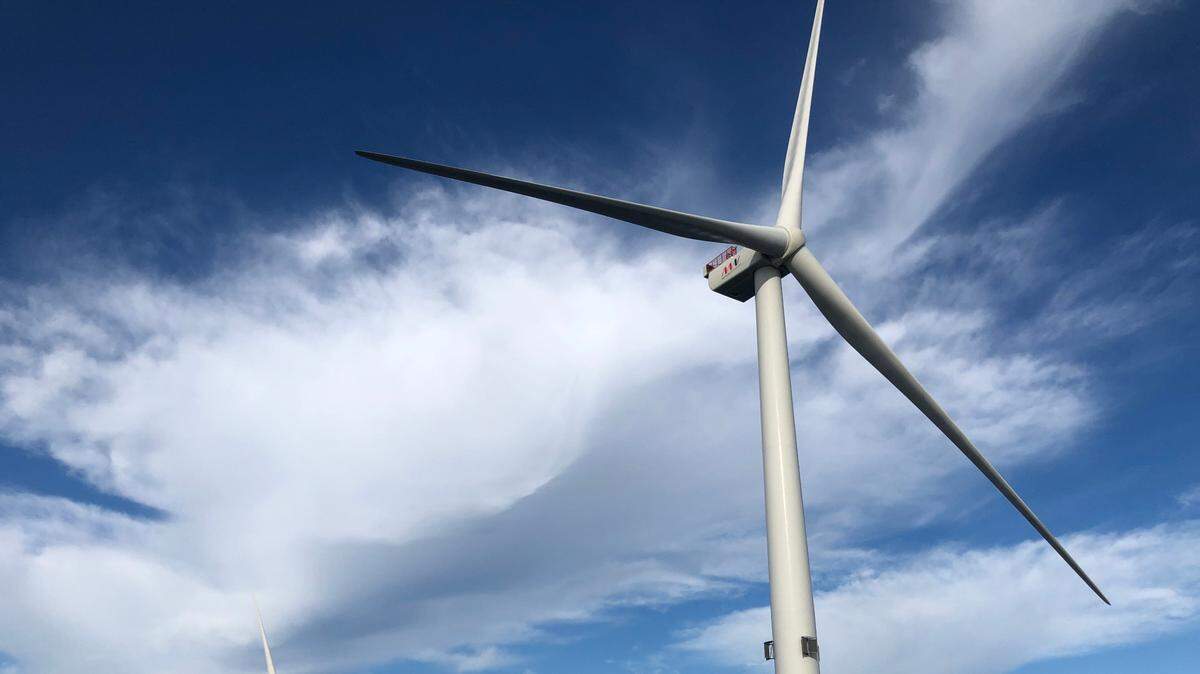
Equinor will cease offshore activity on the Central Coast until at least the middle of 2025 — but not because of the political climate, the corporation said.
Rumors circulated San Luis Obispo County, speculating that Equinor would pause its operations on the Central Coast because Donald Trump was elected president.
But Equinor made plans to scale back its work on the Central Coast over the summer, long before Trump won the election, Equinor spokesperson Tibi Dean told The Tribune.
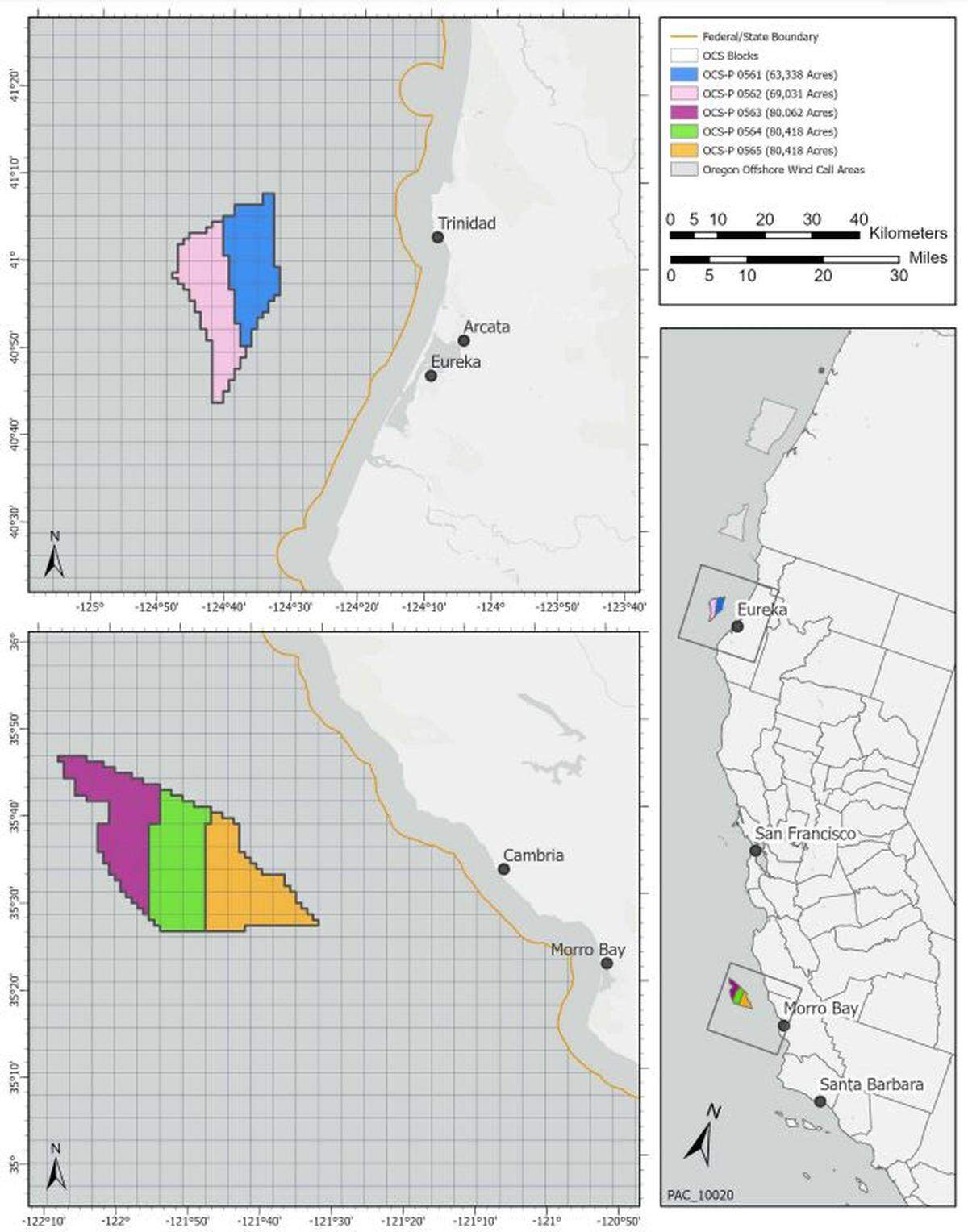
Equinor is one of three corporations that holds a lease to build floating wind turbines in the 376-square-mile Morro Bay Wind Energy Area about 20 miles offshore of Cambria and San Simeon.
The company plans to focus on its East Coast projects during the next year because they are closer to completion, but Equinor staff will remain in San Luis Obispo County to work with local entities and policymakers, Dean said.
The other two leaseholders, Invenergy and Ocean Winds, plan to continue developing their offshore wind projects, too.
As part of its Reality Check series, The Tribune reviewed Equinor’s work plans on the Central Coast and explored how Trump’s administration could impact the offshore wind industry.
Equinor to pause seafloor surveys on the Central Coast
Equinor plans to scale back its work on the Central Coast to focus on its two East Coast projects: Empire Wind 1 and the South Brooklyn Marine Terminal, Dean said.
The company made those plans over the summer — long before Trump won the election, she said.
Empire Wind 1 will be a 80,000-acre offshore wind farm southeast of Long Island, designed to deliver 810 megawatts of energy to Brooklyn by the end of 2027. Equinor plans to start offshore construction on the project during the first half of 2025, she said.
The South Brooklyn Marine Terminal will serve as a port for the wind farm, and Equinor broke ground on that project in June.
Equinor switched gears to focus on the East Coast projects because they are closer to completion, Dean said. Atlas Wind, meanwhile, won’t start producing power until the mid-2030s.
“Equinor views Atlas Wind as a long-term opportunity that can help meet California’s growing energy demand, create jobs and build a domestic supply chain,” Dean said in a statement to The Tribune. “As we focus on delivering our U.S. projects currently in execution mode, we are maintaining a presence in California, sharing information, collaborating with key stakeholders and fulfilling our state and federal lease obligations.”
Equinor wrapped up site surveys for its Central Coast lease area in July.
The company used geophysical surveys to map the seafloor. The survey equipment emitted pulses of sound to create an image of the ocean floor, allowing the company to locate sensitive habitats and shipwrecks, while determining the consistency of the soil and the depth of the seafloor.
That data will show Equinor where it can anchor floating platforms for the wind turbines.
The California Coastal Commission awarded Equinor a two-year permit in July to survey state waters next. The surveys will show Equinor where it can place cables on the ocean floor to carry electricity to land.
Equinor will not conduct those surveys right away.
In fact, the company has no other offshore activity planned through the middle of 2025 for the Central Coast.
Still, Equinor will remain present in San Luis Obispo County to engage with local groups like the Morro Bay City Council and the Morro Bay Commercial Fishermen’s Organization.
No business decisions were made due to the presidential election results, Dean said.
“We do not view providing energy security, creating American jobs and building a domestic supply chain as a partisan issue,” Dean said in a statement. “Equinor has a broad portfolio of energy projects in the U.S., and we will continue to work with a range of stakeholders, as we always have, throughout the development and operation of these long-term projects.”
The other two corporations with leases off the coast of San Luis Obispo County also plan to continue business as usual.
Ocean Winds finished site surveys for the Golden State Wind project in November, and the company will continue pushing the project forward next year.
“Demand for electricity is expected to double by 2050 nationwide, given continuing data center growth and rising electrification, and California is looking to offshore wind as an important element in the diverse long-term energy portfolio needed to keep the lights on and the economy thriving,” Golden State Wind CEO Tyler Studds said in a statement.
Invenergy will also continue to develop the Even Keel Wind project.
“We plan to progress key development priorities and remain focused on advancing the industry to bring the economic and energy reliability benefits of offshore wind to California,” Invenergy said in a statement to The Tribune.

How could a Trump administration impact offshore wind?
Soon-to-be President Trump has threatened to end the offshore wind industry on his first day in office.
“I’m going to write it out in an executive order. It’s going to end in day one,” he said in a May speech in New Jersey.
Trump doesn’t have the authority to detonate the entire industry with one executive order — but he could weaken federal support for offshore wind.
In a September speech at the Economic Club of New York, Trump said he would “terminate the Green New Deal” and “rescind all unspent funds under the misnamed Inflation Reduction Act.”
The Inflation Reduction Act offers a 30% tax credit to offshore wind projects and allocated $100 million to the development of transmission lines that would carry electricity to land, according to the Congressional Research Service.
But Trump may not have the support he needs in Congress to repeal the law. The political winds seem to blow in favor of the offshore wind industry, even within the Republican Party.
An August letter signed by 18 members of the House Republican Conference urged Speaker of the House Mike Johnson to preserve tax credits for the energy industry.
“As Republicans, we support an all-of-the-above approach to energy development and tax credits that incentivize domestic production, innovation and delivery from all sources,” the letter said.
Meanwhile, a resolution passed by the Western Governors Association in December endorsed offshore wind as “a strong economic and sustainable energy generation opportunity for the West.”
North Dakota Gov. Doug Burgum, Trump’s nominee for interior secretary, is a member of the association.
Republicans and Democrats alike seem interested in defending tax credits for offshore wind baked into the Inflation Reduction Act, according to industry group Offshore Wind California executive director Adam Stern.
“We’re hopeful that the new administration will include offshore wind in its all-of-the-above energy policy,” Stern said.
Meanwhile, California offshore wind projects are in early phases of development and are years away from needing federal permits, he said.
“In a way, California has an advantage by not being ready yet to build the projects,” Stern said. “It can do all the preparatory work in terms of getting the ports and the transmission systems organized to accommodate offshore wind, and it can learn from the successes and setbacks from projects on the East Coast.”
During the next four years, California must focus on developing port infrastructure, transmission infrastructure and planning for offshore wind power procurement, which is the process of the state buying the electricity. Most of this work happens at the state level, Stern said.
So far, California has been largely supportive of offshore wind, he said.
Over the summer, the California Public Utilities Commission proposed that the state would need 7.6 gigawatts of offshore wind energy by 2035 — setting the stage for the state to purchase power from the industry.
Port development is also moving forward. On Wednesday, the State Lands Commission announced that the port of Long Beach would develop terminals to assemble wind turbines for the Morro Bay Wind Energy Area.
California voters passed Proposition 4, a $10 billion climate bond that pledged $475 million to the development of port infrastructure for offshore wind.
Coming up, offshore wind companies will apply to the State Lands Commission for a right-of-way lease on state lands and waters for export cables that will connect the wind farms to the California energy grid, according to Assembly Bill 525. That lease application will trigger an environmental review process required by the California Environmental Quality Act.
Eventually, on a federal level, the companies will submit their Construction and Operations Plan to the Bureau of Ocean Energy Management, which will prompt a separate environmental review process under the National Environmental Policy Act.
According to Stern, it’s too soon to say how Trump’s administration will respond to the Construction and Operations Plans.
“It remains to be seen what positions the administration will take, but I think there’s a strong prospect for offshore wind being embraced as one of the key solutions in an all-of-the-above U.S. energy policy,” he said.
This story was originally published December 23, 2024 at 10:00 AM.