What was SLO’s Chinatown like at its peak? Inside neighborhood’s ‘sad history’
READ MORE
Historic SLO Neighborhoods
A multi-part series by The Tribune
Expand All
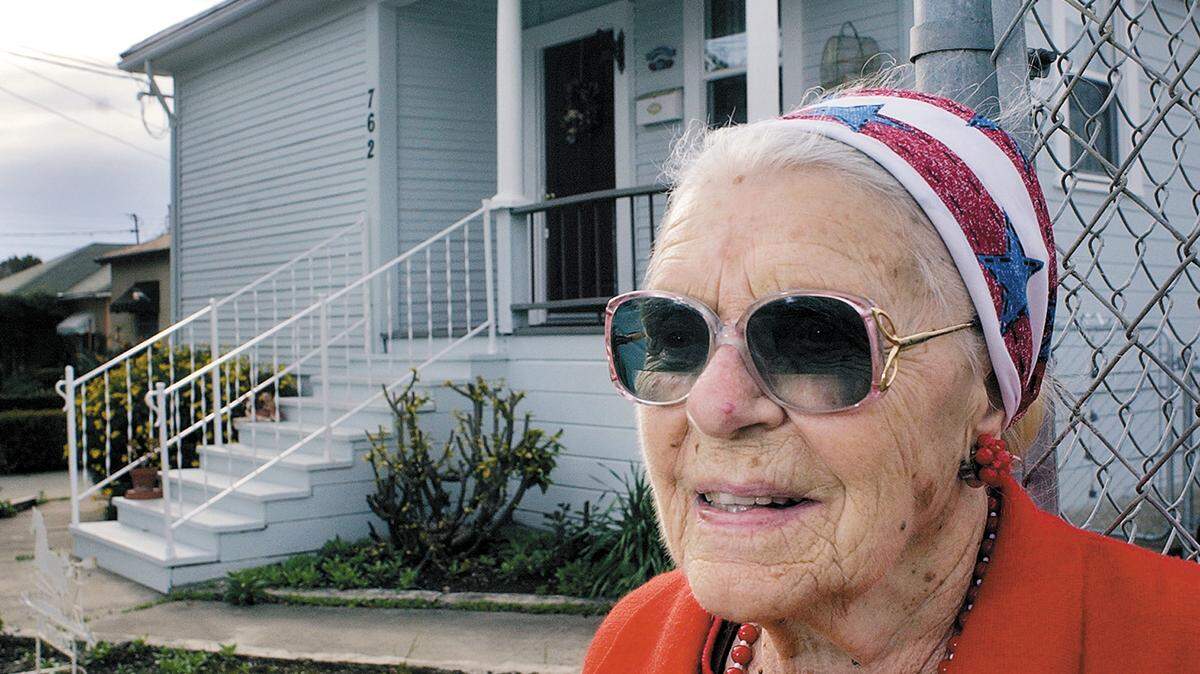
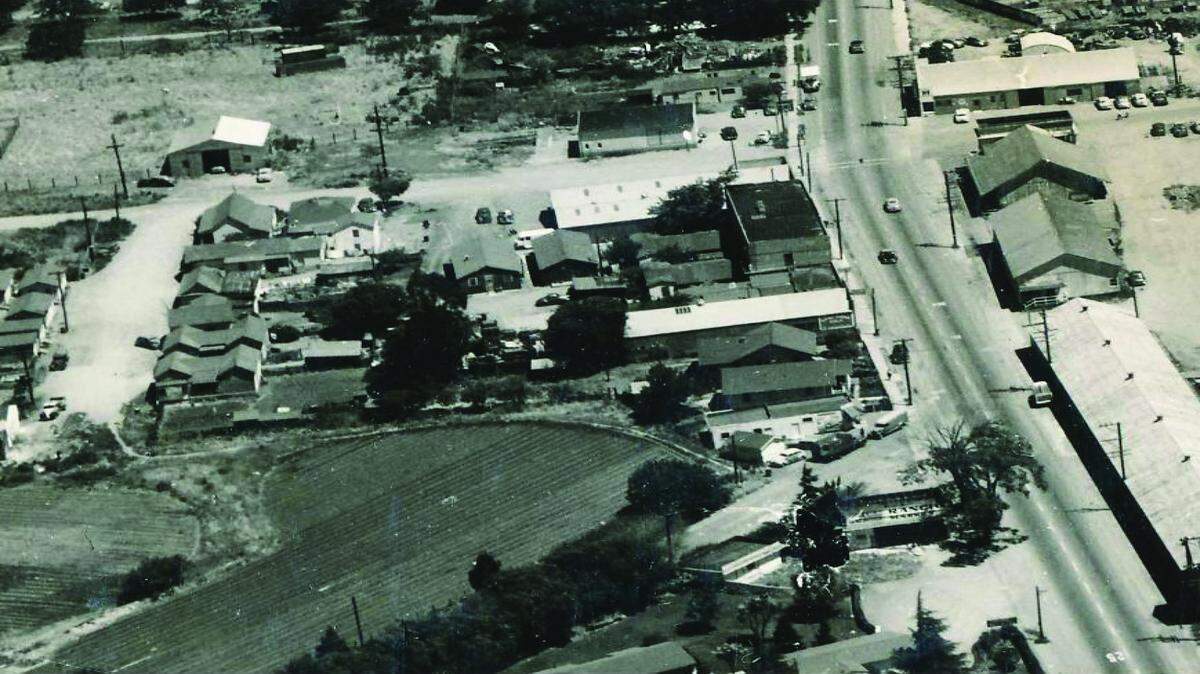
Editor’s note: This is the first story in a three-part series highlighting historic neighborhoods in San Luis Obispo. Two other articles focus on the city’s Little Italy and Japantown neighborhoods.
About 150 years ago, a section of San Luis Obispo’s downtown was home to a prosperous Chinese American population.
Within a couple of packed blocks on Palm Street, residents lived in apartments and frequented family-run shops and noodle restaurants. There was a religious shrine, a gambling parlor and even an opium den.
“It looked like an Old West movie set. It was all false front wooden buildings,” architectural historian James Papp told The Tribune.
Chinatown’s heyday only lasted a handful of decades, ending once a wave of anti-Chinese sentiment swept through the United States.
Indications of the once buzzing neighborhood are still evident in San Luis Obispo if you know where to look.
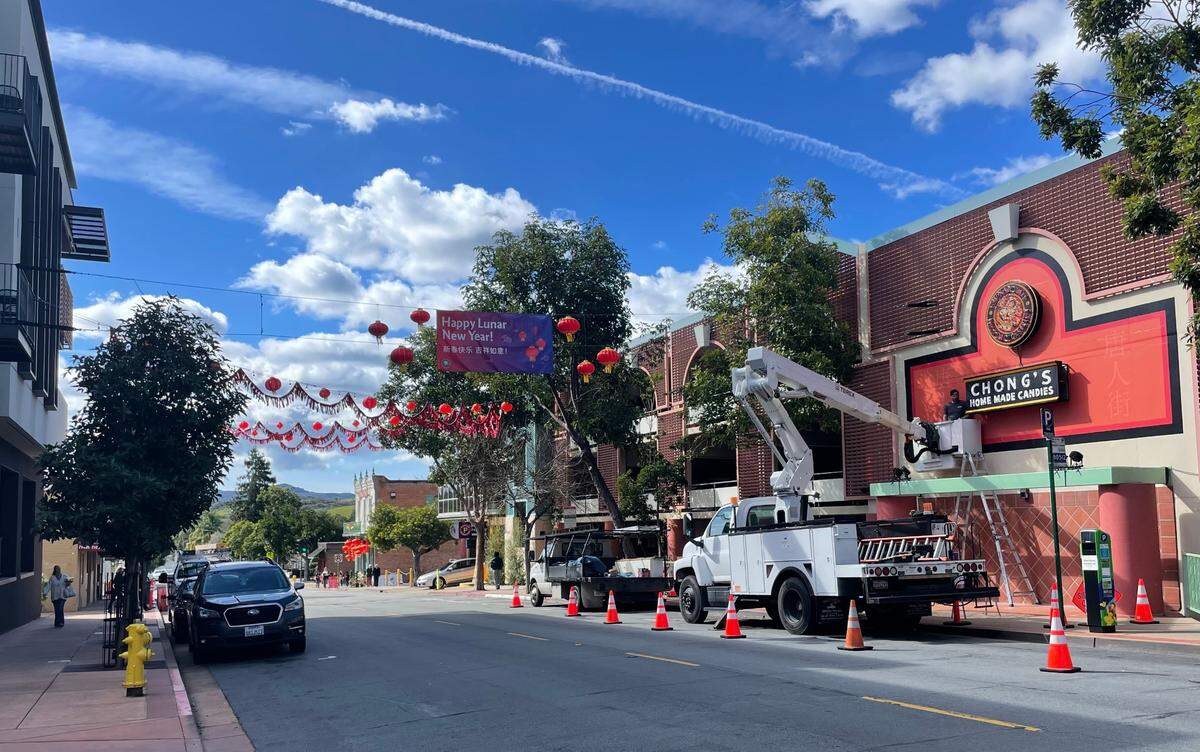
A 99-year-old noodle house continues to serve up beloved Chinese dishes. Red lanterns hang from a store bearing a Chinese labor contractor’s name and glowing neon signs read “Chong’s Home Made Candies” and “Shanghai Low Restaurant” on Palm Street.
What was Chinatown like during its peak? And how does its legacy live on today?
Here’s what The Tribune learned about the historic San Luis Obispo neighborhood:
How did SLO’s Chinatown get started?
San Luis Obispo’s Chinese population once congregated around Palm Street between Morro and Chorro streets in the late 1800s.
During its heyday, the bustling neighborhood in downtown SLO served as a cultural hub for around 800 to 1,100 Chinese immigrants and their descendants, according to Cal Poly history professor emeritus Dan Krieger.
Between 1850 and 1852, California’s Chinese population had exploded from 800 to 20,000, according to Santa Clara University’s digital exhibits. Many started as merchants or miners, but were soon excluded from California’s exploding gold industry.
Chinese men then sought out coastal cities across the state looking for steady employment, Krieger said.
By 1860, San Luis Obispo County had a burgeoning dairy industry and a rapid need for roads, wharves and railroad tracks — but not enough laborers to build the infrastructure.
Enter Ah Louis, the most renowned Chinese American entrepreneur in SLO’s history.
Ah Louis — also called Wong On — arrived in SLO County in 1869 and quickly started hiring workers, according to Krieger. Many were from the village where he grew up in China.
“He had his fingers in so many different pots that there was a need for large numbers of Chinese laborers, and that’s essentially what created Chinatown,” Krieger said of Ah Louis.
The prominent Chinese banker, labor contractor, entrepreneur and farmer made his fortune recruiting Chinese laborers for wharves in Avila Beach, Cayucos and San Simeon, according to Central Coast Asian American History’s website.
“For decades, Ah Louis was the unofficial mayor, judge, bank and employment agency of San Luis Obispo’s Chinatown,” The Tribune previously reported.
In the mid-1870s, he constructed a wooden storefront called the Ah Louis Store in what is now San Luis Obispo’s Chinatown. The Palm Street shop sold imported wares from China along with other household goods.
Ah Louis also started the first modern brickyard in SLO and continued working as a labor contractor.
By the 1890s, he had acquired so much wealth that he began a bank for local Asian residents and opened a pharmacy filled with herbs in his store.
During Chinatown’s peak, SLO’s Chinese American residents — primarily single men —bought groceries and household goods from the Ah Louis Store, dined at family-run restaurants and worshiped at shrines dedicated to Buddhism and Taoism.
Chinese New Year celebrations often erupted in a roar of red firecrackers that left streets covered in explosive residue, the Tribune previously reported.
The male-dominated Chinese neighborhood wasn’t without its vices, though, Krieger said, noting that opium dens and brothels were popular places to pass the time.
Why did Chinese population nearly disappear from neighborhood?
Over the years, Chinatown’s population dwindled due in part to the Chinese Exclusion Act of 1882, which banned all Chinese laborers from immigrating to the United States for a decade. There was also a surge in anti-Chinese sentiment along the West Coast.
“Chinatowns were an undesirable part of any town in California. There was virulent racism in California,” Krieger said. “Already there were laws saying that Chinese could not buy or sell real property, so they couldn’t own the land that they were on in many instances.”
Intense anti-Asian sentiment led to less employment opportunities for the local Chinese population beyond a handful of downtown shop owners, forcing many SLO residents with Chinese roots to move to San Francisco, the Central Valley and Los Angeles, Krieger said, calling it “a rather sad history.”
San Luis Obispo’s Chinese American population had dipped drastically by the late 1800s. Many of the buildings on Palm Street eventually changed ownership or were bulldozed in the early 1950s.
“The city tore down Chinatown and then designated it a historic district after it was gone,” Papp said.
“To give the City Council credit, the city had long been worried about fires and had been trying to get rid of any wooden buildings,” he added. “And that was the 1950s before anyone cared about history.”
A ‘noodle boom’ in San Luis Obispo’s Chinatown
Even as Chinatown’s population shrank, a few large families — including Ah Louis’s family — were able to launch successful noodle houses around the turn of the 20th century.
“People overcame their fear of eating in Asian restaurants,” Krieger said. “They found the food was good, and it was cheap.”
Chinese cuisine’s rise in popularity in downtown San Luis Obispo enabled some Chinese American residents to make a living serving up chop suey and chow mein.
That included one of SLO’s longest-running restaurants, Mee Heng Low Noodle House, which Gin Jack Keen opened at the height of the “San Luis Noodle Boom” in 1927, according to Papp.
“You’ve got this extraordinary noodle culture,” Papp said. “You have three noodle houses opening within 18 months of each other in a town of 7,000 people.”
Papp said cultural tourism stoked the boom because the mostly white town had limited access to international cuisines.
“In the 1950s, the only exotic food you could get here was Chinese,” he told The Tribune. “It was a thrill for people, and people, apparently locally, really liked Chinese food.”
What businesses still keep Chinatown history alive?
In 1995, the San Luis Obispo City Council designated the block of Palm Street between Morro and Chorro streets as the Chinatown Historic District.
Now more than a century after Chinatown’s heyday, only a few historic buildings remain in downtown San Luis Obispo.
The Ah Louis Store at 800 Palm St. is now managed by Karson Butler Events, while Anderson’s Real Estate Services now resides at the former Chong’s Home Made Candies store at 798 Palm St.
The 99-year-old Mee Heng Low restaurant sits at 815 Palm St.
Mee Heng Low manager Russell Kwong said running Chinatown’s last remaining Chinese business is both “good and bad.”
“I like restaurants. I like cooking. All that’s good. I just don’t benefit at all. It’s like, really hard to maintain a business and a life,” he said. “This town is expensive, and I was born and raised here, and it would be nice to live comfortably, but the reality is it just gets harder. I’m at a point where I’m like, do I keep doing this?”
Mee Heng Low has been in limbo ever since the building was listed for sale in 2025.
Currently, Mee Heng Low’s building is on the market for $895,000, according to Anderson & Senn Commercial Real Estate.
However, as of Thursday, Feb. 12, no one has stepped up to buy the property, leaving the restaurant’s future uncertain, Kwong told The Tribune.
He fears new owners could refashion the longtime establishment into a corporate husk that lacks any historical significance.
“I’ve had some people come in and talk about their ideas, what they want to do with the place, and it’s a bummer,” Kwong said. “If they do want to change things, that’ll be the nail in the coffin for Chinatown.”
Mee Heng Low recently revitalized the vintage neon sign at the front of its Palm Street building after winning $50,000 from the Backing Historic Small Restaurants grant program.
The new sign was relit on Jan. 21, Kwong told The Tribune.
He said that, after all these years, Mee Heng Low is still a small, family-run business that attracts a steady stream of locals.
“We’re as much of an institution as the Madonna Inn, but we’re not seen in the same light,” he said.
SLO to host Lunar New Year celebration
The city of San Luis Obispo will commemorate the history and significance of the Chinatown neighborhood during its annual Lunar New Year celebration in February.
The event will take place 6 to 8:30 p.m. on Thursday, Feb. 19, at Mission Plaza in downtown San Luis Obispo.
Attendees can expect activity booths, live performances and food vendors, including Mee Heng Low, to honor the start of the Year of the Horse.
“Our focus is on honoring the history of Asian Americans in our community while creating space for people to come together and celebrate the rich and diverse story of our city,” the city told The Tribune in a statement.
Throughout the month of February, the city is adorning Palm Street in lanterns, fringe and red and yellow lights “as a glow of remembrance and visibility,” officials said.
This story was originally published February 17, 2026 at 5:00 AM.