He went to see China again. But immigration almost didn’t let Ah Louis back to SLO
It is hard to overstate the impact Ah Louis had in the early development of San Luis Obispo.
At one time he was the largest labor contractor in the county. His role helped developers take on major construction projects in the era before fossil-fueled bulldozers.
The 2 million bricks his company made were the building blocks of the first fire-resistant buildings in town.
A short list of essential infrastructure built were the Pacific Coast Railway, the first county road over Cuesta Grade, the road between Cambria and Paso Robles and Southern Pacific construction.
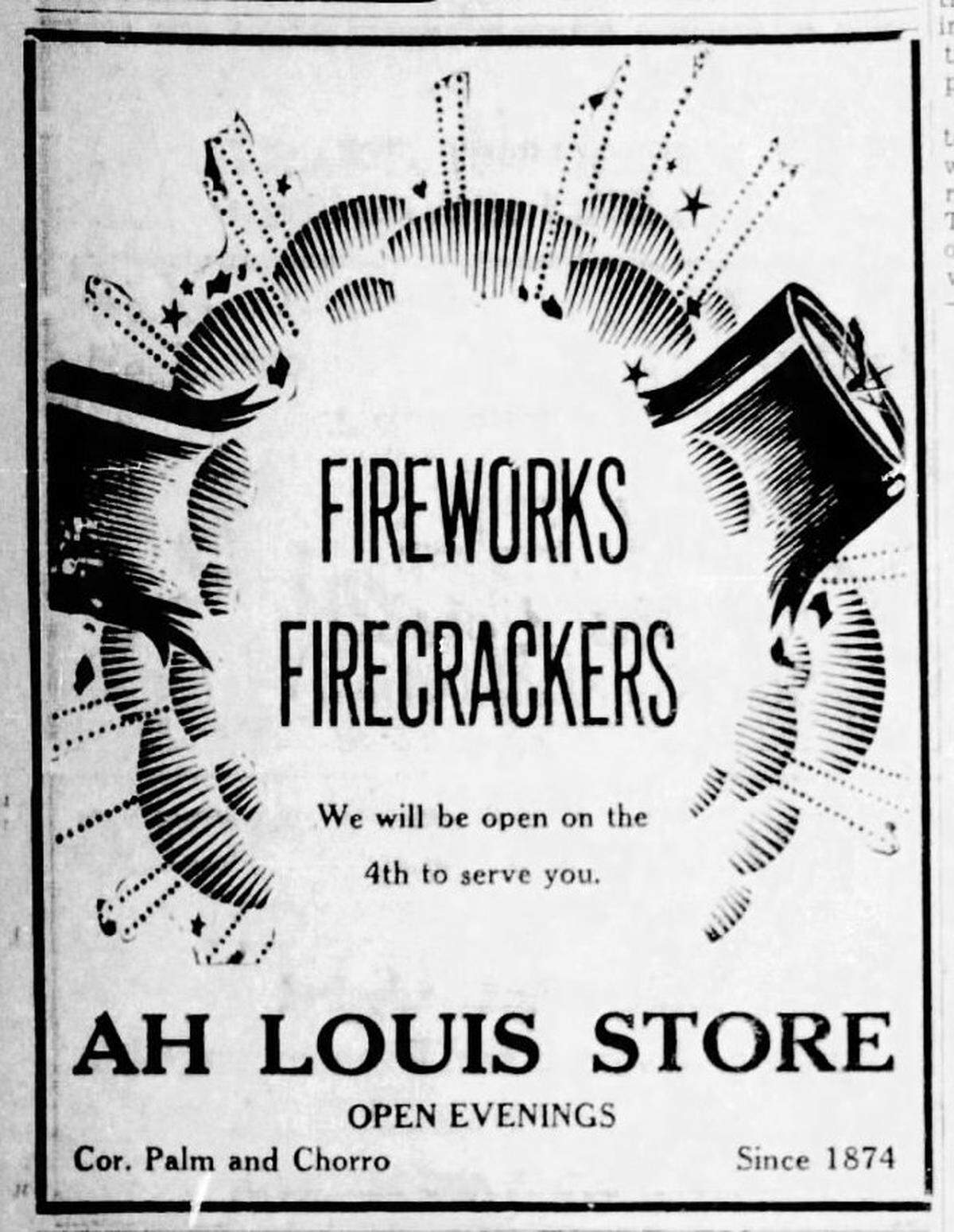
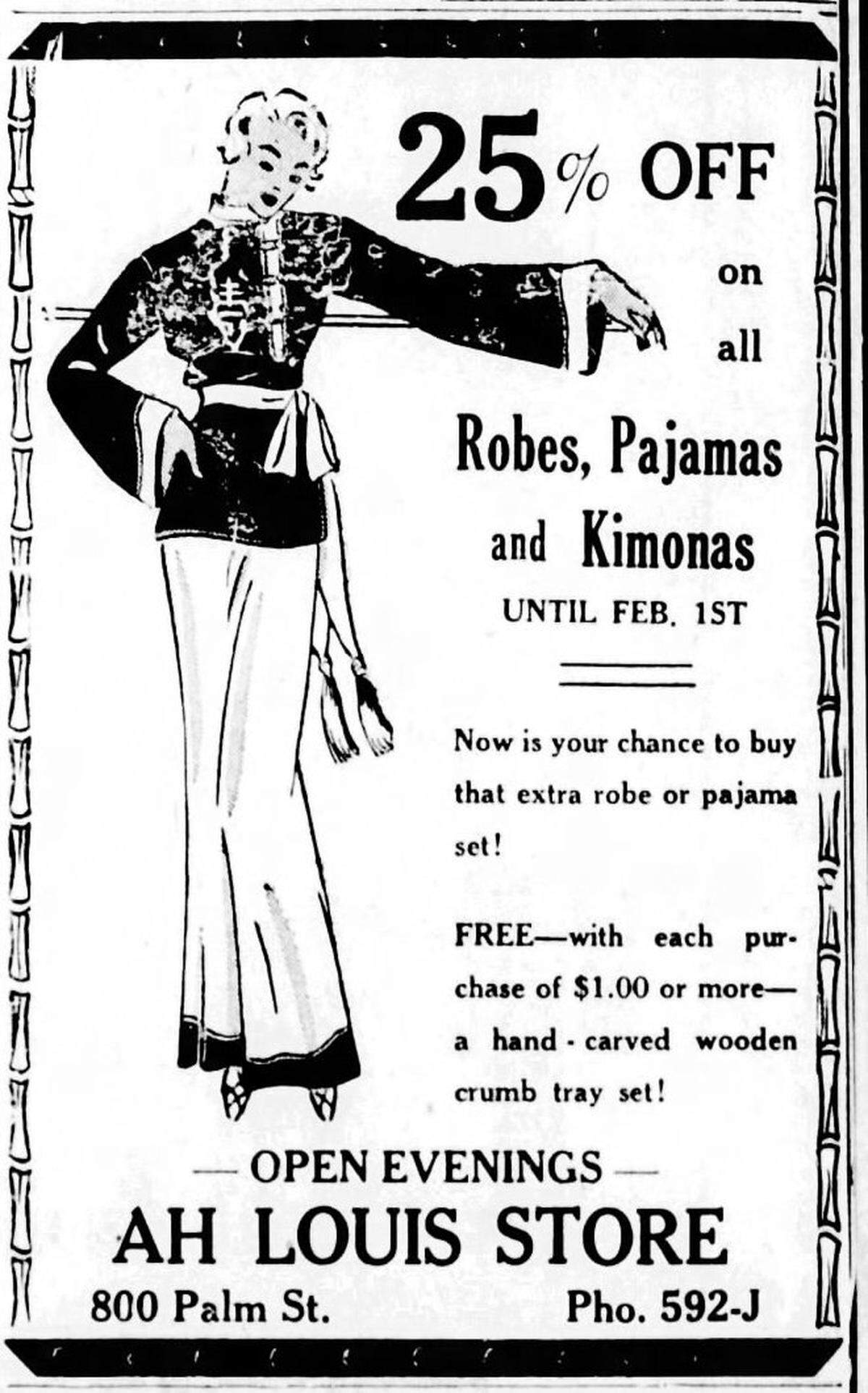
He also had farming and mercury mining operations. His store is now a state landmark.
So why was the 94-year-old at one point stuck in San Francisco filling out paperwork gathering testimonial letters from leading citizens before he could come home after a trip to China?
First some background.
Louis was called the unofficial mayor of Chinatown, and was the living bridge between the Chinese immigrant community and westerners.
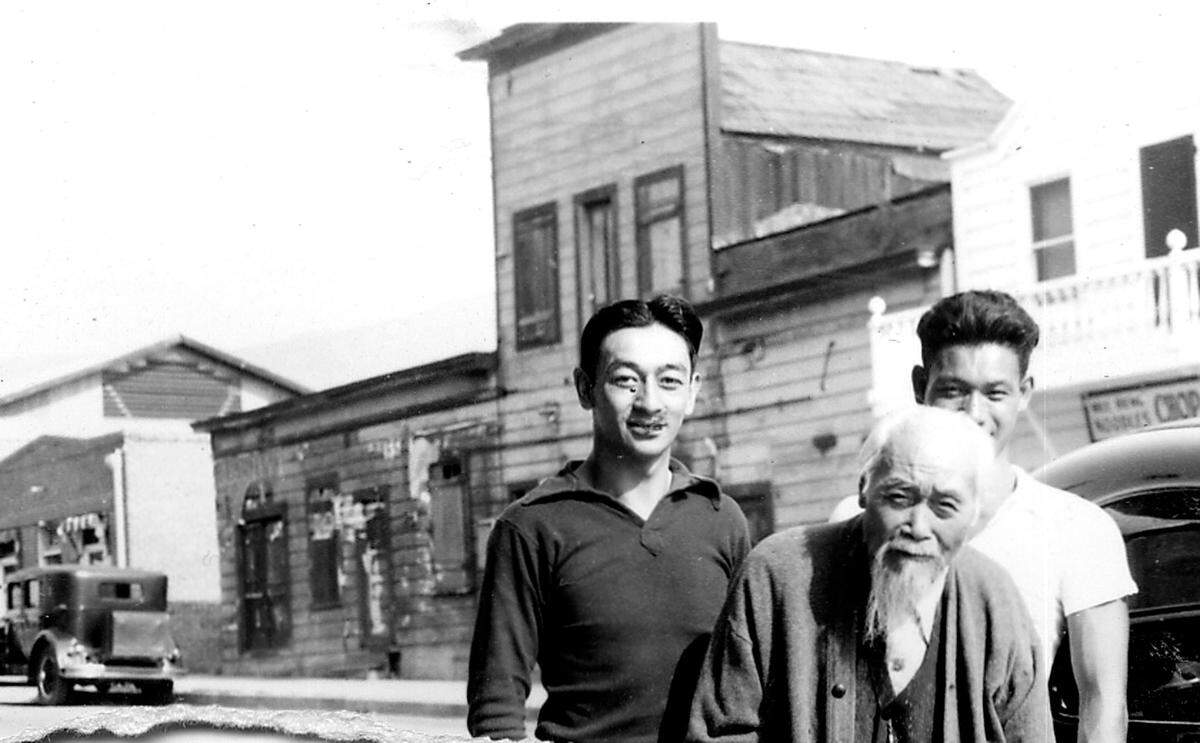
It was a profitable relationship being the middleman who understood both sides of the equation.
There must have been significant political acumen as well because San Luis Obispo’s Chinatown did not suffer the dismal fate of many of the West’s Chinatowns. Many were rocked by violence at the hands of white agitators.
Last week’s column documented a killing and violent threats against Chinese in San Miguel and Arroyo Grande.
It wasn’t easy.
Two white laundries opened in SLO during the 1870s and the Caucasian Steam Laundry opened in 1886, funded by a $1,000 subscription campaign. Those attempts failed.
An anti-Chinese club attempted to cause trouble but did not get significant traction.
Some early articles in California newspapers held the Chinese as object of ridicule.
Louis came to California in 1860 and told a reporter from Westways: “When I come California hunt gold in 1860, many bad men here. Men not like China boy dressed in clothes of homeland.
He continued: “Every time see him, take clothes off and beat him. Pretty soon China boys get smart and put on American clothes …”
The Chinese were seen as a threat by some. The railroad museum in Sacramento documents that they were reliable, hard workers less likely to be hit by waterborne disease in fetid work camps since they traditionally boiled tea water, and were less prone to missing days from alcohol binges. Employers liked them because they could get away with paying less to Chinese workers.
However, assimilation was not easy.
Articles published in the era ridiculed traditional clothing and braided hair.
The Chinese community remained insular. They didn’t drink at bars or eat the same foods, and they ate with chopsticks instead of silverware.
And the effort and tradition of returning bodies to the homeland in China to be buried with ancestors was strange to California immigrants who had buried their dead along the trail or at sea.
When the economy faltered, demagogues found an easy scapegoat to be labeled as “other” and attacked.
The Chinese Exclusion Act of 1882 made it almost impossible for someone from China to immigrate to the United States.
Much later quotas would be imposed for various countries, but China was targeted first and the subject of an outright ban.
Chinese nationals already in the country could not apply for citizenship and could be deported.
So why, at the age of 93, did the wealthy Ah Louis leave a comfortable life to return to China?
He may have been disillusioned by a robbery. At the age of 91, he was tied up while a pair of men ransacked his store.
The Daily Telegram of March 13, 1931, quoted Louis, “‘If I’d been younger they wouldn’t have been able to tie me up,’ Ah Louis said, gazing ruefully at the ugly bruises on his hands, his cut wrists and feeling of the tiny gash below his lip where the gag had cut.”
Not much later he took a tour of California. In San Francisco, grandson Kerman Wong urged him to visit China. The grandson was a representative of the Chinese Nationalist league.
A month later, the 93-year-old departed for China on what would be an 11-month tour with San Luis Obispo-born sons Fred and Howard.
Most news articles of the era — including the Dec. 27, 1932, Daily Telegram — said it was a pleasure trip, a sentimental journey home. It was expected to take several months with stops in Hong Kong, Canton and a 200-mile journey to his native village of Loong On before returning.
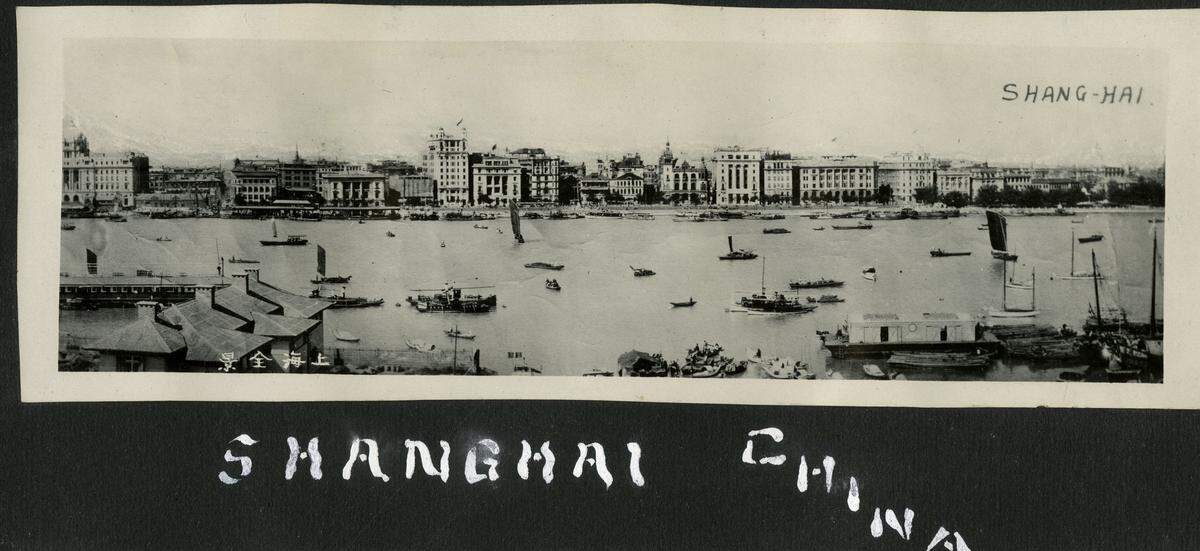
But a story by Emily Pan published in 2020 said he departed without critical re-entry documents suggesting that, for Ah Louis, it was intended to be a one-way trip.
A Nov. 24, 1933, story in the Santa Barbara Morning Press said he had planned to spend his remaining years in his native province of Canton in southern China.
An Oct. 23, 1980, Telegram-Tribune interview with Howard Louis confirmed that his father had intended to die in the land of his ancestors.
Ah Louis later told more than one interviewer that he was soon disenchanted and had thought of coming home within a month, but Howard and Fred were deeply curious about China.
Louis had come to America in 1860 in the era before rigorous documentation and had never become a U.S. citizen. He had been on two trips back to China in 1868 and in 1874.
But that was before the Chinese Exclusion Act.
His sons kept busy on the trip.
Fred traced the family history back 139 generations or 1,200 years. Information came from the Wong temple in the Sun Ning district.
Ah Louis was born Wong On, but seldom used that name after the developer of Harford Pier, John Harford, nicknamed him Ah Louis.
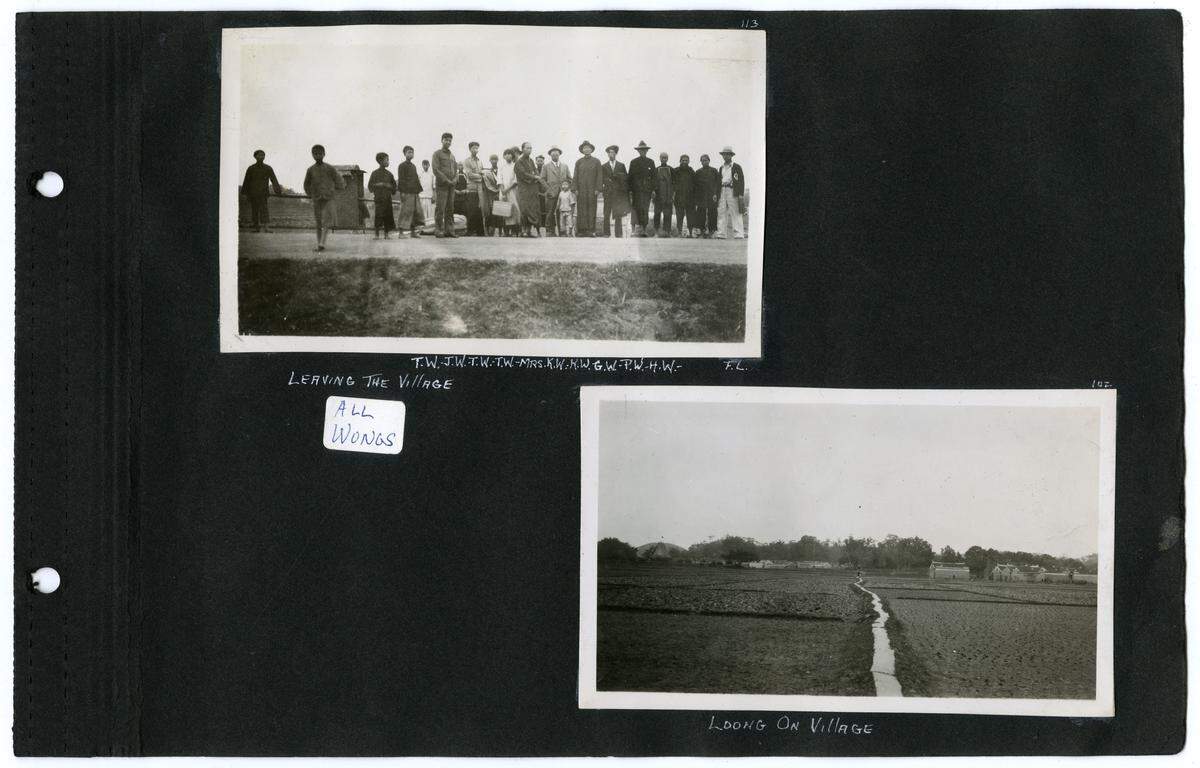
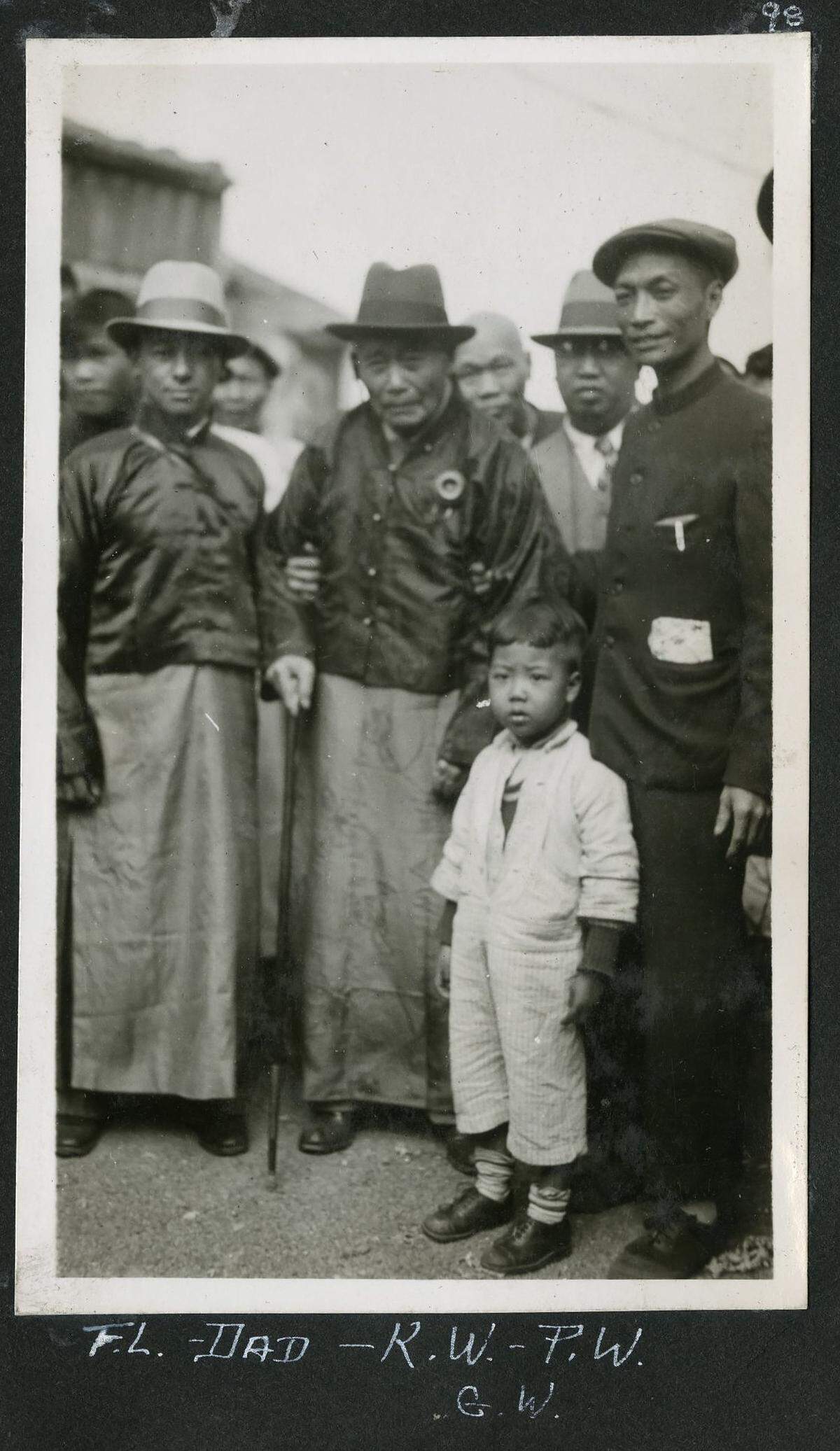
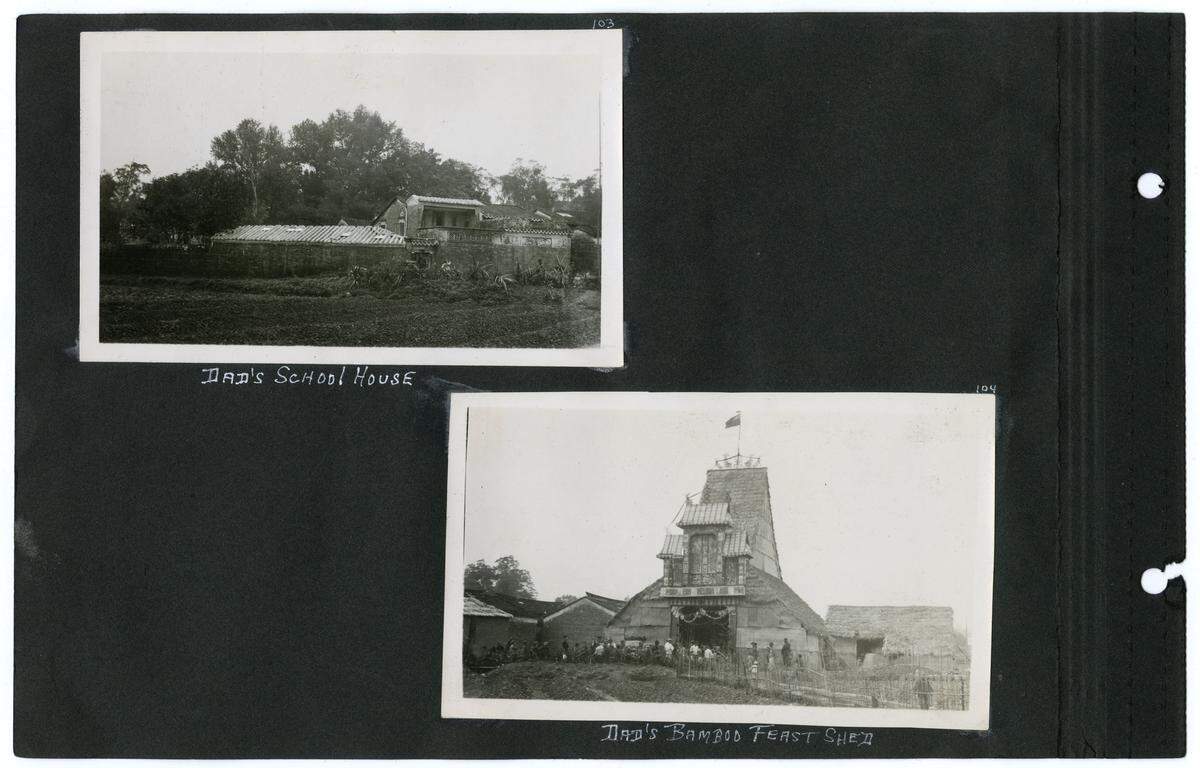
The other brother on the trip — Howard, a talented photographer — documented the trip with photos that can be seen online.
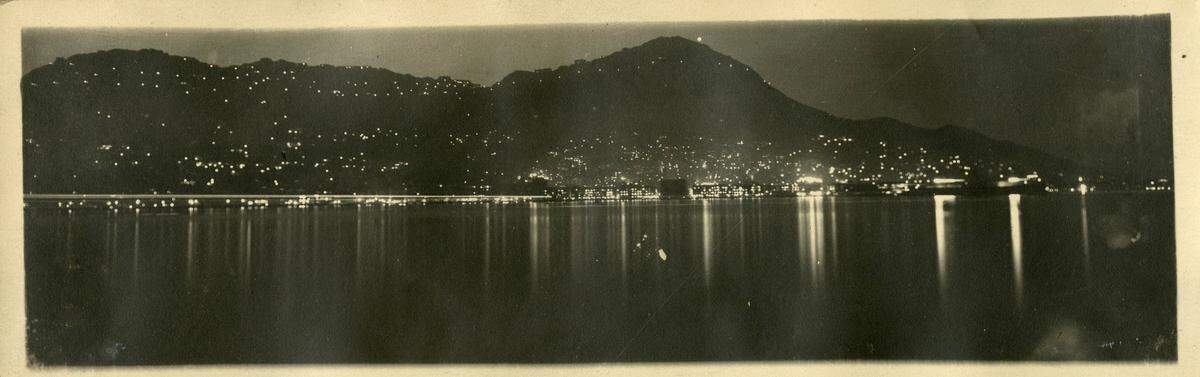
The visit was bittersweet.
Ah Louis visited the school that he had established in Loong On in 1886 and had supported.
A feast was held in a giant bamboo shed, for 1,200 people, fed in shifts of 300. But he also had hired “many men with guns” to deter bandits, and the three slept in separate houses to make it difficult for anyone trying to rob them.
Louis had hoped that he would see similar progress in his home as he had seen in San Luis Obispo.
He said not much had changed in his hometown in 800 years. Water was pumped and carried by human labor. Subsistence farming was a way of life.
Various interviews upon his return played up how much better it was in America.
Steamships, railroads, oil drilling and highways had all brought great change and growth to the Central Coast.
And China was faltering, on the precipice war.
Japan had invaded Manchuria, north of Korea, and Chinese rule was fractured. Central China would soon face invasion as well.
He told a reporter from Westways Magazine in 1934, that he wanted to “come back to San Luis Obispo one month after I arrive in China.” (The Westways article had conflicting origin stories for the name Ah Louis, but his son Fred said at the time he had only heard the Harford story before, and that is the one quoted in every other story I have found.)
But returning was now a problem.
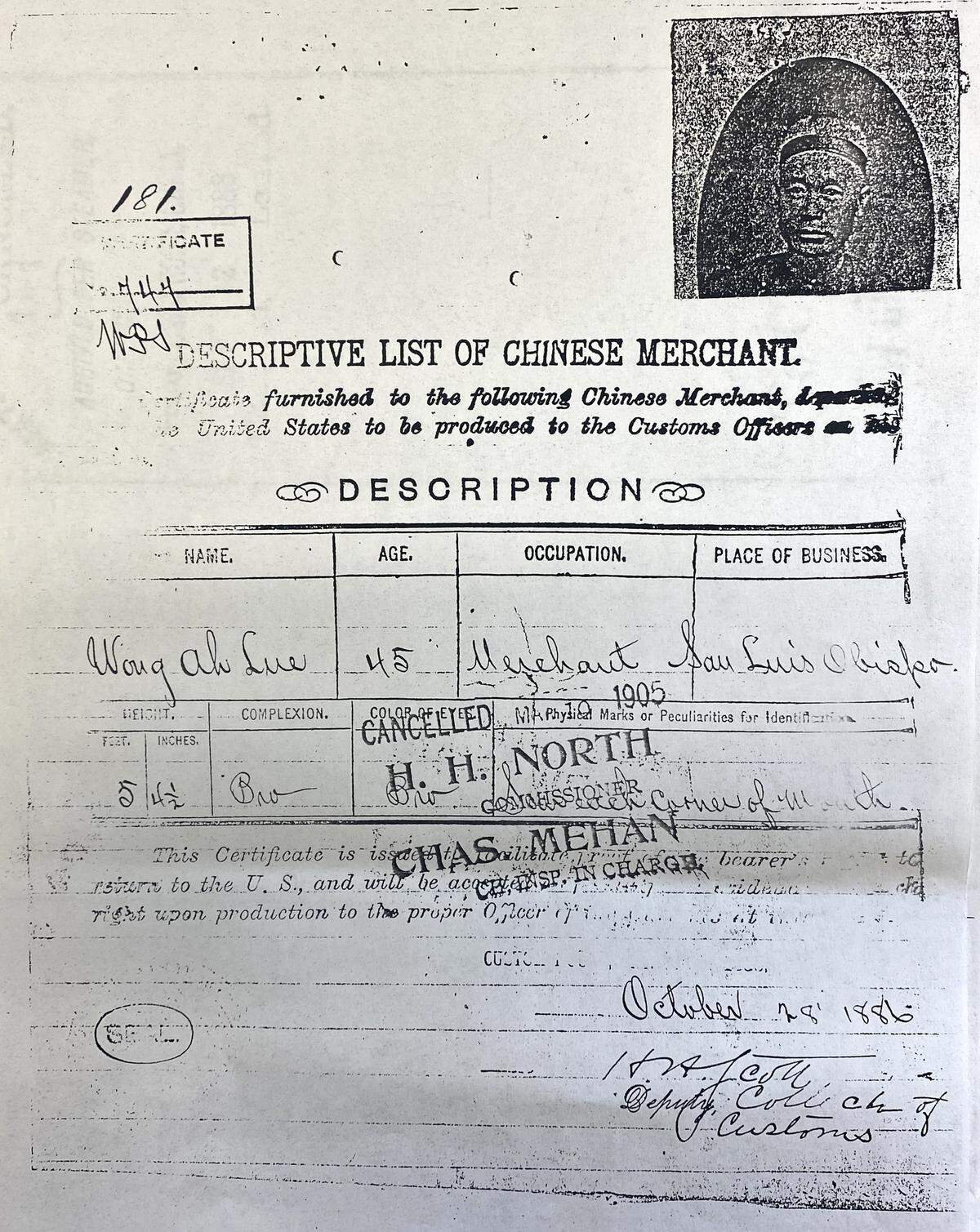
And because Ah Louis did not carry a current certificate of residence, he would not be able to step off the boat and go home. Instead, he would be processed through Angel Island in San Francisco like any other immigrant.
Newspaper articles from the time are low-key. Louis was staying with friends in the San Francisco area but behind the scenes a serious effort was underway to satisfy commissioners at the upcoming hearing.
Young Louis, a son who had stayed in San Luis Obispo, had organized local help in the days before the ship docked in San Francisco.
Letters and radio messages were shared in newspapers from Santa Barbara to San Francisco as the travelers were in transit.
They emphasized the well-known success of Louis as a businessman returning to his home in San Luis Obispo.
A letter writing campaign was underway and supporting documents organized.
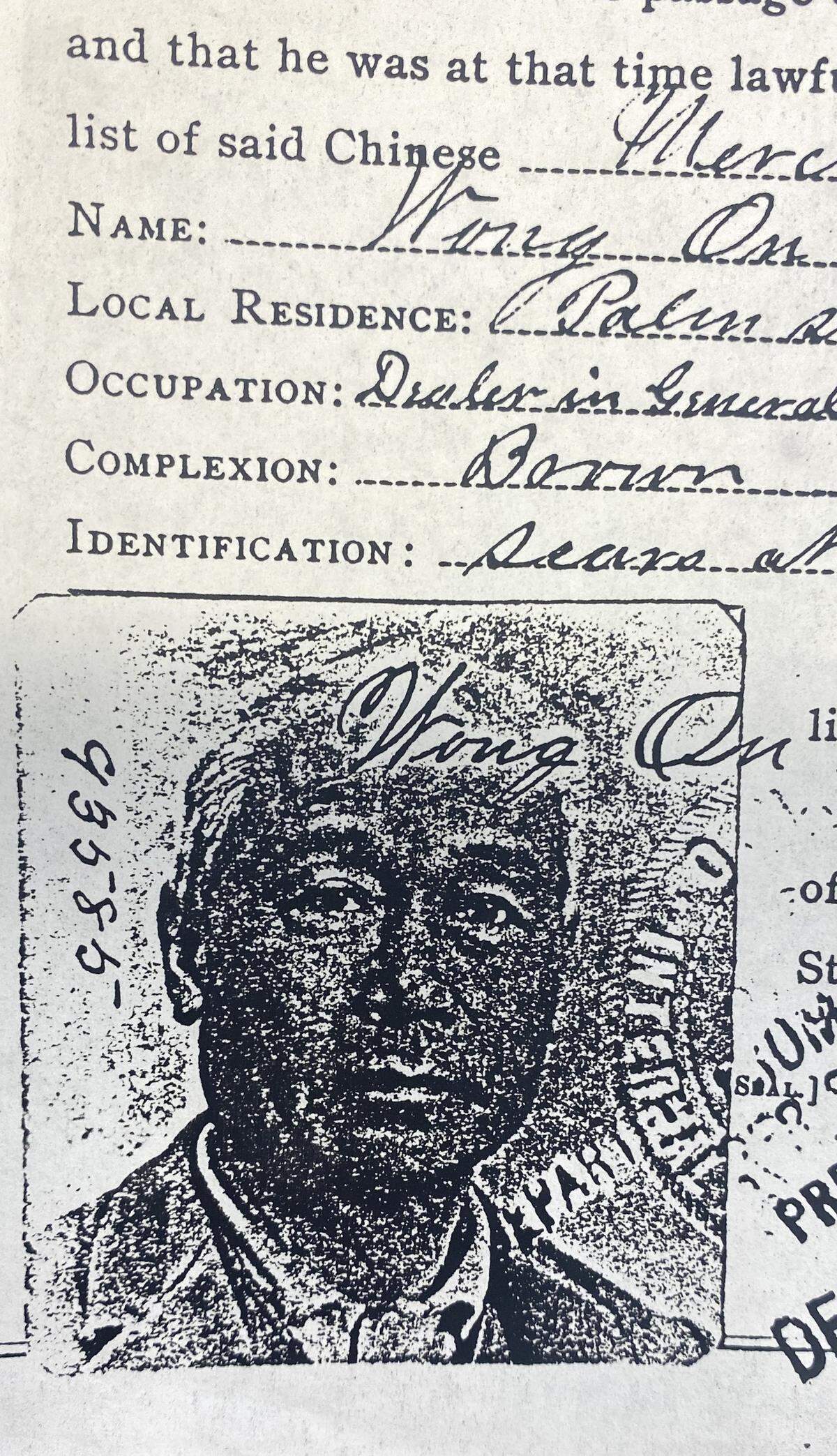
San Luis Obispo mayor Louis Sinsheimer and Superior Court Judge Tom Norton and others wrote letters. They contacted congressmen and Gov. Hiram Johnson.
Young told the Telegram-Tribune on Oct. 23, 1980, that he collected 1,600 affidavits from the county of residents willing to take an oath they knew Ah Louis and that he lived in town.
Many of these documents are copied in the Special Collections of Cal Poly’s Kennedy Library.
The Immigration and Naturalization Service sent an investigator to San Luis Obispo to confirm.
In a report dated Nov. 27, 1933, Charles B. Dixon, immigrant inspector writes, “At 6:30 p.m., Nov. 27, 1933, I proceeded to the corner of Chorro and Palm streets, San Luis Obispo, California, to make a personal visit within the place of business of Ah Louis.
I found a two-story building of gray-stone, approximately 50’ frontage and running a depth of perhaps 1oo (sic) feet, bearing across the entire front of the second story ‘AH LOUIS.’”
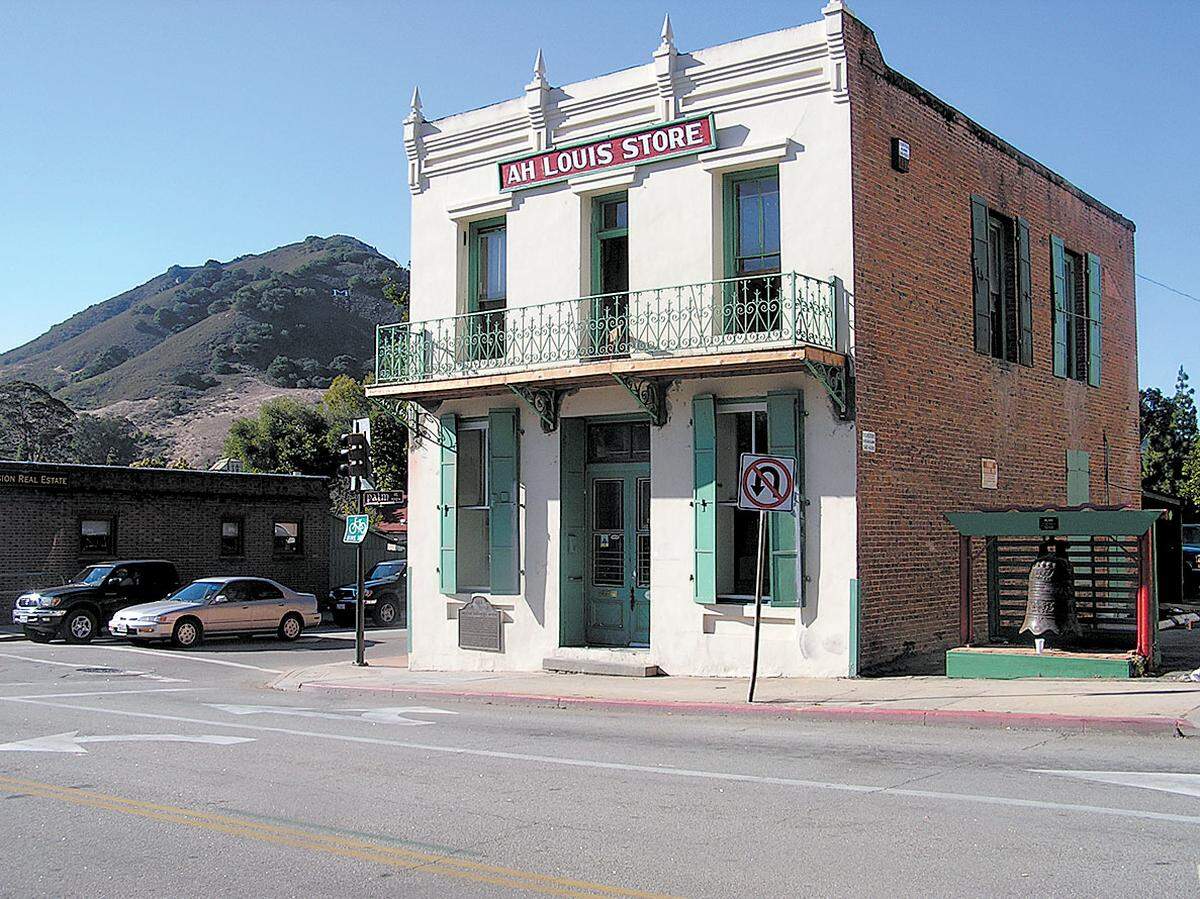
He later writes, “No indications of an (sic) questionable business being or having been operated on the premises, nor does it adjoin any such known establishment.”
Ah Louis is generally and favorably known; he is regarded highly and is widely acquainted in San Luis Obispo; he is one of the three pioneer merchants living in town.”
The following day, a hearing was held at Angel Island attended by Ah Louis and son Fred where they answered questions from a panel recorded by a stenographer.
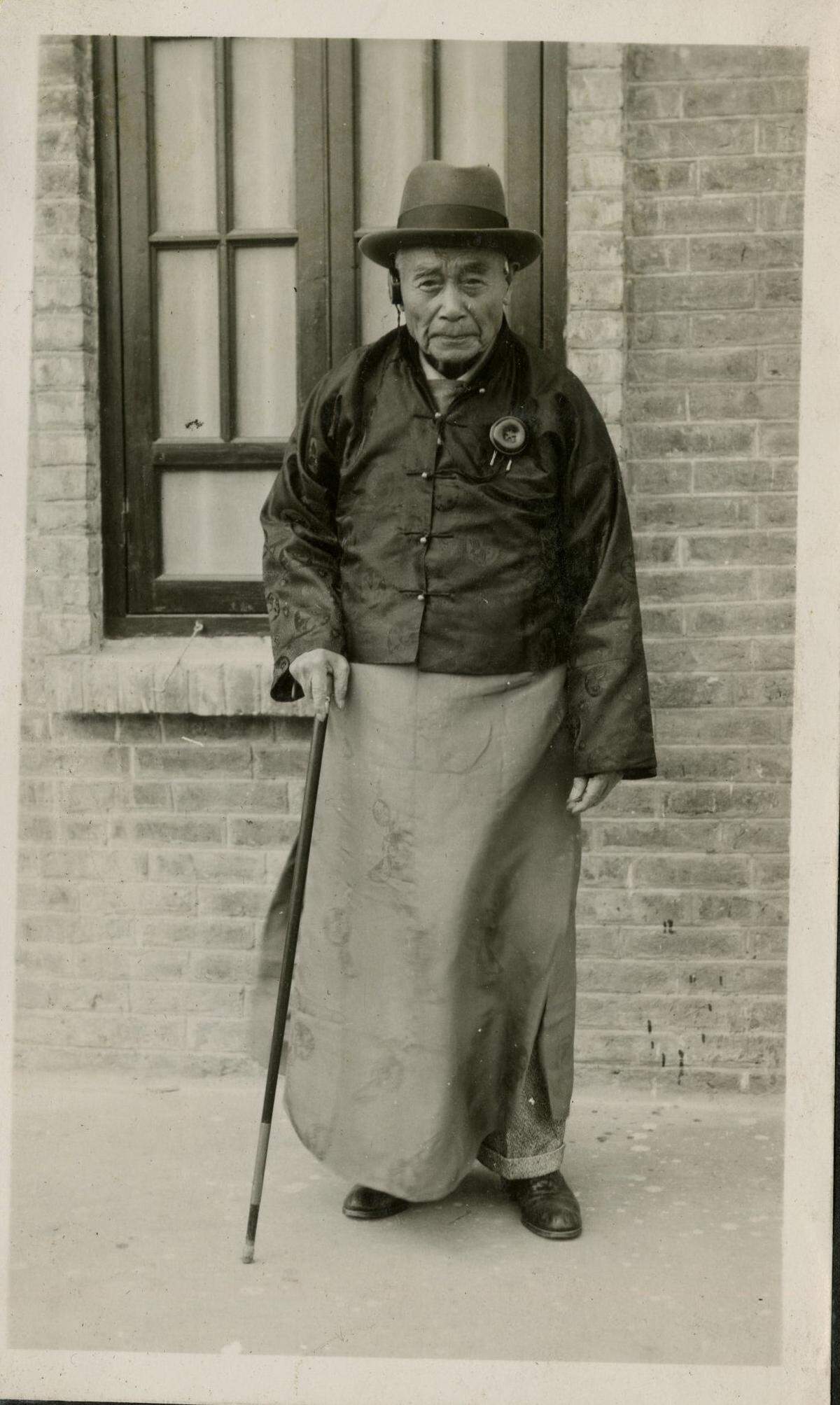
Their biggest concern was the age and infirmity of Ah Louis. They noted his deafness to start the hearing.
The summary conclusion was: “Satisfactory assurance has been given that the applicant will not become a public charge though he is physically defective.”
He would return home with the family in time for Thanksgiving, and the Daily Telegram published an article Dec. 2, 1933, headlined: “AH LOUIS IS HOME; LIKE U.S. THE BEST”
The sons would have several public speaking engagements to talk about the trip from service clubs to Cal Poly.
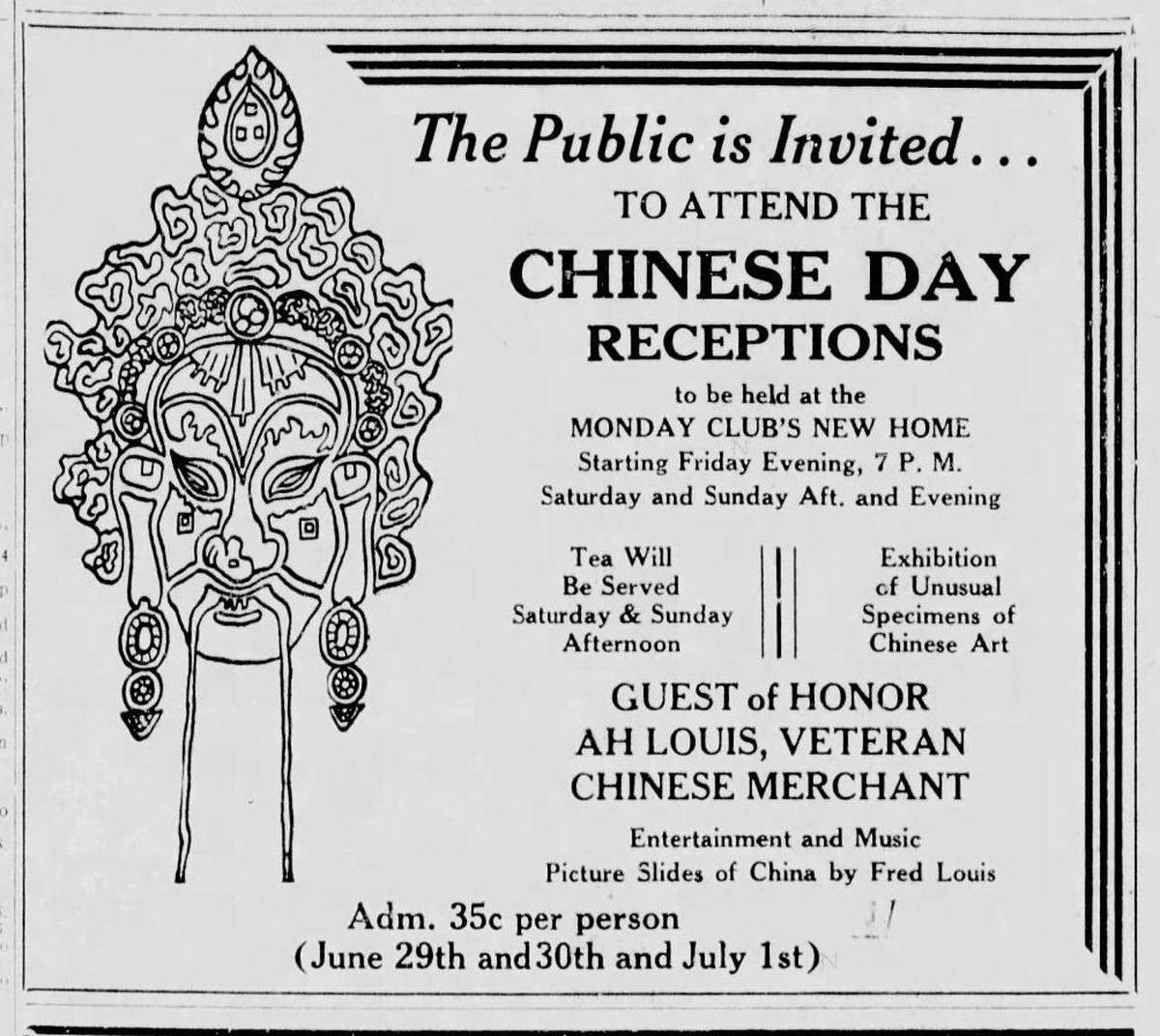
Ah Louis came home with a traditional beard, after his late wife, Gon Ying, had appeared in a dream while he was in China and told him to grow it out.
Three years later, Ah Louis died Dec. 16, 1936, at age 96 years.
Many of the Louis family made their home in the area and were active in public life.
Congress did not condemn the Chinese Exclusion Act and affirm a commitment to preserve civil rights and constitutional protections until 2011-12.
Thanks to John Ashbaugh for sharing a story he wrote for the history magazine La Vista and for the incredible research staff at the Robert E. Kennedy Library, Cal Poly Special Collections Archive including Laura Sorvetti who helped connect me with resources that filled in missing details that weren’t included in news articles of the era.