SLO business pioneer Ah Louis overcame decades of discrimination to find success
With ability, grit and moxie, an immigrant can go from rags to riches — but that ascent can be complicated.
Currently, the Asian-American community is experiencing a rise in hate incidents in the wake of former President Donald Trump’s anti-Chinese race baiting related to COVID-19.
Discrimination dates back to the earliest days of California statehood.
Ah Louis overcame much to become one of the early business giants of San Luis Obispo County.
Louis left China during the Taiping Rebellion.
Soon after his arrival in the United States in the late 1850s or early 1860s, he abandoned traditional Chinese dress. Louis was often beaten, until he began wearing American-style clothes.
An early biographical sketch of Louis can be found in the Mission High School yearbook of 1929, perhaps written by one of his children.
As quoted in the Telegram-Tribune, it said, “When Ah Louis first came to San Luis Obispo, there was only one picket fence in the town; it was south of San Luis Creek and was owned by Mr. Steele. There was no water reservoir, and water was bought for the price of 50 cents a gallon.”
The third brick building in town was the Sinsheimer building, and the Ah Louis store in 1885, was the fourth.
In the 1870s, anti-Chinese politicians vilified Chinese immigrants, and the Working Man’s Party held rallies with people chanting “The Chinese must go.”
In 1876, The Tribune newspaper in San Luis Obispo carried a racist laundry ad saying “Patronize White Industry!” But after a few years, a local Chinese laundry was advertising in the publication again.
Louis was a labor contractor, and Chinese laborers often took on the most dirty, difficult jobs such as constructing the Cuesta Grade road, building railroads, mining mercury or draining the Laguna Lake area. When the construction was at the peak, San Luis Obispo’s Chinatown was one of the most vibrant in the state.
For decades, Ah Louis was the unofficial mayor, judge, bank and employment agency of San Luis Obispo’s Chinatown.
Ah Louis was able to bridge the white and Chinese communities, and with his success raised a large family.
Young Louis said in an Aug 7, 1969, article about a Louis family reunion that “The name is pronounced ‘Lewis’ and not ‘Louie,’ although we don’t bother to correct anyone on this. After some years, my father had the family name changed legally to Louis.”
After decades of discrimination or indifference, Ah Louis was finally recognized as a major figure in San Luis Obispo history.
His store on Palm Street is now on the National Register of Historic Places.
One story said that the steel shutters on the Ah Louis store were intended to provide security from feuding families in Chinatown, but a more plausible explanation is that the shutters were protection from fire embers like those on the Sinsheimer building. The better part of a city block was incinerated by the Andrews Hotel fire in 1886.
A long biography of Ah Louis was published in the Telegram-Tribune — taken a speech made by Peter L. Andre, one of the leading lawyers in town, to the San Luis Obispo County Historical Society.
The story, published Oct. 24, 1959, is edited for length.
How Ah Louis Established His Family in SLO
The Ah Louis store was established in 1874. A little wooden store was erected on the site originally, and later it was moved across the street onto an empty lot, to make way for a new brick building which was completed in 1884.
Incidentally, the little wooden building was later used for various purposes and in the last few years before it was torn down, it was used for the Mee Heng Low restaurant.
The builder of the store, Wong On, later known as Ah Louis, was born in Cathay, China, in 1838. He came to America at the age of approximately 20 years, with the intention of becoming a gold miner. When he first arrived on the Pacific coast, he traveled to Oregon, where he worked for two years.
In 1860, he set out for California to hunt gold.
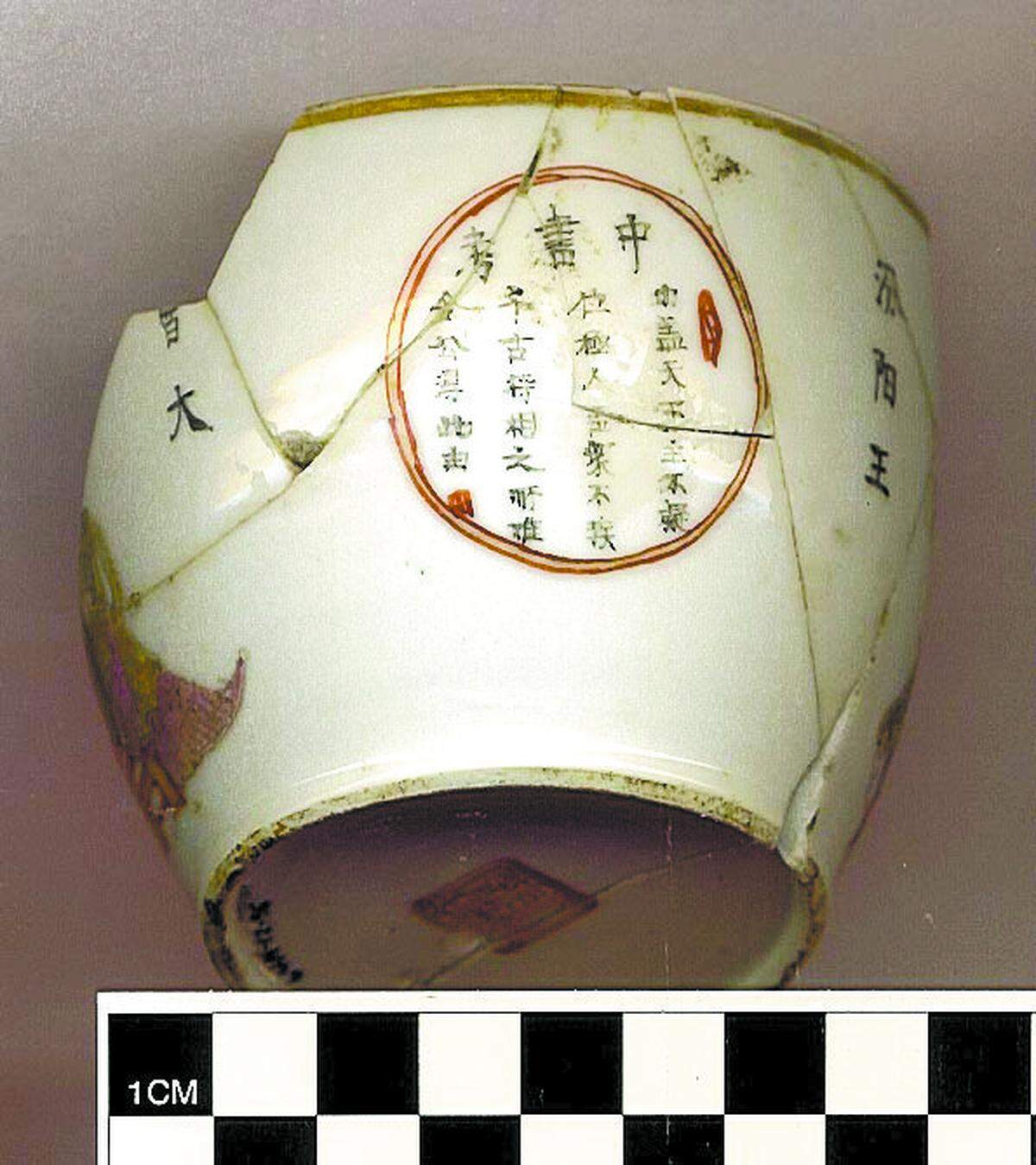
In 1870 Mr. Louis arrived in San Luis Obispo, and went to work as a cook in the French hotel, across from the Old Mission. His son, Young Louis, reminisced to me recently that his father had told him how it had taken him an entire week to walk his mule and gold mining equipment from Gilroy to San Luis Obispo. He found that the climate here was good for his asthma and instead of continuing with his gold mining exploration, he decided to settle in our community.
It was when Louis first arrived in San Luis Obispo, that his name Ah Louis became a part of him. John Harford, an early pioneer rancher and gentleman after whom Port Harford was named obtained the services of Wong On, who incidentally had been nicknamed Ock Fon. Harford decided that it was too much of a tongue twister to utilize either of the names by which his Chinese employe and friend was formerly named and consequently gave him the name by which he is known today.
Ah Louis was a very enterprising man. During his lifetime he built the county road from Paso Robles to Cambria, and also the old Cuesta grade, and he laid all of the track for the Pacific Coast railroad. At one time, he brought 400 coolies by boat from China via San Francisco to work on the construction of the Southern Pacific railroad in the area and particularly in the building of the seven tunnels through the Cuesta grade. It is interesting to note that he received 10 cents per head commission, daily, from the laborers for the privilege of working on the railroad and other jobs.
Operated Six Farms
He pioneered the flower and vegetable seed industry of the central coast area and at one time operated six different farms, two in the Oso Flaco valley; one near Edna; one south of San Luis Obispo off old Highway 101; another in the Chorro valley area, and the sixth being the Chinese Gardens located in the area which is now known as the Anholm tract.
Ah Louis owned the first brick yard in San Luis Obispo. It was located between the San Luis mountain and Bishop Peak, just off Foothill boulevard.
Bricks for the roundhouse for the Southern Pacific, Sinsheimer Bros. store, Ah Louis store and other brick buildings were made by him.
His son Young, remembers as a boy staying all night at the brick yard when bricks were being burned at the kiln with logs instead of oil as was later used.
It was necessary to keep the supply of logs and fire burning constantly throughout the night. Three or four men plied crowbars on the ends of the logs to push them into the fire.
Louis was the largest employer of labor in San Luis Obispo County before the turn of the century. As an enterprising man he saw wisdom in constructing a general merchandise store which catered mostly to the several hundred Chinese employees who had migrated to this area. In this store he acted not only as a merchandiser, but also as a banker.
At one end of the counter, there was a wire cage where he paid out salaries to all employees each Saturday and where he also accepted the salary of other Chinese workers in San Luis Obispo County, and kept the same for them until they needed money.
Many of these Chinese were cooks on ranches, such as the Santa Margarita ranch and the R.E. Jack ranch, the Steele ranch and many others.
Whenever they needed money, the account was charged against their deposits and the balance paid to them.
It was said that there were no written records of these transactions — they were all verbal—and no complaints ever ensued.
Incidentally the speaker [Peter Andre] as a boy can recall the several hundred Chinese families living mostly in small wooden shack type houses, on this street where the Ah Louis store is located. Most of them, except Ah Louis wore native Chinese costumes. The sidewalks in front of the buildings were constructed of boards and inside the doorways of several buildings could be seen old Chinese smoking their pipes.
The mother of Ah Louis’ eight children was a young Chinese girl who was born in San Francisco. They were married about 1890; she died in 1909 in San Luis Obispo.
At this time, 1959, all of the children are still living.
Four of them reside in San Luis Obispo — Walter, Howard (who is sometimes called Toby) and Mrs. Mae Watson (the mother of Billy Watson, the principal of Morro Bay High School). In addition, there is Fred, who is a lieutenant colonel in the U.S. Army; George, a musician residing in San Francisco; and two sisters, Lena and Helen, who reside in Chicago.
Ah Louis lived to the ripe old age of 98 years. Prior to his passing, he had returned to China, thinking that he would die in the homeland of his forefathers. However, after seeing the small amount of changes in the living conditions, customs and methods of operations of the Chinese, over several centuries of time, he decided to return to the United States because of the modern methods of living as used here.
Incidentally, Louis wore a beard, as seen in later photographs of him, after he made the trip to his homeland. The reason for wearing a beard is because his deceased wife, Gon Ying, appeared to him in a dream and said, “You must grow a beard. All old men of China wear beards.” so he grew one right a way.
Ah Louis, in addition to all of his other enterprises, was a breeder of working horses and also owned several fast race horses. There was a race track in the old Portuguese flats section of San Luis Obispo, where his horses, along with the horses of many other pioneers of San Luis were raced.