SLO’s Little Italy was once ‘vibrating with life.’ Where did community go?
READ MORE
Historic SLO Neighborhoods
A multi-part series by The Tribune
Expand All
Editor’s note: This is the second story in a three-part series highlighting historic neighborhoods in San Luis Obispo. Two other articles focus on the city’s Chinatown and Japantown neighborhoods.
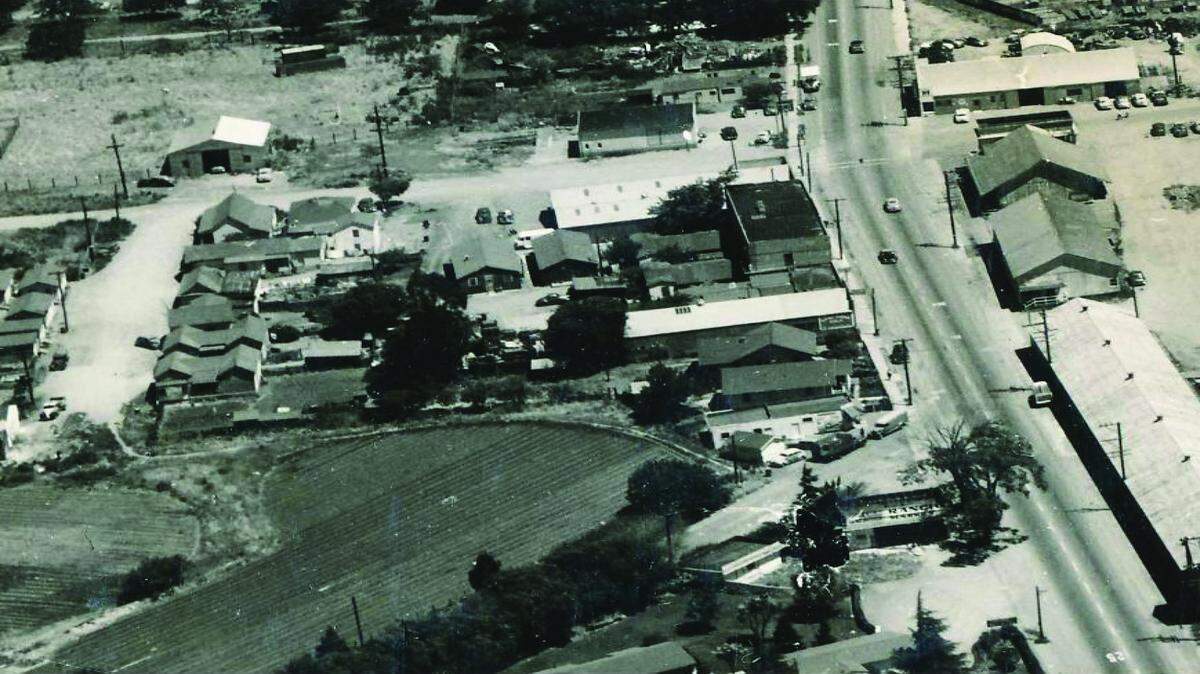
One hundred years ago, a boisterous, close-knit community of hardworking Italian Americans lived in small frame houses hugging South Broad Street in San Luis Obispo.
SLO’s Little Italy thrived in the first half of the 20th century. As the decades flew by, however, large immigrant families dispersed.
Little Italy resident Mark Penza reached out to The Tribune seeking information about his local neighborhood.
“What is the history of the Little Italy area of the city of San Luis Obispo?” he asked The Tribune. “I love our little city! Ciao!”
Penza, a proud Italian American, said his interest was partially piqued due to his heritage. Penza’s grandfather immigrated to New York through Ellis Island around 1900. His grandmother’s family had also moved from Italy to the United States, he told The Tribune.
Penza bought a house in SLO’s Little Italy neighborhood in 1996, but he had no clue about the area’s ethnic roots at the time.
“I just happened to see it on a SLO map some years after the fact,” he said.
Where is Little Italy in San Luis Obispo?
The Google Maps app pinpoints Little Italy as a stretch of six streets — Lawrence Drive, Humbert Avenue, Francis Avenue, Caudill Street, Woodbridge Street and Alphonso Avenue, running between Broad Street and Victoria Avenue.
The half-mile long neighborhood was home to most of the city’s Italian population in the early 1900s.
Little Italy also had residents of Portuguese, Mexican and Spanish descent, among other ethnic groups, the San Luis Obispo Telegram-Tribune reported in July 1985.
How did Italian American neighborhood get its start?
More than 100 Swiss Italian families settled in San Luis Obispo County in the late 1800s.
Nearly all the immigrants came from Canton Ticino, an Italian-speaking region in southern Switzerland that was seized by the Swiss from the Duchy of Milan in 1512, according to a Telegram-Tribune article published in August 1984.
In the mid-1850s, the Swiss region was rocked by a series of economic stresses including political turmoil, trade blocks and severe crop damage from flooding, the Telegram-Tribune reported.
“These were large families. Some of them had as many as 18 children,” Cal Poly history professor emeritus Dan Krieger told The Tribune. “They decided that if they were to survive and hold on to their land, the younger kids would have to leave for someplace else.”
The Swiss Italian immigrants arrived in SLO County seeking land fit for farming and dairy operations. The area was reminiscent of Canton Ticino with rolling hills — vibrant green following springtime showers — that were well-suited for livestock, according to Krieger.
“They brought some money with them — because these were very thrifty people — and they invested in land which ... didn’t have dairies on them yet, especially the area around Cayucos,” Krieger said. “They did immensely well.”
By the end of World War I in 1918, a large population of Italian emigrants had trickled into the small city of San Luis Obispo, with most looking for a better life and more stable employment, according to the July 1985 article in the Telegram-Tribune.
Many found work either at the Union Oil Co. or the Southern Pacific Railroad, which employed more than 1,000 people during its heyday, according to Telegram-Tribune archives.
“Most settled into houses close to work, and slowly Little Italy became a close-knit neighborhood, vibrating with life: Children were being born. Families were growing. New American roots were planted,” the Telegram-Tribune reported.
Some well-known families in Little Italy are still familiar presences in the county, including the Tognazzini, Miossi, Righetti, Rizzoli, Magetti, Monetti, Cattaneo, Lemucchi and Bonini clans, the Telegram-Tribune said.
What was Little Italy like? Food, wine and feast days
In the first half of the 1900s, SLO’s Little Italy neighborhood contained an intimate Italian community that prized hard work, entertainment and good food.
Before cars became common, Little Italy residents would light up when merchants arrived on horse-drawn wagons from San Francisco, carrying loads of specialty items from Italy. Vendors sold everything from giant wheels of cheese to Italian cookies, dried pastas and spicy salami.
The goods were consumed at every major life event, from weddings, baptisms and house parties to feast days and funerals.
These community-oriented gatherings “brought families together for hours of music, food, wine, song and dance,” William Cattaneo, founder of local beef jerky company Cattaneo Bros, Inc., wrote in a Times Past column published in the Telegram-Tribune in 1985.
Wine was also a key component of the hearty Italian meals shared by the community.
“Work, food, and … wine! Wine was the common denominator that united the past with the present, the villages of Italy with the new homes in America,” Cattaneo wrote in the Times Past column. “Wine, like language, was the cultural thread that touched all families in Little Italy.”
Once the wine harvest rolled around each autumn, San Luis Obispo’s Italian community ordered tons of grapes from North County vineyards to press into homemade vino.
“Hands were waving, voices raised in excitement, (with) very little English spoken,” Cattaneo recalled. “The pace became filled with purpose. The grape crush was on.”
The seasonal, celebratory crush was always more party than hard work, according to Cattaneo. As the men turned the purple fruit into pulp, they took turns gulping wine, growing more and more tipsy as the crush continued.
What happened to SLO’s Italian neighborhood?
By the 1940s and 1950s, Little Italy began to wane as Italian traditions became less popular among young people.
Local Italian American men who served in World War II returned to San Luis Obispo with new ideas about how to lead their lives.
“John Wayne, Coca Cola, hamburgers, milk shakes, Frank Sinatra and Bing Crosby had come to town to stay,” the Telegram-Tribune reported in 1985. “There was more English spoken and less Italian. Sunday dinner took a back seat to the beach. Italians married non-Italians.”
Longtime Little Italy residents eventually moved or passed away as the once prominent community shrunk.
“No longer the rattle and squeak of the grocery wagons. No more the steady beat of horses hooves. No more the merry wine makers,” Cattaneo wrote in the Telegram-Tribune in 1985. “Everything is gone but the memories of another age.”
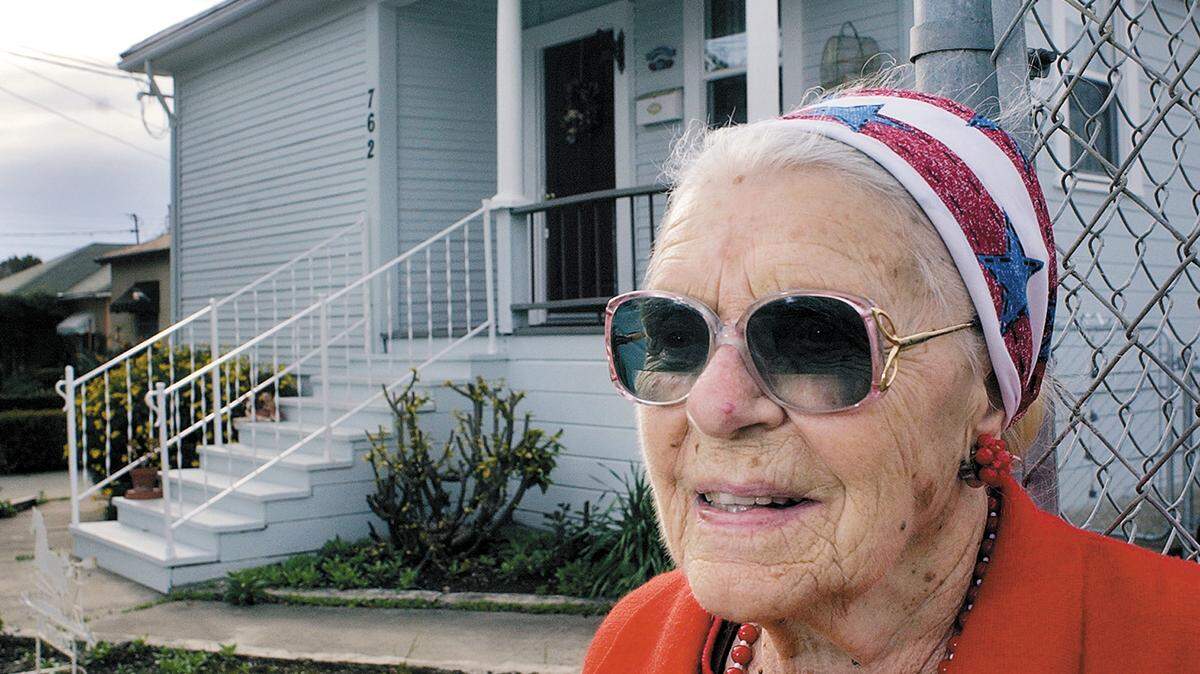
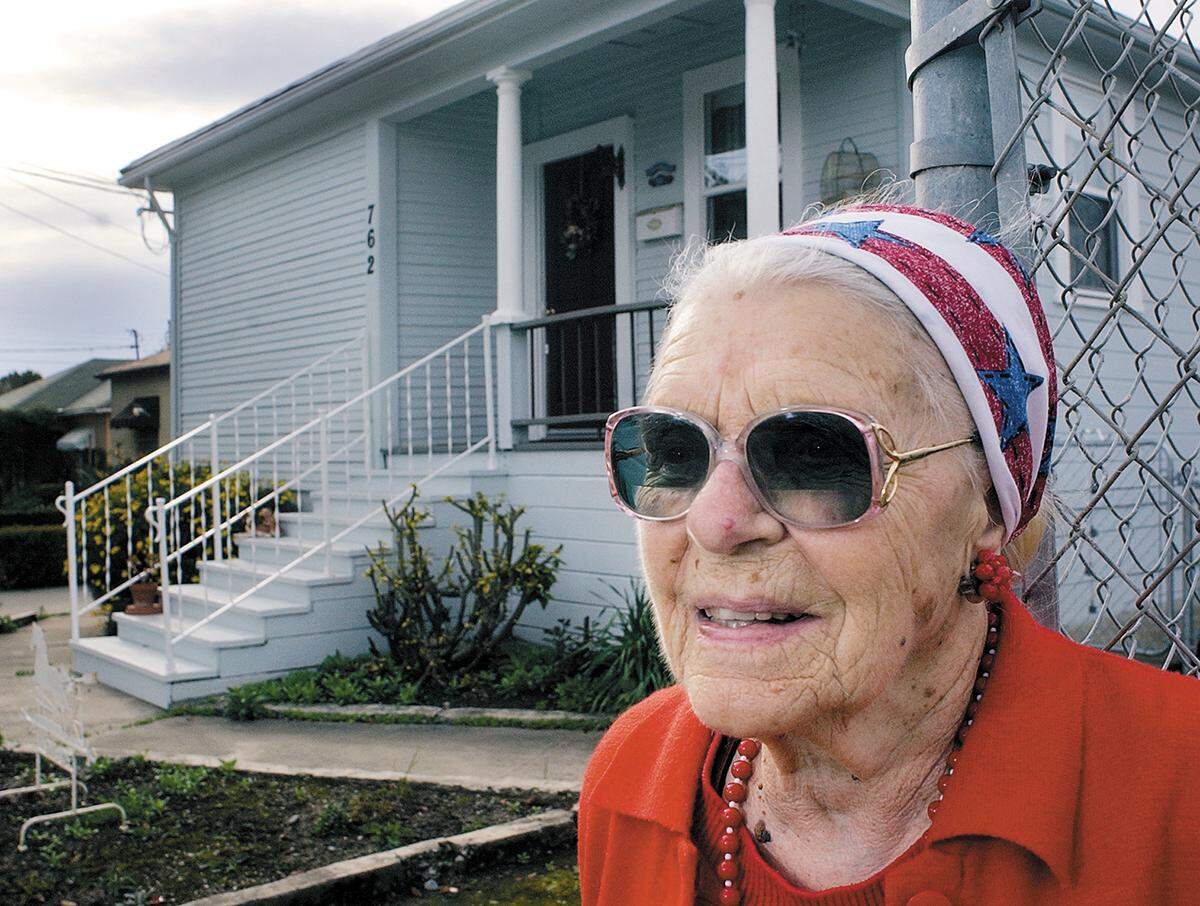
Not everyone was disappointed by Little Italy’s transformation. In 2004, 90-year-old Little Italy resident Mary Cattaneo told the Tribune that the changes surrounding her neighborhood were simply part of a new modern world.
“I think it’s for the better,” she said at the time.
Cattaneo Bros. still looms large in Little Italy
While Italian-run businesses were once abundant in the streets tucked between Broad Street and the railroad tracks, the neighborhood has largely been redeveloped as burgeoning businesses and multi-story apartment complexes.
However, one company with deep Italian roots has stayed in the same spot for more than 75 years.
Family-owned and operated since 1947, Cattaneo Bros. at 769 Caudill St. was first launched by Italian butchers and brothers William and Joseph Cattaneo.
The two brothers emigrated from northern Italy — where they lived about 50 miles from the Swiss border — to San Luis Obispo in 1920, according to a January 1978 article by the Five Cities Times-Press-Recorder.
At their Caudill Street manufacturing plant, the Cattaneo brothers leaned on their culinary expertise to craft cured meats and sausages. The successful local operation served markets from Oakland and the San Joaquin Valley to the Mexican border, the Five Cities Times-Press-Recorder said.
Cattaneo Bros. products have been devoured for decades on the Central Coast.
About 78 years after it first opened, Cattaneo Bros remains a SLO staple committed to churning out specialty European-style sausages, beef jerky and meat sticks.
Mike Radakovich, owner of My Friend Mike’s in San Luis Obispo, said the company’s pork linguica and Swiss sausage was an ever-present part of his childhood. Now, he’s a loyal customer who relies on Cattaneo Bros. meats to top artisanal pies as his popular Little Italy pizzeria.
“We use the Italian sausage and the pork chorizo. We love that there is no fillers, no nitrates, just very simple ingredient list,” Radakovich wrote in an email to The Tribune. “We get to support our neighbors. What more does one want?”
Local businesses speak on Little Italy heritage
Business owners who now call Little Italy home landed on a single word to define their neighborhood — love.
“We love our neighborhood,” Taste! Craft Eatery co-owner Gretchen LeMiere told The Tribune.
Many thought opening Taste, an American restaurant on Broad Street, was a risky move, she said, especially since it’s in an industrial area with relatively low foot traffic.
“I am so glad we didn’t listen,” she said.
Radakovich said he was relatively clueless about Little Italy’s history beyond the neighborhood name that appears hovering over the streets on Google Maps.
“I thought that was pretty rad since we were doing pizza, but growing up here I had no idea this area was considered Little Italy,” Radakovich said.
Now three years into running his pizzeria, he said he loves being part of the spot that once was the center of Italian culture in the city.
LeMiere said she was unaware of the true history of Little Italy before opening her restaurant there, but praised the city of SLO for supporting development in the area.
“Now we have My Friend Mike’s down the street, Cattaneo Bros., which has been here much longer than us, and all of the exciting things going on at Duncan Alley,” a new drink hub in San Luis Obispo, LeMiere said. “Little Italy is a gem!”
This story was originally published February 18, 2026 at 5:00 AM.