SLO County city councils are almost 90% white. Young voters want change, and here’s how
San Luis Obispo County’s white majority dominates local politics, leaving communities of color without proportional representation on the area’s elected councils.
That’s what The Tribune found after spending a month requesting and reviewing information on the age, gender identity and race of all local council members and candidates — a total of 79 people.
Although there have been more-recent efforts to confront inequity and lack of diversity in the county, local officials are typically white and older than 40, the review found. And the candidates for the upcoming election are not much more diverse.
The issue is in the spotlight this year with an election coming on the heels of local Black Lives Matter protests. Systemic racism has been a particular priority for many young voters in San Luis Obispo County based off of feedback received through The Tribune’s Outspoken project, which focuses on the issues that matter to voters under the age of 40.
Just shy of 80% of the more than 200 respondents to our Outspoken survey said they want candidates to be talking about racism, racial justice, diversity, equity or the Black Lives Matter movement.
Several survey respondents said they feel that the lack of diversity among elected officials contributes to policies and an environment that negatively affect minority groups in the area.
“It’s disjointed between what our elected officials think the community needs versus what they actually need,” Paso Robles resident Shannon Gonzales said. “I think that has to do with the fact that a lot of our elected officials do not represent the diversity that’s present in our county.”
.jpg "Protest4 (1).jpg")
Voters under the age of 40 haven’t been the only group concerned about diversity and representation among local elected officials.
Four cities — Grover Beach, Paso Robles, Arroyo Grande, and San Luis Obispo — received legal threats in 2018 and 2019 claiming the cities’ at-large voting framework violate the California Voting Rights Act by diluting the ballots cast by Latino residents. The letter demanded the cities switch to district elections.
A district-based voting system divides a city into four quadrants, or, districts. Only those within a certain district can vote for the designated district seat.
While district elections have proven to increase representation in some areas such as Santa Maria, Cal Poly political science professor Michael Latner said in many California cities, a voting system known as ranked-choice voting might better remedy the lack of diversity among elected bodies.
The Tribune heard from voters and explored the ways in which more representation can be pursued in future elections, from uplifting leaders of color who are currently in non-government positions to changing local voting systems.
Why diversity matters to young voters
San Luis Obispo resident Hollie West said diversity at the official level is important because it changes the conversations that are happening within local government. She said more dialogue about racism would lead to more inclusivity.
“It’s so much easier to turn a blind eye when you only have your own experience to look through,” West said. “I think having more diverse bodies of power, it would create room for a lot more conversations.”
In 2018, San Luis Obispo elected its first Black city council member — Erica Stewart, who identifies as Black and white.
Arroyo Grande resident Kevin Buchanan said he feels that people pull from their own experiences when deciding what actions they want to focus on.
“On the local level, you generally have people that are serving particular and specific needs and interests based on their own background and experiences,” Buchanan wrote in an email to The Tribune.
Gonzales, who is a part of a community group called Paso People’s Action, said she feels that Paso Robles has begun to have conversations about race, but noted that people often point to the one Hispanic council member in the city as a sign that diversity concerns have been addressed.
Maria Garcia was the first Latina city council member elected in Paso Robles, a city with a 39% Hispanic population. She was the first Hispanic person to run for council in 20 years and the first woman elected in three decades, according to the San Luis Obispo Chamber of Commerce.
Gonzales said while she believes this is a “step in the right direction,” electing one person of color should not be the end of the conversation. She said the idea that one person speaks for a whole group is tokenism.
“Having one Latinx person on your city council doesn’t mean your city council is diverse,” Gonzales said. “Just having one Hispanic person in there doesn’t mean that they speak for the entire Spanish-speaking community. I would hate for this to be the extent of moving forward.”
Many people in the survey shared that they feel it’s the job of local candidates and officials to make San Luis Obispo County a more welcoming and equitable environment by not only addressing outright racism, but also creating solutions for intersectional issues such as housing costs, jobs and policing.
“I want the candidates to understand diversity issues don’t exist in a bubble,” San Luis Obispo resident Autumn Ford said.
She said she feels some candidates and officials often say they support anti-racist movements but don’t make changes to better improve the lives of minority groups in the area.
“When a lot of candidates speak about these things, especially in San Luis Obispo, it’s very much like ‘Oh, I care about Black Lives Matter, I’m going to support Black Lives Matter,’ and yet they don’t recognize the underlying oppression of the economic system in the area. … They don’t understand how that ties into race,” Ford elaborated.
As The Tribune found in a nine-month investigation into substandard rental housing conditions, race, housing and income in the area are often linked.
Buchanan said many elected officials don’t consider the inaccessibility of public meetings for lower-income constituents who are working to make ends meet. He said diversity in elected officials’ backgrounds could bring more attention to that end.
“It takes a decent amount of free time and preparation to make your input heard at these meetings,” Buchanan wrote. “If these bodies are made up of entirely homeowners, you get a lot of solutions that protect homeowner interests at the expense of actually solving the housing problem.”
West said she feels that the interests of white property owners seem more important than other groups in the area.
“It’s the happiest place on earth for wealthy white landowners, and everyone else can go screw themselves,” West said.
Based on his political science studies, Latner said better representation in elected bodies provides a more accurate depiction of what people need.
“I’m a strong advocate ... for designing institutions in a way that accurately reflects the populations because democracy works better when you actually have a clear signal,” Latner said. “I think of election rules and voting systems as a way of sending a signal to representatives and institutions that make collective decisions.”
How diverse are SLO County elected officials, candidates?
The Tribune asked for demographic information for all 34 city council members and mayors and 45 city council and mayoral candidates in San Luis Obispo County — focusing on age, gender identity and race.
A total of 11 elected officials did not provide their racial identity, including two people who said the information was divisive or doesn’t represent them. Meanwhile, 19 candidates didn’t provide the information requested, including four incumbents.
Information for some of the officials and candidates who didn’t respond was confirmed via past Tribune articles. The Tribune made several attempts over the course of a month to reach all 79 people.
San Luis Obispo County, which has a population of 283,111 people, is 68% white, according to census data.
The rest of the county’s population is broken down as 23% Hispanic or Latino, 4% Asian, 3% mixed race and 2% Black.
Native American or indigenous people, Pacific Islanders or those categorized as “other” each make up less than 1% of the county’s population.
All seven incorporated cities in the county are also majority-white.
About 50% of the county’s population is over the age of 40, according to census data. The population is evenly split between those who identify as male and female.
Three of the seven cities — Pismo Beach, Morro Bay and Atascadero — currently have entirely white-presenting city councils and mayors. Only one city council member in the other four cities said that they identify as a person of color.
About 88% of the 34 elected officials surveyed in San Luis Obispo County identified or presented as white. Of those who were identified as white, 21 people self-reported their racial identity.
Only two council members, or 6% of elected officials in the county, identified themselves as Asian, one identifies as Hispanic and one identifies as mixed race, Black and white.
Of the elected officials surveyed, around 59% identify as women, while 41% identify as men. None identify as gender non-binary.
A majority — 26 — of the city council members and mayors are above the age of 40. Only two confirmed they are under the age of 40, while six people did not respond with their age.
All four county board supervisors are also white. However, they were not included in the data set because there are no board seats up for election on Nov. 3.
The pool of city council and mayoral candidates vying to fill seats this election is not much more diverse.
At least 53% of the candidates — 24 out of 45 — in SLO County identified as white. An additional 13 who did not respond to requests for their racial identity present as white, bringing the percentage up to 82%.
Three candidates reported they are mixed race; of those, two said they are Asian and white. Two additional candidates said they are Asian, and one said they are Black.
Another two candidates identified as “other” or “unknown.”
None of the candidates who responded said they identify as Hispanic or Latino.
Around 38% of the candidates are women and 62% are men. None identified themselves as gender non-binary.
Of the candidates, 35 responded that they are over the age of 40, seven responded they are under the age of 40 and three did not provide their age.
Cities switch to by-district elections
Lack of diversity among elected officials in San Luis Obispo County is not a new issue, both locally and statewide.
Cities around California, including Grover Beach, Paso Robles, Arroyo Grande and San Luis Obispo, have had to rethink their voting system as a result of letters threatening legal action under the California Voters Rights Act.
Attorney Kevin Shenkman sent the letter in August 2018 threatening litigation if Paso Robles didn’t switch to district elections. San Luis Obispo, Arroyo Grande and Grover Beach received similar letters in 2019.
The Sacramento Bee reported that about 130 of California’s roughly 450 cities have switched to by-district elections since 2002, according to the National Demographics Corporation.
A 2016 study by the Rose Institute of State and Local Government at Claremont McKenna College noted “it is likely, but far from guaranteed” that changing a city’s election system will increase the number of Latinos in public offices.
“The move to by-district elections has increased the number of Latinos elected to city councils, but that change has been driven by significant gains in a few cities, such as Sanger and Chula Vista, that offset a lack of any increase in others, such as Escondido and Wildomar,” according to the study.
Another 2019 study by researchers from UC Riverside found under-represented groups gain seats after their communities adopted district elections.
Cities that switch to by-district elections see racial representation increase by an average of 10% over the next election cycle, the study says.
In Santa Barbara County, Santa Maria held its first district City Council races two years ago.
About 76% of Santa Maria residents identify as Hispanic or Latino, according to U.S. Census Bureau data.
Ten Latinos had been elected to the City Council in the 20 years before the city began the process of adopting district elections in 2017, according to a Noozhawk story.
After the city received a letter threatening a lawsuit in 2017 under the California Voting Rights Act, the City Council finally began the process of creating four voting districts, according to Noozhawk.
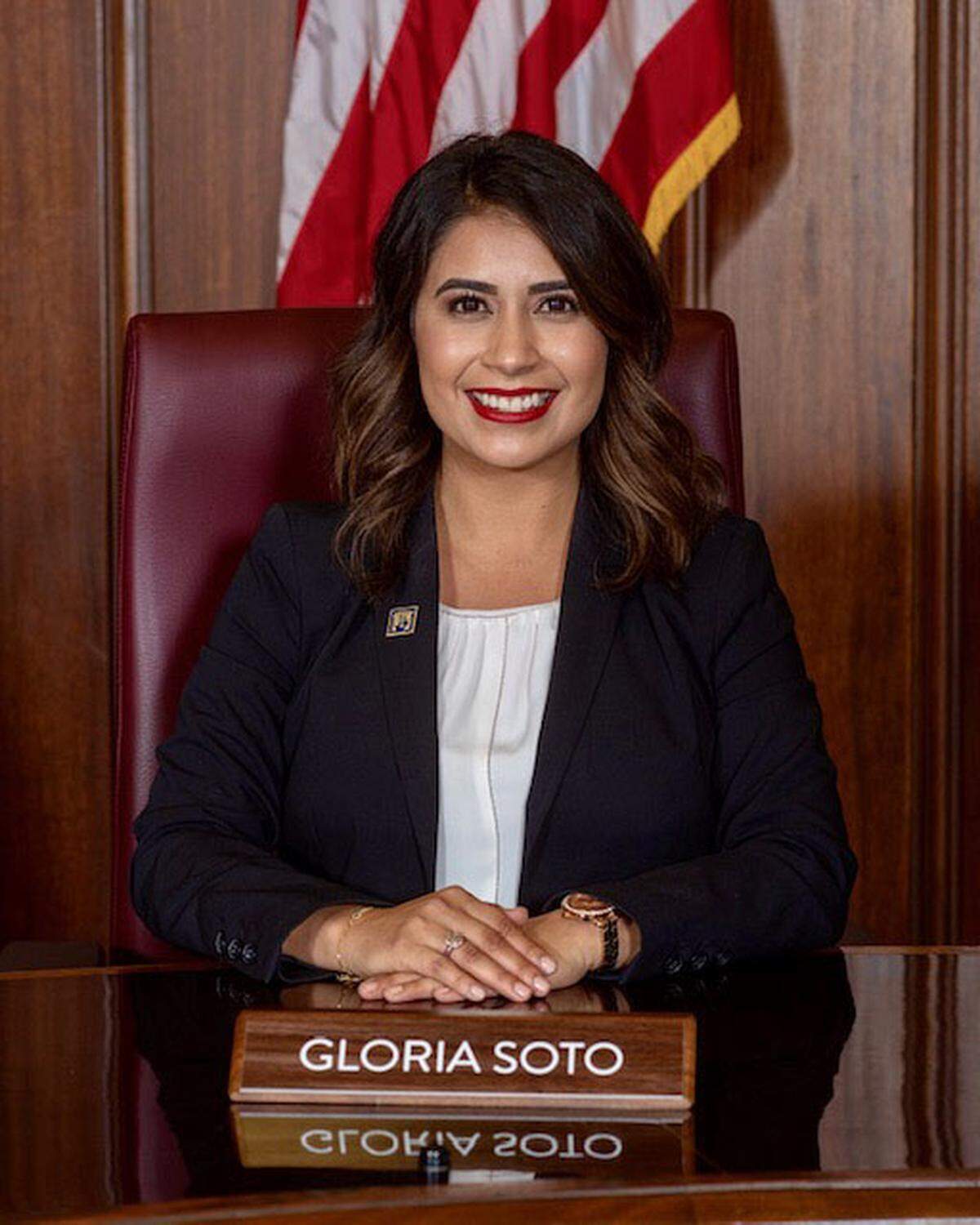
Gloria Soto, then 29, was elected as the District 3 councilwoman in Santa Maria — becoming the sixth woman to be elected to the council and the youngest woman ever elected to the governing body.
Soto, a regional development manager for Planned Parenthood California Central Coast, told The Tribune that the district model enabled her to maintain her full-time job and run for office.
She said she likely wouldn’t have been able to run for office at all under the previous at-large election model.
“Running a citywide election would’ve been quite challenging,” she said. “So the beauty of district elections is it allows working-class folks to run.”
Soto only needed to campaign across her district and reach nearly 25,000 potential constituents. In prior races, she would’ve had to campaign throughout the whole city and reach about 100,000 voters.
Soto said the smaller area meant she was able to do more person-to-person outreach, and she felt the voters she talked to were more engaged in the election process. She said she spoke with residents who’d never before seen their elected representative at their door.
“It allows the candidate to run a more effective campaign if they’re running in their own neighborhood,” Soto said.
Paso Robles changed its election system in 2019, and two of the four districts will be voting on candidates this year. The mayoral race remains an at-large system, meaning everyone in the city votes.
Paso Robles is the first city in the county to switch to district elections. City manager Tom Frutchy said in two years, the city will redraw district lines based off of the 2020 census.
This election, only three candidates — all of whom present as white — ran for the two open seats.
Arroyo Grande will be switching to district elections by Nov. 9, 2022, based on a conditional agreement made with Shenkman, according to Arroyo Grande city manager Whitney McDonald.
“In entering into that settlement agreement, one thing that the city is hoping for, is looking for, is to address diversity concerns and wanting to encourage additional folks to join the City Council,” McDonald said.
McDonald said the city will be conducting a demographic survey before drawing district lines.
Grover Beach will also switch to district elections by 2022, according to Grover Beach City Manager Matthew Bronson. Bronson said the city addressed the letter quickly and decided to make the switch to district elections in July of 2019. Their transition process will begin in 2021, according to Bronson
San Luis Obispo, however, is waiting to see what shakes out in a case involving Santa Monica before it makes a decision on how to best move forward, city attorney Christine Dietrick said.
The city of Santa Monica appealed from an adverse trial court ruling on the CVRA claims and the case has been accepted for review at the California Supreme Court, according to SantaMonica.gov. The Southern California city said it doesn’t believe the at-large system has discriminated against groups protected under the act or that the district system would create a minority-influenced council.
San Luis Obispo has until January 2021 to respond to the letter, Dietrick said. As of now, the city is looking for other options.
“We’ve done some analysis and do not believe that our city’s demographics support district elections,” Dietrick said.
Alternative voting systems
Latner, the Cal Poly professor who has studied electoral forms from governments around the world, agreed that district elections may not be as effective in Central Coast cities as other systems, like ranked-choice voting.
“Districts are to representation the way chemotherapy is to cancer. That is, it works, it’s been an effective treatment ... but it comes with consequences,” Latner told The Tribune via Zoom.
Latner said district elections are only useful when two conditions are met: There is already segregation within the city and the segregated community votes as one unified voter block.
“It’s been a very effective remedy, there’s no question about the efficacy of using district boundaries to create minority-majority districts or to create minority-influenced districts, but there are a couple of other conditions that have to be established,” Latner said.
Latner said in many Southern states in the United States, district elections have been helpful to remedy a lack of representation where segregated communities are clearly cut. However, in California, where minority groups are often more intermixed and don’t always have a unified vote, district elections don’t change the status quo as much.
He also said district elections often don’t take into consideration other forms of diversity, like sexual orientation.
“You might have an LGBT community that is not segregated geographically … but if you chop up a community into districts you’re likely to dilute that issue group if they’re not geographically segregated,” Latner said.
As an alternative, Latner said he believes cities should look into ranked-choice voting, which has been implemented in San Francisco and Oakland, as well as the state of Maine. He said this system tends to elect more people of color and women.
Ranked choice voting, Latner explained, is a voting system where voters would rank their candidates.
Candidates would need to meet a specific quota of votes to be elected, the quota is determined by the number of votes divided by seats on the council.
If a candidate received more than the quota, surplus votes would be transferred to voters’ second choices and candidates with the least number of first-place votes would be eliminated, with their votes also transferred, according to Latner. This process would continue until all seats are filled.
Latner said the ranked-choice voting system ensures that everyone’s vote counts and that multiple candidates aren’t decided by one block of voters, as they can be in an at-large elections.
“Cities are often laboratories for democracy, laboratories for reform in the United States,” Latner said. “Are you interested in just complying with the law or are you interested in actually improving the quality of representation?” I think that’s the most important questions cities have to ask themselves.”
Both Paso Robles and San Luis Obispo have expressed interest in ranked-choice voting.
Dietrick said San Luis Obispo has been pursuing multiple ways to address diversity, including the Diversity and Inclusion Task Force and the prospect of ranked-choice voting.
“We just think (ranked-choice voting) has a greater propensity to advance the diversity objective in our community given the demographics and the dispersal of our minority community members,” Dietrick said.
People of color lack voice in local politics
While a change in voting systems may result in more diversity, there also needs to be a change in who feels they have the opportunity to run for election office in San Luis Obispo County, some survey respondents said.
Gonzales, the Paso Robles resident, said she has often heard the phrase “If you don’t like what (elected officials) do, why don’t you run?” She said that idea often overlooks the challenges of running for public office that many marginalized groups face.
Buchanan of Arroyo Grande said he feels that only a select group of people even have time to run and participate in local elections.
“I also think part of the problem is highlighted by rephrasing the problem as: Why is there a lack of diversity in the population that has the time and money to be a candidate or elected official in these local bodies?” he wrote.
Soto said she can attest to the difficulties of navigating local politics.
There are systemic issues at play that prevent working-class residents — who have multiple jobs, busy families and may not speak English as their first language — from participating in local politics, Soto said.
These residents can’t always come to government meetings, and they don’t have time to do research and seek out information about issues and leaders.
“Oftentimes, families, especially in working-class communities, don’t have the time to become involved in local politics,” she said.
Running for office is an intimidating process with a learning curve, Soto said. Taking that on — especially when there are few community members who’ve successfully tackled the election process — is really tough unless there are people who pave the way, she said.
“We need to start by creating a pipeline,” Soto said. “People need to understand how local government works, how it affects their lives on a daily basis.”
To create truly diverse groups of elected representatives, communities need leaders who represent lots of different viewpoints, Soto said. Government bodies need a diversity of lived experiences, gender identities and education levels, among other perspectives, she said.
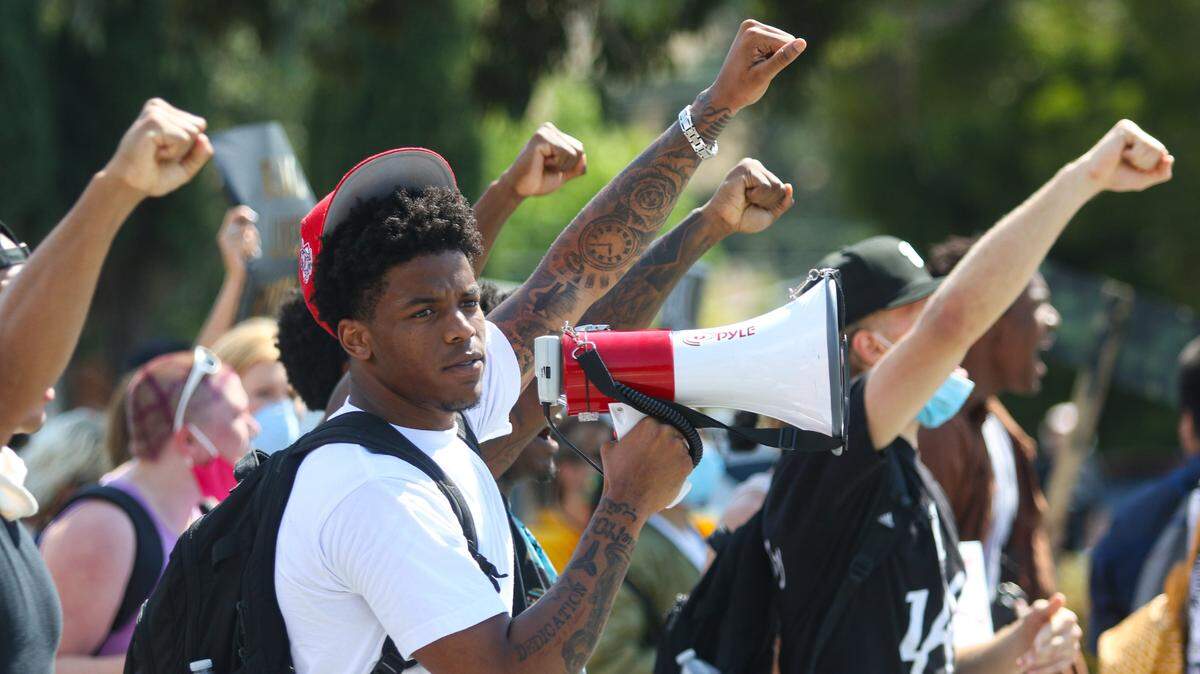
West, the San Luis Obispo resident, said she feels as though SLO County has had a history of discrediting the voices of people of color and that many people may feel discouraged to run.
“We kind of set the precedent as: SLO County is predominately white and shuts down voices of color,” West said, referring to the arrest of several Black local protesters. “It’s hard to then turn around and encourage people of color to run when we see how leaders of color in our community have been treated.”
West said to change this notion, she believes the community should begin to listen to leaders of color in non-government positions so that they may feel they can run for office in the future.
“Leaders of color in our community, they may not be filling government seats, but they’re still there,” West said.
BEHIND THE STORY
MOREHow diverse are SLO County elected officials?
The Tribune looked into how diverse San Luis Obispo County elected officials are after hearing from more than 200 county residents under the age of 40 who said diversity, social justice, racism or the Black Lives Matter movement are among their top concerns this election.
The Tribune spoke with young SLO County residents, a political science expert and currently elected officials to find ways to increase diversity and create proportional representation in local politics.
Click on the arrow in the upper right for more.
Why did we look into diversity among elected officials?
The Tribune looked into diversity among elected officials because young San Luis Obispo County voters said it is something they care about, especially after a summer filled with anti-racism protests.
San Luis Obispo County residents told The Tribune that they feel that the lack of diversity at the local official level can contribute to policies and an environment that negatively affects minority groups in the area.
Many also said they feel that the lack of diversity within elected bodies shows the systemic barriers in place that prevent many working class and marginalized communities from participating in local government.
Young voters said diversity affects housing, jobs and accessibility, and they want local officials to address the intersectional issues head on.
What went into our investigation?
The Tribune received grant funding from Renewing Democracy, an initiative of the Solutions Journalism Network to carry out an election project focused on centering the concerns of voters under the age of 40.
Over the summer, Tribune reporters Cassandra Garibay and Kaytlyn Leslie launched the project, called Oustpoken, by surveying San Luis Obispo County residents under the age of 40 on their chief election concerns.
More than 200 people responded to the survey, which was shared in social media groups and through The Tribune’s website. The responses cover virtually every corner of San Luis Obispo County, from Nipomo to San Miguel.
The goal of The Tribune’s Ouspoken project is to create a conversation between candidates and voters while presenting potential solutions to some of the top concerns identified through the survey.
Nearly 80% of survey respondents said racism and social justice were among their top concerns. The Tribune then reached out to and interviewed people why they feel diversity concerns need to be addressed by local officials.
The Tribune also reached out to all city council members, mayors, city council member candidates and mayoral candidates in San Luis Obispo County — 79 in total — asking for their age, racial identity and gender identity. Several attempts were made to contact elected officials and candidates over the course of a month.
After gathering the data, The Tribune found that city councils throughout the county aren’t very diverse. The Tribune then looked at what could be done both at a large and small scale. The Tribune looked into removing barriers to political participation, ranked choice voting systems and the district election voting system, which is beginning to happen locally.
Tribune reporter Lindsey Holden, who covers the North County, looked at where district elections have already been implemented. Sacramento Bee reporter Kim Bojórquez also contributed to this story. Bojórquez has been looking at diversity among elected officials across the state with a grant from the Solutions Journalism Network.
How to support stories like this.
Projects like these require extensive effort from reporters, editors and all involved. Please consider following this link to subscribe to The Tribune and support future investigations.
Outspoken: How candidates want to make SLO County more inclusive
The Tribune asked candidates about their thoughts on how to make San Luis Obispo County a more inclusive space. Here’s what they had to say.
This story was originally published October 28, 2020 at 10:52 AM.
CORRECTION: This article was updated to include that Grover Beach will also be switching to district elections. It was also updated to say that all the council members in Morro Bay, not Arroyo Grande, present as white.