How diverse are SLO County city councils? Not very. Here are 3 possible solutions
To read more about why diversity is important to young SLO County voters and get a deeper dive into potential ways to increase proportional representation, click here.
Addressing systemic racism and diversity are priorities for voters in San Luis Obispo County following a summer of Black Lives Matter protests, according to The Tribune’s Outspoken project, which focuses on what matters to voters under the age of 40 .
However, the city officials that represent the seven incorporated cities within San Luis Obispo County are far less diverse than the county’s overall population, which is majority white.
Three of the seven cities — Pismo Beach, Morro Bay and Atascadero — currently have city councils and mayors that present entirely as white. Only one city council member in the other four cities said that they identify as a person of color.
About 88% of the 34 city council members and mayors surveyed in San Luis Obispo County identified or presented as white. Of those who were identified as white, 21 people self-reported their racial identity.
Only two council members, or 6% of elected officials in the county, identified themselves as Asian, one identifies as Hispanic and one identifies as mixed race, Black and white.
The pool of city council and mayoral candidates vying to fill seats this election is not much more racially diverse.
At least 53% of the candidates in San Luis Obispo County identified as white. An additional 13 who did not respond to requests for their racial identity present as white, bringing the percentage up to 82%.
Three candidates reported they are mixed race; of those, two said they were Asian and white. Two additional candidates said they are Asian, and one said they are Black. Another two candidates identified as “other” or “unknown.”
Many young San Luis Obispo County voters said they feel that the lack of diversity among elected officials contributes to policies and an environment that harms minority groups in the area.
Here are three ways that cities in the county could potentially diversify their elected bodies moving forward.
1. District elections
Four cities — Arroyo Grande, Grover Beach, Paso Robles and San Luis Obispo — received legal threats in 2018 and 2019 claiming the cities’ at-large voting framework violates the California Voting Rights Act by diluting the ballots cast by Latino residents.
Paso Robles made the switch to district elections for the 2020 election cycle while Grover Beach and Arroyo Grande will be switching by 2022. San Luis Obispo is opting to try other ways to increase representation.
A district-based voting system divided a city into four quadrants or districts. Only those within a certain district can vote for the designated district seat.
The Sacramento Bee reported that about 130 of California’s roughly 450 cities have switched to by-district elections since 2002, according to the National Demographics Corporation.
In Santa Barbara County, Santa Maria held its first district City Council races two years ago, following a long battle to change the way the city elects its leaders.
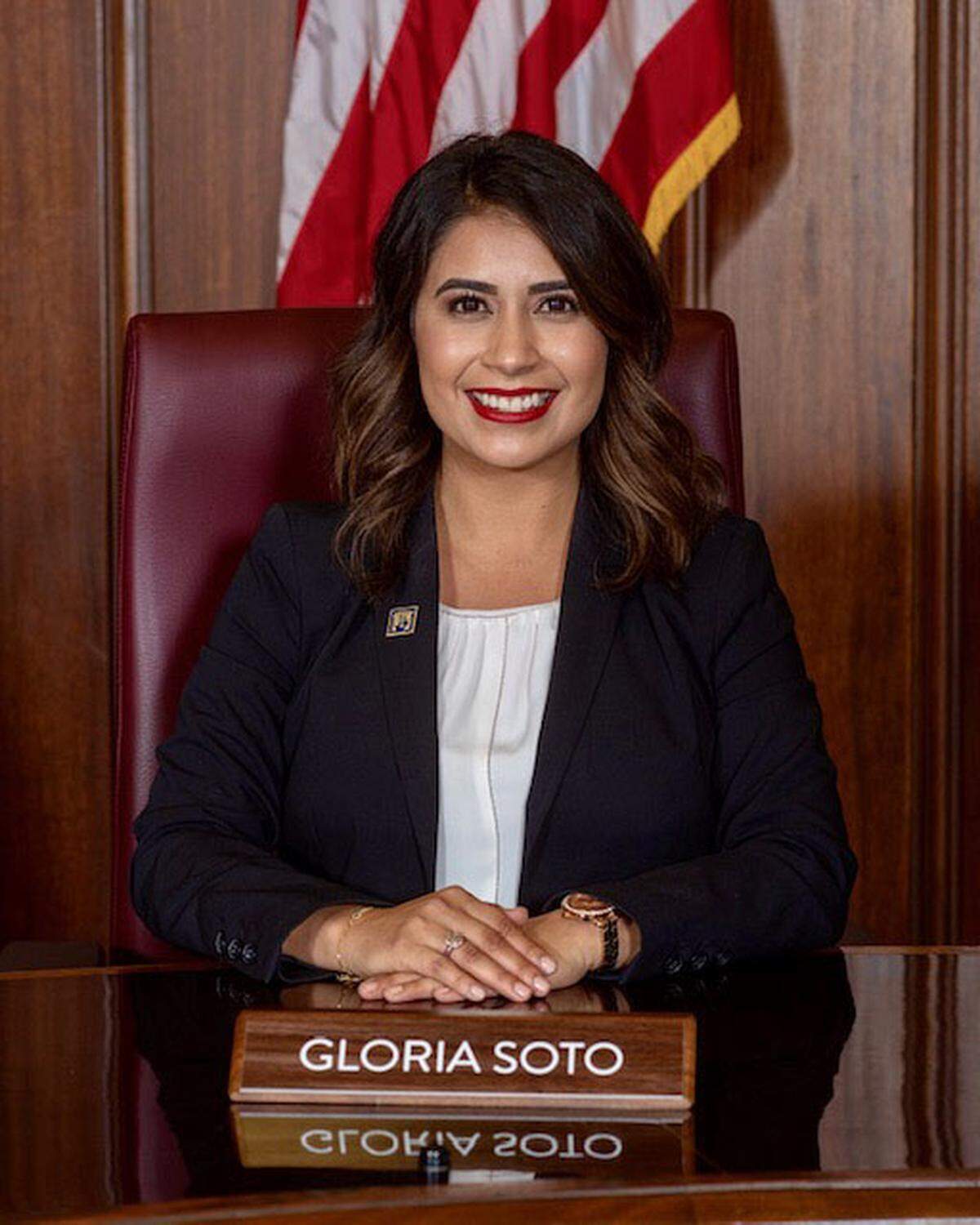
Gloria Soto, then 29, was elected as the District 3 councilwoman in Santa Maria — becoming the sixth woman and the youngest ever elected to the council.
She said she likely wouldn’t have been able to run for office at all under the previous at-large election model.
“Running a citywide election would’ve been quite challenging,” she said. “So the beauty of district elections is it allows working-class folks to run.”
Cal Poly political science professor Michael Latner said district elections are useful when two conditions are met: there is already segregation within the city and the segregated community votes as one unified voter block.
2. Ranked choice voting
Latner, who has studied electoral forms from governments around the world, said a ranked-choice voting system would likely bring more diverse results in California, where minority groups are often intermixed and don’t always have a unified vote.
Ranked choice voting, Latner explained, is a voting system where voters would rank their candidates. The system has been implemented in San Francisco and Oakland, as well as the state of Maine, and tends to elect more women and people of color.
Candidates would need to meet a specific quota of votes to be elected, the quota is determined by the number of votes divided by seats on the council.
If a candidate received more than the quota, surplus votes are transferred to voters’ second choices and candidates with the least amount of first-place votes are eliminated, with their votes also transferred, according to Latner. This process continues until all seats are filled.
Latner said the system ensures that everyone’s vote counts and that multiple candidates aren’t decided by one block of voters, like they can be in an at-large elections.
San Luis Obispo city attorney Christine Dietrick said San Luis Obispo is considering ranked-choice voting.
3. Making local government participation more accessible
Several San Luis Obispo County residents said they feel that inaccessibility to public meetings and lack of financial resources often blocked many people from running for local office, or even getting involved in local politics.
Many working class people have multiple jobs, busy families and may not speak English as their first language. Such residents don’t always have the time or resources to come to government meetings or seek out information about issues and leaders.
“Oftentimes families, especially in working class communities, don’t have the time to become involved in local politics,” said Soto, the Santa Maria councilwoman.
If public meetings were held at times that where more people could participate, and if people were provided resources to learn more about how to get involved in their local elected governments, more people may feel they have the opportunity to run.
This story was originally published October 28, 2020 at 11:17 AM.
CORRECTION: This article was updated to include that Grover Beach will also be switching to district elections. It was also updated to say that all the council members in Morro Bay, not Arroyo Grande, present as white.