
From housing to policing, where do four familiar SLO candidates stand on the issues?
Four candidates for San Luis Obispo City Council in the race’s packed field of eight come with experience of either serving the city in leadership positions or running as candidates in past council races.
In a competitive race against a crop of first-time candidates, Jan Marx, Andy Pease and James Papp each have served on the City Council or an advisory body committee.
Another candidate, Jeffery Specht, ran unsuccessfully for mayor in 2014 and council in 2016, and he regularly appears at City Council meetings as a frequent critic of the city’s fiscal stewardship and leadership among the council and staff.
Marx, who has served 12 years either as SLO’s mayor or a council member, knows the competitiveness of a council race, having lost twice before, including by 47 votes to Heidi Harmon for mayor in 2016.
Pease and Papp also have served past SLO government roles, on ad hoc committees that address specific issues including transportation and water sustainability. Pease was elected as a first-time councilmember in 2016.
Papp served five years on the Cultural Heritage Committee, three times as chair, among numerous other civic roles connected to his background as a historian. Papp was ousted this year from the advisory body over a dispute about his approach to the role, a moment he considers a springboard for his council campaign.
Also competing for spots on the council are four newcomers: Robin Wolf, Abrianna Torres, Kelly Evans and Erik Long. The Tribune is doing two stories on where the candidates stand on the issues, one looking at the better-known candidates and another at the new faces.

Jan Marx
Citing her experience as the reason she decided to run this year, Marx said she’s looking to maintain institutional knowledge in local government, noting the departure of Councilman Aaron Gomez, who decided not to pursue a second term, thus vacating a seat, and the death of Adam Hill, a county supervisor, with whom she has served on many local committees.
Marx, 75, an advocate for preservation of open spaces, homeless services and deed-restricted affordable housing, said at a recent SLO Chamber of Commerce forum that she believes she has the “experience to pull us out of this crisis.”
Marx vows to update the city’s Economic Development Strategic Plan, establishing frameworks for hiring local workers, and to upgrade “high-speed broadband and microgrids to make us an even more powerful entrepreneurial and high-tech center,” she said on her website.
“Economic recovery is the immediate most important issue, during this pandemic,” Marx told Tribune. “Residents have lost jobs, are in danger of being evicted, and if they still have jobs, must teach their children at home. All of the other very important issues must take a back seat until basic financial security of city residents is assured.”
Marx supports SLO’s proposed 1-cent Measure G sales tax increase to help provide needed city services. In her past council service, Marx said she worked to secure grants to help pay for the upgrade to the Los Osos Valley Road overpass, where gridlock frequently stalled the flow of traffic.
Marx believes countering climate change is vital to the city’s economy as well and an issue the current council has aggressively confronted through a 2035 carbon neutrality target.
Her platform also includes: developing a police oversight commission, fighting for inclusionary housing (deed-restricted) initiatives, and supporting alternative transportation.
“SLO city should never look like ‘anyplace USA,’ even at build-out in 10 years,” Marx said in a written response to Tribune questions. “We should continue to develop within our urban reserve line, expand our open space greenbelt and never sprawl out into neighboring farmland.”
.jpg "papp headshot square - James Papp (1).jpg")
James Papp
Papp is a fierce defender of historic preservation in San Luis Obispo, telling constituents he’d be a council member willing to ask “uncomfortable questions” and probe the city’s staff on the best approaches to city planning, among other topics.
He believes the city can boost its draw as a tourism destination by maintaining its historical integrity.
Papp, 56, lost his job on the Cultural Heritage Committee due to a dispute with the council over his response to an application to delist a historic building at 782 and 790 Higuera Street. Papp believes the owner may have interest in redeveloping the building in the heart of downtown and called the analysis “bizarre,” “nuts,” “dangerous,” and “shocking.”
He is currently part of a lawsuit against the city over its review process regarding a 50-foot-tall mixed-use project near historic homes at 545 Higuera and 486 Marsh streets.
While council members have referred to his style as “rude and disrespectful,” Papp said he stands ready to speak out on development applications that violate community design guidelines.
“It seems developers only want luxury housing, because that’s what generates the most revenue for them,” Papp previously told The Tribune.
“We need to wake up and realize that our beauty is not just natural hills but one of the finest collections of eclectic architecture in the nation, which can be as much a magnet for well-heeled cultural tourists as mid-century modern is for Palm Springs,” Papp said. “Tear it down, and they won’t come.”
Papp, who acknowledges he has walked on the highway to protest for racial justice, said that SLOPD’s use of teargas on June 1 is “what happens when you give a police department too much military hardware.”
He said that could be defended as a momentary lapse, but the city’s decision to arrest Tianna Arata on July 21, for which she now faces 13 misdemeanor criminal charges, was clearly the wrong decision, transforming her into a national celebrity and making SLO the “kind of place where thousands of white protesters are allowed to break the law while one young black woman is threatened with years of jail time.”
Additionally, Papp opposes the city’s 1-cent sales tax proposal, calling it a “regressive tax” that will hit poor and unemployed people the hardest; he said the city should have set the tone early with a mask ordinance to help prevent the spread of COVID-19, adding that it made people “afraid to re-enter the economy;” and he supports stopping rent evictions and working toward housing “the community needs, not what developers want.”
“That will probably be small — not sprawl or tall,” he said, and include subdividing existing buildings to transform vacant commercial spaces into places where people can live.
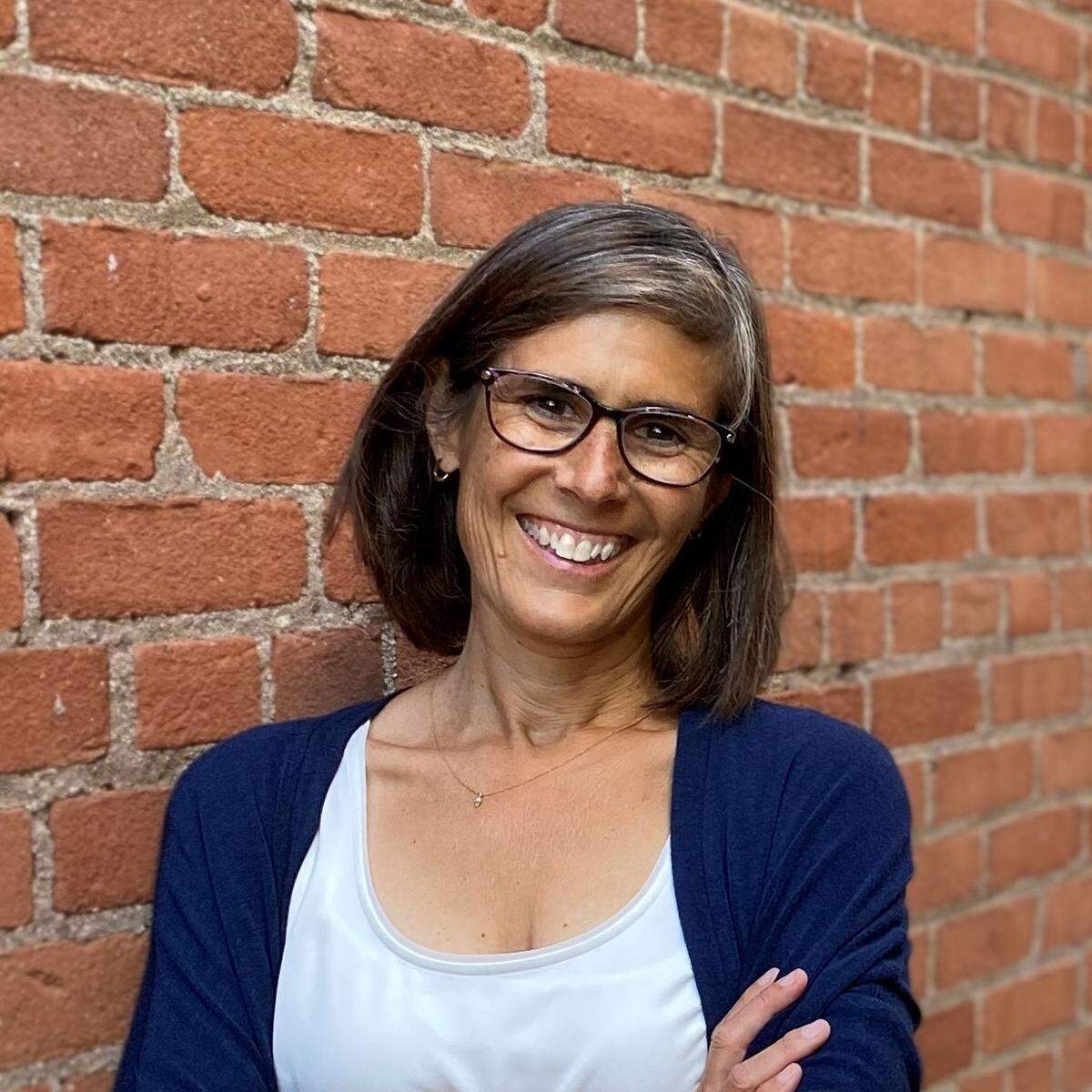
Andy Pease
Seeking a second term, Pease cites economic recovery as the council’s top priority moving forward, saying a “healthy economy” is the flywheel of a successful city.
Her other agenda initiatives include focusing on environmental and social justice and economic disparity, she said.
She cites the council’s decision to tighten the SLO budget by almost $9 million and plan for fiscal health as a step toward long-term fiscal health.
“We have funded and will continue to fund an economic development director focused on serving local business, and our tourism program is working to bring back visitors safely and responsibly when the time is right,” Pease said in a Tribune questionnaire. “Our immediate deployment of Open SLO provides critical outdoor space for restaurants and retail.”
Pease, 54, a green building architect, supports the proposed 1-cent sales tax hike measure and working toward diversity and inclusion through the newly formed task force and other community-based efforts.
She also believes that a few locations in town are suitable for 75-foot-tall buildings but that most should be capped at 50 feet. She said she will work to “update our inclusionary housing ordinance, explore flexible density and support housing within the 1% growth cap of the General Plan.”
“We do have a historic downtown and need to update our historic resources inventory,” Pease said.
She cites her work as part of a council that supports green economy initiatives such as carbon-free electricity, as well as a 2035 carbon neutrality target, and climate action through open space, urban forestry, sustainable transportation and energy efficiency.
Pease said the city needs to create an environment where “we can do better moving forward so people don’t feel they have to walk on the freeway to be heard.”
“I’ve asked SLOPD questions and expressed concerns about the use of tear gas and the arrest of Tianna Arata,” Pease said. “I can’t judge what’s happened, but I can talk about rebuilding trust and community. We’re more on the same page than what we see on social media. We need more productive conversations about values.”

Jeffery Specht
Specht, a frequent critic of the council, wants the city manager fired and the mayor ousted.
Specht has lobbied for fiscal responsibility and criticized the city police’s role in a dog-shooting incident and the arrests of Cheyne Orndoff and Vanessa Bedroni, who he said were wrongfully charged after police mistakenly confused Ordnoff with the man who took SLO Police Chief Deanna Cantrell’s gun from a El Pollo Loco restroom in July 2019.
Orndoff’s attorney Pete Depew recently filed a 104-page motion detailing alleged concealment of communications and criticism by the Sheriff’s Office of SLOPD investigation methods.
City officials say the search was justified, and the case is set for a preliminary hearing on Sept. 28 in county Superior Court.
Specht also cited the incident in 2016 involving a SLO city building inspector who punched a woman in the face, knocking her out. The man, Christopher Olcott, no longer works for the city.
“You have city inspectors beating up women in bars and officers conducting warrantless search and seizures,” Specht said. “There are people in parks using intravenous drugs. This is poor management to say the least.”
Specht said the city has a “reckless interpretation of the law.”
Specht has a firm “no tax” bent and believes the city misuses taxpayer money, including for diversity and inclusion, adding the city “is not going to do anything with (a 1-cent sales tax increase) except build more bicycle trails and spend more money on activists.”
He said the city should do more to help the homeless as well.
Coming tomorrow: Race, housing and the economy are the key issues for a group of four first-time SLO City Council candidates.
This story was originally published September 22, 2020 at 5:00 AM.
CORRECTION: The story was updated to correct the number of years Jan Marx has served in public office.
%20Cropped.jpg)