
Does 50-foot development belong next to SLO historic homes? Here’s what council decided
San Luis Obispo historians and community members on Tuesday urged the City Council to block a 50-foot-tall mixed-use project near historic homes that they say would alter the character of downtown.
But the San Luis Obispo City Council — following the guidelines of city and staff housing laws — voted 3-1 to deny an appeal of the approved development plan at two properties at 545 Higuera St. and 486 Marsh St. near San Luis Fish & BBQ and the Pollard House, Norcross House and Jack House and Gardens.
The planned project divides the block sidewalk to sidewalk between Marsh and Higuera streets.
Mayor Heidi Harmon was the sole “no” vote, and Councilmember Andy Pease recused herself because of recent collaboration with the project architect, Ten Over Studio.
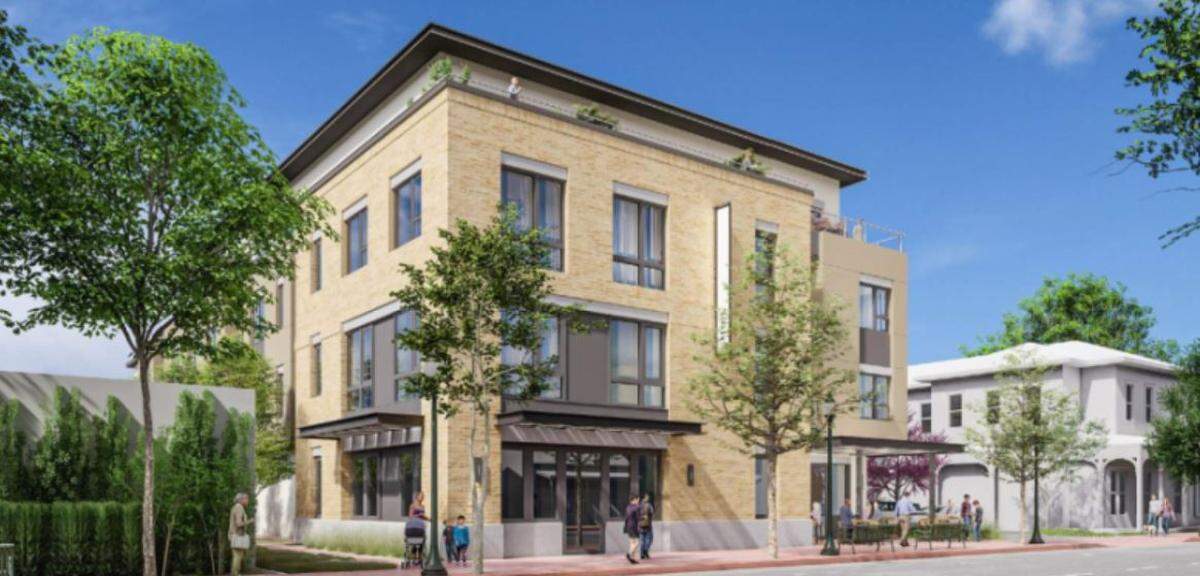
Developer Taylor Judkins received approval from the city’s Planning Commission in February to move forward with a four-story development consisting of two buildings, each 50 feet in height, connected by an unenclosed bridge on the fourth floor.
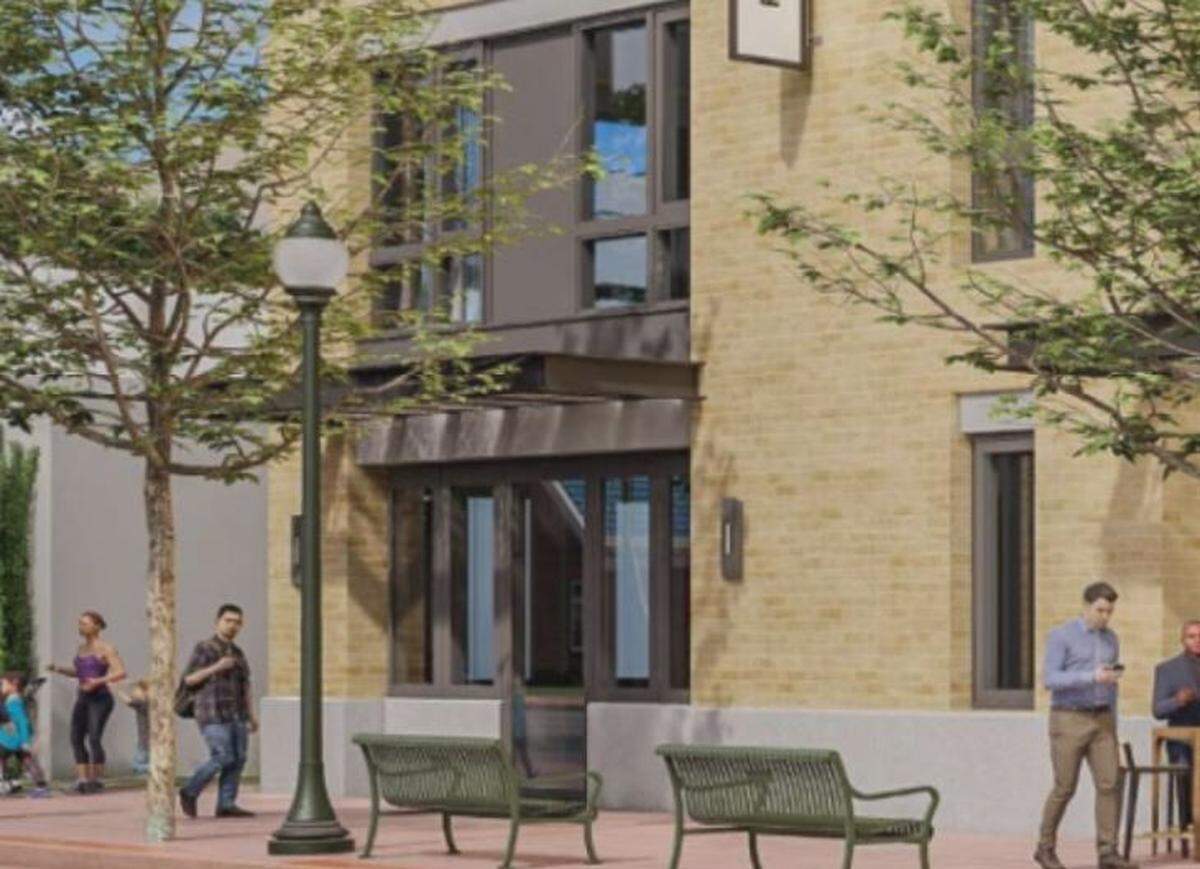
The development envisions 5,241 square feet of ground-floor retail space, eight hotel suites and 39 residential units (apartments), as well as parking that includes a three-level, mechanical parking lift serving 48 spaces and a fourth-floor roof deck. Associated tree removals are also planned.
Judkins is also behind the incoming San Luis Obispo Public Market project near Tank Farm Road and Higuera Street and currently involved in multiple development-related lawsuits.
Critics: Downtown SLO development doesn’t fit
On Tuesday, representatives of the groups San Luis Architectural Protection (SLAP) and Save Our Downtown (SOD) argued that the development violates the city’s design guideline laws that encourage San Luis Obispo to remain architecturally distinctive — preventing it from becoming “anywhere USA,” with “consideration of the site context in terms of the best nearby examples of massing, scale, and land uses when the site is located in a notable area of the city.”
They argued the project should have to go through the California Environmental Quality Act (CEQA) review process because of its impact on the city’s historic resources, which was exempted by city staff.
“The city has violated its own Community Design Guidelines where it states ‘infill residential development should be compatible in scale, siting, detailing and overall character with adjacent buildings,’ ” San Luis Obispo resident Jean Martin, who lives in the historic Pollard House adjacent to the site, wrote in a letter to the city. “It is nothing like any of the historic buildings in this entire block.”
Martin told The Tribune that she believes the proposed mixed-use building appears too much like a block without building articulation, which would be consistent with city rules and surrounding buildings.
San Luis Obispo architectural historian James Papp argued that the project, which he said impacts historic resources and lacks proper city planning oversight such as a lack of cultural heritage review, will produce housing that’s not affordable for average citizens and fail to advance city housing goals effectively.
“We’re sick and tired of listening to the city bang on about housing when what you mean is ultra-luxury housing with a penthouse skybridge and twelve-foot ceilings to solve the great California pied-à-terre crisis,” Papp said.
In a letter to the city, Papp laid out an extensive argument against the project planning —concluding that, in 1969, then-Mayor Ken Schwartz envisioned San Luis Obispo beautifying into a tourist mecca. Instead, Papp wrote, the city is changing course.
“A half century later when Keanu Reeves and Winona Ryder Ubered out of SLO in their 2018 movie (‘Destination Wedding’), Keanu asks ‘What the f--- happened to urban planning in this town? At some point, did they just give up?’” Papp wrote. “At some point we did. But is that what we want people to remember SLO for?”
SLO Council members, staff cite building policy
San Luis Obispo City Council members fired back at some of the comments about the project destroying the city’s look and feel, saying that a variety of architecture is common in some of America’s most prominent cities, including Los Angeles.
“We are unique and SLO is funky,” Councilmember Carlyn Christianson said. “A big building next to cottage house built in the 1930s is something you see in a lot of places. L.A. is like that.”
Christianson said a mix of buildings makes San Luis Obispo special, calling Santa Barbara’s style is attractive but “boring.”
Councilmember Erica Stewart said she has taken regular walks through San Luis Obispo since the coronavirus pandemic and observed many different architectural styles throughout the city, including taller next to smaller buildings.
“I’ve seen a lot of styles in our community,” Stewart said. “We don’t have a specific look.”
Stewart said she went over the city’s housing design laws with planning staff and felt comfortable the project aligned with the policies.
The project site, for example, has no historic home nor is it in a designated historic neighborhood, said Michael Codron, the city’s community development director.
“I have to look at what’s the policy and how do I apply it,” said Stewart, in agreeing with the planning department’s direction to deny the appeal.
A staff report argued the project is consistent with the city’s General Plan and Downtown Concept Plan and that CEQA review wasn’t necessary because “staff has determined through the evaluation process of this project that its construction will not impact or change the significance of any historical resource.”
Mayor Heidi Harmon votes against project
San Luis Obispo’s mayor said Tuesday she was voting against the development in sympathy with Martin, who will have a towering building overlooking her 1876 single-story ranch house once the project goes in.
The home was built by Robert Pollard, who was elected county coroner in 1877, and the home is one the three oldest surviving wooden structures on the city’s west end.
Harmon, acknowledging her vote was a heart-felt one over a policy-driven decision. She cited Martin’s roots as well, noting her mother was the first female banker in the city of San Luis Obispo.
“I just can’t do it,” Harmon said. “I normally don’t vote this way. But I just can’t support it knowing Jean Martin will be in that little house with a towering building right next to her. I don’t normally vote in this way. It feels wrong to me.”
%20Cropped.jpg)