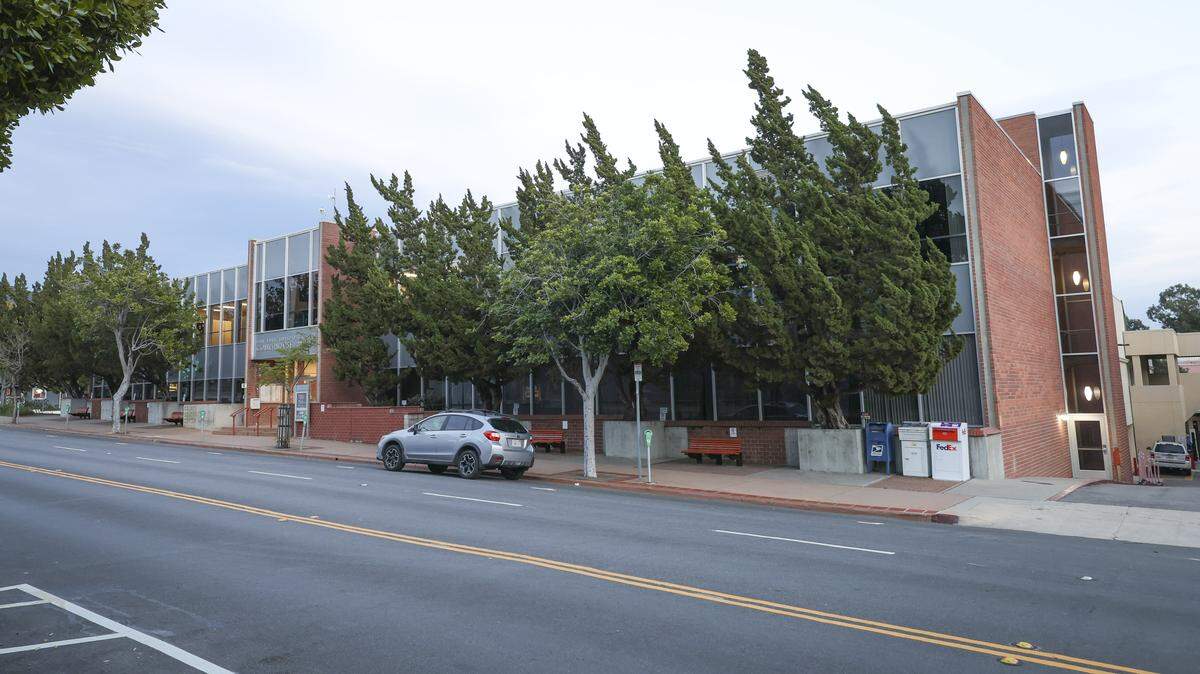
SLO County courthouse annex is monument to mid-century modern. See construction
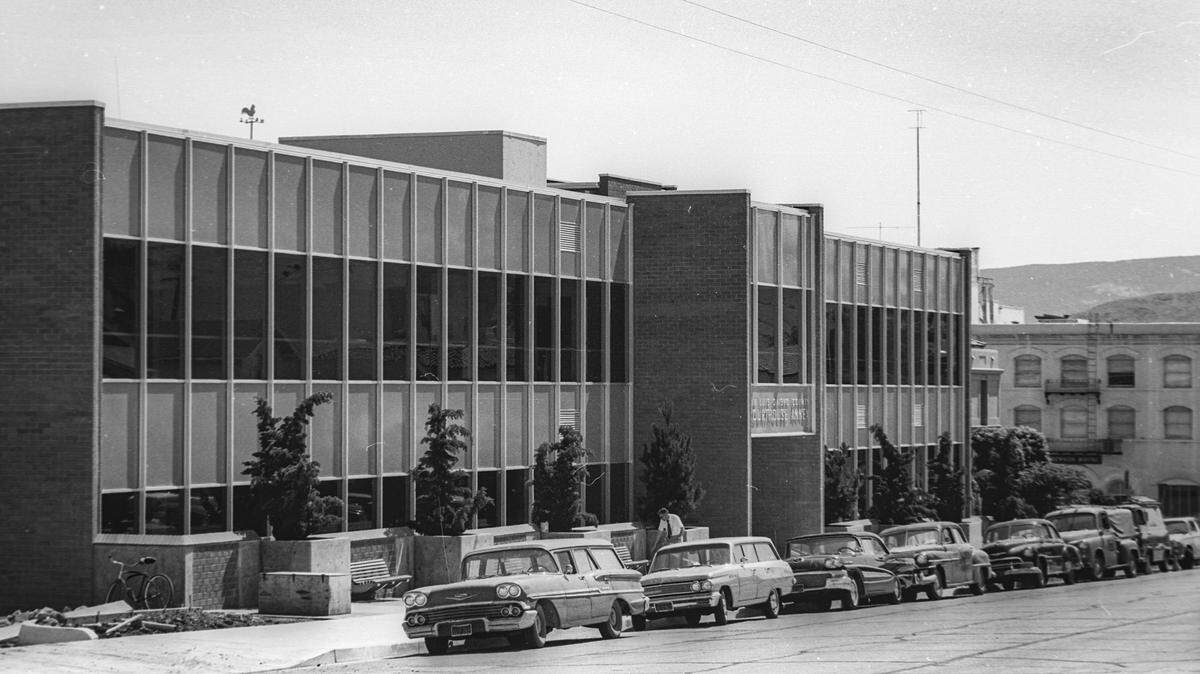
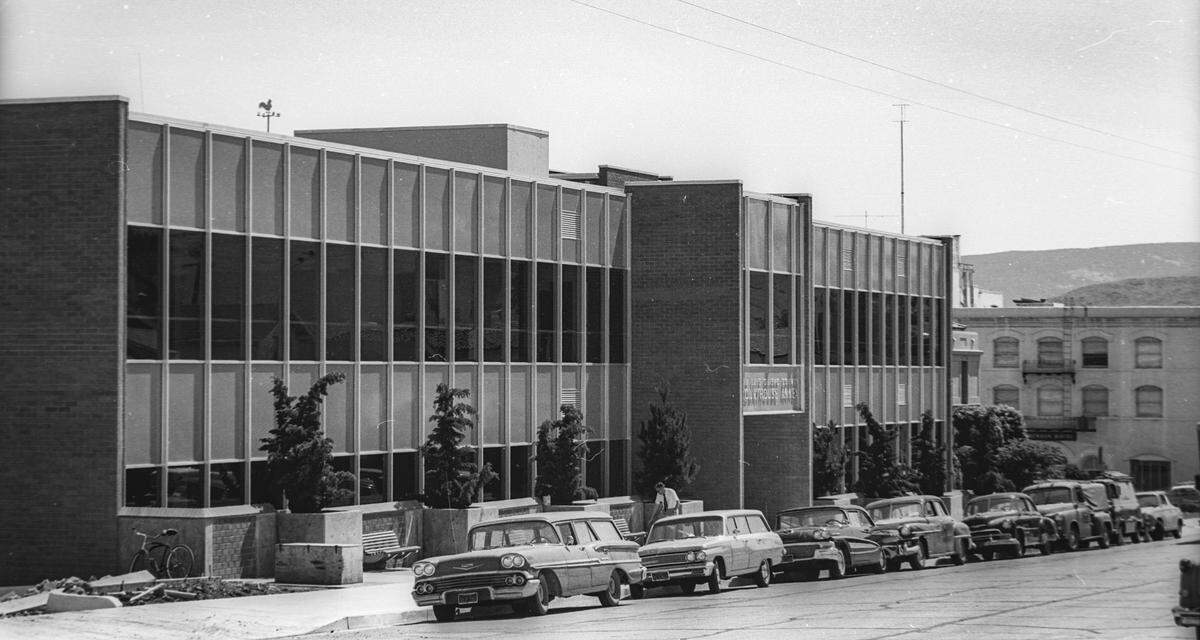
Of the three existing county-built courthouses in San Luis Obispo, my favorite is the three-story, 1964 mid-century modern style annex.
The current 1980s stucco courthouse has some interesting points. It has a soaring interior. Plus, they put a skylight in the new building so that the offices in the annex that once had an unobstructed view could at least have daylight.
But the newest building is unornamented stucco and the interior has a lot of unproductive space.
The older Civic Moderne county courthouse fronting Osos Street finished in 1941. It is a mishmash of mission-style roof tiles over slabs of painted concrete.
The building has a sense of gravitas, but it can’t decide if it wants to be art deco, mission or brutalist slab.
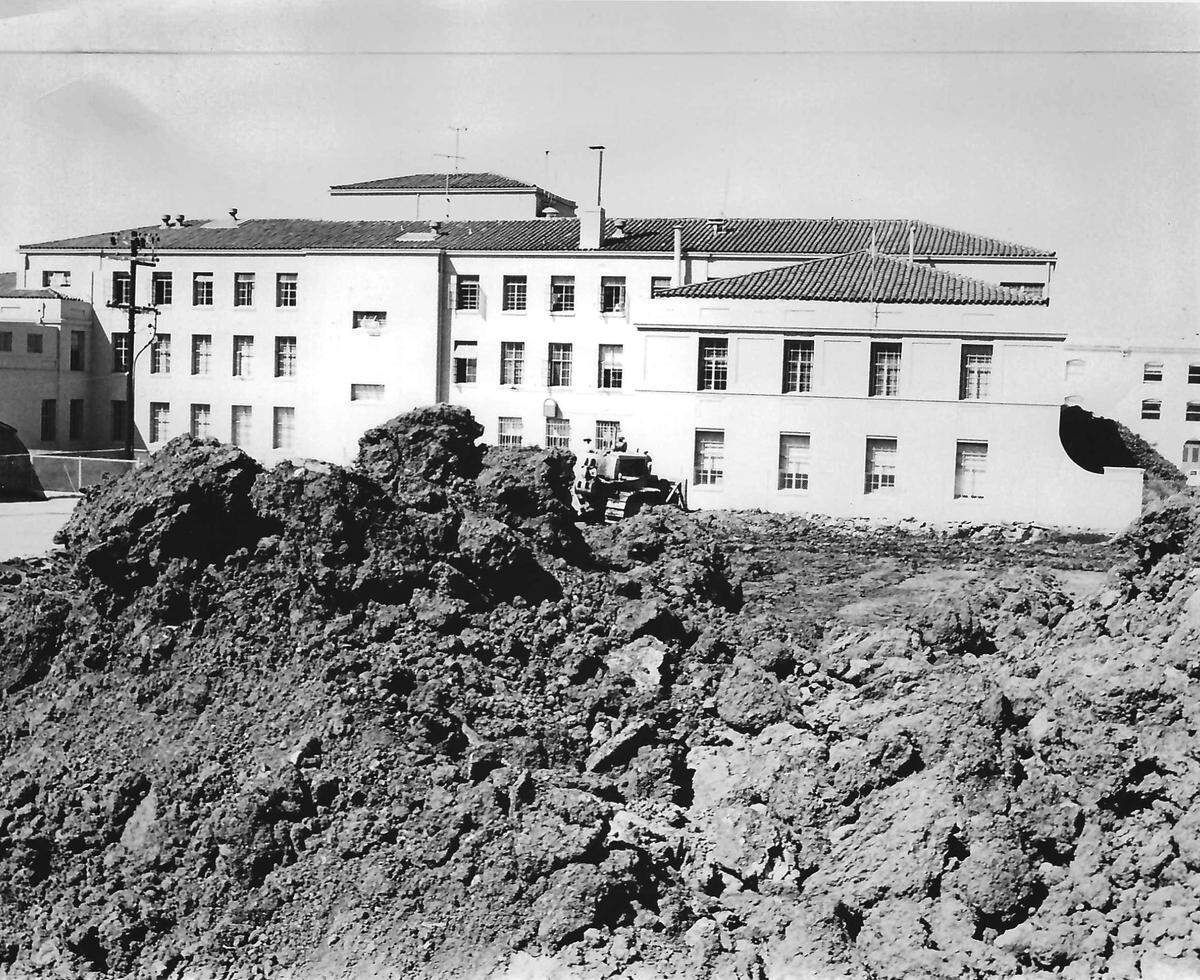
The later birth of the aluminum, brick and glass annex was not without controversy.
Then-District Attorney James Powell objected to contracts being signed for the construction, but the county Board of Supervisors decided to move ahead.
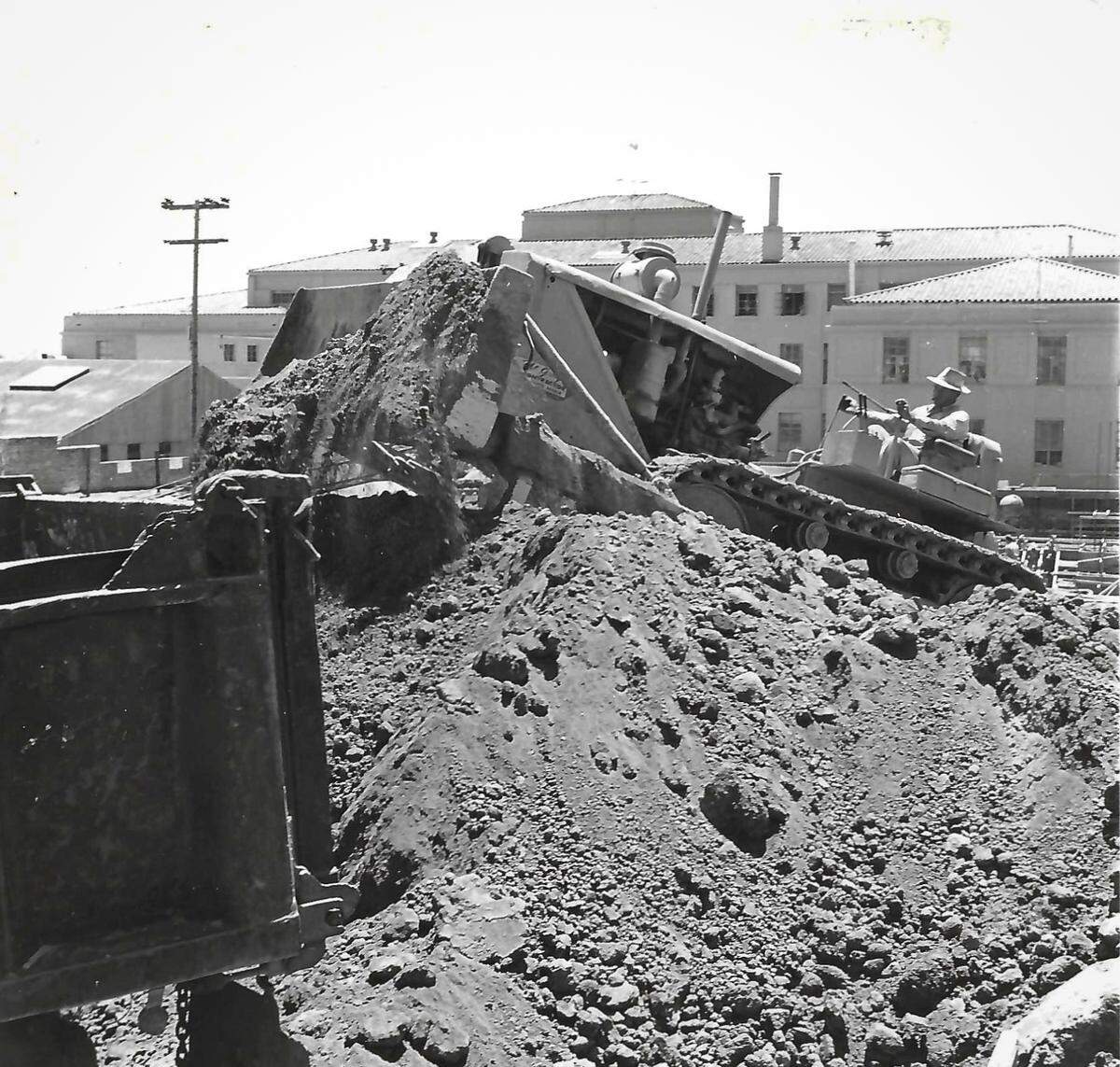
Construction progressed quickly, less than two years from bulldozing to move-in ready. The debate over where and how much to build took longer than the construction.
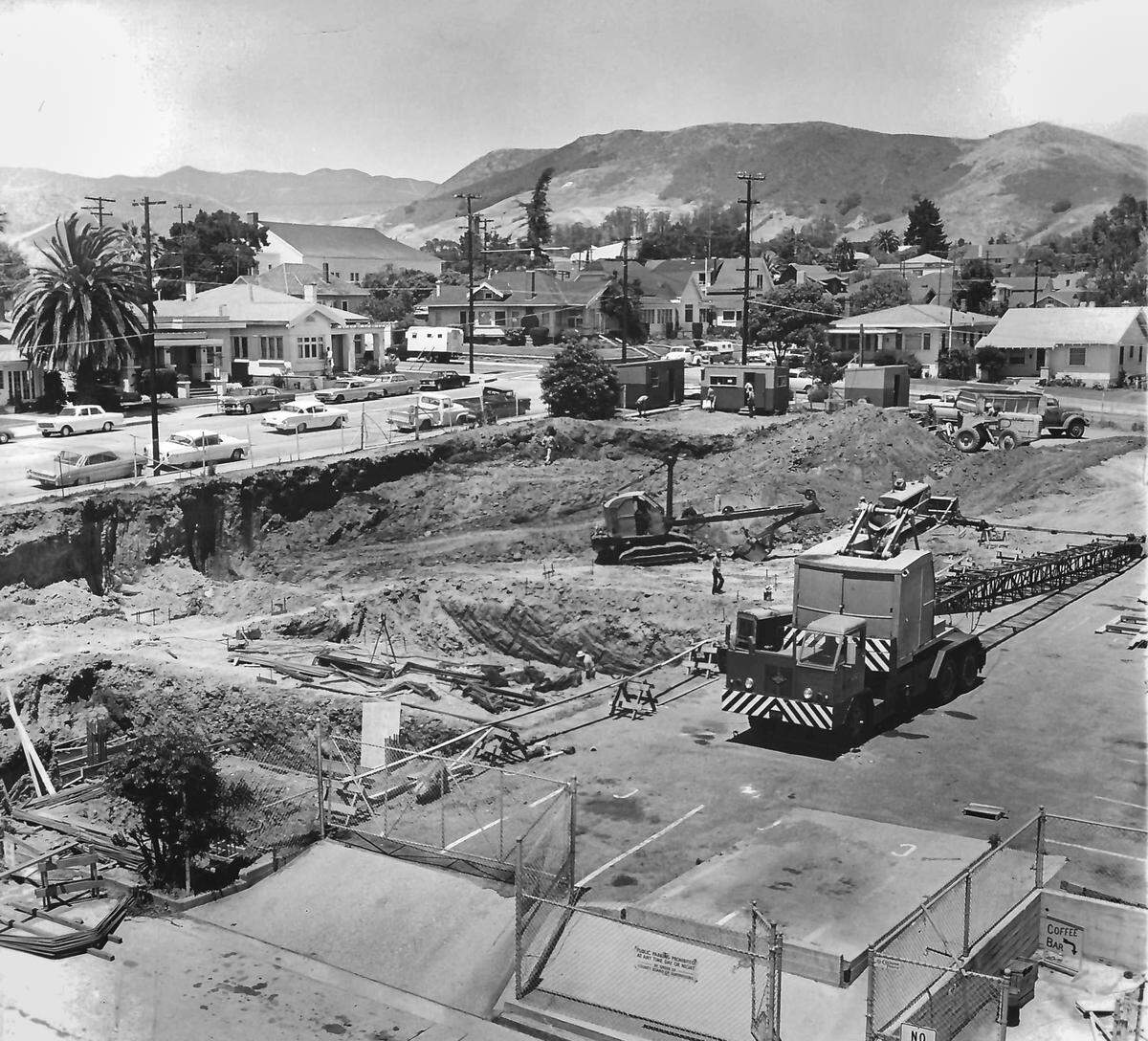
The annex designed by local architect John Badgley was a confident statement of the times: sleek glass, metal and the bricks were even made from clay from the site.
The building was a statement that times were changing, a more professional atmosphere was created.
The architect didn’t like the way cigarette and cigar smoke hung in the air of the San Luis Obispo County Board of Supervisors, so the building had a powerful air conditioning system.
The annex would provide office space for the supervisors for the first time.
They showed their gratitude by quibbling over a bill from the architect over work change orders. He billed $1,900, but they only wanted to pay $1,000.
The building was a marvel of efficiency, refrigerators for staff lunches and design innovations held costs for the three-story building at just above $1 million.
And even today, 61 years later, it looks modern.
An over-ambitious idea was that the building’s foundation was reinforced to allow for two additional stories to be built later on top. An Aug. 22, 1975, article said that was no longer possible.
Before the county could act on the vision, building codes changed and the vertical expansion was abandoned, opening the door for the sprawling current courthouse two decades later.
This July 18, 1964, article by Ken Morris reveals some of the secrets behind building the Annex.
It’s new, it sparkles — it has an ‘extra’
It has taken hundreds of feet of aluminum extrusions, glass plating, copper piping, fluorescent tubing, terrazzo tiling and finally tons of local brick, brains and brawn.
That’s the formula of San Luis Obispo County’s brightest, quietest and most efficient monument to local government as delineated by its designer, architect John Badgley.
The 50,000 square foot structure was completed at 5 p.m. Friday — six years since the seed was planted.
And for those who are not impressed by the sparkle of the county’s $1,092,668 courthouse annex, consider this: It’s all paid for.
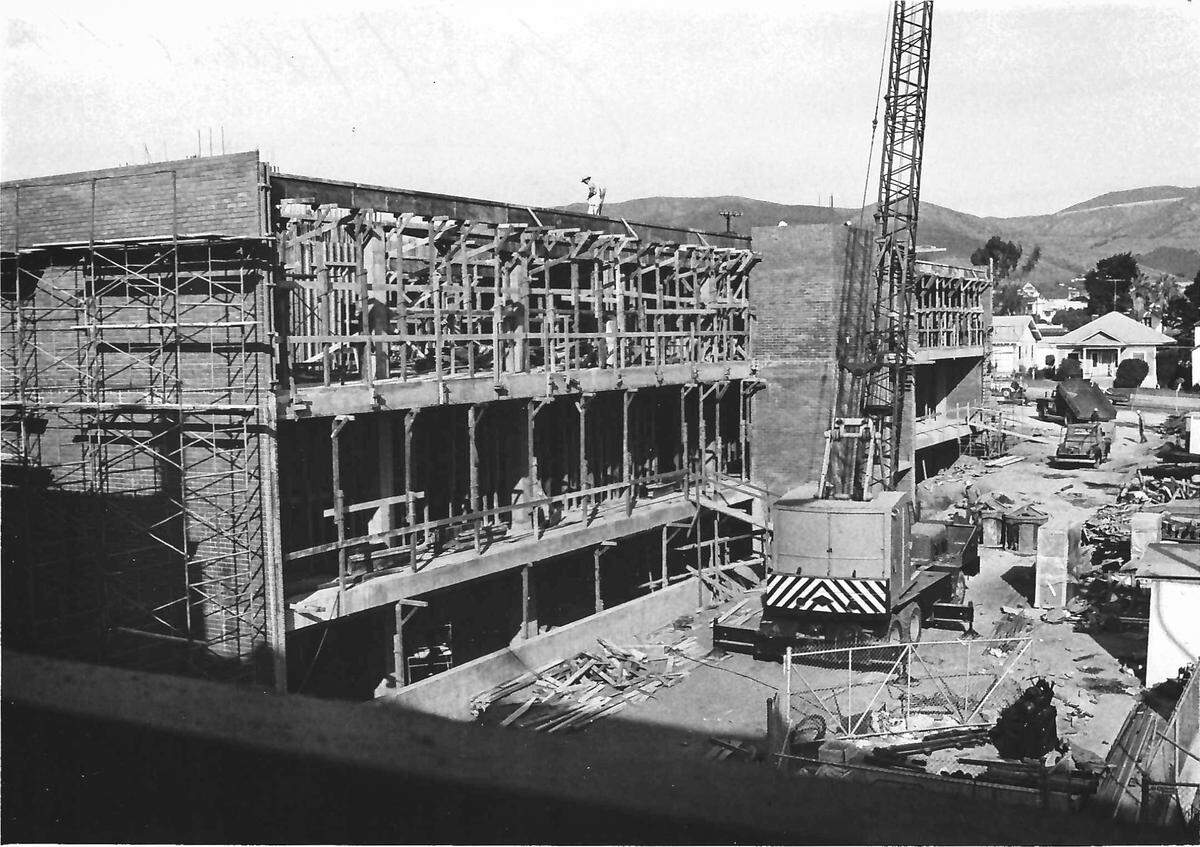
County officials began planning the annex in 1958 and funds were accumulated in the capital outlay fund. Construction began May 13, 1963. Although the building is complete, dedication ceremonies will probably not be held until moving “day” is over.
Moving day will take approximately three months.
Earlier this year supervisors suggested the building be dedicated to the people who paid for it — the taxpayer — and delete the usual list of public officials that is found on other public buildings.
But back to Badgley for the statistics:
The reinforced grouted brick walls are made of local brick, partly with clay taken from the annex site. All interior walls are two inches thick.
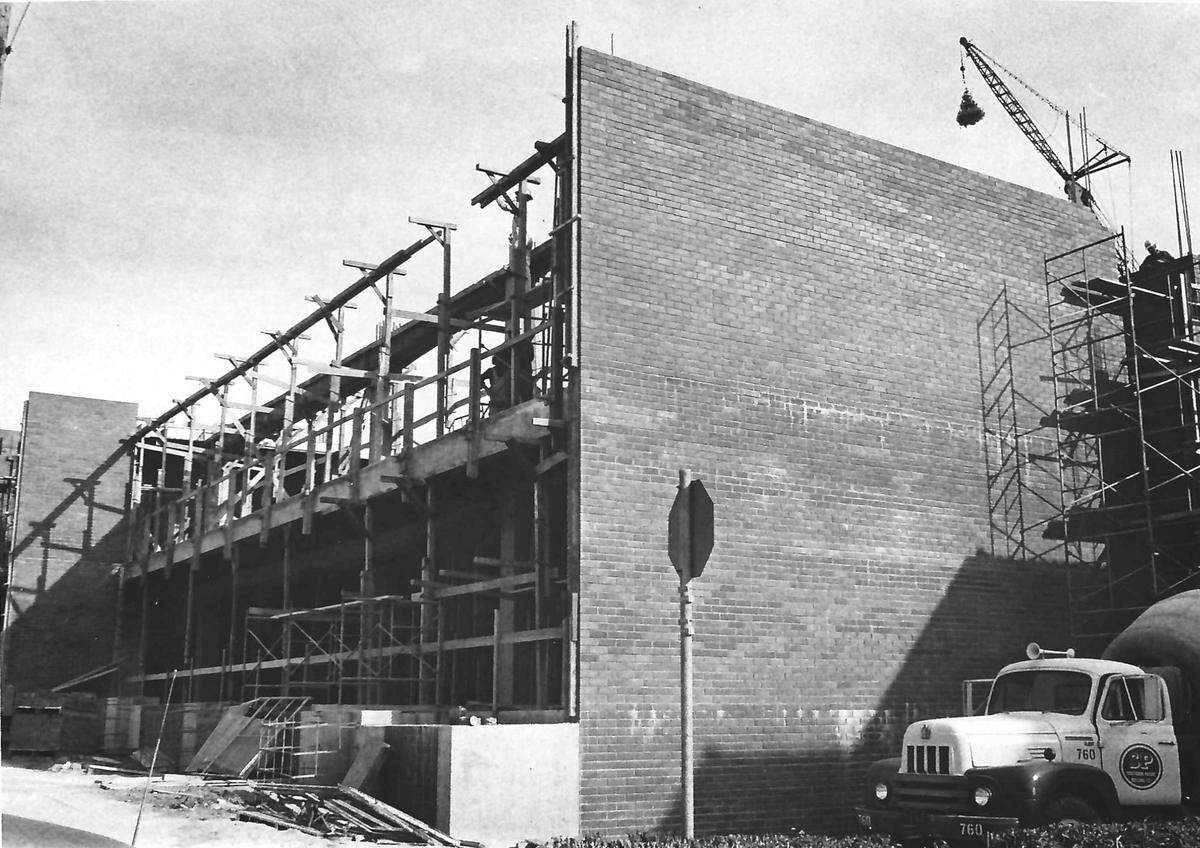
The building foundation and central utility core were constructed to accommodate another two floors when additional space is needed. One public elevator and a shaft for a second one is included in the building.
The 110-ton gas fired air conditioning unit is capable of not only heating and cooling the three-story building but also will keep the 98-seat supervisors’ chambers and court rooms free of smoke.
Badgley said the frequent pall of smoke in the present board chambers was one thing he sought to eliminate.
The air conditioning absorption will provide low velocity, low temperature differential and low pressure air throughout the building, he added. In addition, a gas fired auxiliary 40 kw power plant will kick in during a power failure. A pump also maintains a constant water pressure in the building.
Contractor was Maino Construction Co.
Mechanical engineer for the project was James A. Hayes, former Cal Poly engineering instructor, and electrical engineer was Edward Lowe of Bakersfield. Structural engineer was Eric Elsesser of San Francisco.
Badgley’s associate in the project was George Ikenoyama.