Training shows early use of helicopters to fight wildfires in SLO County
Helicopters are taken for granted today as a frontline firefighting tool.
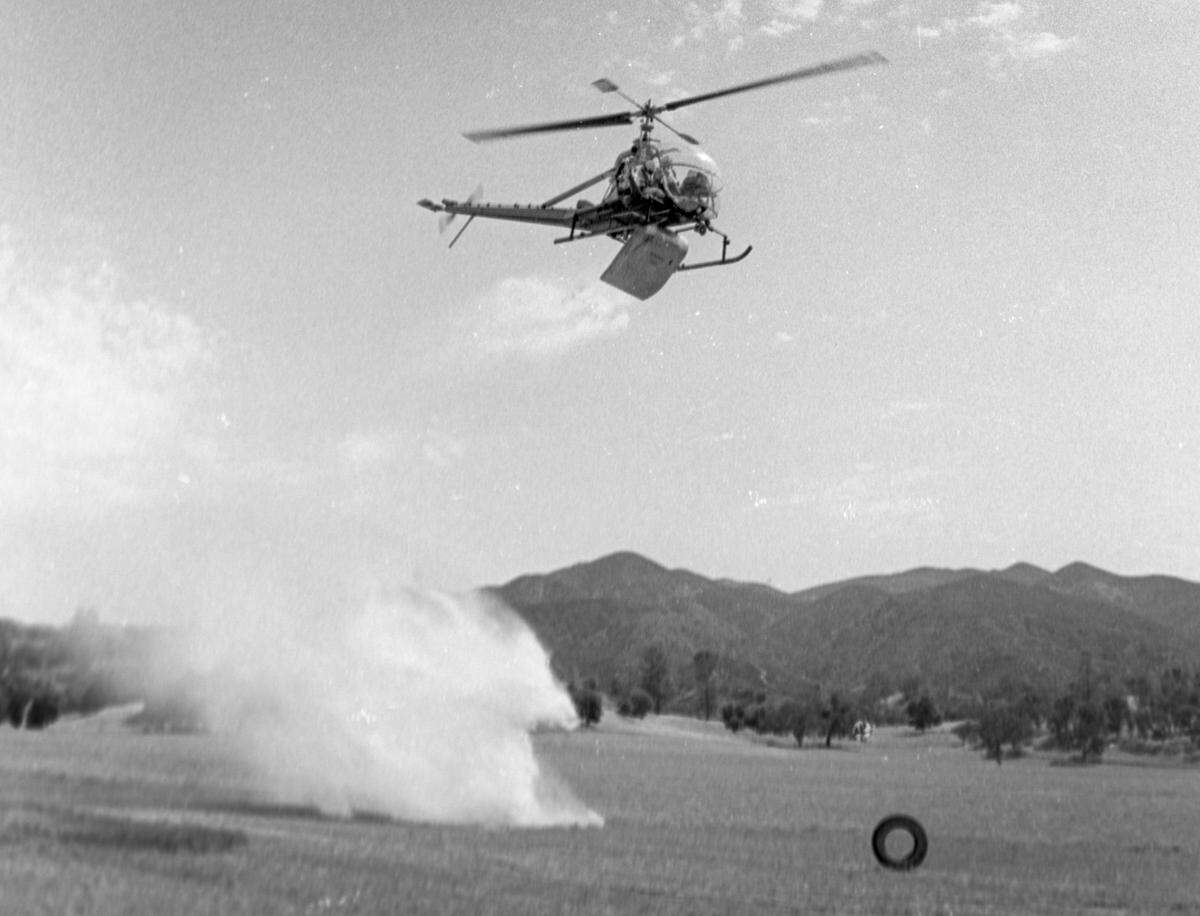
Their precise drop ability is useful for a situation where the large swath drop of an air tanker might not be the best tool.
It’s also a way to quickly insert crews ahead of the fire in remote country with poor or no roads.
What we saw fighting the Gifford Fire were heavy lift helicopters. Those techniques were built on the experience of previous firefighting generations.
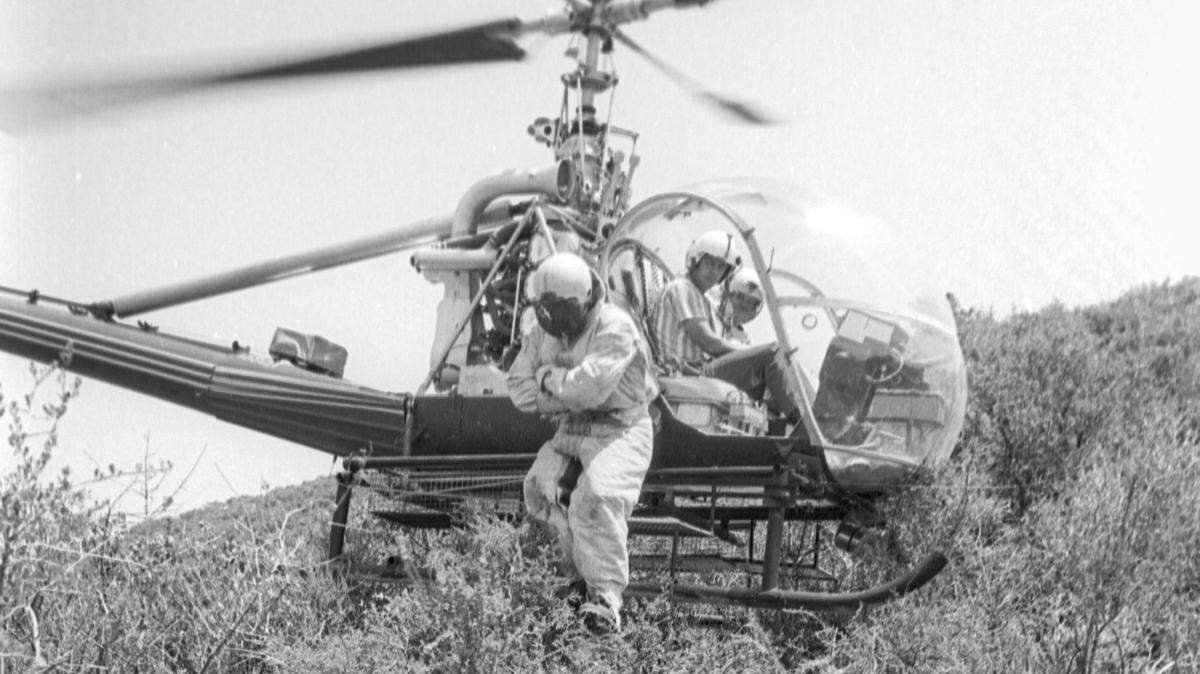
This story about a Helitack crew training with a four-seat helicopter near Pozo 58 years ago shows how much progress has been made, and yet how some the basic concepts haven’t changed.
Today, these daring firefighters are deployed in hotshot crews, and when they parachute out of planes, they’re known as smokejumpers.
For this story, the firefighters were training in an area that was the focus of efforts to block the Gifford Fire, the largest in California this year.
One other note on how times have changed:
Back then there was a defined fire season from July 1 to the first rains of the season.
Almost six decades later, with climate change, fire knows no season.
This unbylined story was published in the July 22, 1967, Telegram-Tribune.
Smokey says: When fire starts, they drop in
Smokey the Bear’s top assistants include a unique branch of the U.S. Forest Service. It’s called the Helitack crew.
Annual training sessions began Sunday at Pozo, and the Helitack jumpers will get more practice throughout the fire season, which extends from July 1 until the fall rains.
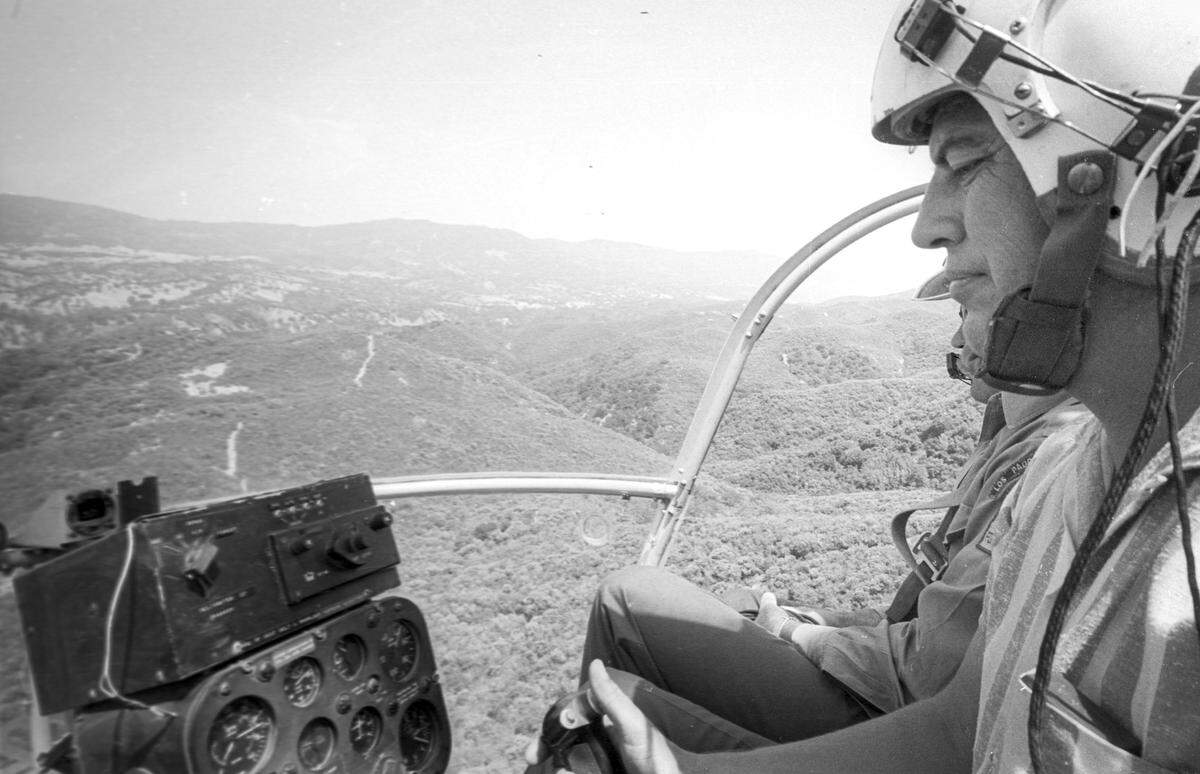
The crew consists of two men and a pilot, Bob Greenhaw, who owns a helicopter. The men are especially trained to jump into remote areas, and the jumps may be anywhere from three to 12 feet.
Main purpose of the Helitack operations is to provide a fast initial attack on fires where space is too small for landing. The first jumper clears the area for additional firefighters.
Crewmembers range in age from 18 to early 20s.

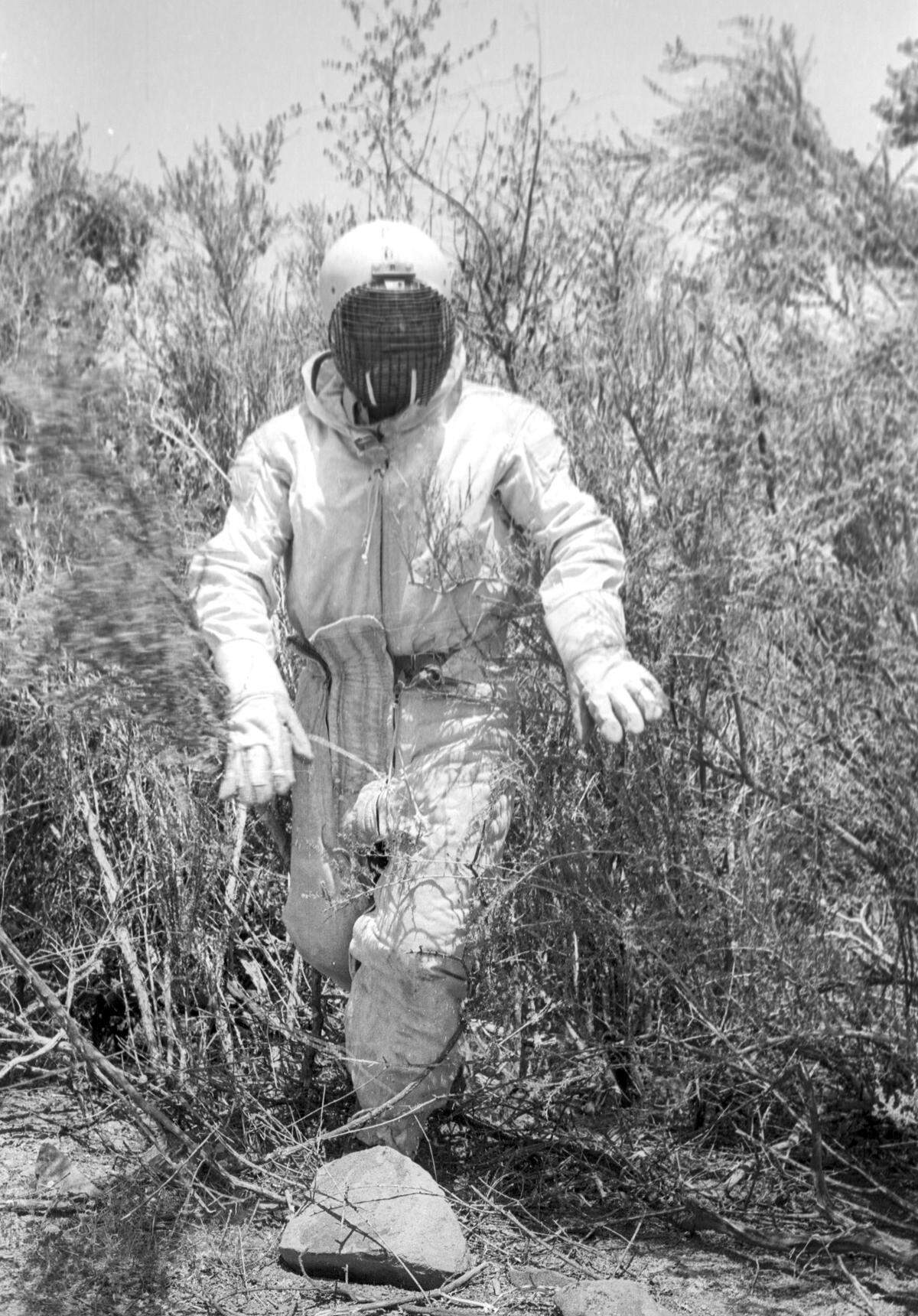
Sunday was the first actual airborne jumping experience for Dave Copeland of Atascadero and Dave Deering of Pozo. Prior to that time their jump activities were confined to platforms set at brush-top level.
Bruce Gregory, a forestry student at Humboldt State College, is the Helitack foreman for this area and is in charge of training his crew in poroper falling procedures.
Three ‘copters with crews are available to the Los Padres District. They are based in Santa Barbara, near Monterey, and at Pozo.
Greenhaw, from Clovis, lives at Pozo during the fire season. When an all-out emergency occurs, he joins the other two chopper crews at the fire scene.
The helicopter serves the forest service in other ways too.
It can lay 900 feet of hose within seconds, drop in tools and supplies by parachute, or lay down heavy chain saws while it hovers a few feet from the ground.
It can drop with pinpoint accuracy chemical fire retardants. This accuracy is ideal for tree stump fires that may have been started by a bolt of lightning.

The Pozo ‘copter is also used on prevention patrols. During deer season forestry officials can check to make sure no one is hunting in closed areas.
If Smokey’s helpers keep improving their firefighting techniques, the public-minded bear may have to turn in his hat and go back to the Washington Zoo.
This story was originally published August 23, 2025 at 5:00 AM.