What’s next for the Oceano Dunes? We answer your questions about the park’s future
A decision in March by the California Coastal Commission prohibits off-highway vehicles at Oceano Dunes State Vehicular Recreation Area by 2024.
The Oceano Dunes, which is managed by California State Parks and located in San Luis Obispo County, is one of the most popular off-roading parks in California — attracting about 1.4 million visitors in 2019, according to State Parks.
State Parks is now mandated to discontinue OHV use in the park by 2024 as it sees fit. The agency may choose to phase out the activity or halt it all at once.
The Coastal Commission’s decision, which came during its meeting on March 18, will have both short-term and long-term impacts on the park near Pismo Beach and surrounding economies.
The vote came nearly 40 years after the park’s coastal development permit was established, allowing State Parks to manage the park with temporary conditions set forth by the commission.
Supporters say the decision was long-awaited and will benefit the sensitive dune ecosystem.
But critics say that the decision will disrupt decades-old family traditions of visiting the Oceano Dunes for its unique recreational opportunities.
To provide clarity on the Coastal Commission’s decision, we answer several Tribune reader questions about the Oceano Dunes and its future.
What happens next for the Oceano Dunes?
There still is a lot that is unknown about the future of the Oceano Dunes.
Here’s what we know will happen next, starting with changes that went into effect March 19:
Nighttime off-highway vehicle driving is no longer allowed at the Oceano Dunes.
This change went into effect on March 19 and includes all OHV riding.
However, commissioners said it was key to allow nighttime driving in the Oceano Dunes, but only in camping areas of the park. Should someone arrive late to the park, commissioners said, those people should still be allowed to drive in to their campsite.
Emergency vehicles are not subject to the nighttime driving ban.
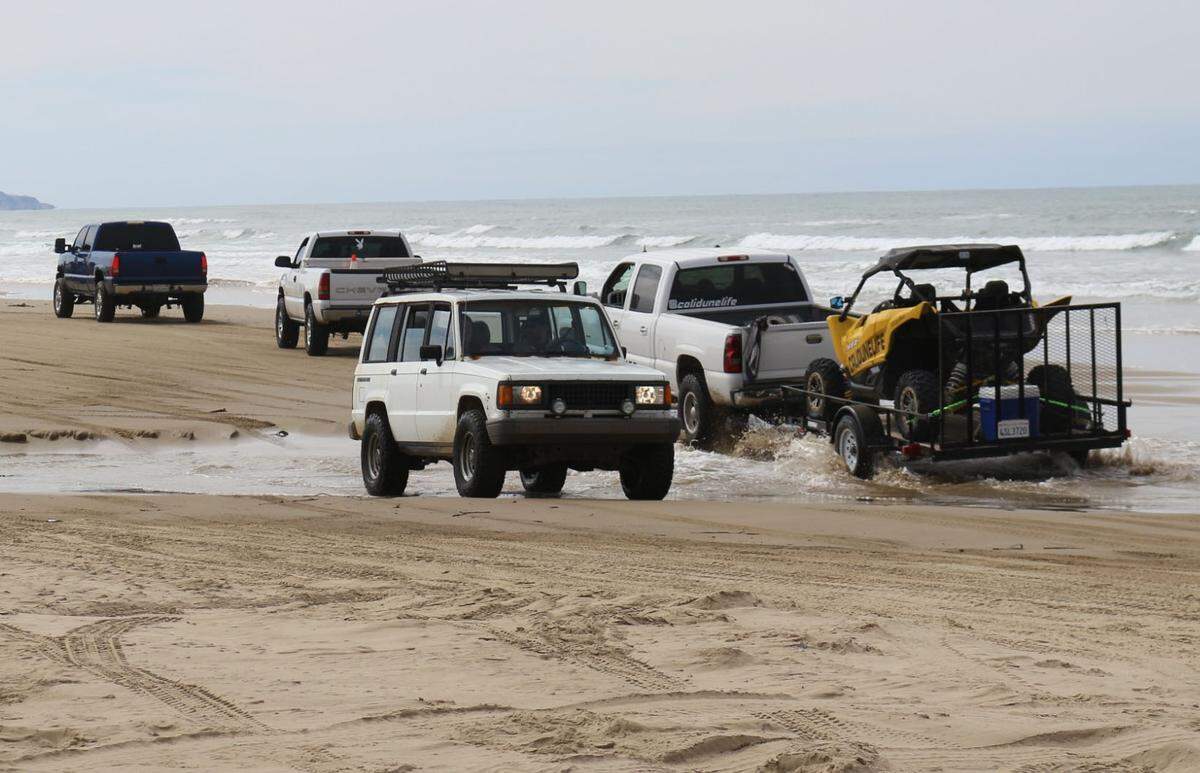
No vehicles are permitted to cross Arroyo Grande Creek.
This change also went into effect on March 19.
When Arroyo Grande Creek is flowing into the ocean, as it typically does during the rainy season, no vehicles — aside from emergency vehicles — are permitted to cross it.
This limits any vehicle access to the majority of the Oceano Dunes since Arroyo Grande Creek flows into the ocean just south of the Pier Avenue vehicle entrance.
There are protections for snowy plovers and terns.
The 300-acre seasonal habitat enclosure for western snowy plovers and California least terns was made permanent by March 19. Additionally, the Coastal Commission requires State Parks to add more fenced areas for the birds each year during the breeding season, March 1 through Sept. 30.
Should either of the birds be found in OHV, vehicle or camping areas of the park, the nesting area must be immediately surrounded by a fence at least 150 meters, or, 492 feet, in radius for plovers and at least 300 meters, or, 984 feet for the least terns.
That fencing must remain there until the birds hatch and leave the nests.
Other changes affect trash, special events, access, outreach, grading and fencing.
As of March 19, all trash and recycling receptacles are required to be covered to help reduce attracting predators.
And any special events — such as concerts or music festivals — require separate coastal development permit authorization from the Coastal Commission as of March 19. The only exception to this new rule is if the Coastal Commission’s executive director determines that a separate permit isn’t necessary.
Also by March 19, State Parks is required to advertise and implement outreach efforts to lower-income people, youth and tribal entities to ensure the agency is maximizing the use of the Oceano Dunes.
Now prohibited at the Oceano Dunes are beach grooming and grading within fenced restoration, habitat enclosures or other protected areas or below the mean high tide line. Any such activity may be allowed, however, if it is done in a way that protects the beach, dunes, watercourses, public recreational access and public views.
Pier Avenue vehicle entrance must close by July 1, 2022.
Currently, the Pier Avenue vehicle entrance to the Oceano Dunes is the second most popular vehicle entrance to the dunes.
Kevin Pearce, Oceano Dunes district superintendent for State Parks, said during the March 18 Coastal Commission meeting that the Pier Avenue entrance accounts for about 40% of the total vehicle traffic going into the dunes, whereas the Grand Avenue entrance gets about 60% of the traffic.
But by July 1, 2022, the Pier Avenue vehicle entrance will be closed. Only pedestrians, equestrians and bikers will be allowed into the Oceano Dunes via that entrance.
Local government leaders are concerned that this change will create traffic problems in Grover Beach — to which the Coastal Commission and State Parks were unable to present any solutions during the March 18 meeting.
By 2024, State Parks must discontinue all vehicle access to the Oceano Dunes’ sensitive habitat areas.
State Parks may choose to phase out vehicle access to these areas, or prohibit it all at once. It is currently unknown what its plans are.
By 2024, all Oceano Dunes car camping must be limited to the beach area between Grand and Pier avenues, and only allow 500 campers.
This area in Oceano Dunes State Vehicular Recreation Area is not considered an environmentally sensitive habitat area, which is why OHVs and car camping are allowed here.
Does ban apply only to ATVs, dune buggies and dirt bikes? Can I still drive my car on the beach?
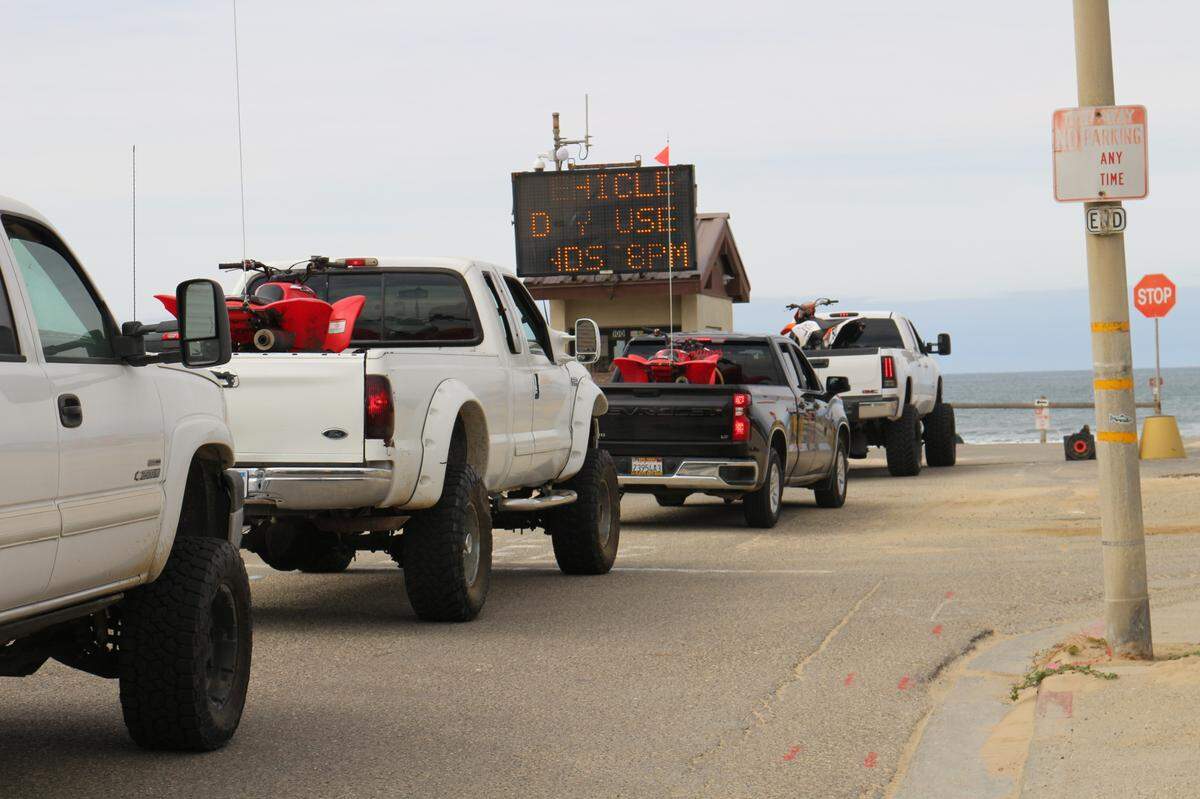
The Coastal Commission decided to ban all vehicles in the environmentally sensitive habitat areas of the Oceano Dunes — not just dune buggies and all-terrain vehicles.
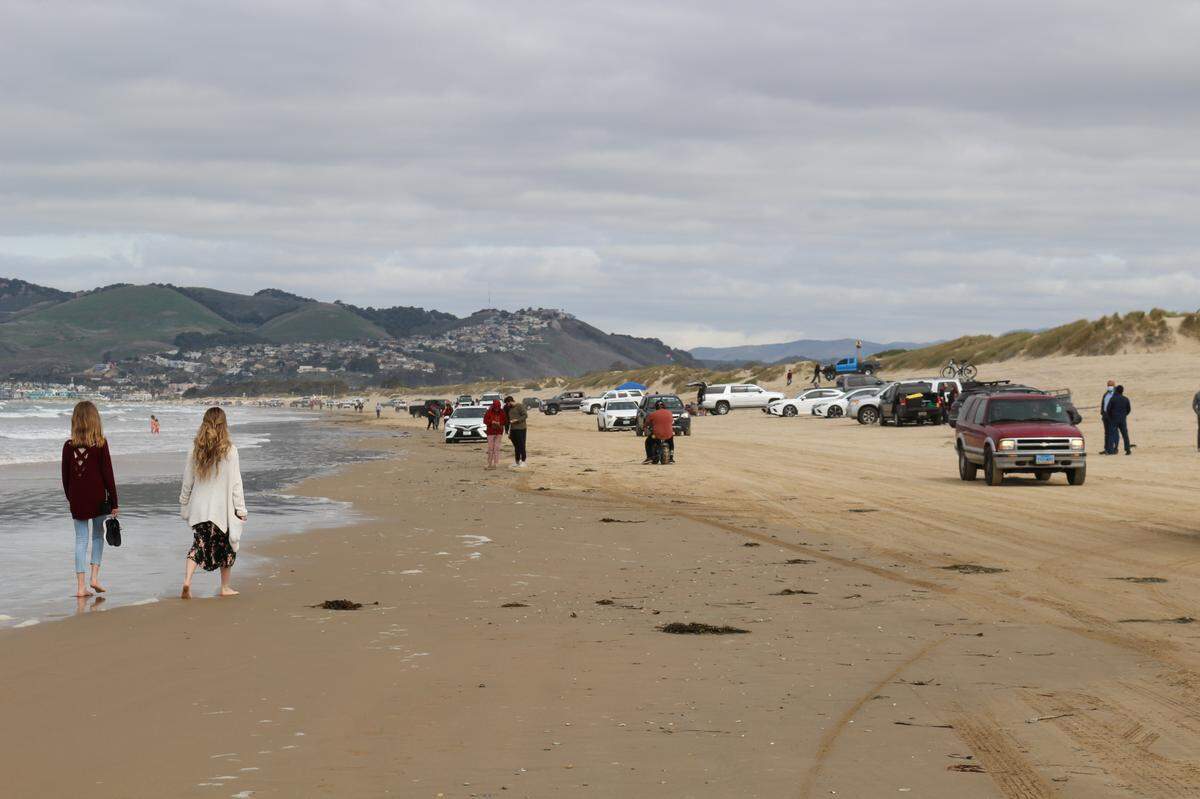
After Jan. 1, 2026, vehicles will only be permitted to access the Oceano Dunes on the one-mile beach stretch between Grand and Pier avenues.
How does this impact car camping at the park?
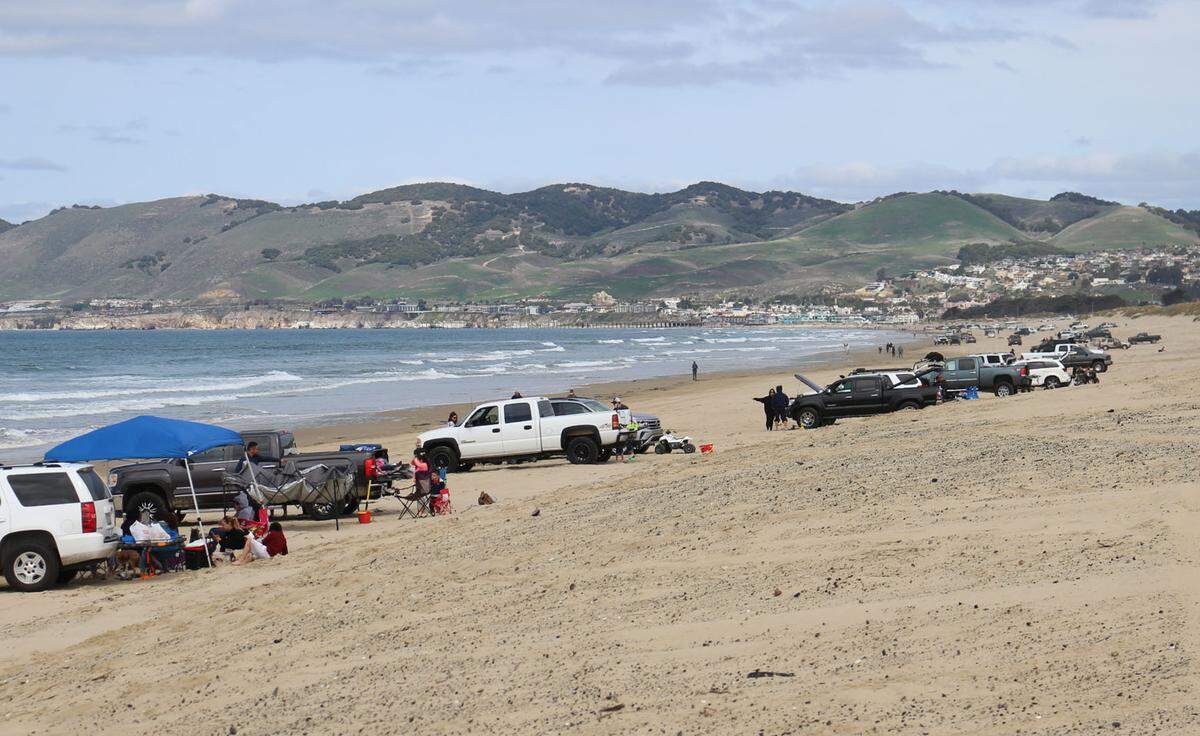
Right now, State Parks allows 1,000 “units” — meaning cars, recreational vehicles or tents — at the Oceano Dunes. This camping is dispersed throughout the dunes area and beachfront, though most stick to the beachfront just above the high tide line.
The Coastal Commission’s decision mandates State Parks to limit the number of campers to 500 and only allow them between Grand and Pier avenues — an area that encompasses about one mile of beachfront.
This change must go into effect by Jan. 1, 2024.
This area is the only area in the Oceano Dunes park that is not considered an environmentally sensitive habitat area by the Coastal Commission and San Luis Obispo County. So cars are allowed in this area.
Local governments, however, have expressed concerns that allowing 500 campers in this area may not be entirely feasible because of a high tide that would push campers into dunes that couldn’t be accessed by recreational vehicles or street-legal cars.
State Parks may choose to decrease the number of campers allowed in that area to ensure people can enjoy a safe experience, but it cannot go over the 500-camper limit set by the Coastal Commission.
Those who do not want to camp at the Oceano Dunes but want to drive on the beach may do so in the area between Grand and Pier avenues. State Parks will be limited to allowing 500 street-legal vehicles in the park per day, in addition to 500 campers.
Are ATV rentals gone for good now?
Visitors to the Oceano Dunes were previously allowed to rent all-terrain vehicles from local shops that had contracts with State Parks.
Such ATV rentals were banned from the Oceano Dunes from March 2020 through June 15, when the park closed to vehicle traffic due to COVID-19 restrictions.
People who own OHVs could ride them at the park beginning Feb. 26.
State Parks included in its Public Works Plan for the Oceano Dunes a plan to discontinue its permits with the local ATV concessionaires in April 2022.
Regardless, because OHV use must be discontinued in the Oceano Dunes by 2024 due to the Coastal Commission’s decision, local ATV rental shops will likely suffer and be forced to close.
Local politicians asked the Coastal Commission to provide economic relief to those local business owners, but commissioners did not respond to those requests during their meeting on March 18.
Will there be lawsuits against the California Coastal Commission?
Four separate lawsuits were filed in San Luis Obispo County Superior Court in April and May after the Coastal Commission’s decision.
Those cases have since been consolidated into two lawsuits.
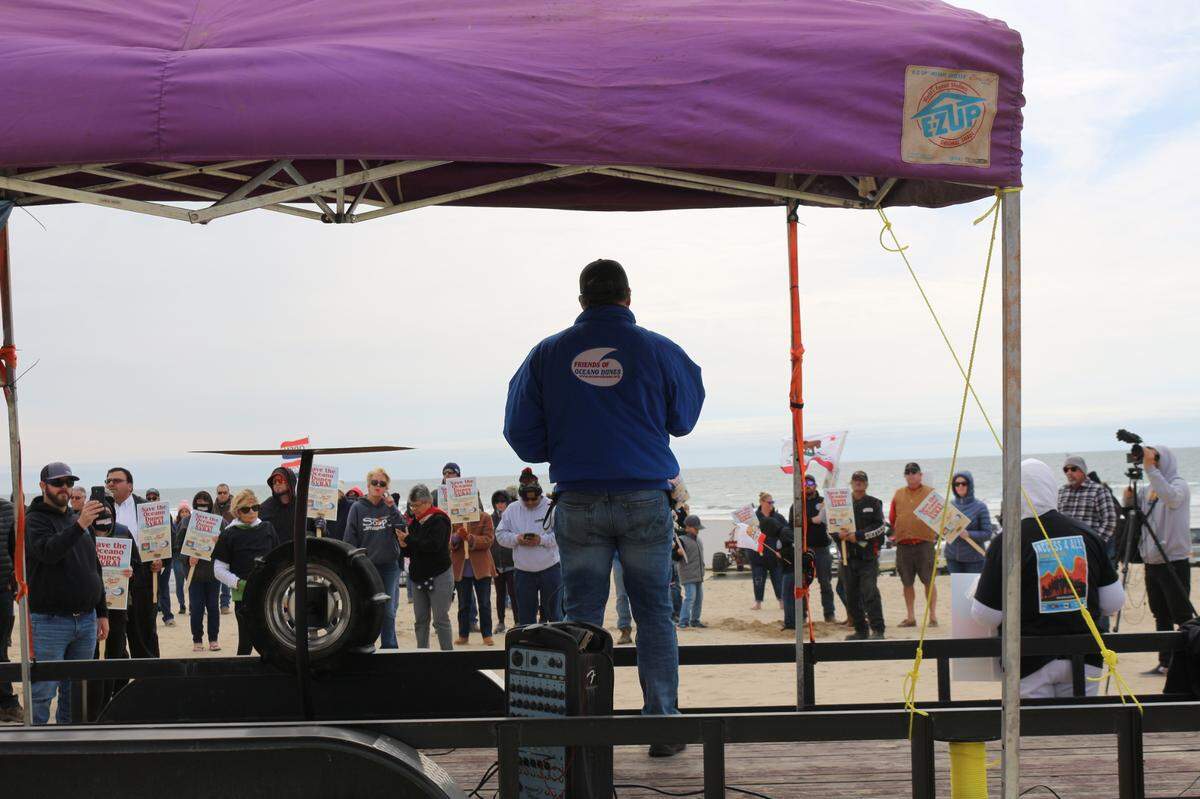
The first lawsuit, filed by two off-road riding advocacy groups — Friends of Oceano Dunes and EcoLogic Partners — alleges the Coastal Commission violated the California Environmental Quality Act and the California Coastal Act by voting to ban OHVs in the Oceano Dunes.
The lawsuit also alleges that State Parks also overstepped its bounds by subsequently following the commission’s direction.
Attorneys for San Luis Obispo County — which was named as a “real party-in-interest” because it owns the nearly 600-acre La Grande Tract property within Oceano Dunes State Vehicular Recreation Area — generally denied all of the allegations against it.
The Coastal Commission and State Parks have not yet filed their responses to the lawsuit.
The second lawsuit, filed by Friends of Oceano Dunes, says that the Oceano Dunes has an “implied-by-law dedication” for OHV use, beach driving and camping, and therefore cannot be used for any other purpose. The lawsuit asks a judge to grant a quiet title to the Oceano Dunes land and return the land to its alleged lawful purpose of off-road riding.
“Quiet title” lawsuits of this kind are usually brought against private landowners. They are usually used to “quiet” a dispute over who owns the land.
Friends of Oceano Dunes in its lawsuit doesn’t dispute who owns the land, just that the owners allegedly are improperly using the land by banning OHVs and camping in some areas of the park.
Attorneys for the San Luis Obispo County Air Pollution Control District and State Parks generally denied all of the allegations in the quiet title lawsuit in separate filings received by the court on July 14 and 16, respectively.
Attorneys for the Coastal Commission and the state of California filed a demurrer in the case. That means the attorneys may not dispute the facts but argue that there is no valid legal claim.
A hearing is set for Jan. 5 in Superior Court, during which Judge Tana Coates may decide to sustain the demurrer, meaning Friends of Oceano Dunes may be able to revise their case.
If Coates decides to overrule the demurrer, then the case will be allowed to proceed as is.
Did the Coastal Commission overreach its authority?
The Coastal Commission enforces the California Coastal Act, which mandates the protection of environmentally sensitive habitat areas “against any significant disruption of habitat values, and only uses dependent on those resources shall be allowed within those areas.”
A report by the Mills Legal Clinic at Stanford University’s Stanford Law School found that the Coastal Commission was required to prohibit OHVs in the Oceano Dunes because the activity was found to disrupt and degrade sensitive habitats.
Additionally, the report found that the Coastal Commission had the authority to enforce such prohibitions. Citing case law, the Stanford report says that when conflicts arise between Coastal Act provisions — such as considering the economic wellbeing of a coastal community or providing the protection of sensitive ecosystems — the highest priority must be given to environmental considerations.
The Coastal Commission was the authorizing body of the coastal development permit for the Oceano Dunes, which regulates the activities and development at the park.
The permit was reviewed on a nearly annual basis to determine if OHV should be limited in any way to ensure coastal resources are protected. Because the Coastal Commission’s action on March 18 was a revision to the Coastal Development Permit for the Oceano Dunes, it changes what activities and development are allowed within the park.
Why did it take Coastal Commission nearly 40 years to end OHV use?
This question was top of mind for some local governments before the Coastal Commission’s meeting on March 18.
In the early 1980s, San Luis Obispo County adopted its plan for how it would develop and govern the local coastline. That plan asked State Parks to figure out how to manage the Oceano Dunes and the impact vehicles have on the environment, or it would shut down vehicle use at the park.
But the Coastal Commission at that time found that vehicle use in the park disrupted environmentally sensitive habitat areas, or ESHAs, which are protected under the Coastal Act.
So State Parks and the Coastal Commission worked together to define temporary parameters under its coastal development permit that would allow vehicle use at the Oceano Dunes for the time being with the stipulation that State Parks would revise its operations in the park to ensure coastal resources were adequately protected.
Nearly every year since 1982, the Coastal Commission met to discuss and possibly revise the permit for the Oceano Dunes.
Over those years, commissioners asked State Parks to impose vehicle access limits, conduct studies to measure the impact that vehicles were having on the dunes and fence off areas for habitat restoration or animal protection.
While State Parks complied with these requests, OHVs were still allowed on the dunes, though in a limited capacity compared to historical use.
It wasn’t until recently that the environmental degradation at the Oceano Dunes caused by OHV activity reached a boiling point. In 2018, the San Luis Obispo Air Pollution Control District issued a stipulated order of abatement that required State Parks to reduce wind-blown dust on the Nipomo Mesa by 50%.
In 2018 and 2019, the Coastal Commission implemented its own tribal consultation and environmental justice policies, which set forth formal processes for listening to tribal concerns regarding any decisions the commissioners may take, and ensuring that historically marginalized communities are protected from environmental injustices such as increased pollution.
Utilizing these two policies, Coastal Commission staff said they took a deeper look in recent years at the impacts the activities at Oceano Dunes had on tribal communities and the communities of Oceano, Nipomo, Guadalupe and others that have a largely Hispanic or Latinx population.
This impacted their decision to suggest the Coastal Commission prohibit OHV use at the dunes, staff said.
How will this impact the local economy?
This is one of the great unknowns of the California Commission’s decision.
Local businesses that cater to OHV users at the Oceano Dunes will likely be forced to close or restructure their businesses, however.
South County Chambers of Commerce CEO Jocelyn Brennan told The Tribune that the chamber will move forward on an economic impact assessment and feasibility study to figure out how to “mitigate the economic losses and plan for future opportunities at the park.”
“The South County Chambers’ focus has been assisting businesses through COVID impacts, and now we will assist them through this impact as well,” she said. “Because our local businesses depend on tourism dollars, the challenge will be, ‘How do we continue to draw visitors to the unique dune system at Oceano State Park?’ This will be a significant transition for our businesses and local economy.”
Local government bodies, such as the Grover Beach City Council and Oceano Advisory Council, wrote letters to the Coastal Commission before its March 18 meeting asking for economic support for local businesses that will be impacted by the ban on OHVs at the dunes.
The Coastal Commission did not address these concerns in its March 18 meeting.
What happened to State Parks’ Public Works Plan?
State Parks released a massive, wide-ranging Public Works Plan and subsequent Environmental Impact Review on the Oceano Dunes in December that outlined the agency’s vision for the park for the next 20 to 30 years.
This plan was generated at the request of the Coastal Commission, and cost the agency more than $2 million.
But both documents are open to public comment through April 19, so the Coastal Commission could not evaluate them during its March 18 meeting.
The Coastal Commission’s decision on March 18 will have a sweeping effect on the proposed plans State Parks released in the documents, which allowed for continued OHV use in the park and expanded the area in which vehicles were allowed in the park.
Despite this, State Parks has not yet released any information regarding revisions to its Public Works Plan.
Where else can I go to ride OHVs?
California State Parks allows for off-highway vehicles in eight other areas of the state:
- Carnegie State Vehicle Recreation Area, located in the hills of southern Alameda and San Joaquin counties;
- Clay Pit SVRA, located two miles west of the town of Oroville south of Chico;
- Eastern Kern County Onyx Ranch SVRA, located on the western edge of the Mojave Desert adjacent to State Route 14;
- Heber Dunes SVRA, located three miles north of the Mexican border crossing at Highway 7;
- Hollister Hills SVRA, located about an hour north of San Jose;
- Hungry Valley SVRA, located at Tejon Pass in northern Los Angeles County;
- Ocotillo Wells SVRA, located west of the Salton Sea, and
- Prairie City SVRA, located 20 miles east of Sacramento.
Outside of State Parks, there are also OHV riding options in nearby National Forests.
RiderPlanet USA, a motorcycle and ATV trails online database, also has a list of OHV riding areas in the state that includes federal, state and local land.
This story was originally published March 22, 2021 at 5:00 AM.