Coastal Commission could decide fate of Oceano Dunes off-road riding. What you need to know
A historic decision from the California Coastal Commission may be on the horizon after nearly 40 years of inaction — one that will have major impacts on Oceano Dunes State Vehicular Recreation Area and the communities that surround it.
On Thursday, commissioners will hear a Coastal Commission staff report, California State Parks presentation and hours of testimony from elected officials, tribal representatives, organizations and members of the public before deliberating on the Oceano Dunes’ temporary Coastal Development Permit.
The commission may choose to revise the park’s permit, which was first issued in 1982 as a temporary fix to allow off-highway vehicle use with the expectation that State Parks would find permanent solutions to operational and environmental concerns that came with the use.
Some local communities have criticized the Coastal Commission for allowing State Parks a loose rein in operating the Oceano Dunes for the past four decades.
“I really feel like the government has failed our area with this,” now-former Grover Beach City Councilwoman Mariam Shah said at a City Council meeting on March 8. “To be functioning on a 40-year temporary permit is ridiculous.”
The original inhabitants of the land — the Northern Chumash — have continuously pleaded with the Coastal Commission and State Parks to preserve the dunes to no avail.
“Why don’t we all wake up, see that the Chumash lived for over 10,000 years on the sacred dunes sands, lived, raised children, buried the elders, looked to the heaven of majesty, opened our souls to the sun rises and sun sets, as stewards of the care of the diamond great dunes and landscape of wonder,” Fred Collins of the Northern Chumash Tribal Council wrote to the Coastal Commission in a January letter.
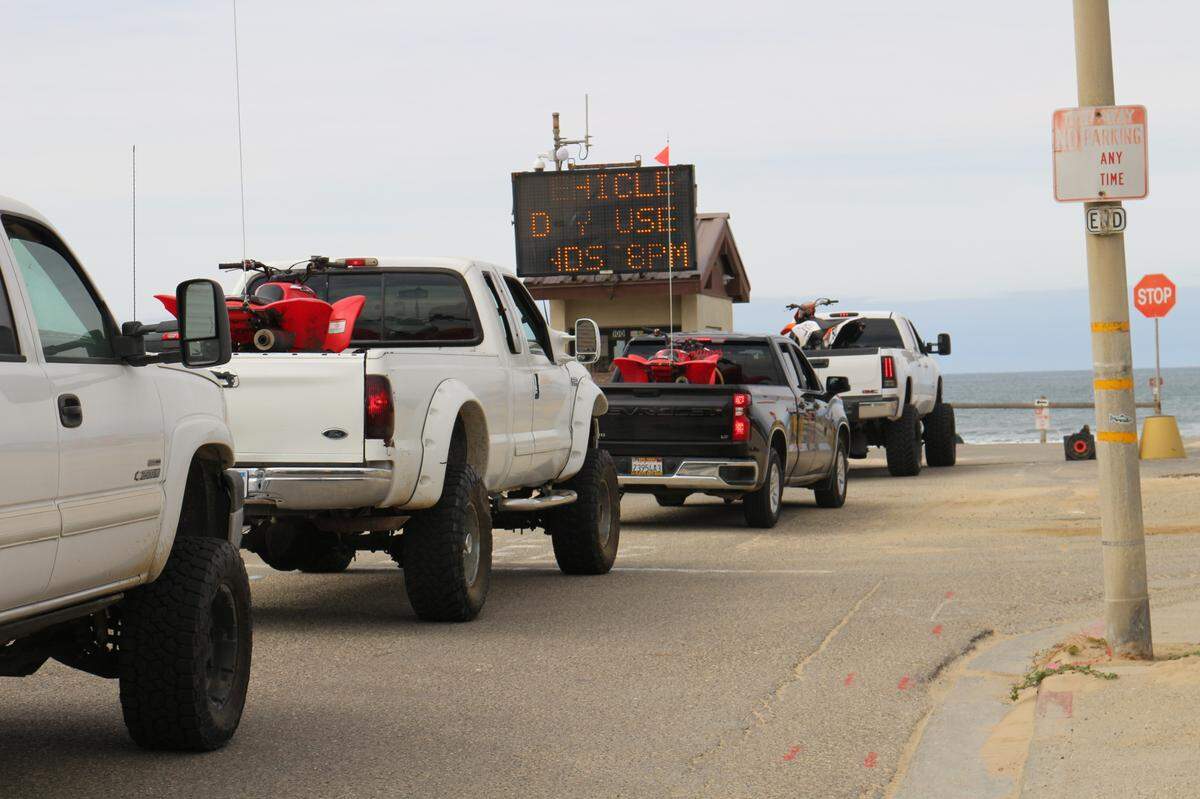
While some decry the use of off-highway vehicles at the Oceano Dunes, a large and passionate group of off-road riding advocates want OHV use to continue on the dunes, citing the unique access to the beach it provides.
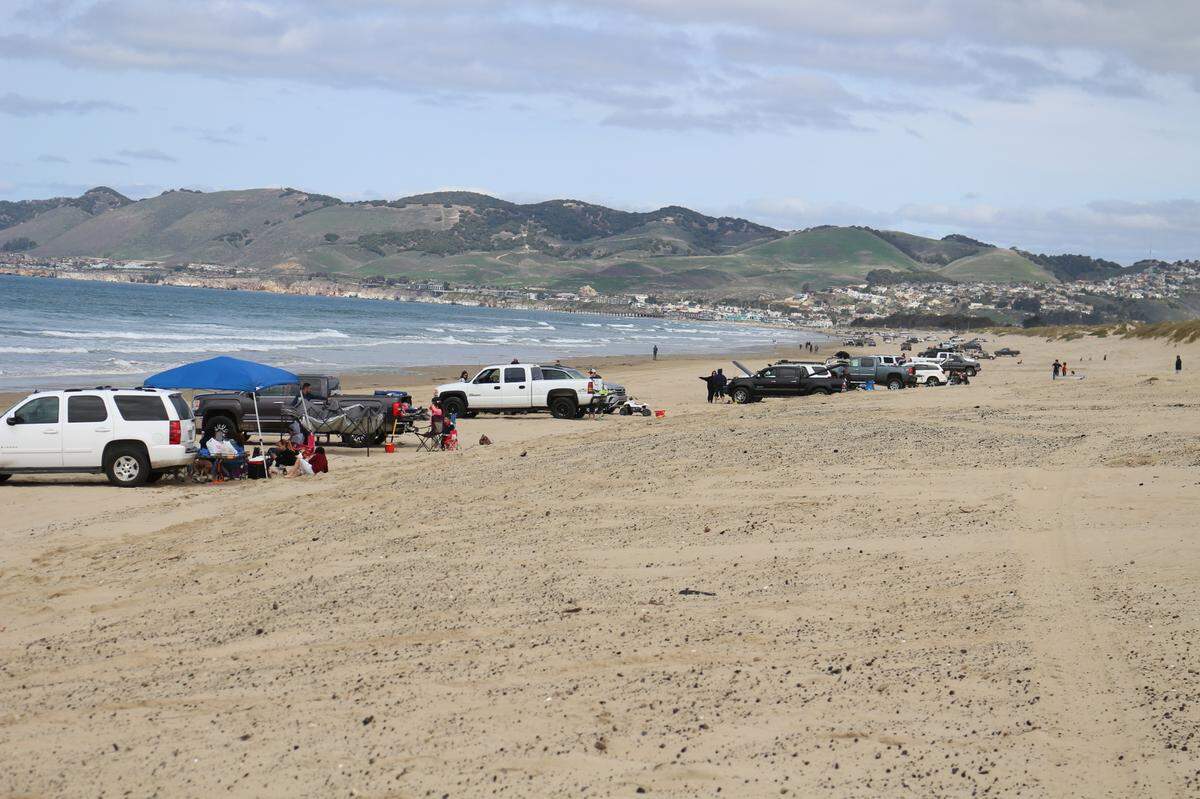
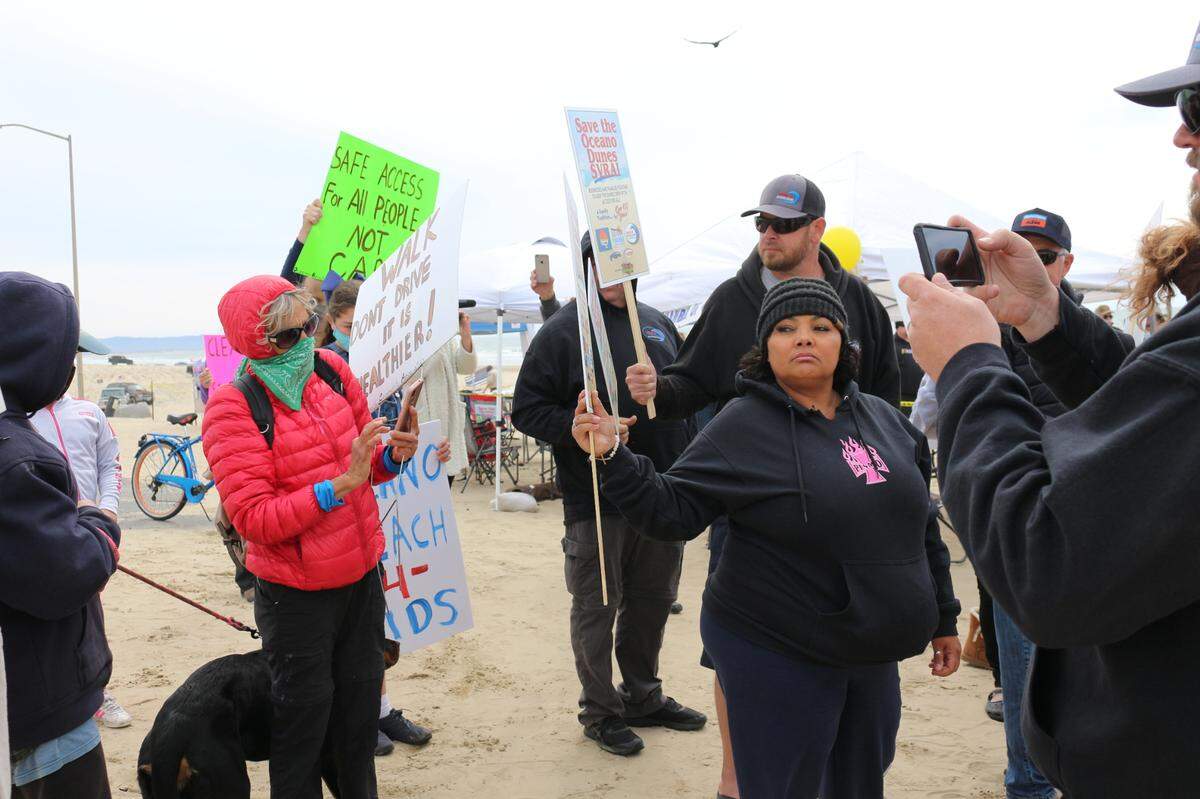
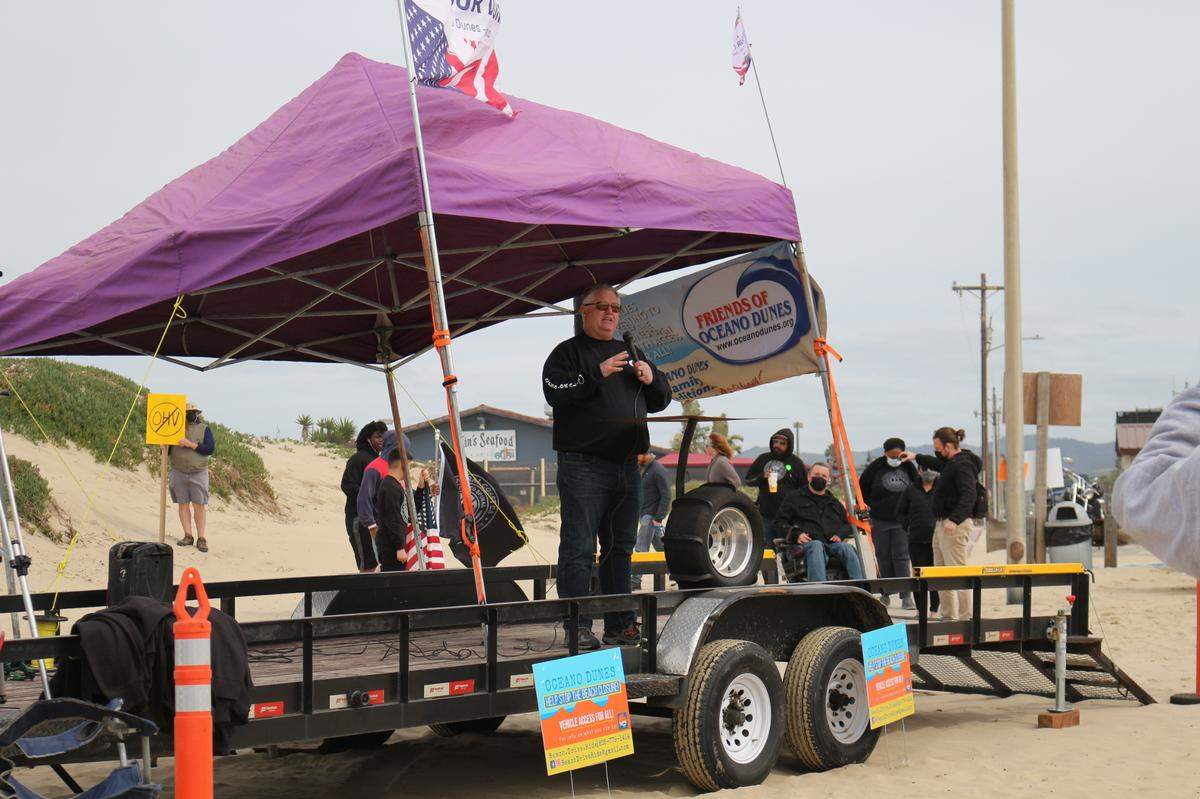
Friends of Oceano Dunes, a nonprofit group that represents about 23,000 off-road enthusiasts that use the park, announced Sunday that it may sue the Coastal Commission should the agency move forward with its staff’s recommendations.
“Friends of Oceano Dunes has been pretty successful in our lawsuits and that’s going to continue,” Friends of Oceano Dunes president Jim Suty said at a protest held at Pismo State Beach on Sunday. “We are preparing our lawsuit against the Coastal Commission right now.”
Friends of Oceano Dunes has won several court cases over the years and forced the Coastal Commission to pay hundreds of thousands in legal fees as a result.
When it comes to the law, however, the Coastal Commission is mandated to terminate the OHV use in the park, according to a recent report released by the Mills Legal Clinic at Stanford University’s Stanford Law School.
That’s because the California Coastal Act and the Off-Highway Motor Vehicle Recreation Act do not allow for such use unless it is environmentally sustainable — which the Stanford report and numerous studies over the years say is not the case at the Oceano Dunes.
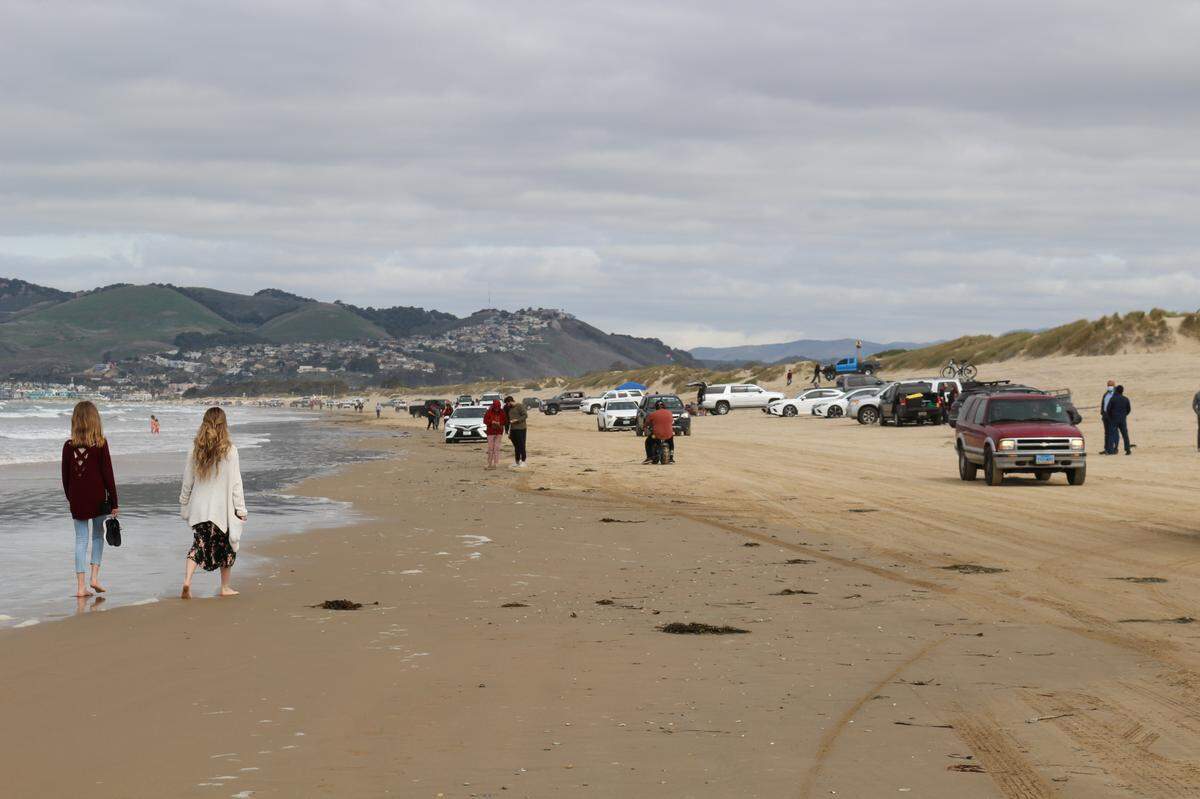
History of off-highway vehicle use at Oceano Dunes
Vehicles first started coming en masse to the Oceano Dunes in the early to mid 1970s. By the late 1970s, the popularity of driving on the beach at Pismo State Beach and the Oceano Dunes exploded.
Tens of thousands of people gathered at the Oceano Dunes on holiday weekends, creating a temporary city where injuries and crime were common.
In the early 1980s, San Luis Obispo County adopted its plan for how it would develop and govern the local coastline. That plan asked State Parks to figure out how to manage the Oceano Dunes and the impact vehicles have on the environment, or it would shut down vehicle use at the park.
But the Coastal Commission at that time found that vehicle use in the park disrupted environmentally sensitive habitat areas, or ESHA, which are protected under the Coastal Act.
So State Parks and the Coastal Commission worked together to define temporary parameters under its Coastal Development Permit that would allow vehicle use at the Oceano Dunes for the time being with the stipulation that State Parks would revise its operations in the park to ensure coastal resources were adequately protected.
Nearly 40 years later, commissioners will meet to discuss and possibly revise that temporary Oceano Dunes permit — because, after all that time, the state agencies have not come to any agreement around how much vehicle use is acceptable in the park while still protecting the coastal ecosystem.
In July 2019, the Coastal Commission seemed likely to decide whether off-highway vehicle use should continue.
But commissioners kicked “the can down the road” and sent everyone home without any changes made to the uses of the park, Commissioner Steve Padilla said at that 2019 meeting.
Commissioner Sara Aminzadeh indicated during the 2019 meeting that she wanted to find a way to continue OHV use in the park, saying, “I’ve been struck by the notion that we all fall in love with nature in different ways.”
Commissioners allowed State Parks time to draft a plan that would outline the future of the park on the stipulation that the agency would consider phasing out OHV use at the park.
“I’m willing to give one more year, but it’s only one more year,” Commissioner Donne Brownsey said during the 2019 meeting.
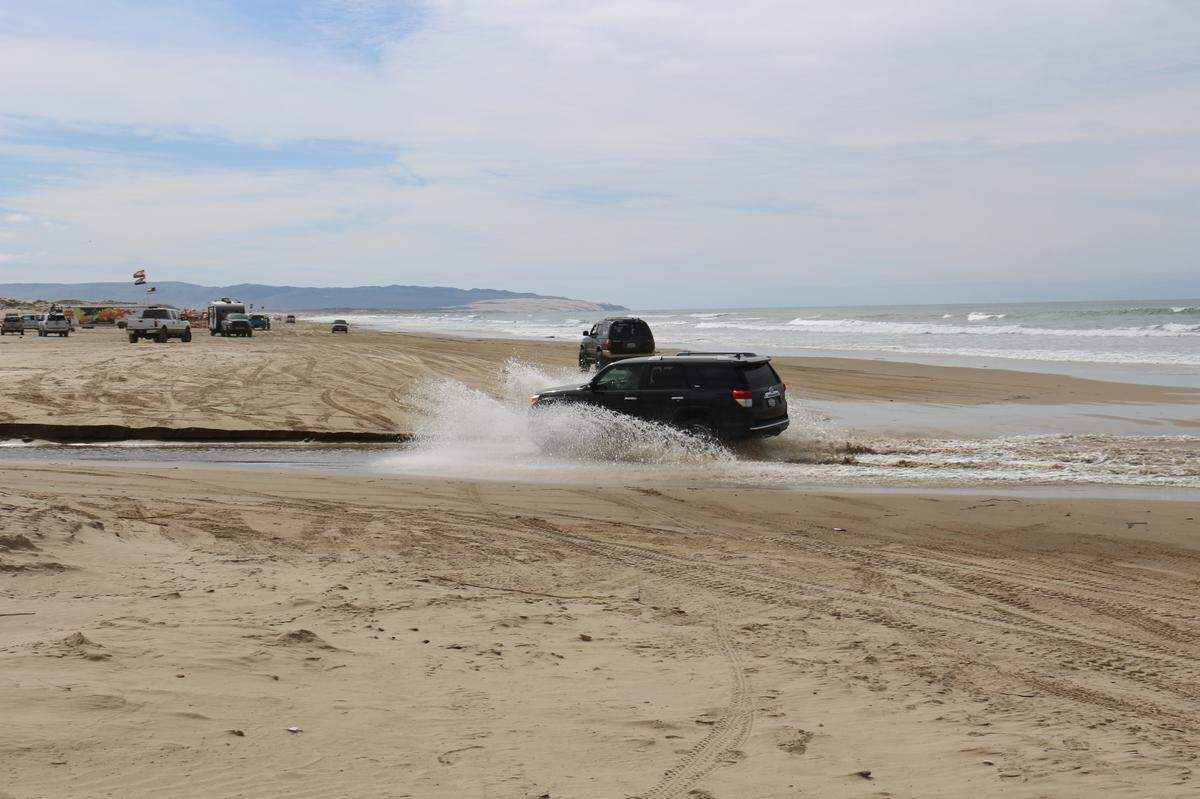
State Parks plan would expand OHV use
In December, one and a half years later, State Parks released that plan — featuring about 900 pages of proposals to expand OHV use in and outside of the park’s existing boundaries.
The plan rebuked the plausibility of phasing out OHV use, citing State Parks’ responsibility to provide accessible recreational activities for all as well as financial concerns that would result from the discontinuation of OHVs in the park.
This prompted a response from Coastal Commission staff that mirrors their recommendations in 2019.
In short, the staff asked that commissioners modify State Parks’ Coastal Development Permit to require OHVs to be prohibited at the Oceano Dunes by Jan. 1, 2026.
Staff also recommended that the Coastal Commission limit street-legal vehicle access and beach camping to a one-mile beach stretch between Grand and Pier avenues and close the Pier Avenue entrance to Oceano Dunes by July 1.
In addition, the staff suggested that the commission tighten down on protection areas for endangered species and indigenous cultural and sacred sites; prohibit vehicle crossings of Arroyo Grande Creek when it flows into the ocean; require separate coastal development permits for special events such as concerts and festivals, and require State Parks to increase outreach about the park to low-income, youth and tribal entities.
State Parks would also be required to submit annual reports showing its progress in implementing the requirements under its coastal development permit, according to the staff report.
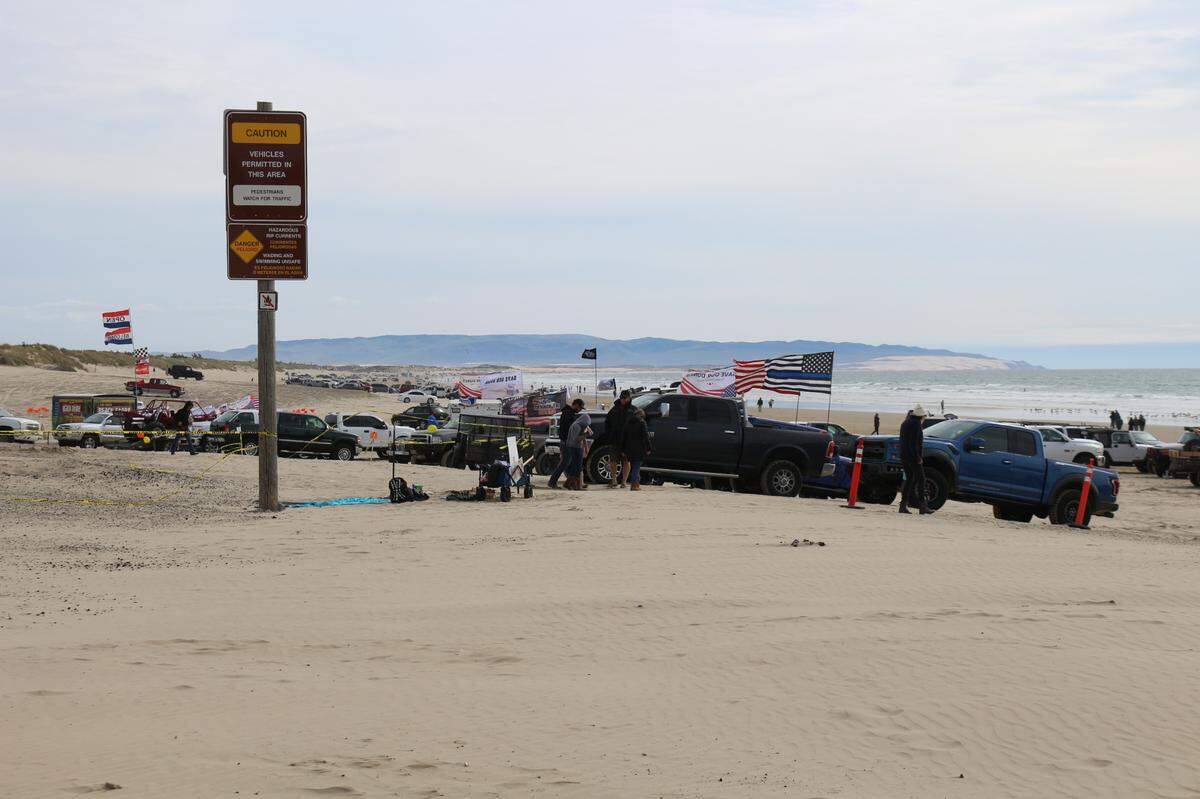
City officials, off-road riders react to proposed changes
Community members were allowed to submit public comments to the Coastal Commission regarding its staff report and State Parks’ draft plan before 5 p.m. March 12.
Local city officials, advocacy groups and tribes were among the commenters who weighed in.
The Northern Chumash Tribal Council noted in a letter to the commission that its people lived on the dunes for more than 10,000 years and have adamantly protested against OHV use in the park for the past 50 years.
State Parks’ draft plan for Oceano Dunes is disrespectful and “should open everyone’s eyes to the white washing of the Chumash culture,” the tribal council wrote in its letter.
The tribal council also said that State Parks did not follow state law by inadequately consulting with them and other recognized Native American tribes about its plan.
The Guadalupe City Council wrote a letter in opposition to State Parks’ plan, and council member Tony Ramirez said that the agency mislead it in its plans for the Oceano Dunes.
Ramirez said State Parks Director Armando Quintero initially told the council that State Parks was scaling back its plans for the Oso Flaco Lake area, and was likely only going to propose general maintenance projects for the area.
“And then a few weeks later, that’s when the State Parks plan came out and we were like, ‘Oh, that’s not what was presented to us,’ ” Ramirez told The Tribune. “It was completely misleading.”
State Parks outlined massive development plans for the Oso Flaco Lake area — to which the city of Guadalupe is the closest locale —that would bring hundreds of campers and OHV riders to the dunes through a southern entrance.
The Grover Beach City Council did not expressly side with either the State Parks plan or the commission’s staff report.
In a letter to the commission, the Grover Beach council said it is concerned about traffic impacts to Grand Avenue should the Pier Avenue entrance to the dunes be closed off. The council also scrutinized Coastal Commission staff’s recommendation to limit camping to the beach area between Grand and Pier avenues, saying that high tides make camping in that area difficult.
The council also asked for economic reparations for its local businesses that rely on OHV use in the dunes.
In its letter, the council noted that while the dunes were closed to OHV use due to COVID-19 restrictions, “we have seen an increase in tourism and related tax revenues in our beachfront community over the past year though we recognize that COVID travel limitations make it difficult to draw definitive conclusions from 2020.”
The Oceano Advisory Council — which has authority from the San Luis Obispo County Board of Supervisors to represent the community in matters of planning and building — fiercely opposes State Parks’ plan and supports the Coastal Commission staff recommendations.
“Oceano has never had an opportunity to develop itself to be a beach community and experience the benefits of that economic development, that cultural development that comes with having a local beach that is for people, not for vehicles,” Charles Varni, vice chair of the advisory council, said during a Oceano Advisory Council meeting on March 11.
The advisory council, like Grover Beach, wants economic reparations for local businesses that cater to off-highway vehicle users if OHV use is discontinued — and a phase-out of the Pier Avenue entrance closure due to traffic concerns that could result from the closure.
Additionally, the advisory council found the Pismo Beach Chamber of Commerce’s opposition to the OHV phase out at Oceano Dunes to be hypocritical, since Pismo Beach banned vehicles on its beach decades ago.
The South County Chambers of Commerce — which represent the chambers of Arroyo Grande, Avila Beach, Grover Beach, Pismo Beach, Nipomo and Oceano — authored a letter to the commission with the San Luis Obispo, Paso Robles, Morro Bay, Santa Maria, Santa Ynez and Santa Barbara South Coast chambers of commerce that expressed concern over the lack of local representation on the Coastal Commission.
The South Central Coast has not had a representative on the commission since Erik Howell lost his seat on the Pismo Beach City Council in the November 2020 election.
The chambers’ letter did not express clear opposition to the commission’s staff recommendation that OHVs be phased out, though the Pismo Beach Chamber of Commerce participated in Sunday’s protest with Friends of Oceano Dunes and local OHV advocacy group Beach.Drive.Ride on Sunday demanding the continuation of OHV use on the dunes.
Several politicians also wrote in on the Oceano Dunes matter.
U.S. Rep. Salud Carbajal (D-24), State Sen. John Laird (D-17), State Sen. Ben Allen (D-26) and San Luis Obispo County Supervisor Bruce Gibson all wrote in opposition to State Parks’ plan and in support of the commission’s staff recommendation.
Assemblymember Jordan Cunningham (R-25), Assemblymember Robert Rivas (D-30), State Sen. Anna Caballero (D-12) and State Sen. Shannon Grove (R-16) wrote a joint letter to the commission in opposition of the staff recommendation to phase out OHV use.
The state Off-Highway Motor Vehicle Recreation Commission, which oversees OHV park general plans in the state, wrote to State Parks that it was largely disappointed with its plan for the Oceano Dunes. It suggested that OHV use in the park be expanded even further than State Parks’ plan suggests.
Can California Coastal Commission legally restrict OHV use?
According to the recent Stanford Law School report, the Coastal Commission is mandated to discontinue OHV use in Oceano Dunes State Vehicular Recreation Area.
“Staff’s recommendation to phase out OHV use on the fragile dune system and protected coastal resources of (the Oceano Dunes) constitutes sound public policy and is entirely consistent with applicable state law, including the Coastal Act, the Off-Highway Motor Vehicle Recreation Act and the California Endangered Species Act,” the report, which was sent to the commission, said.
The Stanford report asserts that OHV use has continuously degraded the dune ecosystem and therefore violates the Coastal Act and Off-Highway Motor Vehicle Recreation Act — both of which put the protection of natural resources above economic and recreational benefit.
State public resources code “indicates that permanent closure may be necessary to restore damaged areas to their pre-OHV condition,” the Stanford report says.
The report examined an area called Inglenook Fen, a beach dunes preserve in MacKerricher State Park located northwest of Sacramento.
In 1977, State Parks found that the “fen and dune ecosystem ... are extremely fragile” and prohibited vehicle access and limited foot traffic in the area.
“As the Inglenook Fen example and the text of the OHV Act show, State Parks has never had a mandate to support vehicular recreational activities at the expense of natural resources,” the report reads.
“State Parks’ assertion that it does ‘not have the authority to phase out OHV activity in the (Oceano Dunes) on its own’ is false,” the report continued. “State Parks already has authority to eliminate OHV use from (the state park) in order to protect ecological resources, and it does not need the legislature’s permission to reclassify a state park unit.”
Additionally, the Stanford report examined how State Parks and the Coastal Commission could violate both the state and federal endangered species acts should “take” of the western snowy plover and California least tern continue to be allowed.
“Take” is defined as “any action that harms or harasses listed species,” according to the federal Endangered Species Act.
OHV riding and State Parks activity has killed the federally protected birds and harmed their nests, the Stanford report said, noting that continuing to allow such take is a liability risk for both agencies.
“At every turn, State Parks has proven that the legally required protection of endangered species is not the agency’s priority. Given State Parks’ failure and the legal mandates discussed throughout this letter, the commission should act to protect endangered species within the park by eliminating OHV use,” the report said.
How to provide input on Oceano Dunes future
The Coastal Commission’s meeting will be held virtually on Cal-Span.org beginning at 9 a.m. Thursday.
Individual speakers will be allotted one minute each during the public comment portion of the meeting. Those who wish to comment must first fill out a remote testimony request form on the commission’s website before 5 p.m. Wednesday at coastal.ca.gov/meetings/request-testimony/special-hearing.
Additionally, anyone may file a written comment with State Parks by 5 p.m. March 18 by email at OceanoDunes.PWP.EIR@parks.ca.gov or mail at California State Parks Strategic Planning and Recreation Services Division, 1725 23rd St., Suite 200 in Sacramento, CA 95816.
This story was originally published March 15, 2021 at 3:01 PM.