Live updates: Coastal Commission decides fate of OHV use at Oceano Dunes
Update, 9 p.m.
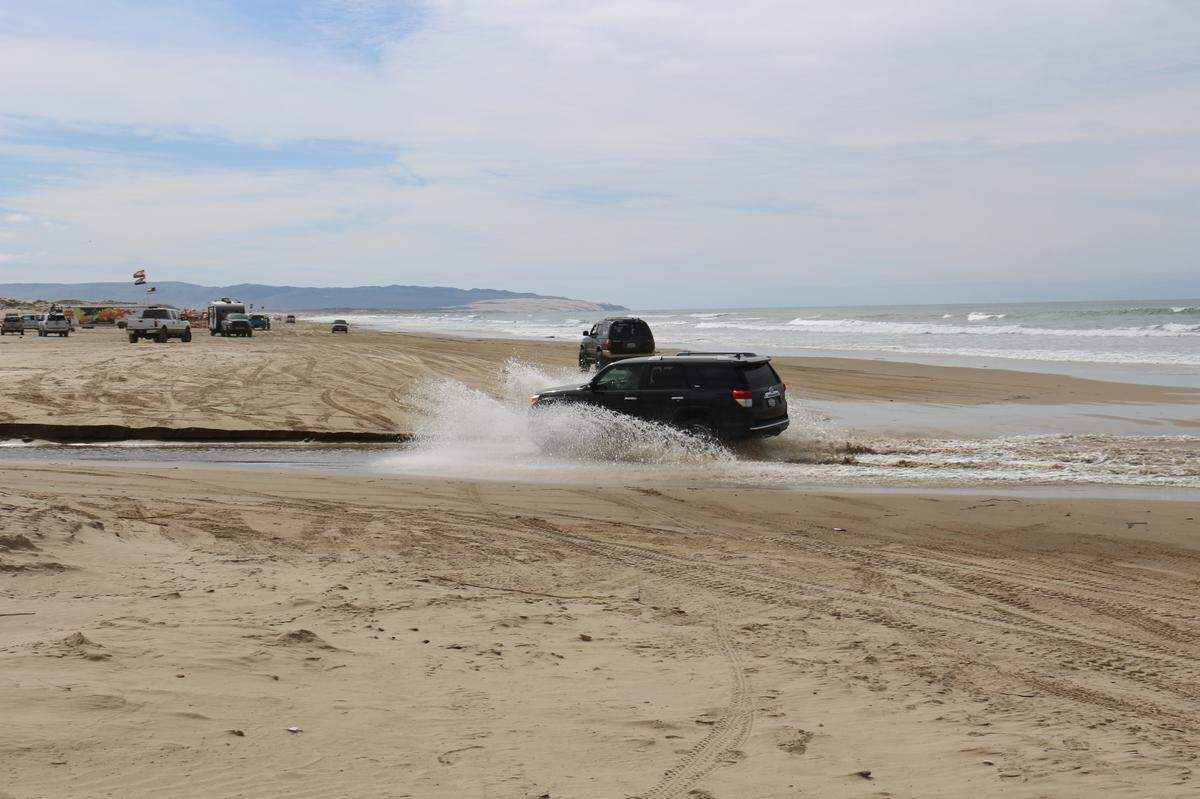
In a historic vote, the California Coastal Commission unanimously voted to revise the coastal development permit for Oceano Dunes State Vehicular Recreation Area to prohibit off-highway vehicle use in the park by 2026.
For more on the landmark vote: In historic decision, Coastal Commission votes to end off-roading at Oceano Dunes
Update, 7 p.m.
After asking questions of California State Parks and California Coastal Commission staff for nearly three hours, commissioners have taken a break for dinner and will return at 7:20 p.m. to deliberate the coastal development permit for Oceano Dunes State Vehicular Recreation Area.
Commissioners will determine whether off-highway use in the Oceano Dunes can continue.
Coastal Commission staff has recommended commissioners revise the Oceano Dunes permit to prohibit OHV use at the dunes by 2026.
State Parks disputed that plan, saying it would disrupt the agency’s obligation to provide accessible recreation and may have negative economic impacts on the local community.
Update, 5 p.m.
After three and a half hours of public testimony, California State Parks Director Armando Quintero responded to the comments.
He first requested that the public comment period on State Parks’ Public Works Plan for Oceano Dunes Vehicular Recreation Area be extended to April 19.
“Our focus is human health and biodiversity, and that needs to inform all the decisions about any activities that are shown as (State) Parks’ mission to balance public access and use — that means (Americans with Disabilities Act access), equestrian use, bikes, hikers, dogs, e-bikes, passive recreation and OHV and others,” Quintero said. “It’s not our duty to show bias for or against any views, I want to be clear that our interest is in basing our decisions and recommendations of public comment on the science.”
After Quintero’s brief response, Dan Carl, Central Coast district director for the Coastal Commission, also responded to the public comments heard during the meeting.
Carl addressed State Parks’ Public Works Plan, saying it was indeed an expansion of off-highway vehicle use at the Oceano Dunes because the acreage of OHV-use areas would expand, while State Parks would limit use capacity limits.
Carl also said that though State Parks has drafted biodiversity management and habitat conservation plans, those plans cannot offset the detrimental impacts off-road riders have on the environment.
Additionally, Carl noted that because State Parks would be mandated to limit vehicle access to the Oceano Dunes, there should be no traffic issues after the Pier Avenue entrance closes.
“Vehicular recreational users enjoy and benefit from their activities at the park over underserved communities directly in the park who bear the burden of its impacts, especially in terms of air quality and public health problems, but also in terms of a depressed economy and environmental conditions,” Carl said. “This represents a classic environmental justice issue.”
After Carl spoke, Coastal Commission Executive Director Jack Ainsworth said that the OHV use at the Oceano Dunes must be discontinued in order to protect the environmentally sensitive dunescape.
“OHV use is way out of balance with the protection of sensitive coastal resources at the park ... the hard fact is that continued OHV use will continue to degrade and have an adverse impact,” Ainsworth said. “Our recommendation not only protects the environmentally sensitive habitat, but also provides robust public access and honors that long history of access on the beach at this park.”
After the responses from State Parks and Coastal Commission staff, commissioners were given time to ask questions.
Update, 2:15 p.m.
Public comment from the general public began at about 1:20 p.m. Thursday at the California Coastal Commission’s meeting. Those who wished to comment were given one minute to testify.
About 130 commenters were in line to speak during the meeting.
Commenters who called in were divided upon whether the Coastal Commission should implement its staff’s recommendation to discontinue off-highway vehicle use at the Oceano Dunes.
But early in the comment period time, the majority of commenters had asked the commission to accept its staff’s recommendations.
Larry Allen, the former air pollution control officer for San Luis Obispo County, said he’d been studying and “seeking solutions to the substantial air quality emissions caused by park operations over 16 years ago.”
“The unfortunate reality is the culture at State Parks is diametrically opposed to solving any issue that doesn’t align with their core mission to enhance and expand off-road riding, and say that use is more important than public health and environmental protection,” Allen said.
State Parks refuses “to comply with numerous requirements of the commission, (county Air Pollution Control District), (California Department of) Fish and Wildlife, and virtually every other resource agency charged with protecting public health and the environment,” Allen added.
Those opposed to the Coastal Commission staff recommendation to discontinue OHV use at the Oceano Dunes cited expected economic woes should the use be banned, beach accessibility concerns and refuted air pollution concerns.
Brenda Auer, a resident of Grover Beach, said the beach at Oceano Dunes is “in better shape than the (Pacific Coast Highway) here.”
“I’ve driven the beach twice today. Being able to drive from Grover to Pier Avenue is one of my joys and why I live here,” Auer added.
Former Grover Beach Mayor Debbie Peterson said State Parks was a “model neighbor” and “jumped to help with law enforcement in our city when needed.”
Peterson asked the commission to not modify the Oceano Dunes coastal development permit because the Central Coast does not have representation on the Coastal Commission.
That was echoed by Jocelyn Brennan, president and CEO of the South County Chambers of Commerce.
“Without the proper representation for the South Central Coast, and without a comprehensive cost-benefit analysis of park uses and future opportunities, making this decision today without these two critical pieces of information is a dangerous precedent for future proceedings of this magnitude,” Brennan said. “Commissioners should also be aware that today there has not been a meaningful outreach to Spanish-speaking residents of Oceano, and their voice has not been heard on this issue and they’re largely unaware of the decision before you today.”
Update, 12:45 p.m.
During public comment, Friends of Oceano Dunes President Jim Suty said that the Coastal Commission “has no jurisdiction” or authority to ban OHVs from Oceano Dunes.
Suty has previously indicated that Friends of Oceano Dunes, a nonprofit organization that advocates for about 23,000 off-road enthusiasts who use the park, could sue the Coastal Commission if it initiates the staff’s recommendation to discontinue OHV use at Oceano Dunes.
Before Suty gave his remarks, however, Mikaela Pyatt, a certified law student at the Mills Legal Clinic at Stanford Law School, said that “when there is damage to natural resources (from OHV use) ... the (Off-Highway Motor Vehicle) Act mandates permanent closure for restoration.”
“There is no conflict between what the Coastal Commission staff is recommending today and what the Legislature intended when it passed the OHV Act,” Pyatt said.
Valerie Mercado of the Pismo Beach Chamber of Commerce said that closing Oceano Dunes to OHV use would detrimentally impact the local economy.
Mercado said that the COVID-19-related closure of Oceano Dunes in summer 2020 “devastated businesses to the core.”
Annie Frew, the director of community engagement & advocacy at Visit SLO CAL, urged commissioners to not make any decision regarding Oceano Dunes’ operations without local representation on the commission and without a reputable economic study of the impacts OHV use has on the local community.
“The park attracts over 1 million visitors annually who contribute to substantial amount of economic activity to the area through supporting small businesses, creating jobs and generate millions in tax revenue to provide important services to all county residents,” Frew said “We think commission action today would be premature, there is no Coastal Commission representative for the South Central Coast seat.”
Frew noted that Visit SLO CAL and the South County Chambers of Commerce are currently working on an economic impact assessment that “will outline the economic activity for current and future potential users” at Oceano Dunes.
The Coastal Commission went for a lunch break at 12:42 p.m. and is set to return at 1:15 p.m.

Update, noon:
Public comments from elected officials and tribal representatives began at 11:15 a.m. Thursday at the California Coastal Commission’s meeting.
Public agency representatives spoke at about 11:37 a.m.
Gary Willey, San Luis Obispo County air pollution control officer, said that he believes that Oceano Dunes State Vehicular Recreation Area can remain open to off-highway vehicle use and still meet air quality requirements.
“It’s going to require some significant changes in acreage and riding area but we feel that most of the park can remain open and meet the air quality requirements,” Willey said.
Willey noted that State Parks’ plan for Oceano Dunes will require some more work to properly address all the air quality issues present, but said it is a good start.
Kimberlina Whettam, vice chair of the California Off-Highway Motor Vehicle Recreation Commission, said that the commission strongly opposes the Coastal Commission staff’s report to discontinue OHV use at Oceano Dunes.
Charles Varni, vice chair of the Oceano Advisory Council, supports the Coastal Commission staff recommendations.
“Oceano has been called the poster child for environmental injustice on the California coast,” Varni said. “We need a vehicle-free beach to grow an equitable economy and improve the quality of our community life.”
Next to speak was Fred Collins, tribal chair for the Northern Chumash Tribal Council.
“It is with great heart and a sad heart, that I come here to speak,” Collins said. “In the State Parks presentation, it was the same old story: lacking feeling, lacking caring and lacking understanding for the tribal community that have (shouldered) the burden of the worst toxic waste in Oceano Dunes, and we support the commission’s staff report.”
Update 11 a.m.
April Winecki, a consultant with Winecki Consulting, gave a presentation that reviewed the Coastal Act and local coastal plans’ compliance issues with the Coastal Commission’s staff recommendations that would require the discontinuation of OHV riding at Oceano Dunes.
Winecki argued that the commission’s staff recommendation would disproportionately impact minorities who visit the park for OHV use and low-cost camping opportunities — since most of the park’s visitors come to Oceano Dunes from the Central Valley and Los Angeles area.
“Staff’s recommendation to eliminate the park’s unique access and recreational uses is presented with no real consideration of these impacts,” Winecki said.
“The existing public access and recreational opportunities supported by the park are public resources of statewide significance,” Winecki said, “found nowhere else in the State Park system and nowhere else along the California coast.”
After Winecki’s presentation, Director Quintero spoke again in a closing argument for the commission to not take action or reject the Coastal Commission staff report.
“This draft (Public Works Plan) process will strengthen a forward-looking tradition that utilizes transparent public processes to develop solutions that work for everyone and that are informed by the best and latest science,” Quintero said. “Parks, in partnership with communities throughout California, has over 150 years of experience in balancing the complex issues of public access and resource protection.
“We absolutely dedicate ourselves to partnering with the public and agencies, as we solve the complexities of resources protection, public access, and enjoyment and community engagement,” he continued. “We have demonstrated significant progress in all of those areas, and we believe the (Public Works Plan) process offers the best way forward for continual improvement.”
Update 10:45 a.m.
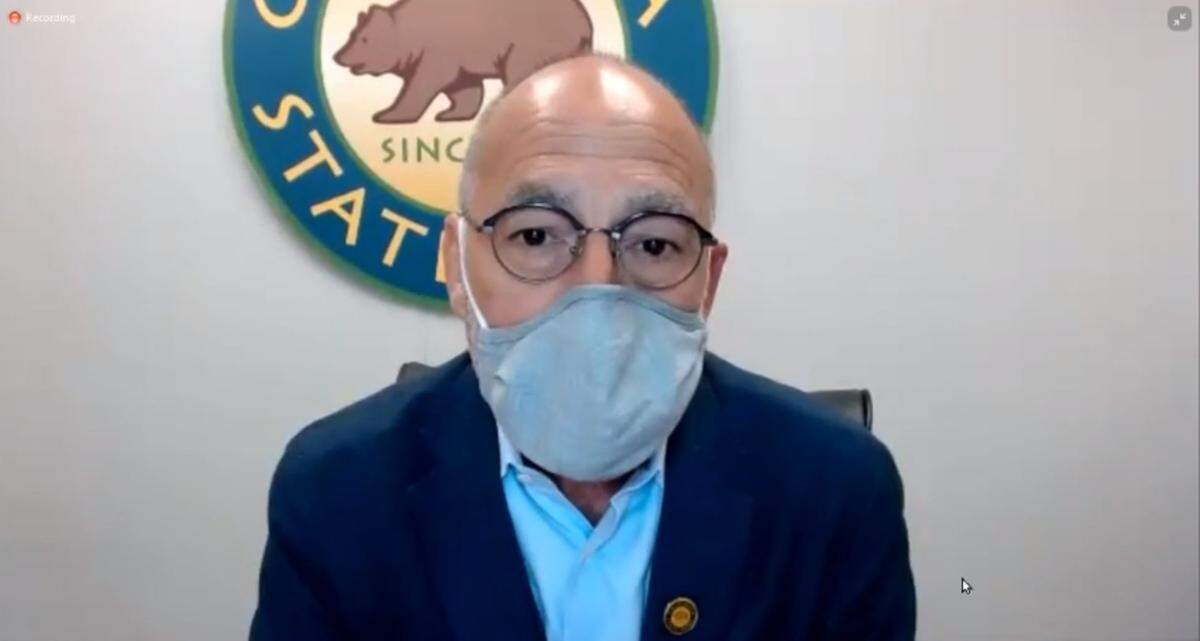
Following Quintero’s testimony, Director of the California Department of Fish and Wildlife Chuck Bonham went over his department’s Biodiversity Management Plan for Oceano Dunes.
Bonham said the Biodiversity Management Plan was “long overdue” and “creates comprehensive species conservation plans and ... would allow us to better manage and preserve a broader range of plants and wildlife and habitats across this landscape, and it would ensure consistency with the California Endangered Species Act.”
Bonham asked commissioners to ensure the Biodiversity Management Plan is enforceable.
After Bonham spoke, Alexandra Stehl, State Parks’ Chief of Planning, gave a presentation about the various plans State Parks has drafted that go over resource protection and continued OHV use impacts on Oceano Dunes.
“In July 2019, State Parks was directed by the Coastal Commission to address a series of specific conditions,” Stehl said. “State Parks was required to consider and address these conditions.”
Stehl said State Parks did address those conditions “through a variety of planning efforts currently underway, including the Public Works Plan, the Biodiversity Management Plan, the Habitat Conservation Plan and the dust management plan to ensure consistency in the management of these park units and compliance with applicable state and federal regulations.”
Stehl also went over how State Parks has implemented several biodiversity protection measures that aim to aid endangered and threatened species recovery at Oceano Dunes, such as the western snowy plover and California least tern.
Addressing the Coastal Commission’s staff report, Stehl said that the Public Works Plan does not expand OHV use, but rather imposes stricter use limits at Oceano Dunes.
Specifically, Stehl spoke about State Parks’ 40-Acre area plan, which would create a two-mile trail through previously-vegetated dune areas.
The 40 Acre area was “previously open to OHV riding, but was planted with dune vegetation in 2009 to protect our water quality and Oso Flaco Lake and stabilize an area in order to provide light trail development once the deserts vegetation have become established,” Stehl said.
The vegetation is now established and ready to be reopened to OHV riding, Stehl said.
Update 10:18 a.m.
California State Parks Director Armando Quintero began his presentation to make his case against the Coastal Commission’s staff recommendations to discontinue OHV use at Oceano Dunes just after 10 a.m.
“The core mission of State Parks is to make parks for everyone, including those who are low-income, those who are members of underrepresented minority groups, those who are differently abled,” Quintero said.
Discontinuing OHV use at Oceano Dunes would disrupt State Parks’ mission, Quintero said.
“The (Public Works Plan) has been designed to help us work together to balance protection of precious resources for future generations to incorporate best mitigation to benefit public health and to provide equal access for the current and future generations,” Quintero said. “We believe that OHV use as managed by State Parks ... is compatible with the Coastal Act and the (San Luis Obispo County) local development plan, and can continue with the proposed modifications in the draft.”
Update 10 a.m.
Coastal Commission Central Coast District Supervisor Kevin Kahn kicked off the meeting with a presentation on the staff recommendations for Oceano Dunes.
Kahn argued in his presentation to the commissioners that OHV use is unlawful because it is not an allowed activity in designated environmentally sensitive habitat areas, or ESHA, under the California Coastal Act.
Kahn outlined the two-part test that determines what activities are allowed under ESHA:
- Is the use dependent on the habitat resource?
- Does the use avoid significant habitat value disruption?
OHV use within the Oceano Dunes fails both of these tests, Kahn said, because the use is not dependent on the dunes to function and it “significantly disrupts beach and dune habitat values.”

Later in his presentation, Kahn warned commissioners that they will “no doubt hear comments today suggesting that dust air quality and public health impacts are natural and not a result of vehicular recreation.”
He told commissioners that this notion is false: “Yes, it is a naturally windy environment, but the dust problems have conclusively been shown to be exacerbated as a direct result of vehicular recreational activity.”
Kahn noted that the OHV use at Oceano Dunes has contributed to environmental and tribal justice issues, and it is the commission’s duty to ensure underserved and minority communities are not subject to these injustices.
Addressing the legal concerns of discontinuing OHV use at the park, Kahn said that the Off-Highway Motor Vehicle Recreation Act and the California Coastal Act are not at odds with each other.
The laws “promote providing public access and recreational opportunities, but not at all costs,” Kahn said. “The laws require such recreation to be undertaken in a manner that doesn’t lead to adverse impacts to natural resources, and both allow for that reduction or even cessation of recreational use, so as to meet applicable resource protection requirements.”
Kahn said the elimination of OHV use at Oceano Dunes would comply with the two laws.
The Public Works Plan released by State Parks in December that outlines the future of Oceano Dunes for the next 20 to 30 years was not adequate, Kahn added.
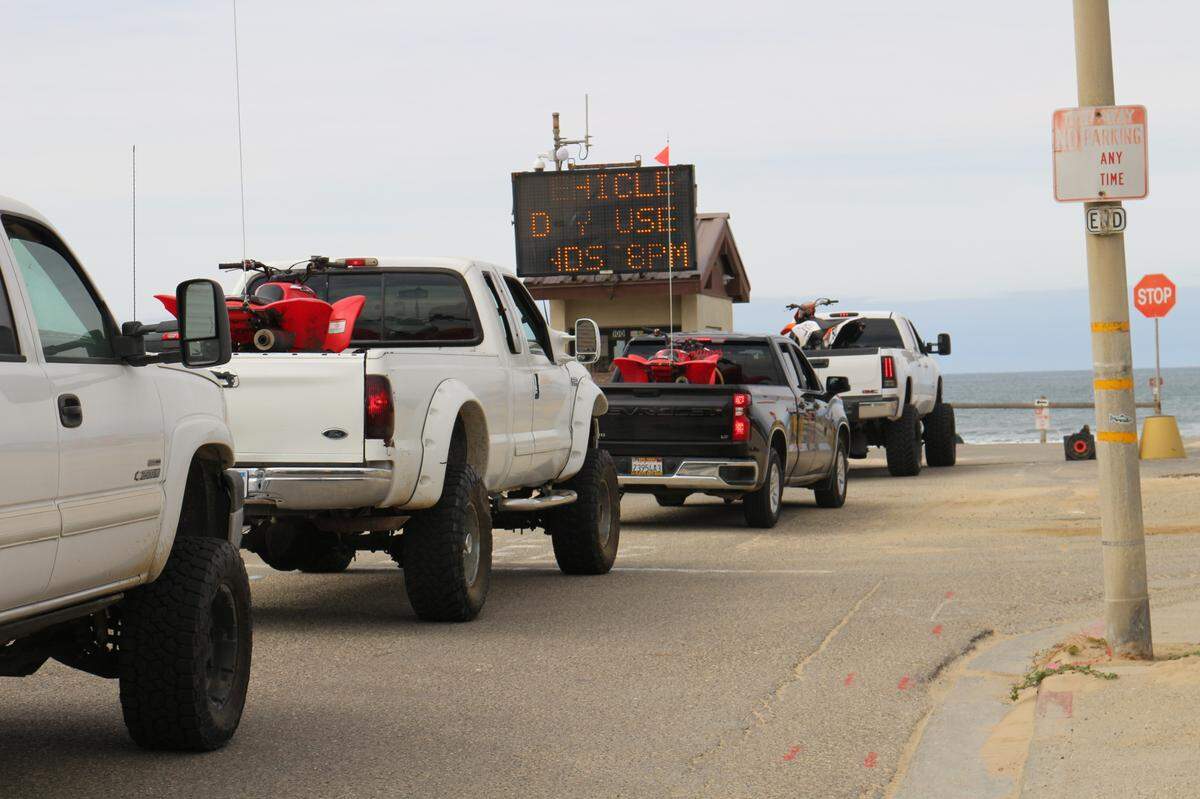
State Parks did not follow commission suggestions to consider phasing out OHV use over five years, discontinue nighttime OHV riding and discontinue vehicle crossing of Arroyo Grande Creek, Kahn said. The Public Works Plan also omitted a commission suggestion to implement a monitoring program of the park’s operations, said that there is no Coastal Commission authorization needed for State Parks operations like beach grading and fencing, and concluded that the Pier and Grand avenue entrances should be permanent, Kahn said.
In his conclusion, Kahn said “it’s time for the commission to use the discretion afforded to this body to make changes.”
“We see the potential for this park to become one of State Parks’ crown jewels, offering unique recreational experiences, particularly camping for families looking for lower costs recreational and outdoor opportunities on almost 5,000 acres of beaches dunes, creeks, wetlands and lakes,” Kahn said.
Kahn noted that “the evidence is pretty overwhelming” in support of discontinuing OHV use at Oceano Dunes.
Original story:
The California Coastal Commission met Thursday to discuss and hear public comments on California State Parks’ coastal development permit for Oceano Dunes State Vehicular Recreation Area
The meeting started at 9 a.m., and is expected to last several hours.
The Oceano Dunes permit is up for evaluation, as it has been nearly every year.
This year, however, the commission may take steps to modify the permit to mandate that State Parks discontinue off-highway vehicle use on the environmentally sensitive dunescape by 2026, as suggested by Coastal Commission staff.
State Parks plans to refute that suggestion during the meeting, claiming that such a huge shift in park operations would cause economic disruption and go against the agency’s duty to provide accessible recreation opportunities for all.
The commission debated the same potential permit modification in 2019, but did not take any action. Instead, State Parks was asked to complete a Public Works Plan and subsequent Environmental Impact Review that would lay out the future of Oceano Dunes for the next 20 to 30 years.
State Parks released those documents in December, but Coastal Commission staff argued that the plan did not adequately consider the phasing out of OHVs by 2026 and therefore suggested the commission assert its authority to prohibit such use.
The meeting began with a Coastal Commission staff presentation expected to take about 30 minutes. Following that, State Parks will present for about 60 minutes, including time for rebuttal.
Then elected officials and tribal representatives will be allowed up to two minutes each to speak, followed by established organizations.
Individual members of the public will then be allowed to speak for up to one minute each.
In total, 182 speakers have signed up to present at Thursday’s meeting, according to Coastal Commission public information officer Noaki Schwartz.
Following public comment, State Parks may be able to speak again, followed by a Coastal Commission staff response to public testimony.
Then the Coastal Commissioners will deliberate.
You can watch the meeting live on Cal-Span.org.
This story was originally published March 18, 2021 at 9:15 AM.