Kristin Smart hearing: Ruben Flores accidentally confessed to a felony, detective says
A San Luis Obispo County Sheriff’s Office detective testified Tuesday that the man accused of hiding the remains of Cal Poly freshman Kristin Smart made an inadvertent confession when investigators took a DNA sample.
According to the detective, Ruben Flores, father of murder defendant Paul Flores, asked investigators in May why they sought DNA samples from his ex-wife and her boyfriend.
“They didn’t commit a felony, I did,” Det. Clint Cole testified that Ruben Flores said.
Ruben Flores then corrected himself and said, “I mean, I’m the only person that’s been arrested,” according to testimony Tuesday.
Testimony resumed Tuesday in San Luis Obispo Superior Court in the preliminary hearing for Paul Flores and his father, Ruben.
Paul Flores, now 44, is the last person known to have seen the 19-year-old freshman alive after walking her back from the party toward the Cal Poly campus residence halls on May 24, 1996.
Smart’s body has never been found but investigators said in court documents that her remains were buried at the Arroyo Grande home of 80-year-old Ruben Flores, and recently moved.
Paul Flores, a San Pedro resident, is charged with one count of murder, while his father is charged with felony accessory after the fact.
Tuesday marked the 15th day of proceedings as the evidentiary hearing dives into its fifth week. It is now tentatively scheduled to conclude by Sept. 10; both parties said on Monday that proceedings are behind schedule.
Nearly two dozen people — including Smart’s parents and former friends and classmates of Smart and Paul Flores, as well as current and retired San Luis Obispo County Sheriff’s Office and Cal Poly campus detectives, Flores’ ex-girlfriend and a cadaver dog expert — have testified since the hearing began Aug. 2.
On Monday, a retired handler of a dog trained to detect human remains testified that the dog alerted on Paul Flores’ Santa Lucia Hall dorm room about a month after he moved out of the room in 1996.
Gail Laroque was the second handler to testify that their dogs alerted to the room — namely a mattress and trash can left behind in the room, which had been cleaned by Cal Poly staff by June 29, 1996.
On Tuesday, a third cadaver dog handler testified that his dog alerted to the presence of human remains in Flores’ residence hall room.
Wayne Behrens said his dog’s search began outdoors on campus but that the animal independently led him to Santa Lucia Hall — right outside the window of Paul Flores’ room, although Behrens didn’t know that at the time.
“We knew we were looking for a probably deceased person,” Behrens said on the stand in San Luis Obispo Superior Court. “But we weren’t told that dorm had any significance.”
At the conclusion of the weeks-long preliminary hearing, Superior Court Judge Craig van Rooyen will rule whether prosecutors established probable cause — a lesser standard of proof than guilt beyond a reasonable doubt — to proceed the case toward trial.
Here’s what happened in court Tuesday.
Third cadaver dog handler testifies in SLO court
Behrens was first of three cadaver dog handlers to search Paul Flores’ dorm room on June 29, 1996.
Behrens testified Tuesday that he was assigned to the search of the Cal Poly campus through his work for the California Rescue Dog Association (CARDA), which contracts work for the state Office of Emergency Services.
He was on campus at the request of law enforcement with Adela Morris and Laroque, two other CARDA volunteers who also had their own certified human remains detection dogs. Both Morris and Laroque previously testified during the preliminary hearing.
Behrens’ dog, a yellow Labrador named Sierra, was certified by CARDA in locating both remains and live humans, and had been successful in finding remains in at least four large-scale searches times during its lifetime, he testified.
Behrens recalled on the stand that he was assigned to search a rectangle-shaped outdoor area of the Cal Poly campus, with the residence halls at the northern boundary.
Sierra ignored other areas but led Behrens to the exterior of Santa Lucia Hall and “showed interest” outside a first-floor window.
Behrens said he asked his accompanying Sheriff’s Office deputy to let them inside the building to continue the search. After a little hesitation, Behrens said, he and Sierra were allowed into the building, which was partially occupied by students at the time.
According to Behrens, the dog ran to Room 128, then, when let inside, alerted to a mattress on one side of the room, and to a desk underneath a window leading to where she had alerted outside.
“We were all surprised by the strong response,” Behrens testified. “It was a strong response. The deputy behind me said, ‘Wow.’ “
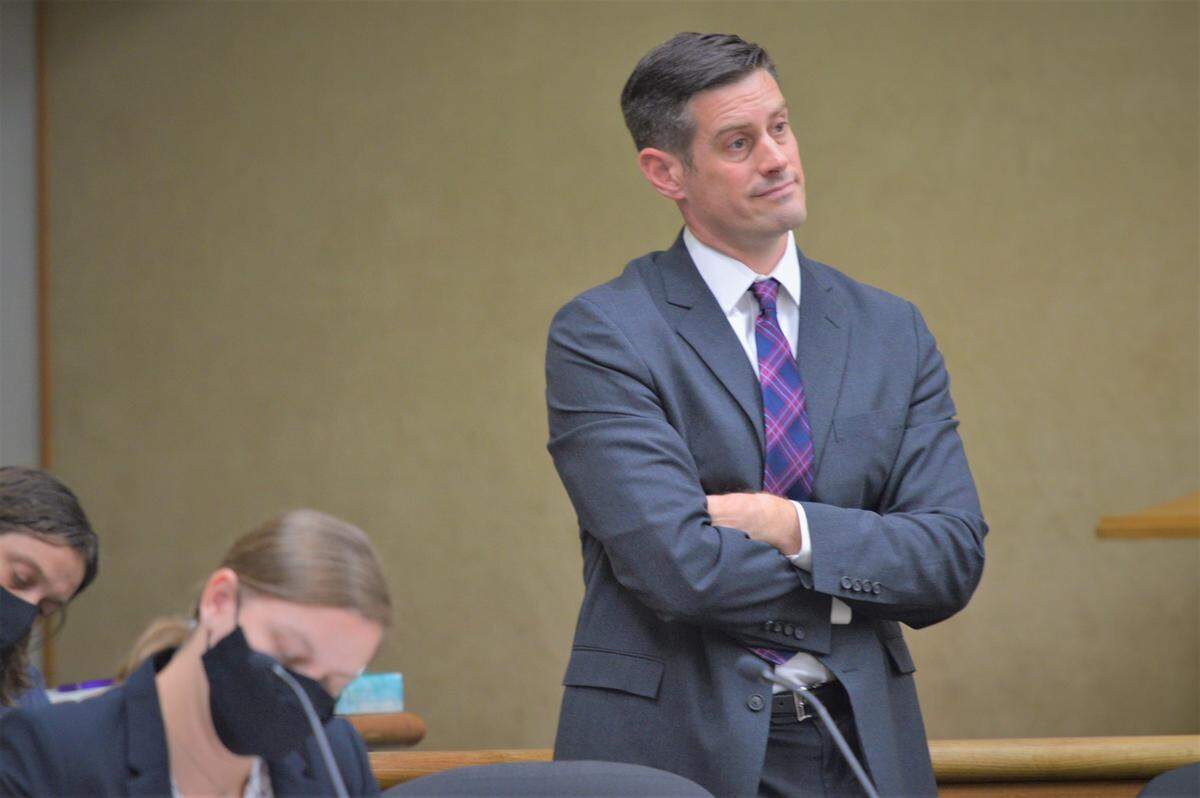
Asked by deputy district attorney Christopher Peuvrelle to describe the intensity of Sierra’s alert, Behrens said, “Sometimes (alerts) can be a little ambiguous. This was not ambiguous.”
The handler said he urged law enforcement officers to bring in other K-9 teams to verify his findings.
Behrens said he recommended the deputy bring in the other dog teams “blind,” or without any explanation.
Under cross examination, Behrens said he remembered discussing his findings with the other K-9 handlers, but not until after they conducted their own searches.
The defense also asked Behrens about any possible contamination of the room. He said the deputy that followed him was not wearing any protective gear and that there was roughly a half-dozen student residents lingering around the dorm building while he conducted his search.
Behrens testified that he was not aware of any physical evidence or actual human remains ultimately being found in the room.
Unlike dogs in three later searches, Behren’s dog did not alert on a trash bin in Flores’ room, he said.
Criminologist says she examined fibers found in soil
Just prior to the lunch recess, the court heard testimony from Faye Springer, a retired senior criminologist for the Sacramento County District Attorney’s Office who currently contracts with that county’s Laboratory of Forensic Services.
Springer, who is being taken out of order as a witness, said her expertise is trace evidence, or evidence that is small enough to require special instruments such as microscopes to examine.
Spring said she’s testified more than 500 times as an expert in court proceedings — roughly half of that related to trace evidence, including that blood and fibers.
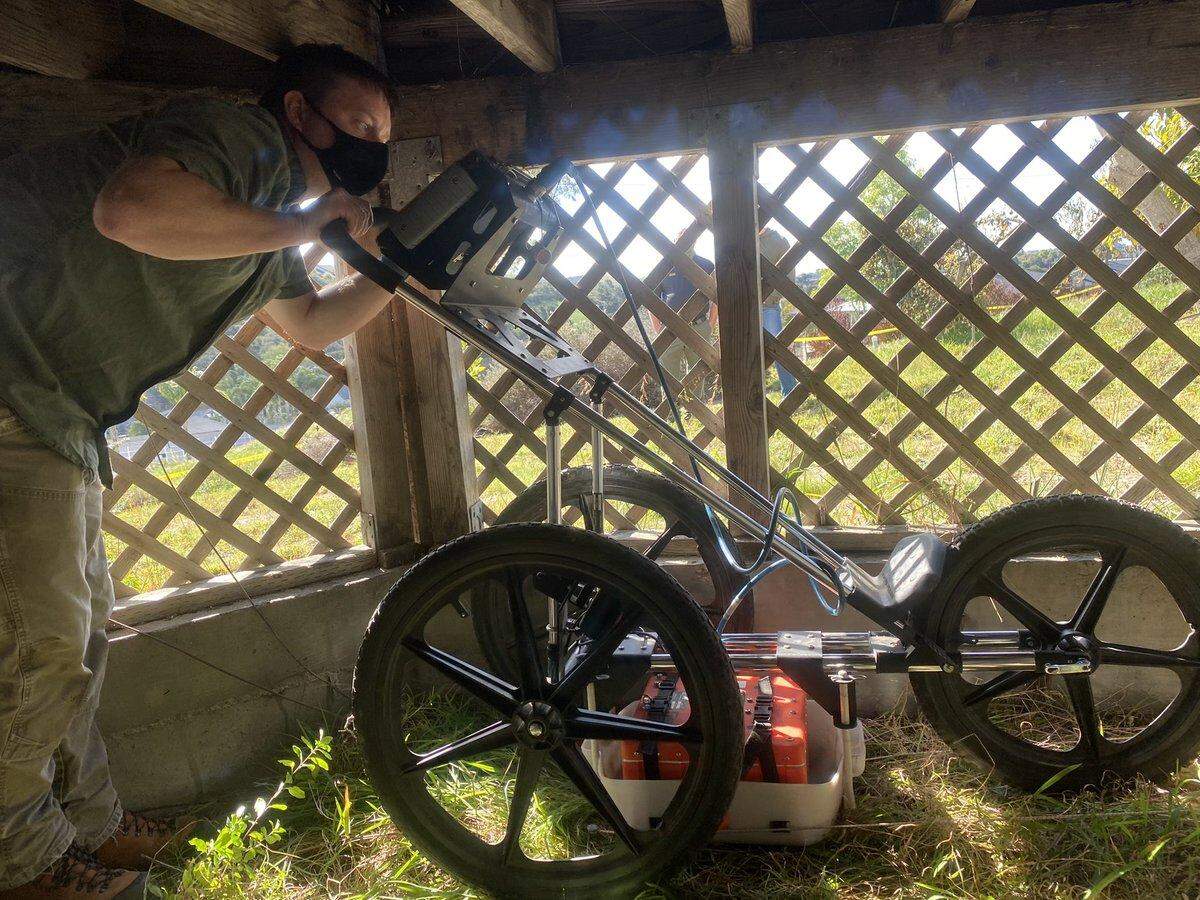
Though it was not specifically mentioned in court Tuesday, unsealed court records show that investigators say they recovered clothing fibers in a disturbed patch of soil under Ruben Flores’ deck at his home at 710 White Court in Arroyo Grande.
Springer said that in May 2021 she examined fibers provided to her by Sheriff’s Office Det. Clint Cole that were found in soil of some sort. Though she did not know the source of the fibers, both parties’ line of questioning indicated that the fiber samples provided to her were found under Ruben Flores’ deck.
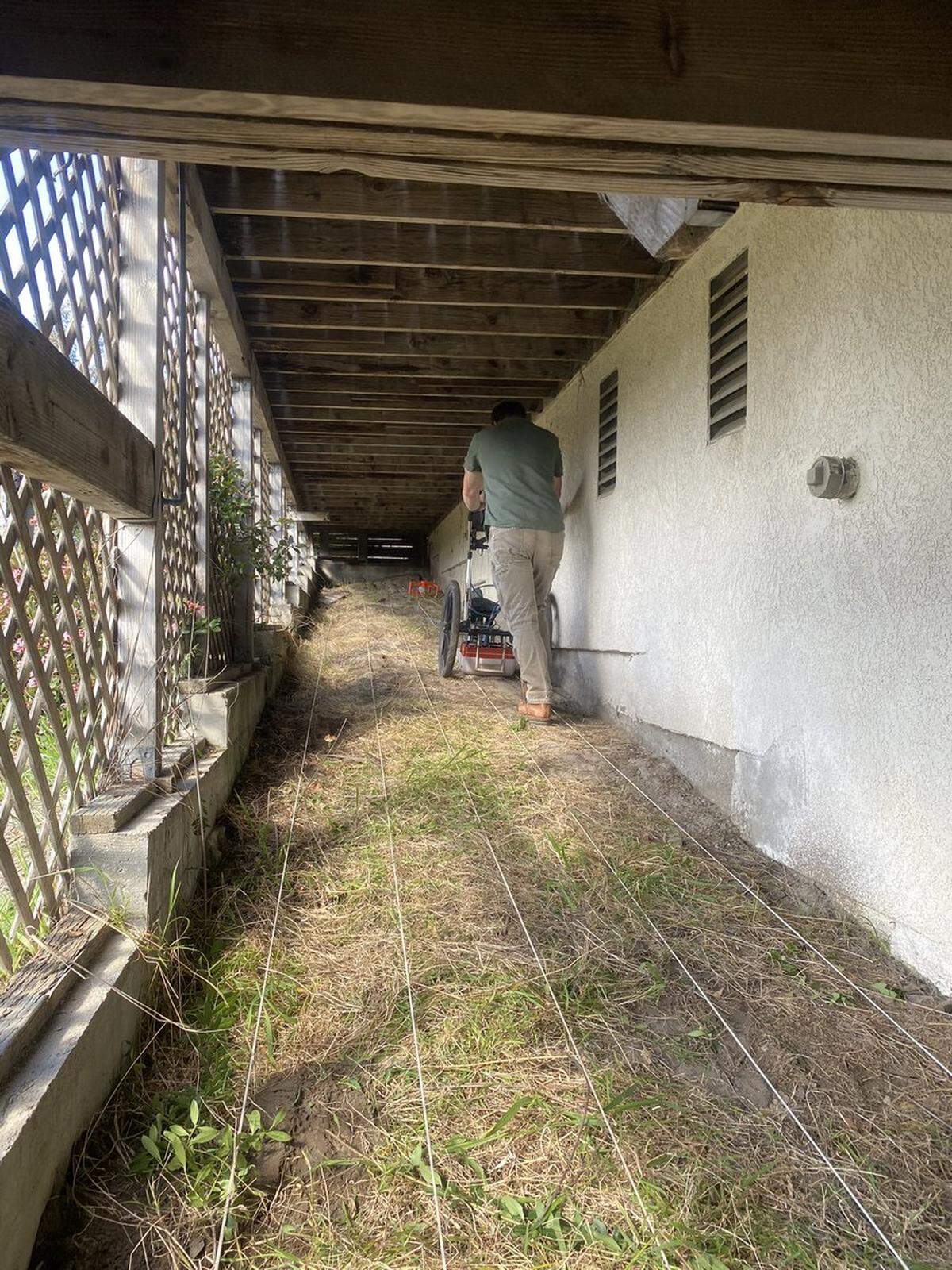
Springer testified that the fibers came to her attached to “lifts,” or adhesive strips used to collect trace evidence.
The fibers were black, pink, light-colored, and blue, she said, and some were synthetic while others appeared to be cotton-like. Smart was wearing black and light-colored clothing as well as red sneakers, previous testimony showed.
The colors largely had not faded, consistent with being protected from sun and rain, Springer said.
Springer said she only recorded the fibers’ appearance and she didn’t run any forensic or chemical testing on them.
The criminologist was also provided a hair brush — testimony did not specify whose it was — for comparison with any hairs she found in the samples. She did not find any hairs in the samples, Springer said.
Under cross-examination, Springer said it would not be unusual to find such fibers in soil at a construction site or around a house.
“It’s very likely, yes,” she said.
She also said whoever collected the fibers should have been wearing protective gear as to not contaminate samples.
Defense attorney Robert Sanger questioned Springer’s knowledge about the case before she examined the fibers.
Springer said Cole revealed to her beforehand that Paul Flores was the suspect in the case. She also said she “knew a little what this case was about” from news reports over the years.
Springer also knew that Smart was supposedly wearing red tennis shoes the night of her disappearance, the criminologist testified.
But she was not able to draw any significance to the fibers, she said, because there was nothing to compare them to — such as pieces of Smart’s clothing from the night she disappeared.
“There’s some material there that are interesting that could be compared if objects or clothing are found,” Springer said.
Under questioning by Ruben Flores’ attorney, Harold Mesick, Springer said that she completed her review of the fibers the same day she received them, within a typical eight-hour shift.
The defense team told the court they were only provided information on Springer’s review by the prosecution on Tuesday morning, and the DA’s Office emailed them a memo from an interview with Springer taken at the lunch break.
In the memo, Springer is quoted as saying the fibers she reviewed “didn’t look really old,” had “fairly clean surfaces, fairly intense in color” and “did not look like there was a degradation of the material.”
Detective says Ruben Flores made incriminating statement
J.T. Camp, the San Luis Obispo County District Attorney’s Office’s lead investigator in the case, took the stand Tuesday afternoon.
Camp said he was a student at Cal Poly from 1991 to 1995 as well as a one-time resident of Sequoia Hall, located near Santa Lucia Hall, and was familiar with the layout of the campus.
Camp testified that he photographed relevant areas on campus and documented the path that previous testimony showed Smart and Paul Flores walked when traveling with two others toward the dorms from a house party on Crandall Way.
Camp said the 0.44-mile trek took him 8 minutes and 35 seconds to walk.
.jpg "Afternoon FLORES1501-2 (1).jpg")
Cole also took the stand late Tuesday and recounted going with Camp to Ruben Flores’ house on May 19 following Flores’ arrest to collect a DNA buccal swab, which is collected from the inside of the cheek, as authorized by a search warrant.
Cole said Ruben Flores did not let the two inside his home, but took the swab in the doorway.
Before he did, however, Ruben Flores was reading the search warrant and saw similar swab authorizations for his ex-wife, Susan Flores, and her boyfriend, Mike McConville, Cole said.
Cole said Ruben Flores asked why the investigators were taking a DNA test from Susan Flores and McConville because “they didn’t commit a felony, I did.”
The detective testified that Ruben Flores quickly corrected himself and said, “I mean, I’m the only person that’s been arrested.”
Testimony is expected to resume Wednesday morning.
This story was originally published August 31, 2021 at 1:44 PM.