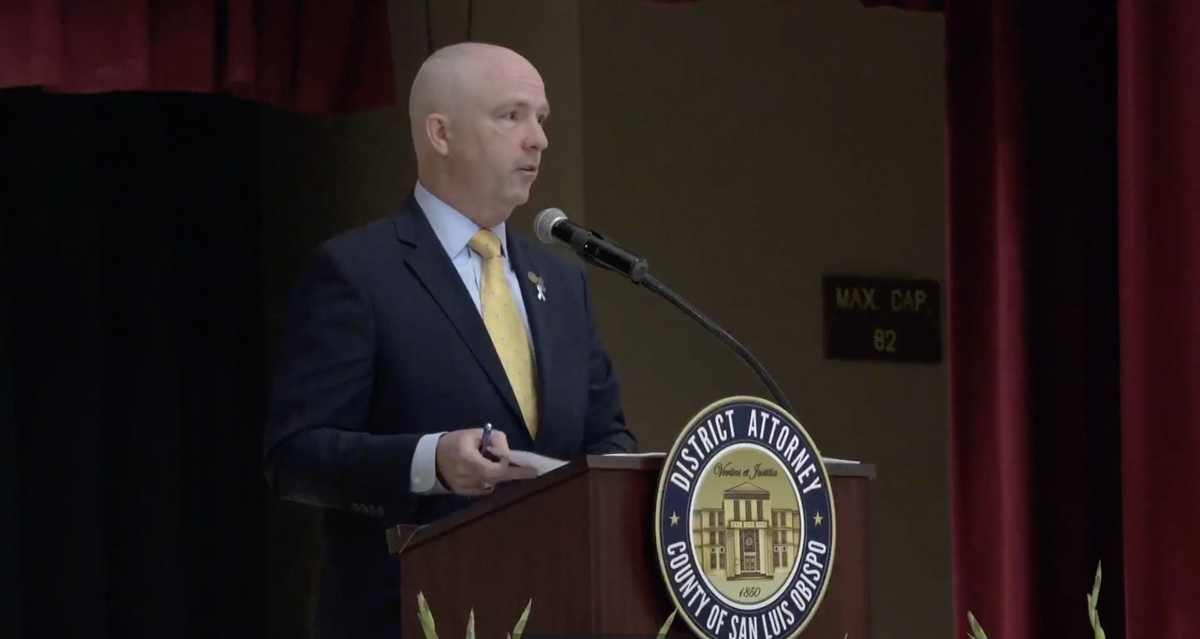
SLO County district attorney is not shy about sharing his political opinions. Is it ethical?
In the run-up to the election last month, SLO County District Attorney Dan Dow appeared at a monthly meeting of the Paso Robles Republican Women Federated as the keynote speaker. School board candidates Laurene McCoy and Hunter Breese also attended as special guests.
Three weeks earlier, Breese was reported to Dow’s Office for alleged election fraud.
The Oct. 14 meeting was not a campaign event, and Dow said he did not endorse any candidate for election, but for Camille Katz, the Paso Robles citizen who submitted the complaint against Breese, the district attorney’s appearance at an event with the subject of a formal complaint made her question the integrity of his investigation entirely.
“Can I trust my DA to investigate what’s going on in our small community, to care what’s going on in our small community?” Katz asked The Tribune.
The event is only one recent example in a long list of Dow outwardly sharing partisan opinions, begging the question of whether elected officials within the criminal justice system should be as vocal about their political views as Dow has been.
The Tribune reached out to Dow to discuss how his public expression of his political views relates to his work as the county’s chief prosecutor. In lieu of answering a detailed list of questions asked, he responded over email with a written statement, which he also posted in full to X earlier this month.
“Let me make something clear,” Dow said in the statement. “As the elected district attorney, I am absolutely committed to making sure that every victim and every defendant who has a case before my office is treated with dignity and respect, obtains a fair trial, and receives a just outcome for the specific facts under California law.”
But Katz feels differently.
“I’ve met him on a personal level. He’s very kind ... but I don’t like how he involves his politics in his decision-making,” Katz said of Dow. “There should be balance, and I feel like he doesn’t equally balance both sides of the political coin.”
The Tribune examined Dow’s political activity and looked into the ethical rules governing prosecutors’ partisan behavior as a part of its Reality Check series.
Dow’s history of publicizing his politics
Dow has a long history of stepping into political issues.
During the COVID-19 pandemic, he personally ignored a statewide public health order prohibiting indoor church gatherings and said he would not criminalize residents for not following state lock-down mandates.
At a fundraiser for the separatist group New California State in October 2020, Dow introduced controversial conservative commentator and activist Candace Owens. It was another event that disregarded masking orders.
Around the same time, Dow came under scrutiny for prosecuting Black Lives Matter activists, including Tianna Arata for 13 misdemeanors, after a 2020 protest stopped traffic on Highway 101.
San Luis Obispo Superior Court Judge Matthew Guerrero kicked the San Luis Obispo County District Attorney’s Office off the case in December 2020 after he found that a campaign email sent by Dow’s wife asking for donations to help him “lead the fight against the wacky defund the police movement” was a “clear conflict of interest.”
Moreover, Dow has never shied away from sharing his political views on social media.
His recent Instagram feed has been flooded with posts about his opinions on and involvement in various political topics, such as voting yes on Proposition 36 to increase the criminalization of misdemeanor drug possession and theft; sharing the results of Los Angeles County’s DA race that ousted, as Dow put it, the “progressive left ‘social justice’ imposter prosecutor” George Gascon; fundraising for and attending an event at a pro-life pregnancy center; congratulating President Donald Trump on Election Night; and attending a talk at Cal Poly by Riley Gaines, a professional swimmer and conservative political activist known for campaigning against the participation of transgender women in women’s sports.
In his post lauding Gaines, Dow thanked her for speaking to the university on “Real Women’s Day,” a holiday designated by the athlete to recognize the fundamental biological differences between men and women and honor biological females as “the only kind of women.” On Oct. 25, 2023, a partisan bill was introduced in Congress to designate Oct. 10 — or XX in Roman numerals, a nod to the female gender chromosome — as the “Real Women’s Day” holiday.
“Sometimes I will express my stand on certain issues on social media to make it clear to the community where I stand,” Dow said. “It is transparent, appropriate and honest to let the public know when I express my views in this way.”
As for the ethics of Dow’s digital footprint as an elected attorney, Scott Cummings, a professor of legal ethics at the UCLA School of Law, said he isn’t breaking any rules.
“It’s an unfortunate thing for him to do, but it’s not unethical, unfortunately, from the perspective of a prosecutor,” Cummings said, specifically referencing the post about Gaines.
Cummings said it would become a problem, however, if Dow had an ongoing case involving a transgender person. Then, it could be considered a conflict of interest.
“I work hard to guard and protect the integrity of my profession, and I will never engage in a politically motivated prosecution,” Dow said in his statement. “And I will speak out when I see it happening elsewhere.”
Dow noted that he holds “conservative policy views” and described himself as an “unashamed” Christian who “is blessed to have established genuine personal relationships with many people of other faith communities and policy views.”
“On my own time, when I attend public events such as a recent march through the Farmers Market to support the Jewish people and the state of Israel,” — of which he posted a video on Instagram — “I express my personal views that represent my values,” he said. “And I do so because it’s the right thing to do morally, ethically and, frankly, legally.”
Why did Dow attend an event with a supposed subject of a DA investigation?
After Katz heard Dow was attending the Republican Party event with Breese, she became worried that he was showing “preferential treatment” to the candidate as a subject of a potential DA’s Office investigation, she said.
“The DA is just not responding to whether they even have an open investigation. Meanwhile, Mr. Dan Dow is doing Republican events with the very people he’s supposed to be investigating,” Katz said. “It seems highly corrupt.”
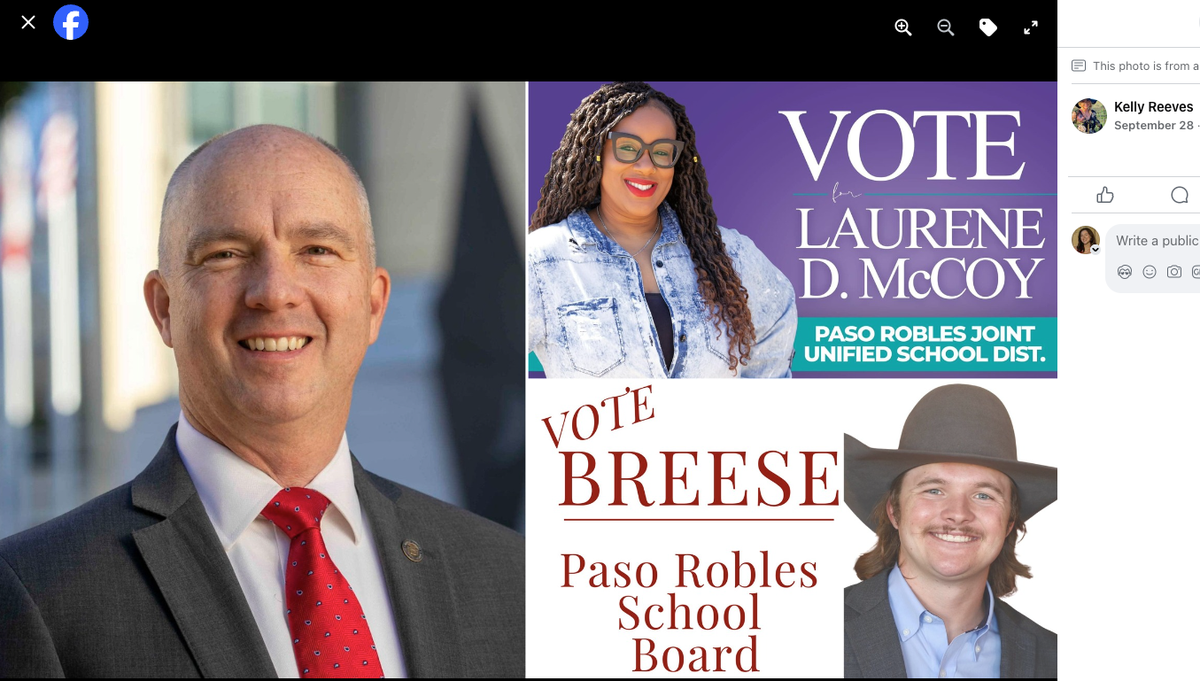
The Tribune first heard about the investigations against Breese and Arroyo Grande Mayoral candidate Gaea Powell through a series of anonymous tips and then later confirmed the information through the SLO County clerk-recorder. When asked by The Tribune, the DA’s Office said it does not confirm or deny the existence of open investigations against any candidate for office.
But Dow said the reason for his office’s silence was a matter of fair prosecution during an ongoing election in which Breese was a candidate for office. As of the latest vote tally, Breese was trailing in the race by nearly a two-to-one margin.
“In the interest of justice and fairness, we are still not confirming whether an investigation is or is not underway,” Dow said.
Dow also said that his involvement in the Paso Robles Republican Federated Women’s event should not be mistaken as an endorsement.
“I have repeatedly made clear that I have not endorsed any local office candidates in this election cycle,” he said. “I did not and have not endorsed any local candidate.”
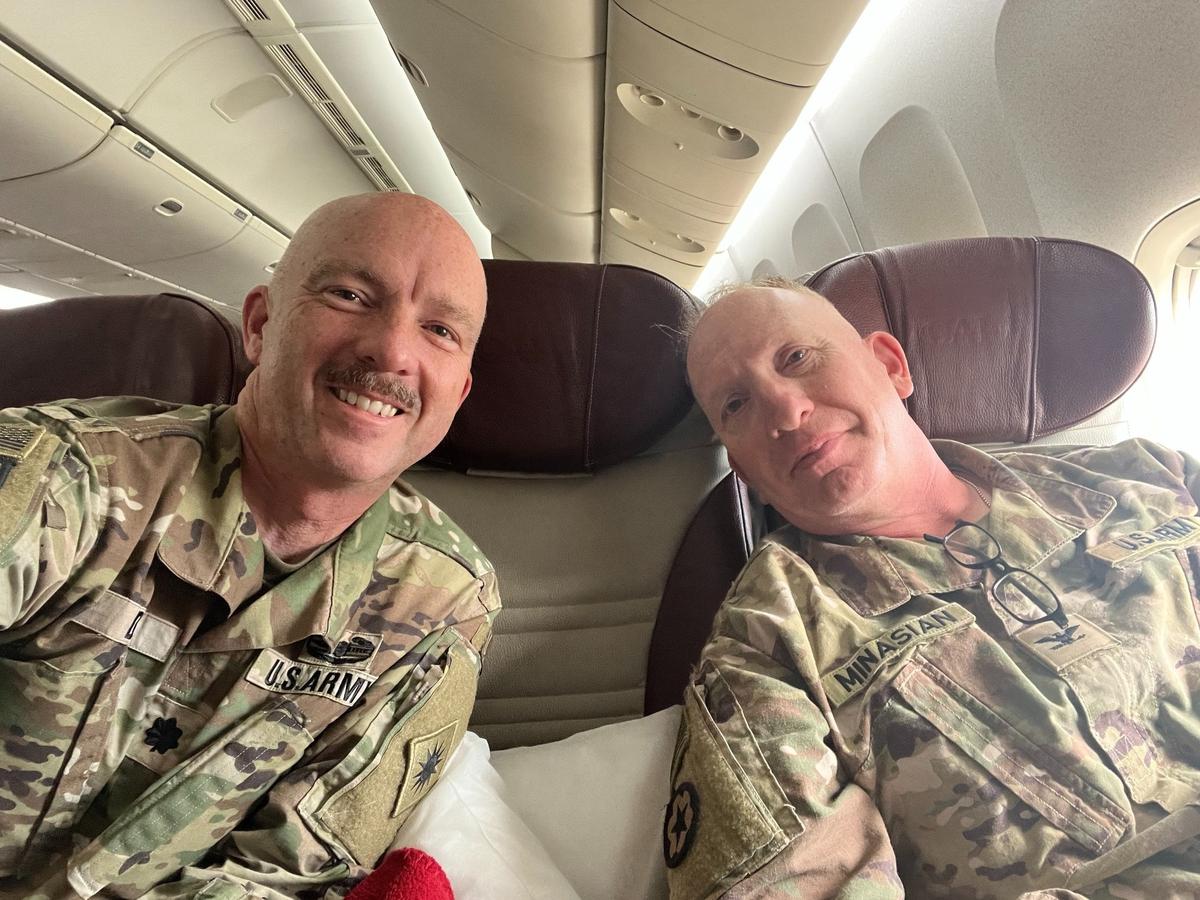
He reiterated that the meeting was not a campaign event but rather a regular monthly gathering held by the Republican group to socialize and discuss issues of concern to them. He was asked to speak about his recent military deployment in the Middle East and the criminal justice system, not about the candidates or the election, he said.
“I am willing to speak to most any group that would be kind enough to invite me,” Dow said.
In fact, Dow said he was asked to speak at the meeting in May, months before the event took place, while the North County candidates were not invited to speak until much later.
But Katz said even if the event had been scheduled before she filed her complaint against Breese, she still found it “highly inappropriate” and a possible “conflict of interest” for Dow, as an elected law enforcement official, to have attended a political event.
“You’re not supposed to be serving a political party when you’re the DA,” she said. “Is this interfering in your ability to do your job now that you might have to investigate people that you’re actually advocating for?”
What are the ethical rules around a DA’s political behavior?
As it turns out, the rules that govern the partisan behavior of prosecutors is “a little bit of a gray zone,” according to Cummings.
Ethical rules about participation in political events pertain only to judges, not prosecutors, Cummings said.
The California State Bar Committee on Judicial Ethics enforces its formal opinion prohibiting judges’ attendance at political fundraising or endorsement events — which would likely include the Republican Party event Dow attended — but the State Bar does not have the same rules for prosecutors.
All in all, Cummings said there isn’t much oversight for district attorneys in terms of specific ethical rules around political activities.
The closest thing would be the American Bar Association’s set of ethical guidelines for prosecutors, but they are not hard-line, enforceable rules, nor do they touch on the question of political activity, Cummings said. Instead, they are more related to preventing bias in specific cases.
Dow himself has written informally on the topic of prosecutorial ethics for the California Globe in reaction to former President Donald Trump being found guilty on 34 felony counts in the New York hush money case, pointing to an essay by former U.S. Attorney General Robert H. Jackson as ethical guidance, as well as in a brief message on the DA’s Office website.
“I became a prosecutor because of the requirement to exercise our authority with honesty, integrity, and fairness to all concerned,” he wrote for the Globe. “I am disappointed to see political prosecutions by some district attorneys.”
The difference in ethical standards between judges and district attorneys comes from a fundamental difference in their roles, Cummings said. While judges must remain objective to adjudicate cases and make fair and unbiased rulings, attorneys are, by nature, taking sides.
“I mean, lawyers are supposed to be partisan actors, right?” Cumming said. “They’re taking hard positions for clients. The prosecutor is unique in that regard.”
Cummings said that as elected officials, district attorneys tend to have a “complicated relationship with politics and independence.”
“These elected officials are in a little bit of a difficult situation, because they do have to run for office and be elected on grounds that are going to appeal to certain segments of the electorate, and then that means they have to continue engaging in political activity, even when they’re in this office,” Cummings said.
Ultimately, district attorneys have free speech rights to engage in political activity. But while there is technically nothing barring Dow from attending political events and outwardly expressing his views, Cummings said he still wouldn’t advise it.
“I don’t think it’s a good look,” he said. “I think the best practice is, obviously, for them to comport themselves in such a way that are going to reduce concerns about politicization of their office. And so I think that’s a question of best practices and doing the right thing.”
Cummings said Dow’s participation in the Republican Party event supporting Breese may have “raise(ed) questions” and created a “potential link” between himself and the target of an investigation, but that he wouldn’t go as far to call it a conflict of interest that would threaten a fair investigation.
However, even the appearance of bias is dangerous for a DA’s Office, Cummings said.
“We want confidence in the people we trust to make important public decisions on our behalf,” Cummings said. “You want the public to be confident that they’re making those decisions based on fact and law and not based on some political agenda. I think it goes entirely to democracy.”
This story was originally published November 20, 2024 at 10:54 AM.
CORRECTION: This story has been updated to reflect that New California State is a separatist group.