Committee opposed to Morro Bay ballot measure raised $100,000. Is it dark money?
One of the committees associated with the only contested issue on Morro Bay’s ballot raised more-than $100,000 in donations — pouring money into the contest in the final weeks leading up to the election.
But some people question if the influx of money is a good thing.
With multiple unusually large donations coming from two out-of-state sources a month before the election, dark money may have found its way into San Luis Obispo County’s local politics.
The donations are supporting the campaigning efforts of the Morro Bay Citizens Opposed to Measure A-24.
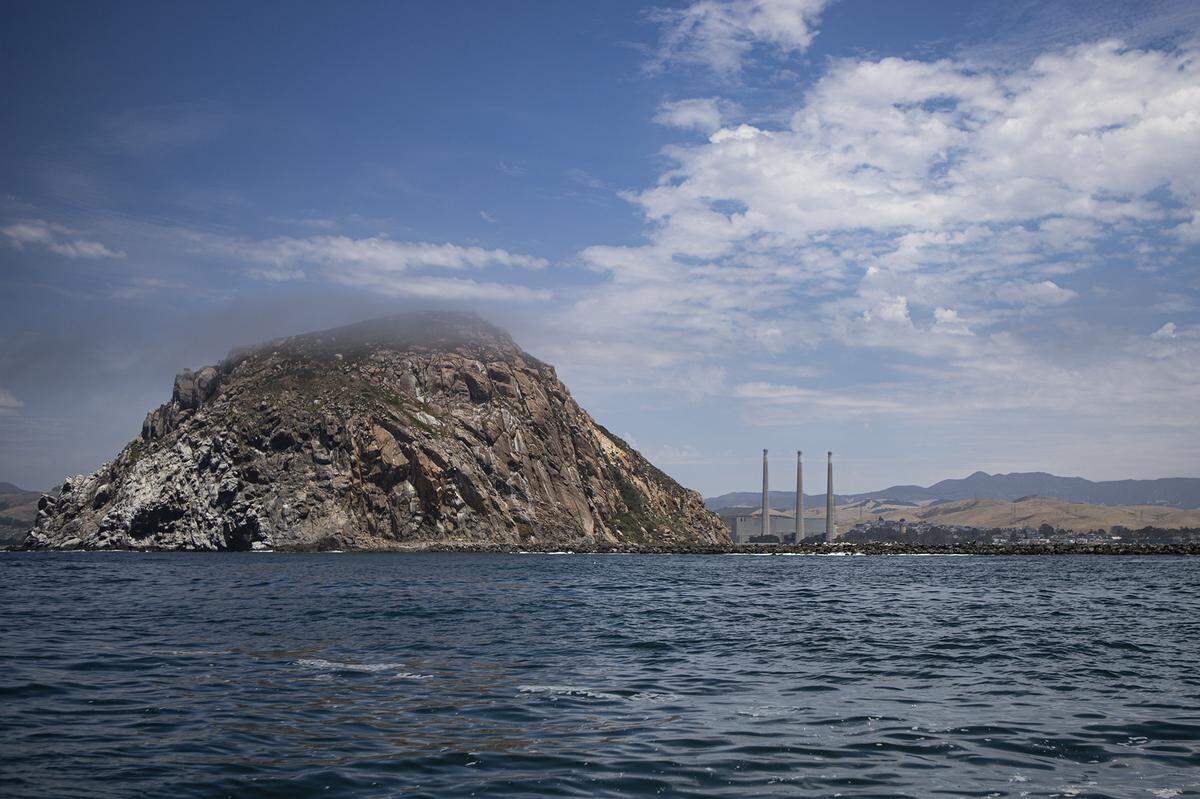
If passed, Measure A-24 would freeze the land use on the retired Morro Bay Power Plant property as visitor-serving commercial — an action that could block a new battery plant proposed to be built on the site.
With candidates for mayor and two City Council seats running unopposed, the measure was already the only item worth watching on Morro Bay’s ballot before big money was involved.
But can the donations be considered dark money?
Committee member Marlys McPherson defended the committee’s decision to accept the donations.
“There’s no law against accepting these donations,” she said. “We have complied with all the FPPC rules and regulations, deadlines, everything. We have not tried to hide anything.”
She explained that the donors had no say over the committee’s messaging or strategy.
“We weren’t going to accept money if they were going to try to control the campaign,” she said.
The Tribune looked into the campaign finances of the Morro Bay ballot measure group as a part of its Reality Check series.
Committee accepts large donations from two nonprofit organizations
The large donations to the Morro Bay Citizens Opposed to Measure A-24 were made in the final stretch of fundraising before the election.
On Sept. 21, the opposition committee had still raised only $19,645 in donations, mainly from retired individuals and small-business owners in the community, according to campaign finance reports.
Then, during the following two weeks, the committee raised $86,480 in monetary and non-monetary contributions, pushing its total donations to $106,125.
As a comparison, the Citizens For Estero Bay Preservation group that proposed Measure A-24 raised a total of $13,299 this year as of Oct. 19, according to the group’s most recently available campaign donation filings.
Non-monetary contributions are campaign donations made in the form of goods or services instead of cash.
As of Oct. 19, the opposition committee had spent $96,886 on mailers, digital ads, graphic design and a PO Box rental, campaign finance documents showed.
The majority of that money — $91,659 — was spent in a large burst between Sept. 22 and Oct. 19.
During the same time frame, the opposition committee accepted more than $40,000 in cash donations and $43,000 in non-monetary donations from two out-of-state nonprofit organizations that are not required to disclose who their donors are — raising suspicion that the funds are dark money intended to influence the outcome of the election.
One of the groups was a nonprofit organization called the Local Jobs & Economic Development Fund based in Dover, Delaware.
The group made two donations, one monetary contribution of $26,000 on Sept. 23 and another non-monetary contribution of $22,800 to pay for an “in-kind description-survey” two days later on Sept. 25, according to the opposition group’s most recent campaign finance disclosure.
The fund is a 501(c)(4) social welfare organization, which is still a tax-exempt nonprofit, but is allowed more flexibility with political advocacy and lobbying than a 501(c)(3).
The Local Jobs & Economic Development Fund “exists to support those who have a vision for increasing the resiliency and vibrancy of their rural communities by attracting new investment, creating new jobs and welcoming new business,” its website reads.
The fund reported receiving $1.8 million in contributions, grants and gifts to the IRS in its 2022 Form 990 tax filings, a large portion of which appears to have come from the Tides Foundation, a multi-million dollar nonprofit organization financed by billionaire George Soros.
In 2022, the Tides Foundation donated more than $1 million to the Local Jobs & Economic Development Fund — which accounts for over half of the group’s gross receipts — according to the foundation’s most recently available IRS tax filings.
“The Local Jobs & Economic Development Fund is supported by a diverse group of donors aligned around strengthening local efforts to promote clean, low-carbon energy and local economic development,” a spokesperson for the fund told The Tribune by email.
Moreover, the fund also employs a separate business owned by its own president.
Eric Heitz is the president of the Local Jobs & Economic Development Fund, according to the organization’s tax filings.
According to Heitz’s LinkedIn, he is also the co-founder and president of Down Ballot Climate Partners, a consulting firm that advises “organizations and donors on how local elections can have outsized impacts on the deployment of clean energy,” according to its website.
According to the organization’s tax filings, the Local Jobs & Economic Development Fund paid Down Ballot Climate Partners $391,305 in 2022 for “consulting and support” services.
None of the board members of the Local Jobs & Economic Development Fund receive any compensation from the organization, including Heitz, even though he dedicates an average of 30 hours a week to his role as president, according to the nonprofit’s tax filings.
Heitz’s LinkedIn does not list his involvement in the Local Jobs & Economic Development Fund.
The opposition committee was originally contacted by and collaborated with Down Ballot Climate Partners for a climate survey of the bay, but was later sent a donation by the Local Jobs & Economic Development Fund, according to committee member Marlys McPherson.
Heitz did not immediately respond to The Tribune’s requests for comment.
Meanwhile, another 501(c)4 nonprofit organization called Greenlight Action donated $15,000 to the committee on Oct. 1.
Greenlight Action also contributed four non-monetary donations that had a total value of $20,505.
The first was $7,000 of canvassing support reported on Sept. 28, followed by $340 of text banking on Oct. 2, $12,814 of canvassing support on Oct. 7 and $351 of text banking on Oct. 15, campaign finance reports said.
Greenlight Action, based in Washington, D.C., was approved for federal tax exemption effective in January 2024, according to an IRS document.
The nonprofit is the sister organization of Greenlight America, a 501(c)3 that has been tax-exempt since November 2023.
“We exist to support local groups and volunteers who want to get utility-scale clean energy projects built in their communities,” the Greenlight America website said.
In 2023, both Greenlight organizations filed forms 990-N, which is an annual electronic notice filed by small organizations that receive less than $50,000 a year. The organizations vastly increased their fundraising the next year, bringing in more than $5 million, which will show up in its next 990, according to a statement from Greenlight America.
Greenlight America and Greenlight Action do not accept donations from “clean energy developers or other industry sources,” the company said in a statement sent to The Tribune.
“We’re proud to support the Morro Bay residents running the No on A-24 campaign to advance a clean energy future that unlocks economic growth and protects the city for generations to come,” Greenlight America founder and CEO Matt Traldi said.

Are donations of that size legal?
According to state and local election law, the donations are legal because there is no upper limit for how much money ballot measure committees can accept.
Enacted in 2021, Assembly Bill 571 placed state limits on campaign contributions made to candidates in local elections for cities and counties that had not not already enacted their own contribution limit on candidates, but not on donations to ballot measure committees.
According to the City Clerk Dana Swanson, Morro Bay “has not adopted a local ordinance establishing limits for campaign donations.”
Committee defends decision to accept donations
The opposition committee was first contacted by Down Ballot Climate Partners sometime around May, McPherson said.
In July, Down Ballot Climate Partners distributed a survey about climate change to Los Osos, Cayucos and Morro Bay voters, McPherson said. Down Ballot asked about the battery plant in the survey and polled more voters in Morro Bay to support the committee’s efforts.
The Local Jobs & Economic Development Fund later submitted a report to the committee sharing the cost of the survey, McPherson said. The survey showed up as a $22,800 non-monetary contribution to the committee on its most recent campaign finance report.
McPherson said she was “surprised” by the size of the donation, as they didn’t discuss the cost in July.
Meanwhile, Greenlight Action supported the committee’s canvassing efforts by sharing training materials, instructions, a script, flyers, door hangers and a data analysis application.
The cash donations came after the non-monetary contributions, McPherson said.
“It came fairly late, the cash,” she said. “I think they needed to know if we were competent and could actually run a campaign.”
The committee did not accept donations from Vistra Corp., parties that had an interest in developing the Morro Bay power plant property or the fossil fuel industry, she said.
The committee researched the mission statement and leadership of the companies before accepting the donations.
“We tried to do due diligence in making sure that we were accepting legitimate donations from reputable groups, and that’s what we did,” she said.
Additionally, McPherson said the two companies had no say over the committee’s messaging.
“We controlled the messaging, we controlled the strategy, they just gave the in-kind donations and the cash,” she said.
The donations allowed the committee to send extra mailers to registered voters, she said.
Before the donations, the committee planned to send three mailers to every registered voter in Morro Bay. After the donation, the committee sent five mailers.
“We were able to reach more voters with more materials,” McPherson said.
What would the ballot measure do?
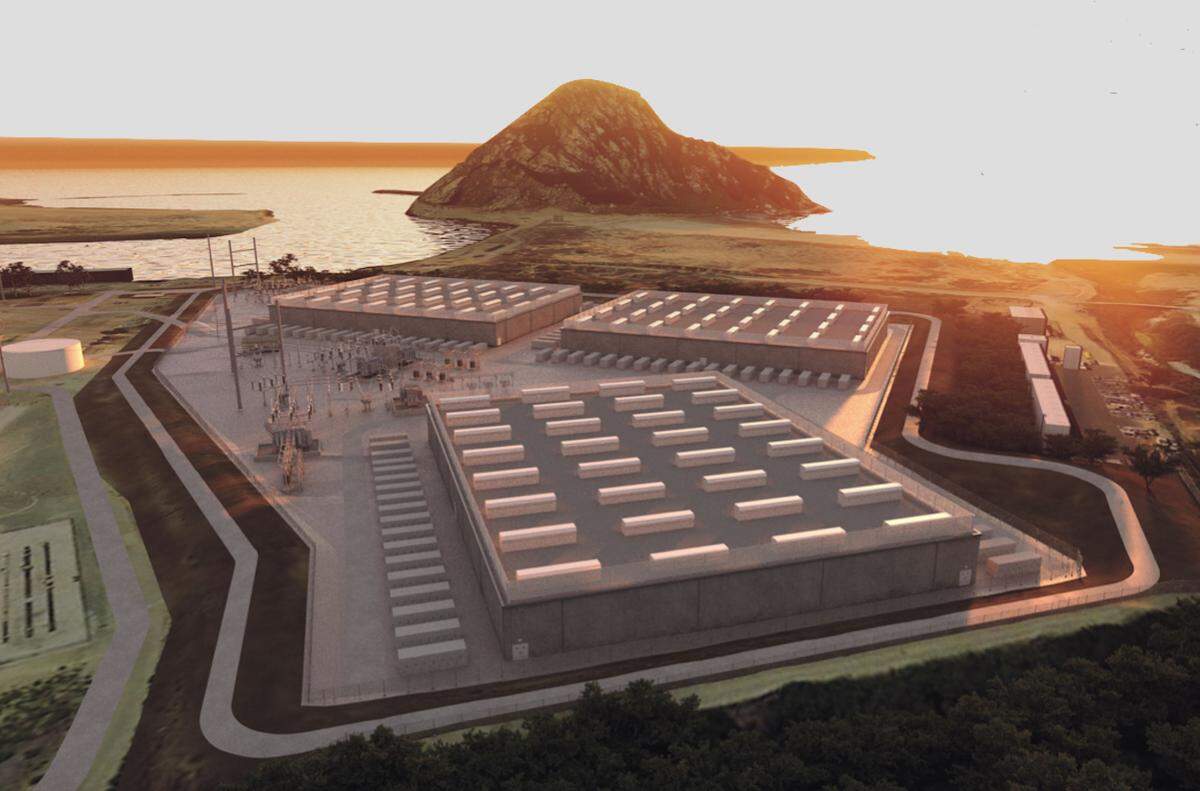
Texas-based energy company Vistra Corp. applied to the city to build the battery plant, which would store enough electricity to power about 450,000 homes, according to Vistra.
Last year, the Citizens for Estero Bay Preservation community group mobilized to oppose the battery plant. While touting the slogan “no batteries by the bay,” the group gathered more than 1,000 signatures from registered voters to place Measure A-24 on Morro Bay’s ballot this November.
If passed, the initiative will freeze the land use on the property as visitor-serving commercial, blocking the City Council from approving permits for the construction of any industrial project on the site — including the battery plant.
Last week, however, Vistra paused its application with the city and announced plans to apply to the California Energy Commission and Coastal Commission for project approval instead.
The Morro Bay City Council can only approve permits for projects that comply with the city’s zoning laws. For the Energy Commission and Coastal Commission, however, the local zoning laws only serve as guidelines in their consideration of the project — so the ballot measure may not actually block the battery plant.
“Vistra has not and will not financially contribute to the A-24 campaign or any related groups,” Vistra Media Relations Manager Jenny Lyon told The Tribune.
This story was originally published November 4, 2024 at 5:59 PM.