SLO County DA takes prosecution of Tianna Arata case to California Supreme Court
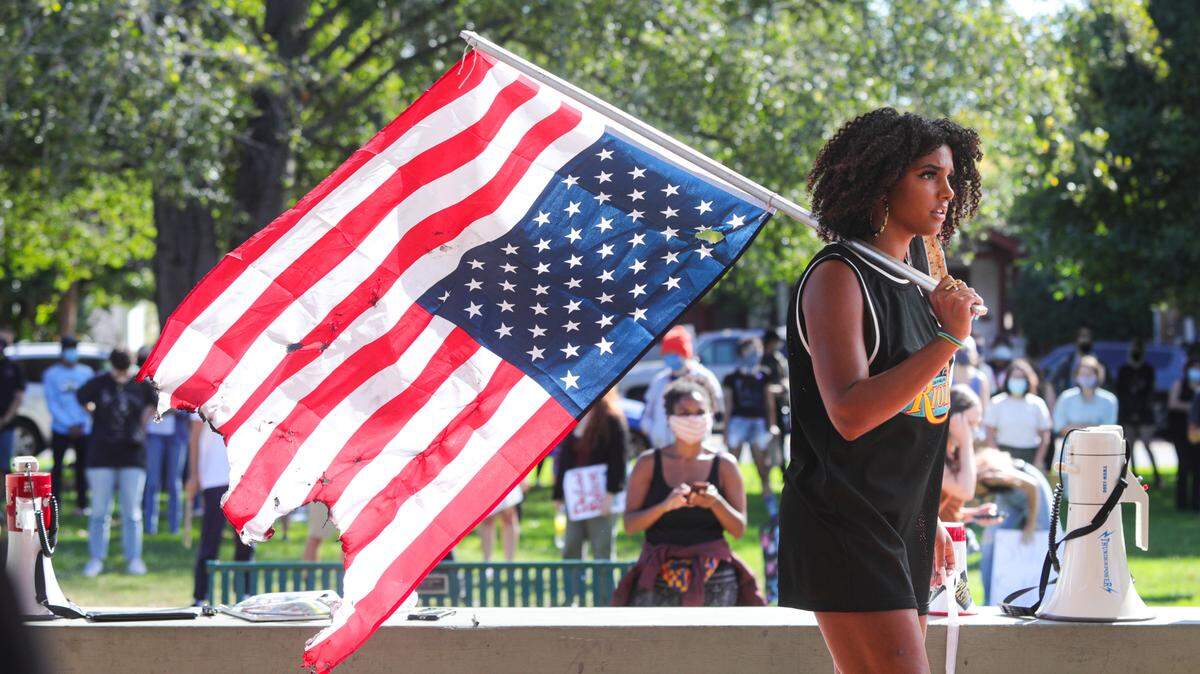
San Luis Obispo County District Attorney Dan Dow wants his office to prosecute Tianna Arata and six other Black Lives Matter demonstrators on charges relating to a July 2020 protest — and he formally asked the California Supreme Court for help earlier this month.
San Luis Obispo Superior Court Judge Matthew Guerrero took Dow’s office off the case in December 2020, citing a campaign email sent by Dow’s wife that asked his supporters for donations to help Dow “lead the fight against the wacky defund the police movement” as a “clear conflict of interest.”
The California Court of Appeal affirmed the decision Aug. 31, and published the opinion into citable case law, meaning it can be used as a legal basis for future similar cases, on Sept. 29.
Curtis Briggs, Arata’s lawyer, told The Tribune he does not think the court will hear the case because there is not “even a remote chance of (Dow) prevailing.” However, Briggs added, he hopes it does.
“We’ve always wanted to use this very small incident to create a larger dialog around race and equality. It’s difficult to do without a reason to get attention on these issues,” Briggs said. “Supreme Court litigation can get us the type of attention we’re looking for.”
When asked for the District Attorney’s Office’s stance on the case, Dow referred The Tribune to the agency’s petition. Assistant District Attorney Eric Dobroth said the office does not have additional comments.
Asked about the case during a virtual Cambria Chamber of Commerce meeting, Dow said his office did not want “bad precedent out there.” He said he is “confident” the state’s highest court will side with his office.
In its petition, the District Attorney’s Office asked the California Supreme Court to hear the case in order to establish a clear legal precedent.
“In a time of extreme political and social divisions, these questions about the parameters of disqualification are important ones that are likely to recur,” the petition said.
The law that governs when prosecutors or their offices can be disqualified from a case, California Penal Code 1424, states a motion to disqualify “shall contain” a statement of the facts that support why a defendant believes the prosecutor should be disqualified, the laws the defendant is relying on, and “shall be supported by affidavits of witnesses who are competent to testify to the facts set forth in the affidavit.”
The main three questions Dow’s office wants the state Supreme Court to answer are:
- What evidence satisfies the affidavit requirement of the law?
- What evidence of a prosecutor’s political or social beliefs can be entered into court?
- Can a court rely on a district attorney’s association with individuals who disagree with the political and social beliefs of a charged defendant as evidence to disqualify the prosecutor or their office?
“It’s more of the same arguments that have failed so far,” Briggs said. “The biggest things that stand out are that, one, Dan Dow has never said he’s not biased against Black Lives Matter, and, two, he’s never acknowledged the danger of him raising money off the prosecution of Black Lives Matter protesters while prosecuting them.”
DA: Court of Appeal opinion shows ‘split in authority’
Arata was arrested following the July 21, 2020, rally during which protesters marched onto Highway 101 and clashed with motorists.
The demonstrators were among thousands nationwide calling for racial justice and an end to police brutality following the May 2020 murder of George Floyd at the hands of Minneapolis police Officer Derek Chauvin.
Arata faces 13 misdemeanors related to the protest — including counts of false imprisonment, obstructing a public thoroughfare and resisting arrest.
Arata’s motion to disqualify Dow’s Office was joined by Robert Lastra, Samuel Grocott, Jerad Hill, Marcus Montgomery, Amman Asfaw and Joshua Powell, who were also charged with multiple crimes in connection to the protest.
The exhibits attached to the motion included news articles, drone video, a San Luis Obispo Police Department news release about the July protest, interviews with protest witnesses, Dow’s post on the conservative Facebook group PRotect Paso about the charges against Arata and comments on that post, as well as the campaign email sent by Dow’s wife.
At the time of the initial motion in 2020, Dow and the California Attorney General objected to admitting the motion’s exhibits into evidence because of their admissibility and authenticity.
The protesters’ attorneys offered to authenticate the exhibits with live testimony, but Guerrero did not find it necessary because Dow was not disputing the factual accuracy of the exhibits. The appellate court agreed.
Guerrero’s and the appellate court’s decision hinged on the campaign email, but cited the other exhibits as context for that email.
Dow’s petition says the California Supreme Court should review the case to “reconcile the plain language” of the law that allows defendants to motion for a prosecutor’s recusal — specifically clarifying whether affidavits of witnesses able to testify are required in order for the motion to move forward.
The part of the law that requires affidavits of witnesses was added in 1999 to prevent prosecutors from being disqualified on the basis of unverified or inaccurate claims.
“The opinion in this case contradicts that finding and leaves open the question of what exactly must be submitted to comply with the plain language of Penal Code section 1424,” Dow’s petition says.
Dow’s petition claims the finding by Guerrero and the Court of Appeal that it was unnecessary to authenticate the exhibits through live testimony “is contrary to the very narrow interpretations” other appellate courts have given regarding the admissibility of news articles and internet sources, citing a 2002 California Supreme Court case that found the truth of the content in an article is not proper to introduce a fact into evidence.
The finding “represents a split in authority that (the California Supreme Court) should resolve to secure a uniform approach” to how news articles can be entered into evidence both generally and specifically in prosecutor disqualification motions, the petition says.
Dan Dow ‘hand-picked’ protesters to advance political platform, attorney alleges
Dow’s petition said the Court of Appeal’s decision to uphold and publish their opinion “is likely to lead to widespread forum shopping where defense attorneys will rely on the published opinion to disqualify district attorneys in cases that touch on sensitive political or social issues.”
The petition alleges the Court of Appeal opinion “appears to find” that personal or public beliefs of an elected district attorney are grounds to disqualify them from a case.
The Court of Appeal applied a two-part test to decide whether Dow’s office should be disqualified from the case: Is there a conflict of interest, and if so, is the conflict severe enough to disqualify the district attorney?
The test was established out of Haraguchi v. Superior Court, a 2008 California Supreme Court case where the high court reversed a decision to recuse a prosecutor from trying an intoxicated rape case because the prosecutor previously wrote a fictional book about a district attorney trying a similar case.
In this case, the campaign email was a “clear conflict of interest,” found by both Guerrero and the Court of Appeal to be severe enough to recuse Dow from the case.
“When someone is running for office on the basis of going after somebody for doing something wrong, in all probability being elected on that, and then actually doing it — it just seems ... to taint the whole judicial system,” Court of Appeal Presiding Justice Arthur Gilbert said during oral arguments in June. “This taints the whole process, and it hurts you as a prosecutor, your office, everyone.”
California Deputy Attorney General Christopher Lee, who argued on behalf of Dow’s office, held that the email was a “general campaign email” and that it said “in a nutshell” that Dow was fighting hard for public safety.
Lee said that the email did not mention the Black Lives Matter movement specifically, but rather made passing references to the “wacky defund police movement” and “crazy protest activity.”
Dow’s supreme court petition alleges the opinion departs from “established precedent” that says the appearance or likelihood of unfair treatment is not enough to disqualify a prosecutor or their office from trying a case.
The petition cites People v. Neely, a 1999 California Supreme Court case that allowed a district attorney who campaigned on his predecessor being “soft on crime” for not seeking the death penalty against a specific defendant, to seek the death penalty against that defendant when elected.
But this case doesn’t apply to the Arata case, Briggs said.
If Dow said he was going to be tough on people who block streets when they protest, then prosecuted BLM protesters and pro-President Donald Trump protesters who blocked streets, Briggs said, then Dow’s prosecutorial discretion would be applied fairly.
“Dan Dow didn’t try to prosecute any of the other 300 people that were out there (during the protest),” Briggs said. “He focused on people of color and one, outspoken person of color in particular, and then prosecuted a couple of people later.
“He’s not using his discretion in a fair way. He’s sitting there and he’s hand-picking (protesters to charge) not based on a situation, but based on how he could advance his political platform.”
Campaign email is not a conflict of interest, DA says
According to the petition, charging Arata with 13 misdemeanors “caused a significant amount of public controversy.”
The only statements made by Dow or his staff in the admitted evidence “discussed in neutral language the prosecutor’s function and the impartial considerations made in this and every case,” the petition said.
One statement was from a Tribune article that quoted Dobroth as saying that the District Attorney’s Office would not accept any petitions to drop the charges against Arata or the other charged protesters because petitions do not have legal bearing on the law applied in the case and the office would be “in violation of (its) ethical duty” if it made a filing decision based on public sentiment.
The other was a post by Dow in the PRotect Paso Facebook group explaining why he charged Arata with misdemeanors instead of felonies.
Comments on the post, which were also admitted into evidence, claimed the BLM movement was “domestic terrorism,” “down right evil, no brains or souls,” and posted pictures of a BLM billboard burning in flames. Members of the group have discussed their skills as hunters and claim they will use these skills to help Dow and “protect our own.”
The PRotect Paso group is known for its conservative, far-right views. Counsel for the protesters argued Dow only reached out to this group to explain his charging decisions because group members belong to his voting base.
“It’s no secret in this small community that Mr. Dow holds very right-wing political views. He’s very vocal about them,” Patrick Fisher, another attorney for Arata, said in June during Court of Appeal oral arguments. “When both sides are upset with Mr. Dow for what he did, who does he reach out to? He only reaches out to PRotect Paso, to plead his case to them. And it speaks volumes.”
The petition claims there is no evidence that Dow or his office was aware of or responded to the Facebook comments, and that comments made by other people should not be used to recuse Dow from trying the case.
When it comes to Dow’s appearance on Tony Perkins’ Christian radio show, Dow only spoke about not charging people who want to sing in church without a mask, the petition said, and did not discuss Black Lives Matter. There is no evidence to suggest Dow was aware of Perkins’ previous anti-BLM statements at the time he appeared on the show, the petition said.
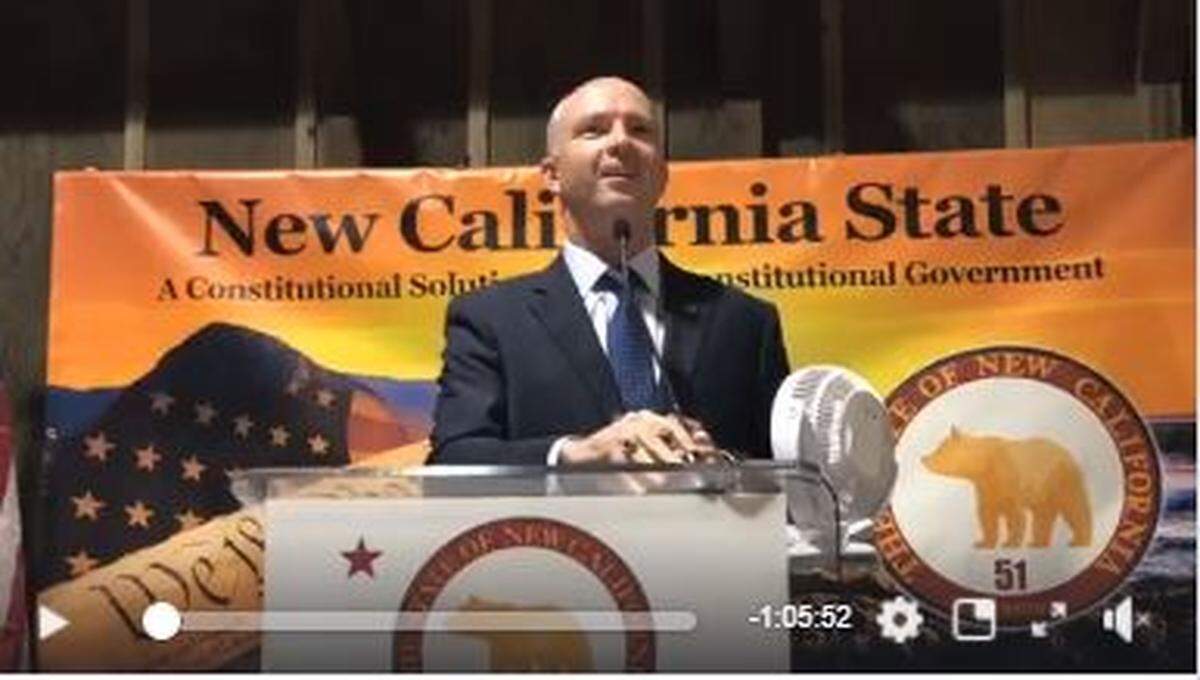
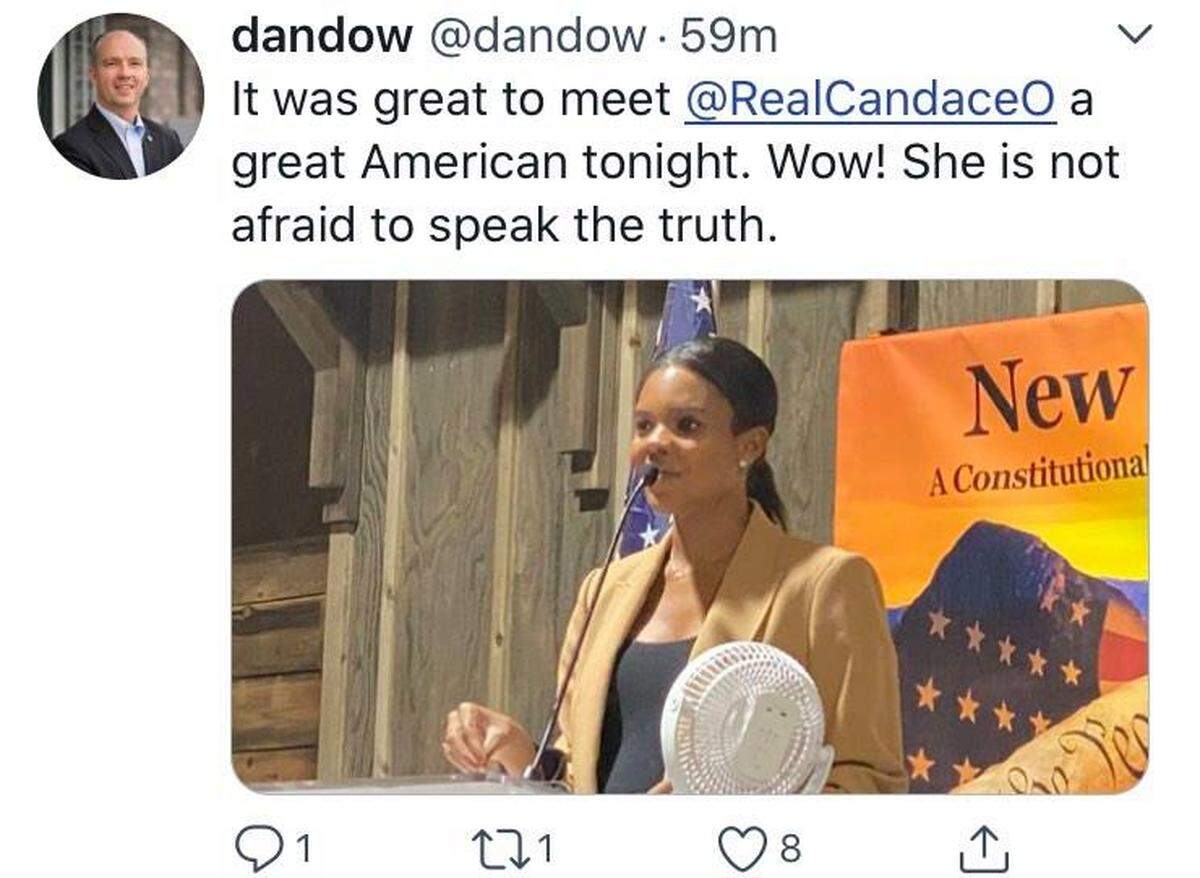
Dow’s decision to give the prayer at an October 2020 fundraiser for secessionist organization New California, where he appeared alongside conservative author and political commentator Candace Owens, also is not relevant to his ability to try the case.
At the event, Owens called BLM “one of the most racist movements that ever existed in this country.”
Dow quote tweeted her speech, saying “she is not afraid to speak the truth.”
The petition also notes that Dow told the Tribune that Owens is a “bright and intelligent, fearless woman and a role model for young women everywhere.”
According to the petition, there is nothing in the record that regards Dow’s thoughts on Owens’ specific statement on the Black Lives Matter movement, and “the only reason” there was any public commentary on Owens by Dow was because a Tribune reporter asked Dow “a generic question” about his thoughts on her.
“The Tribune, generally politically and ideologically opposed to Mr. Dow, sought a comment by him about Ms. Owens to use in an article critical of Mr. Dow’s political positions that was then attached as evidence” to the motion to disqualify Dow’s office, the petition says.
It also notes that only Arata was charged at the time the event with Owens took place.
“The Court of Appeal in its published opinion thereby endorses the practice of attaching critical media coverage generated by a political opponent of a district attorney as competent evidence of a disabling conflict or bias,” the petition alleges.
While the factual accuracy of the news articles were not in dispute, the statements that were critical of the Black Lives Matter movement were not made by Dow himself and should not support the inference that Dow has a bias against the movement, the petition said.
The petition alleges recusing Dow’s office from prosecuting the case violates his First Amendment right to free speech.
“If issuing a statement that a district attorney needs the voters financial support to lead the fight in their county against ‘the wacky defund the police movement’ and anarchist groups that are trying to undermine the rule of law and public safety in our community’ is the type of statement that shows a disabling conflict of interest, the result will be both a significant curtailment of the rights of free speech afforded to elected officials and a significant increase in recusal motions,” the petition said.
The petition alleges the request by California Attorneys for Criminal Justice to publish the opinion “foretells” how defense attorneys will use the opinion to disqualify district attorneys in cases that deal with sensitive social or political issues and result in “widespread forum shopping,” or choosing the court or jurisdiction that has the most favorable rules or laws for the position being advocated.
“The Court of Appeal’s published opinion allows a trial judge to grant a disqualification motion based only on their subjective opinion of what may appear improper or unseemly to the community, rather than an objective factual analysis based on competent evidence of whether the district attorney is unable to prosecute a defendant fairly,” the petition said.
“Ironically, the reasoning of the opinion encourages defendants to try their case in the media because the increased press coverage and controversy generated would contribute to the legal and political controversy, making disqualification more likely.”
The California Supreme Court will decide whether it will hear the case in the next 60 days. The court reviews petitions each week.
If the petition is granted, Dow’s office has 30 days to file their brief, then the defense will have 30 days to reply.
Oral arguments are placed on the calendar typically several months to a year after all briefs are filed.
This story was originally published November 21, 2022 at 7:00 AM.