Paso Robles homeless residents face riverbed cleanups and public backlash. ‘It’s not easy’
Summer is a tough time to be homeless in Paso Robles.
Temperatures regularly climb into the triple digits and encampments are shut down due to fire risks. There are few places homeless residents can go to get out of the heat during daytime hours.
Although El Camino Homeless Organization (ECHO) is continuing to grow its new shelter, which opened at a former Motel 6 off Riverside Avenue just six months ago, Paso Robles’ homeless residents continue to struggle with limited resources. And they face the ire of housed residents who openly talk online about wanting them gone from the city.
“There’s not a feel for compassion out here, unless you’ve lived it,” said Christina Gragg, who’s been houseless in Paso Robles for nearly three years.
Paso Robles looks to prevent fires, house homeless people
Paso Robles is dealing with a two-fold problem — how to prevent fires in the Salinas River riverbed and where to house homeless residents, many of whom continue to camp in the typically dry waterway.
As of 2019, the city was home to at least 239 homeless residents, 221 of whom were unsheltered, according to San Luis Obispo County’s point-in-time homeless census. Unsheltered residents are those “living on the streets, in abandoned buildings, storage structures, vehicles, encampments or any other place unfit for human habitation,” the census report said.
San Luis Obispo County typically counts homeless residents every other year, but the 2021 census did not happen due to the ongoing coronavirus pandemic.
Of those counted in 2019, 30% said job loss was the primary factor that led to homelessness. About 20% of respondents reported alcohol or drug use as causes of homelessness, while 17% said eviction, 11% said a divorce or breakup and 10% said they’d experienced a dispute or a family member or friend had asked them to leave their living situation.
Salinas River bed home for city’s houseless residents
Until December 2020, the North County had only one homeless shelter — the ECHO facility in Atascadero, which primarily serves those in the process of transitioning out of homelessness.
In fall 2020, ECHO, joined by Peoples’ Self-Help Housing and the Housing Authority of San Luis Obispo (HASLO), received $14 million from the state to turn the Motel 6 into an overnight shelter and permanent affordable housing.
Before the facility opened, the riverbed functioned as the city’s de facto homeless shelter for decades.
It’s a huge space in the middle of the city filled with vegetation and makeshift trails. The riverbed is an attractive camping spot in part because it’s removed from prying eyes — unlike the downtown area — and people have enough room there to set up their own spots away from other riverbed occupants.
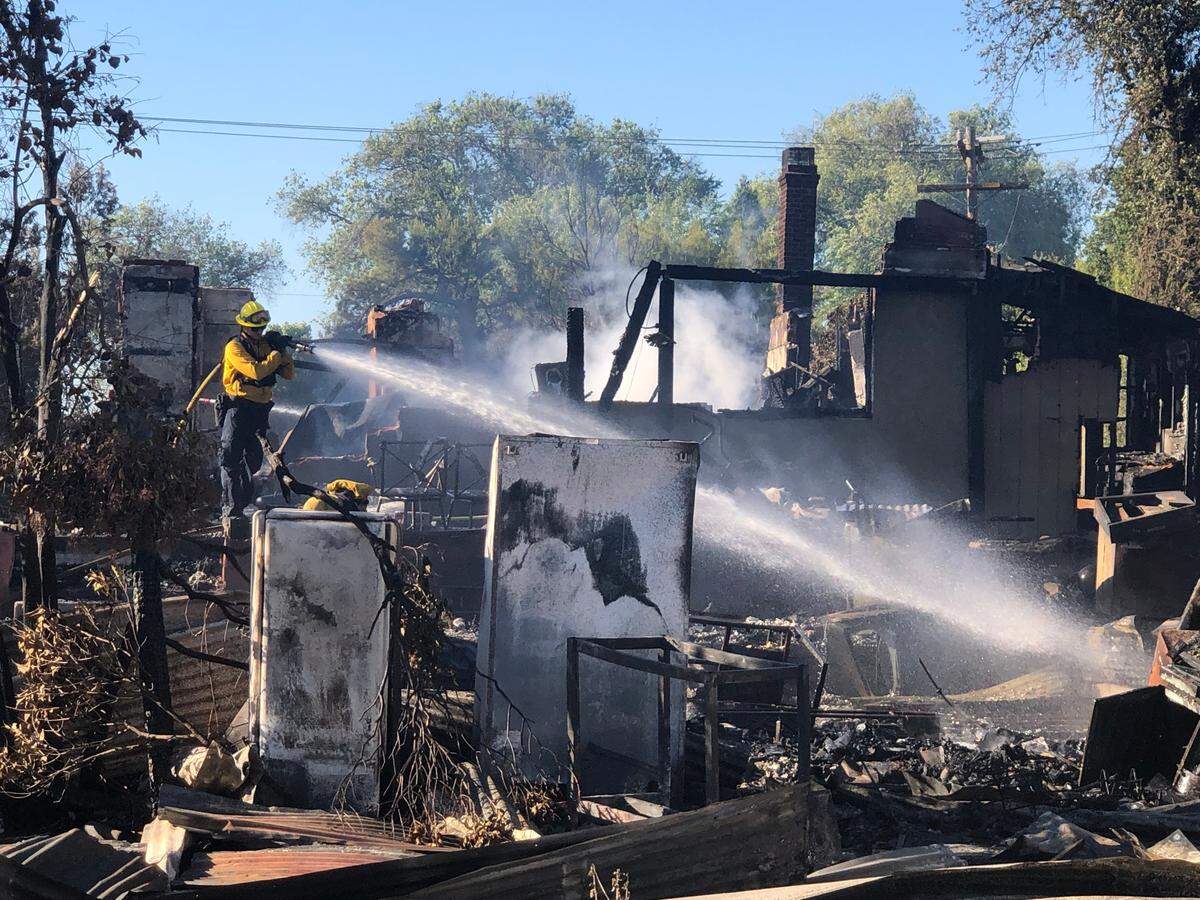
In June 2020, a fire sparked by weed abatement in the riverbed created flames that jumped South River Road, damaging nine homes and destroying two. There had been hundreds of riverbed fires prior to the 2020 blaze, but the damage this one caused drew increased attention to fire prevention.
In late May 2021, Paso Robles’ fire chief declared a portion of the riverbed from the Niblick Road bridge north to city limits a high fire risk area.
That means residents can no longer camp in that section of the waterway. The city has been paying contractors thousands of dollars to remove personal belongings, garbage and debris from the riverbed.
Now that a large portion of the riverbed is off-limits for campers, that means people who previously lived there have very few other places to go, especially during the day.
Housed residents shame the homeless on social media
Paso Robles residents have been posting photos on social media showing shopping carts full of belongings parked in the downtown area, as well as pictures depicting people sleeping on sidewalks and benches.
Some online commenters suggest that harassing and shaming homeless people will make them uncomfortable and force them to leave the North County community. Some even say they should be shipped out of town to an uninhabited location where they won’t bother others.
This messaging is counterproductive to the efforts of organizations such as ECHO, who are trying to connect homeless residents to services, said Shanice Brown, an ECHO case manager.
“(Commenters) think people like being homeless,” Brown said. “A lot of people — they don’t want to be homeless. They would love to have a place to live and be comfortable.”
“A lot of people are embarrassed to come stay in a shelter because social media and outside people judge them for being here,” she added. “So I think it’s hard. We should be cautious of that when we see people in the streets.”
ECHO serves increasing numbers of homeless Roblans
ECHO’s clientele has been increasing over time as people come to know the organization, according to Jeff Al-Mashat, Paso Robles homeless services director.
The ECHO shelter currently has the capacity to house about 50 people overnight, and it could sleep closer to 60 people once COVID-19 restrictions are lifted, Al-Mashat said.
The facility has a lottery every night for beds, and staff has had to turn some people away when there aren’t enough.
The permanent housing side of the facility has provided homes for 35 people since it opened, he said.
Al-Mashat said he has been seeing more shopping carts downtown, which he thinks may be the result of the riverbed cleanup.
“We believe that’s people who have left the riverbed and tried to take as much as they can,” he said.
ECHO has hired an outreach coordinator to help connect homeless residents with services. And the nonprofit organization started initiatives, such as a twice-weekly shower program, to gain community trust.
A bigger shower program is in the works, along with a playground for children, hallways around the outside-facing former hotel rooms and partnerships with RISE and Boys and Girls Clubs of Mid Central Coast.
“In Paso Robles, in particular, we know the population is more challenged because there haven’t been services available,” Al-Mashat said.
Homeless people ‘working very hard’ to get lives back
Paso Robles homeless residents who spoke to The Tribune at ECHO’s evening meal emphasized the challenges of living life on the streets and the struggles they face climbing out of their situations.
They said they want to reunite with family members and get away from the hardships of homeless life. Some said they’re actively pursuing housing and trying to figure things out.
“Even getting into the services — it’s hard,” Brown said. “It’s not easy. Getting people housing is such a process to do. It’s really hard getting them jobs. A lot of them don’t have Social Security cards, IDs, birth certificates. If you’ve been homeless for years, you don’t have those kind of things anymore.”
There’s an ongoing debate over whether most homeless residents living in Paso Robles are locals or people who come from other places to take advantage of local services. ECHO’s intake data suggests at least 80% of Paso Robles clients are from the area, Al-Mashat said.
All of the people who talked to The Tribune are longtime area residents or have family in the area.
Ray White, who’s been houseless for six to seven years, was previously a teacher at Paso Robles High School. After an engagement ended, he said he “started drinking with a capital D” and alcoholism caused his life to crumble.
Nowadays, White spends a lot of time reading at the Starbucks off 24th Street. He said things have been looking up for him, lately, as some inheritance money he expects to receive may finally allow him to find a place to live.
“These people are extremely generous,” White said of the homeless community. “They care about everybody else because they are everybody else.”
Shelly Cox, who’s been houseless for about nine months, lives in the riverbed off First Street, just outside the area that’s off-limits to campers. She said she spent more than a decade caring for elderly residents in the area, but got in trouble at work.
Cox subsequently lost her job, car and apartment. Then she heard there were people living down in the riverbed.
Most days, she said, wakes up and “hangs out,” staying close to her tent and belongings to prevent them from being stolen. Cox emphasized people living in the area make efforts to keep their trash cleaned up, although there are few garbage receptacles.
Tears filled Cox’s eyes as she brought up her family and her desire to see them again. Gragg comforted her as she spoke.
Gragg, the woman who’s been homeless for nearly three years, said she’s struggled since she lost her vehicle and her dog following a drunk driving incident, which she’s currently fighting in court.
Gragg grew up in the North County and graduated from Atascadero High School.
She’s in the midst of trying to figure out a living arrangement, and she’s considering leaving the county, once her court case has wrapped up.
Most nights, Gragg tries to stay in a hotel or at the ECHO shelter, if she can get a room.
“There are people working very hard out here to get their life back,” Gragg said.
Gragg said she’s had hip replacements and has to work hard to get around. She said she wants people to have a better picture of homelessness in Paso Robles.
“People want to believe the labels,” Gragg said. “People need to look at themselves before they judge.”
This story was originally published July 13, 2021 at 5:00 AM.