
Can a photo of a woman defecating in downtown SLO persuade us to add more homeless services?
Sam Blakeslee was stopped at a traffic signal in downtown San Luis Obispo in June when he spotted a woman with her pants down around her knees, obviously relieving herself in broad daylight.
Blakeslee — a former state senator and assemblyman and the president of the Blakeslee and Blakeslee financial planning firm — snapped a photo.
The picture shows the unidentified woman squatting, with one arm on a planter box for support. Her head is down and her face isn’t visible, but it’s a wrenching scene nonetheless.
Blakeslee posted the picture on Facebook.
“So I apologize for this photo,” he wrote. “I wrestled with whether or not to share.”
“This is a photo of a homeless person relieving herself in public at the intersection of Chorro and Monterey at the entrance to our Mission Plaza at 10 a.m. this morning ...”
“SLO City Council. Whether the answer is improved services or enhanced enforcement — please take action to save our city and help these people!”
Photo of woman prompts ‘raw torrent of emotions’
Since then, the photo has taken on a life of its own.
Blakeslee’s post generated nearly 100 comments, including many that took public agencies to task for not offering more services for homeless people.
“How hard or inexpensive would it have been to drop off a few Porta Potties, a Dumpster, service them regularly, and inform the squatters that it is up to them whether they are allowed to stay?” one person asked.
“This appears to be a mental health issue,” another commenter said. “To reduce that population it requires making mental health a priority with preventive, on-going medical services and education. My hope is that there are people smarter than me that can make this happen.”
Blakeslee later told The Tribune that he was overwhelmed by the outpouring of comments.
“It was a raw torrent of emotions that ranged from sadness and despair to frustration and anger,” he said. “What seems evident to all is that we are in a battle that, frankly, we are losing — and no one wants SLO to deteriorate into another San Francisco or Venice Beach.”
KVEC talk radio host David Congalton, who devoted nearly an entire segment to discussion of Blakeslee’s photo, had a similar response.
“My reaction to the photo was ... OK, well this is just another day in Los Angeles or another day in San Diego or another day in San Francisco and it’s coming here now and damn it, are we going to do something about it or are we just going to repeat the problems these other cities are facing?” he asked his listeners.
Is picture worth 1,000 words?
If a photo of a woman relieving herself in such a public way can shock the powers-that-be into ramping up services for homeless residents — if a photo really is worth 1,000 words — then the end surely does justify the means.
But let’s be clear; this single photograph doesn’t mean we’re at a tipping point. This is a rare occurrence, which is exactly why Blakeslee posted this picture.
Still, there are plenty of other signs that we need more services for people experiencing homelessness.
Walk in downtown San Luis Obispo late at night or early in the morning and you’ll see people sleeping rough.
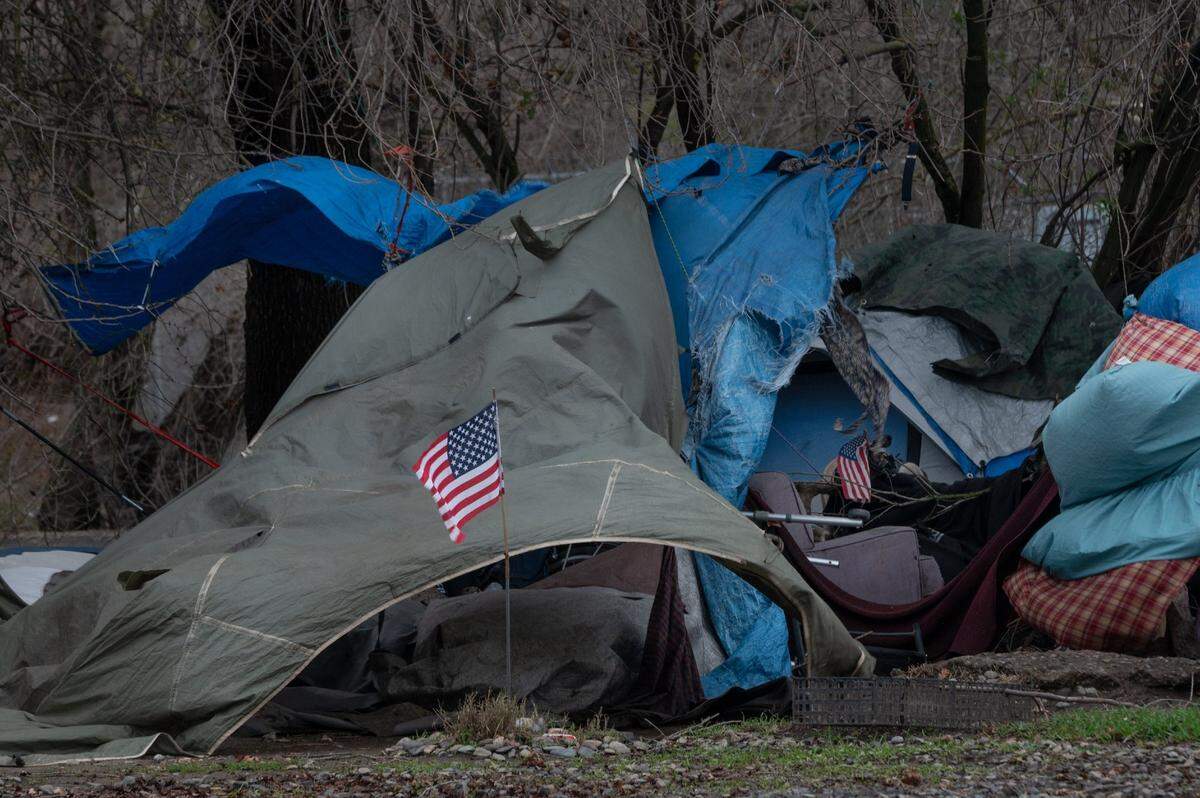
Check along the highway, and you might spot an encampment.
What about that car parked next to you at Starbucks — the one with the sunshade on the front windshield, the towels covering the side windows and all those possessions piled up in the back? Chances are someone’s living in there.
In other words, if some of the good people of San Luis Obispo County aren’t already aware homelessness is an issue here, they need to open their eyes.
What’s been accomplished
Over the past several years, local government agencies — often with the help of nonprofits and private donations — have made progress in responding to homelessness issues.
40 Prado Homeless Services Shelter in San Luis Obispo is one example. The conversion of a Motel 6 in Paso Robles into an emergency shelter and permanent low-income housing is another.
There are programs that aren’t so visible, including some that help low-income families avoid eviction, find them primary health care or access to mental health services.
Nonprofit organizations offer additional programs.
Hope’s Village, for example, has provided more than 100 recreational vehicles to homeless veterans. The group also operates a mobile shower program; runs an outreach program the provides food, sleeping bags and other necessities to people living on the street; and helps reunite homeless individuals with their families. And if that’s not enough, the group’s founder, Becky Jorgeson, remains determined to establish a community of tiny homes that would provide permanent shelter.
More aid is coming. A detox facility — the first in the county to serve homeless and low-income clients — will soon open at the 40 Prado campus.
The city of San Luis Obispo is creating a of mobile crisis unit staffed with a paramedic and social worker to respond to homeless needs; adding beds to the 40 Prado shelter; and has hired a new homeless response manager. A detox facility — the first in the county to serve homeless and low-income client — is coming to the 40 Prado campus.
Yet there are still unmet needs, and there is no one-size-fits-all solution to homelessness. There’s probably not even a 10-size-fits-all fix.
That can be overwhelming, but it’s no excuse for paralysis — or for delaying action until we embark on yet another study.
This issue has been analyzed enough.
Remember the 10-year, countywide plan to end homelessness? It’s now 12 years old, and homelessness is still with us.
‘Sanctioned’ campgrounds
It’s time to act, and we can and should tackle the most achievable goals first.
Here’s one: Let’s designate a campground in every major community where people can live without fear of being rousted out by authorities — something that’s been happening often in San Luis Obispo County.
Some areas obviously are inappropriate for encampments, including sites where fire danger is high or where creeks can be polluted. But this is a big county.
Would it really be so hard to designate places where basic services — including clean water, toilets, showers and shade — can be provided? Where agencies could provide medical aid, counseling and other supportive services? Where people could bring their pets?
Such campgrounds — sometimes called safe grounds —already exist or are being considered in other cities, including Sacramento. They can generally accommodate tents, cars, RVs, even tiny homes on wheels. And, unlike most safe parking programs, residents can stay there all day.
A subcommittee of San Luis Obispo County’s Homeless Services Oversight Council has been studying the option and recommends opening “sanctioned encampments” throughout the county as a pilot project. The county Board of Supervisors, however, has not signed off on that specific program.
At a May meeting, the board did endorse a plan that includes two pilot programs. One is safe parking and the other is a “Blue Bag” program that will provide trash collection, sharps collection, basic hygiene services and outreach services to up to 10 existing encampments.
The board also approved updating the 10-year plan to end homelessness and development of a “communications and engagement strategy” that would “increase awareness of local homelessness and related challenges, as well as services and resources available...”
Sounds like the same old, same old.
Do we really need a communications strategy to increase awareness of local homelessness?
And instead of spending money on another study, why not use it on actual services?
We’ve been studying and planning and forming committees and pontificating for at least 15 years, and there are still huge gaps in services. And frankly, some existing programs aren’t as successful as they could be.
We need to fill those gaps now, or as Sam Blakeslee predicted, we will become a miniature version of San Francisco or Venice Beach.
We can’t let that happen.
It’s time for bold action. We need to stop strategizing and start doing.
This story was originally published July 9, 2021 at 7:00 AM.