State appeals court won’t hear DA’s disqualification in SLO County protesters’ case
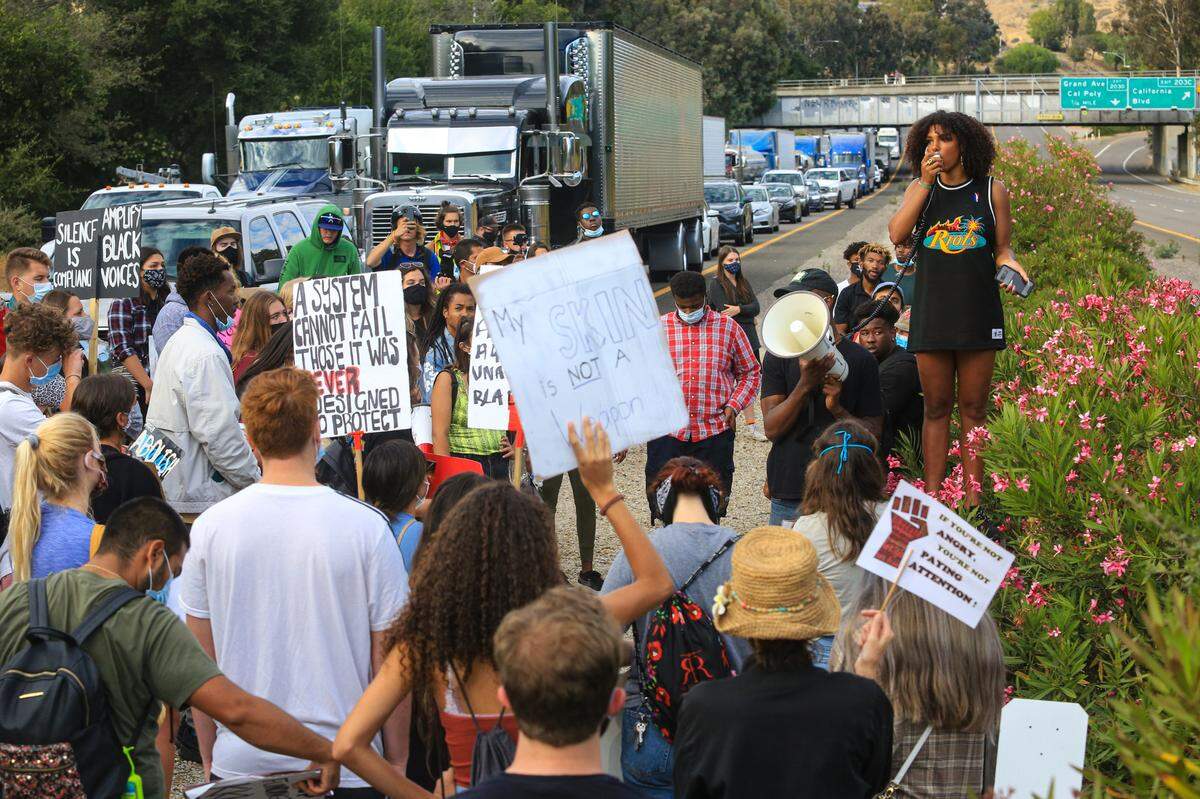
The California Court of Appeal has declined to hear arguments over a San Luis Obispo County judge’s disqualification of local prosecutors in the criminal cases against seven Black Lives Matter protesters accused of offenses during a July march on Highway 101.
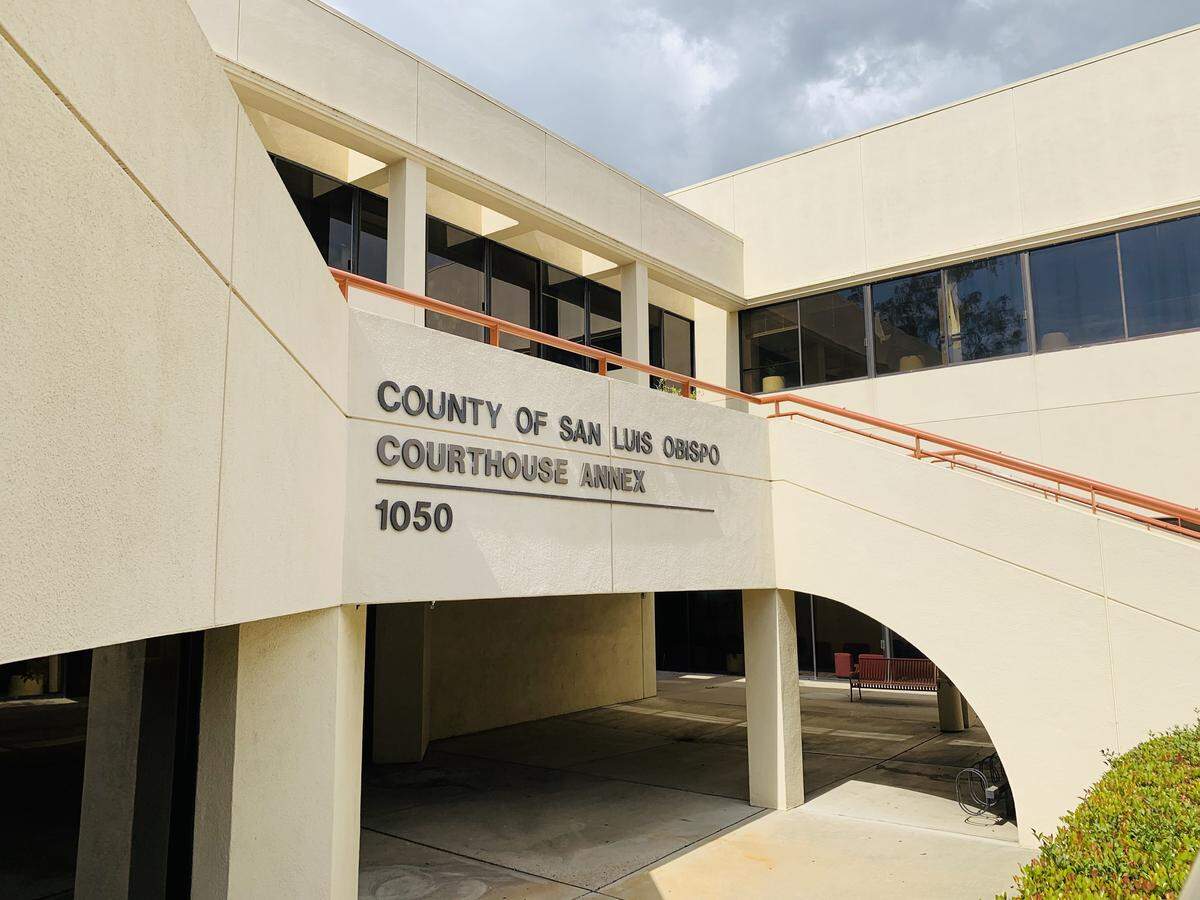
Instead, the ongoing appeals in the four-defendant misdemeanor case involving activist Tianna Arata, as well as the three-defendant felony case against protesters who clashed with a motorist on the highway, will all be heard by three local judges who preside over San Luis Obispo Superior Court’s Appellate Division.
Proceedings have stalled in the cases after Superior Court Judge Matthew Guerrero granted a defense motion in December removing the entire District Attorney’s Office from prosecuting the cases, due to a “clear conflict” presented by an email sent from the re-election campaign of District Attorney Dan Dow that appeared to reference the protesters’ cases in seeking financial contributions.
The District Attorney’s Office and the state Attorney General’s Office, which would take over as prosecuting agency, appealed Guerrero’s ruling in January.
The surprise ruling filed Thursday by the three-judge Second Appellate District panel in Ventura says it declined to accept the case largely on procedural grounds, a decision that caused initial confusion among some attorneys involved in the cases, the District Attorney’s Office, and court staff.
Why the appeals will be decided locally
Michael Powell, CEO of San Luis Obispo Superior Court, explained Thursday that when the District Attorney’s Office appealed Guerrero’s ruling, it filed appeals in the three-defendant felony case involving Robert Lastra, Sam Grocott and Jerad Hill to the state Court of Appeal, because the charges included a single felony against Lastra.
The appeal in the four-defendant case involving Arata, Marcus Montgomery, Amman Asfaw, and Joshua Powell, was filed locally in the Superior Court’s own Appellate Division, which is common for cases that include only misdemeanor charges.
In their order Thursday, the three-judge Court of Appeal wrote that it was premature for the state to even consider the case because it hasn’t proceeded far enough at the local level.
Citing the case against Lastra — who is charged with felony vandalism for smashing the back windshield of a car — the court said it could not review the case because the accusations against Lastra have not yet been presented to a judge in an evidentiary hearing known as a preliminary hearing.
If a judge finds probable cause exists to support charges following testimony in a preliminary hearing, the judge will “certify” the prosecution’s complaint and move the case toward trial. Before that, a complaint filed by prosecutors is merely an accusation, the Appellate Court said.
None of the protesters’ cases reached a preliminary hearing before legal challenges halted the case, and therefore, Lastra “has not yet been ‘charged with a felony,’” the Appellate Court wrote.
The order says that while the District Attorney’s Office argued that both appeals should be heard in state Appellate Court “to secure uniformity of decision,” the defense filed briefs arguing they should both be heard in the Superior Court’s Appellate Division.
Powell said Thursday that following the state court’s decision, both appeals are now firmly within the purview of the local Superior Court’s Appellate Division.
Reaction to the ruling varies
While the District Attorney’s Office says the state court’s ruling boils down to a simple change of venue for the appeals, attorneys for various defendants chalked the ruling up to the latest of several legal wins for the defense.
“Nothing has changed or been decided,” Chief Deputy District Attorney Jerret Gran wrote in an email Thursday afternoon. “The order from the Court of Appeal in Ventura did not reach a decision on the merits. It simply switched the court and jurisdiction that will hear the case from the Ventura Court of Appeal to the San Luis Obispo County Superior Court Appellate Division.”
Gran said the agency’s legal arguments will remain the same in local court and that prosecutors “have confidence in our position and remain determined that it is appropriate for the San Luis Obispo District Attorney to remain as the prosecutor in these cases.”
But defense attorney Brian Ford, who is representing Lastra, said in a news release Thursday that the defense is “glad to have this first Appellate win.”
“We feel strongly that Judge Guerrero’s order was necessary and proper — this unlawful prosecution must be stopped!” Ford wrote. “Dan Dow’s Office cannot be trusted to prosecute any case involving Black Lives Matter because of his personal bias and racial-political animus.”
Ford wrote that “any other prosecutorial agency would have apologized and dismissed this case long ago, or not even charged it in the first place.”
Curtis Briggs, one of Arata’s attorneys, wrote in an email Thursday that the DA’s Office and the Attorney General’s Office misread the law in their pursuit of having the appeal heard in state court.
“It was a very simple issue, and both of these prosecutors were mistaken. I’m not surprised at this result,” Briggs wrote. “I look forward to getting this case before the jury.”
A spokesperson for the Attorney General’s Office on Thursday said only that the agency is currently reviewing the Appellate Court’s order.
What’s next?
Moving forward, Powell, the SLO Superior Court CEO, said that appellate cases in the local Appellate Division are heard by a panel of three Superior Court judges, and hearings are heard the first Friday of every month.
Powell said it was unclear Thursday which three judges would be making the decision on whether the local District Attorney’s Office could stay on the cases, and it was also unclear whether the court will even take up the protesters’ cases at their next monthly hearing April 2.
Powell said Appellate Division hearings are open to the public and will be broadcast on Zoom via the court’s website.