SLO activist Tianna Arata talks social media, growing up in white schools, on ABC show
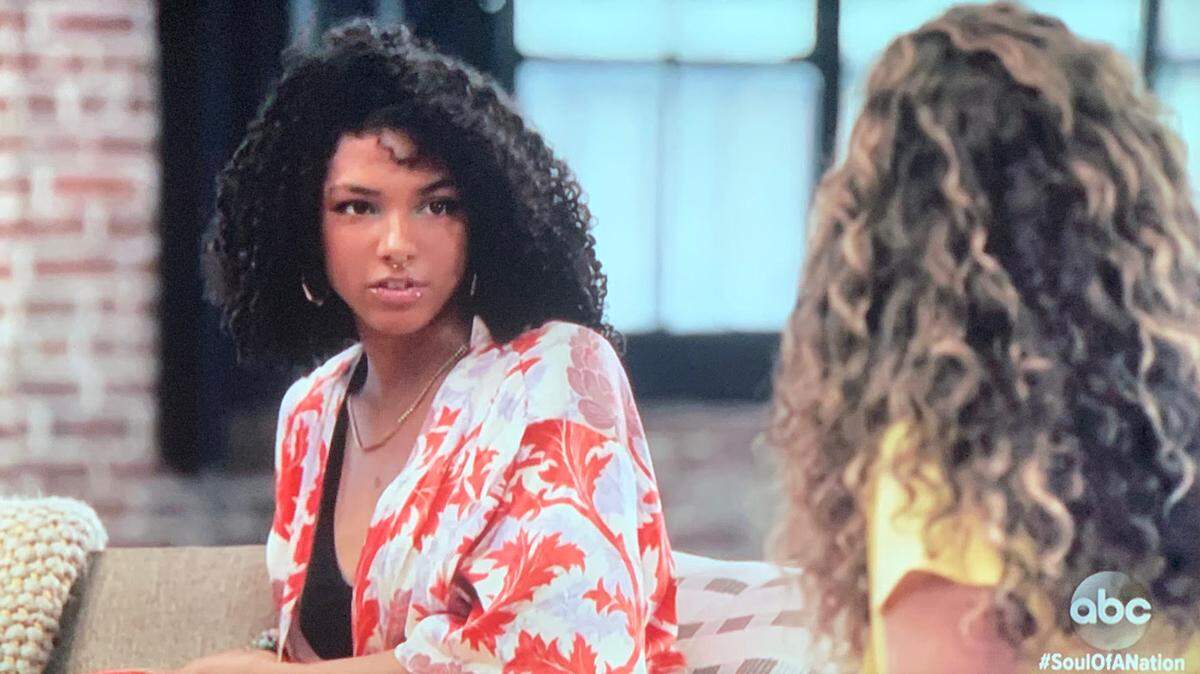
San Luis Obispo Black Lives Matter organizer Tianna Arata discussed what it was like growing up attending predominately white schools and the power social media plays in organizing social justice movements on a segment of ABC’s “Soul of a Nation” Tuesday night.
The interview aired during part of the second episode of the six-part docuseries, which explores the Black experience in America — past, present, and future.
Arata was featured as a Gen Z student leader.
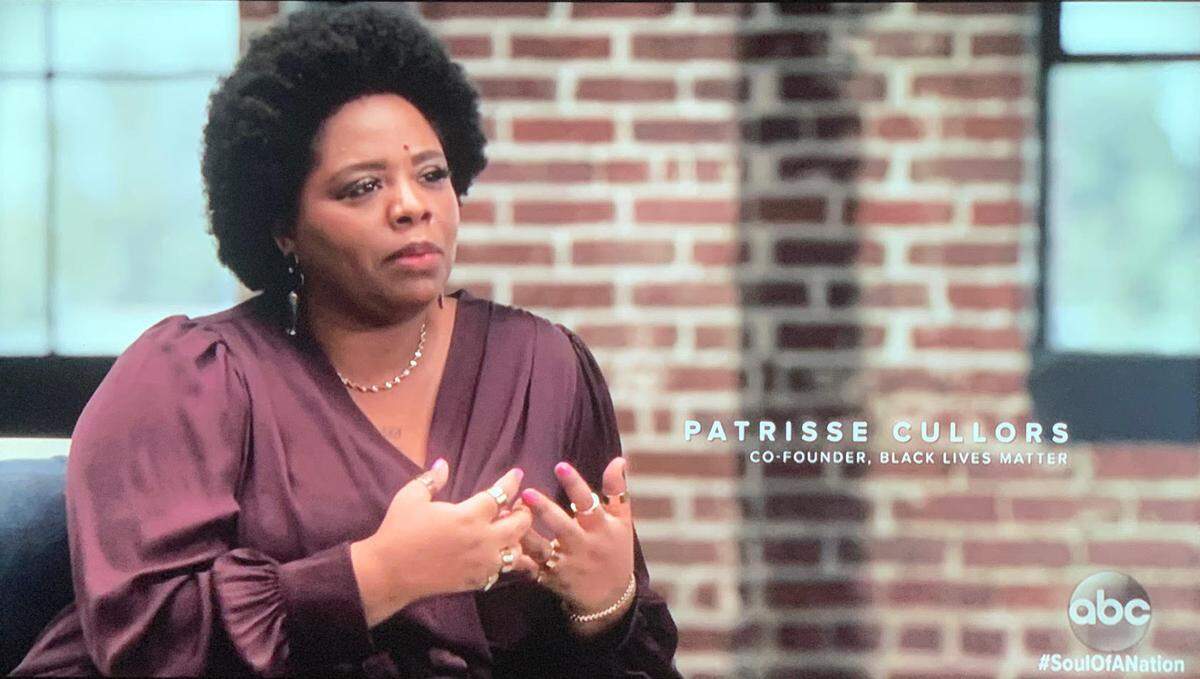
The roundtable-style discussion also included Black Lives Matter Foundation co-founder Patrisse Cullors, who spoke at a rally in support of Arata outside the San Luis Obispo Superior Courthouse in August.
Arata has been charged by the San Luis Obispo County District Attorney’s Office with 13 misdemeanors — including false imprisonment and blocking a public thoroughfare — for her involvement in a July 21 protest that stopped traffic on Highway 101 for about 40 minutes.
Seven other people are also facing misdemeanor and felony charges related to that July protest, which involved roughly 300 protesters.
The criminal cases against all eight activists are stalled while the District Attorney’s Office appeals a judge’s ruling to remove them from the case due to a conflict with the elected District Attorney.
The next hearing in the case is scheduled for April 9 in San Luis Obispo Superior Court.
The criminal case was not mentioned during the segment, but Arata discussed how “peaceful, beautiful and joyous protest” is an effective means of shifting long-standing narratives.
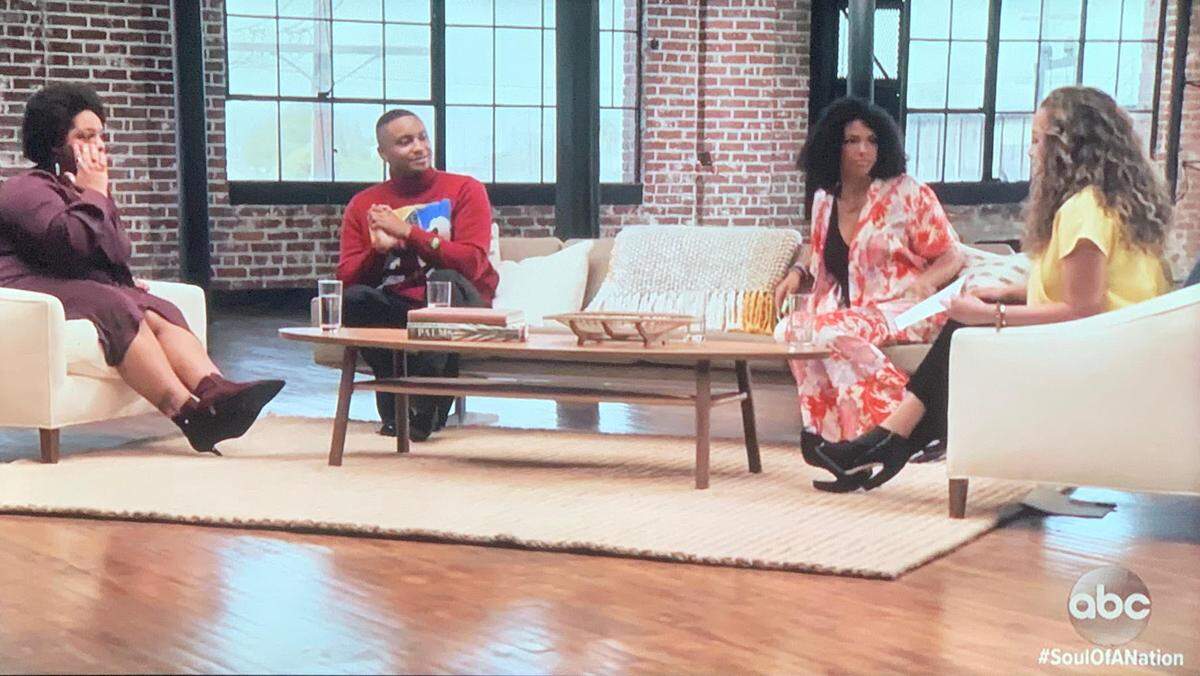
Group talks about Gen Z and “Black Twitter”
The second episode of “Soul of a Nation,” titled “Next,” was hosted by actress Marsai Martin of “Black-ish” and focused on forward-looking topics such as Gen Z, Black social media influencers, Afrofuturism, and the younger generation’s influence on the future of performing arts.
Arata appeared in a recurring segment titled “In the Kitchen,” which features a roundtable-type discussion on various topics, during the second half of the program.
The interview included Arata, Cullors, Brooklyn activist and city council candidate Chi Ossé, and the segment’s host, journalist and “The View” co-host, Sunny Hostin.
Hostin kicked off the segment on the topic of “Black Twitter,” a term used to describe the community of Black users on the social media platform that has helped push forward dialogue on sociopolitical issues of importance to the Black community but have been largely absent on other media platforms.
Black Twitter is credited with spreading awareness of those issues to non-Black Twitter users.
“I have this friend, and she asked me where she could find Black Twitter, and I think she thought it was an app,” Hostin said. “And you know my response was sort of like, you know, ‘Black Twitter will find you.’”
“If you can’t find Black Twitter, leave it be,” said Arata, who is referred to in the segment as a student leader.
“Black Twitter is the look you give another Black person when a white person says something crazy,” Ossé said.
“We took it and made it ours, and I feel we do that for everything. It’s so powerful,” said Cullors.
“It’s also, when it comes to serious matters, it alleviates the situation, which is much needed,” Ossé said.
“Honestly, life, especially for people of my generation, I feel like sometimes I don’t even have a second to myself, with every major event that’s been happening, basically every week at this point,” Arata said.
“I’m not Gen Z, I’m a Millennial, and when I speak to mostly Gen Z audiences, I’m always reminding myself that these children were children when I helped launch BLM, like 7, 8 years old,” Cullors said. “Gen Z sees everything.”
“I think our generation’s very hyper-aware,” Ossé said. “When they say ignorance is bliss, I really feel that a Gen Z person, they don’t have that. ... They see what’s happening in the world through every screen that you can imagine. It’s overwhelming, but it’s also necessary and beautiful.”
“Social media has, in amazing ways, allowed for these conversations to become global,” Cullors said.
“It’s nice to have a space where the whole goal is to uplift you,” Arata said.
‘Joyous protest’ and ‘The Moment’
Hostin asked the group how they use tools at Gen Z’s disposal to change narratives on current issues.
“How do you change the narrative now? I mean, you’re Gen Z leaders, right? Where do we go?” Hostin asked.
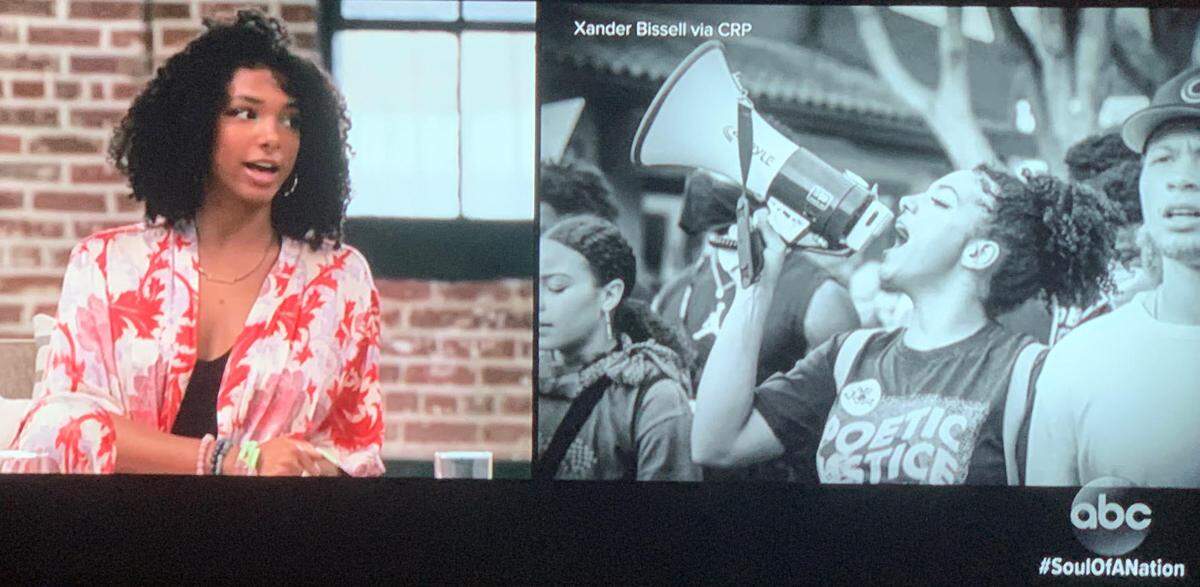
“Peaceful, beautiful and joyous protest,” Arata responded.
“It’s your right,” Hostin said in agreement.
“Exactly. Look, we’re here. You’re not going to ignore our needs,” Arata said, as the show displayed a black-and-white photograph of Arata protesting in downtown San Luis Obispo. “I have to fight so hard as a Black woman to just be free.”
In another segment, Hostin asked the group about “The Moment” they “knew they’re Black.”
“So, it was a little bit different for me,” Arata said. “My mom is white. I saw my dad on the weekends. But there were never Black people at my schools. ... Everybody treats you as ‘other.’ You’re other. You’re Black. You’re dirty. You smell bad. You should straighten your hair.”
“It’s crazy, and I’m like, why do none of these people like me?” she said. “You know racism at a very young age, because it’s not born, it’s taught. But it’s taught from the moment you’re brought into this world.”
“Soul of a Nation” airs Tuesday nights through April 6 at 10 p.m. The second episode can be watched online via the network’s website or on Hulu.
This story was originally published March 10, 2021 at 12:50 PM.