
From washed-up skulls to underwater trails, here are SLO County’s 10 most extreme rain stories
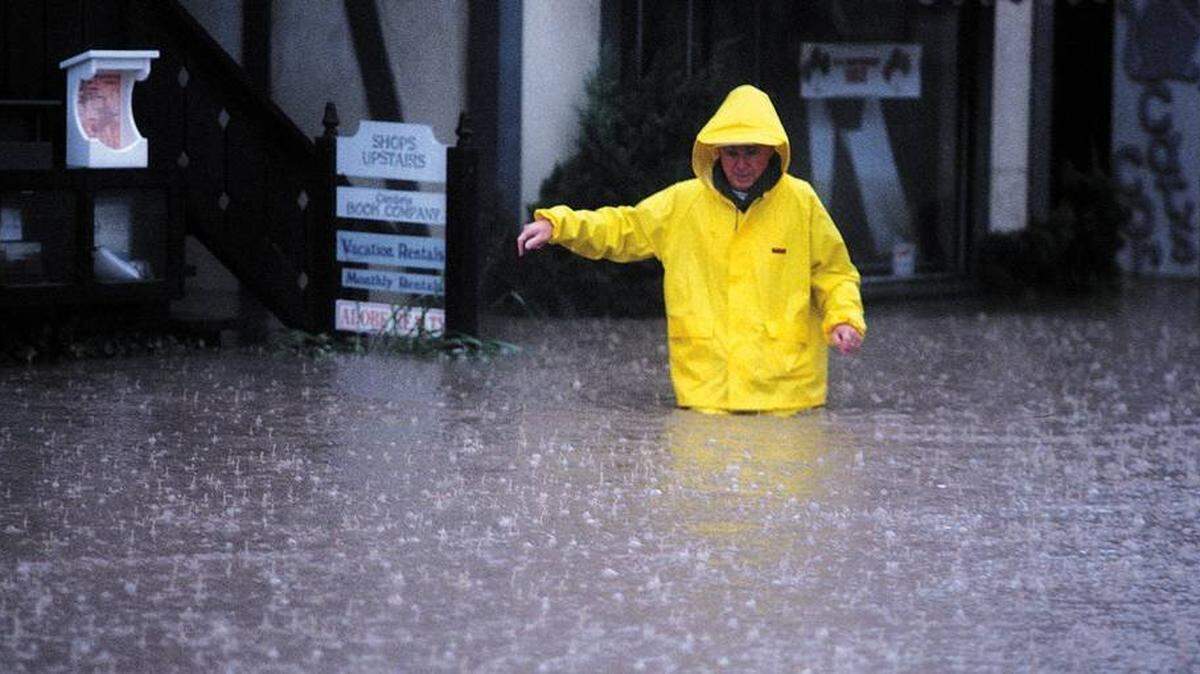
It’s easy to forget that San Luis Obispo can get some pretty extreme weather.
After all, the area is known for its year-round sunshine and mild temperatures. But we’ve definitely had our brushes with massive flooding, destroyed public property and even a washed up skull or two.
So as we deal with the aftermath of a major storm on California’s Central Coast, here’s a look back at some of the most extreme events when weather has been less than sunny for San Luis Obispo County:
1. Storm fells bridges and knocks the ends off piers
In 1885, a storm costing roughly $100,000 in damage (more than $2.6 million in 2020 dollars) descended upon San Luis Obispo.
Overnight about nine inches of rain fell “without intermission,” keeping many an anxious resident awake as they waited to see when the storm would cease.
Then around 2 a.m., the fire bell began ringing as San Luis Obsipo Creek rose to the steps of creek-side businesses, and knocked down bridges on Marsh, Osos, Morro and Nipomo streets.
Only the brand-new iron bridge on Chorro Street was saved, although it was damaged significantly.
Over the ocean, the storm raged so fiercely it knocked several hundred feet off the roughly 900-foot-long Pismo and Cayucos wharfs.
Today, a small portion of the creek downtown is actually walled underground, in a channel lined in Bishop Peak granite — some say the reason is because of the 1885 storm and Tribune editor Myron Angel’s call to wall up the creek.
Check out more of the original story here: http://www.sanluisobispo.com/news/local/news-columns-blogs/photos-from-the-vault/article45913500.html
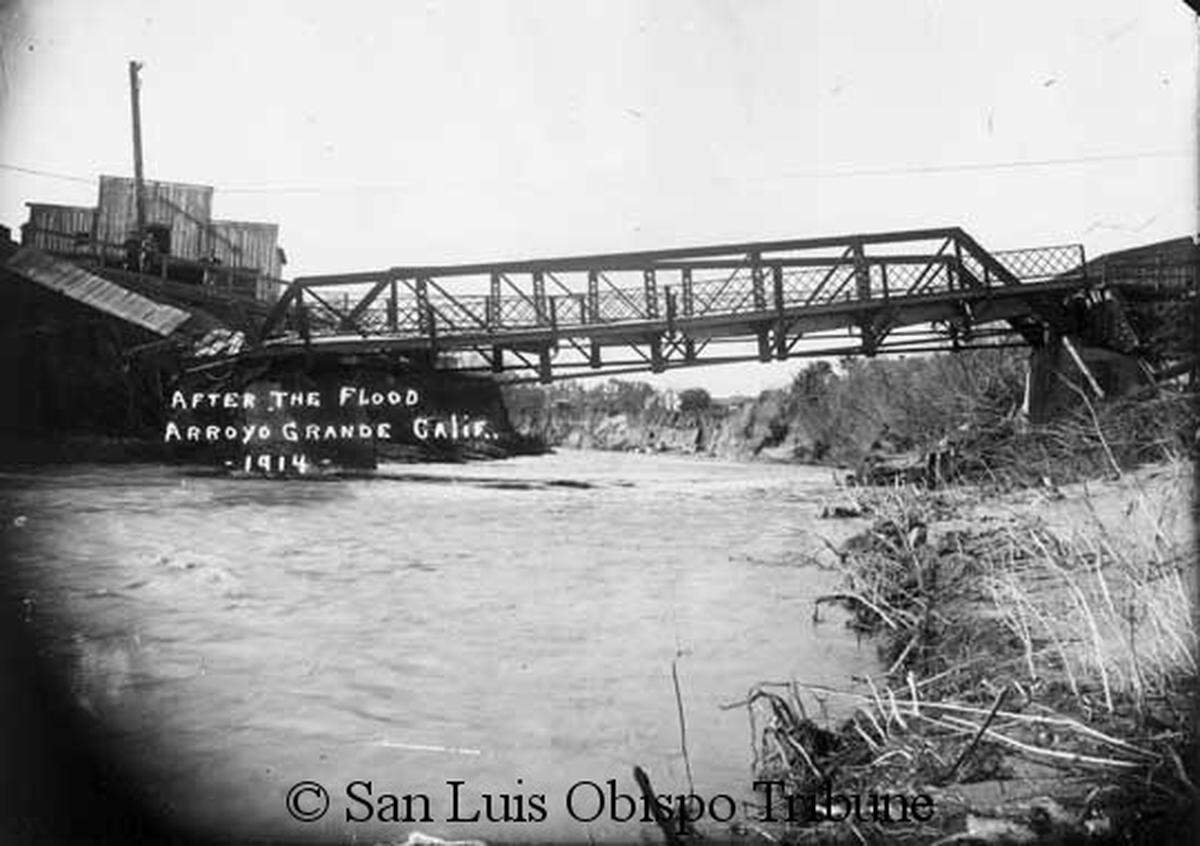
2. Human skull discovered, Arroyo Grande threatens to dis-incorporate
By all accounts, 1914 was a rough year for San Luis Obispo County.
After a dry stint the year before, the rains came with a vengeance in January 1914, flooding much of the county, knocking out power, stranding people in town and even damaging Branch Street in Arroyo Grande so badly that residents pushed to dis-incorporate so they wouldn’t have to pay for the damage. (They were ultimately unsuccessful.)
Even more “grewsome” however, was when a human skull washed up from a grave at an Orcutt Road ranch. According to a report in The San Luis Obispo Daily Telegram, Walter Perozzi found the skull with some tissue still on the bone. (The coroner later said there was no evidence of foul play.)
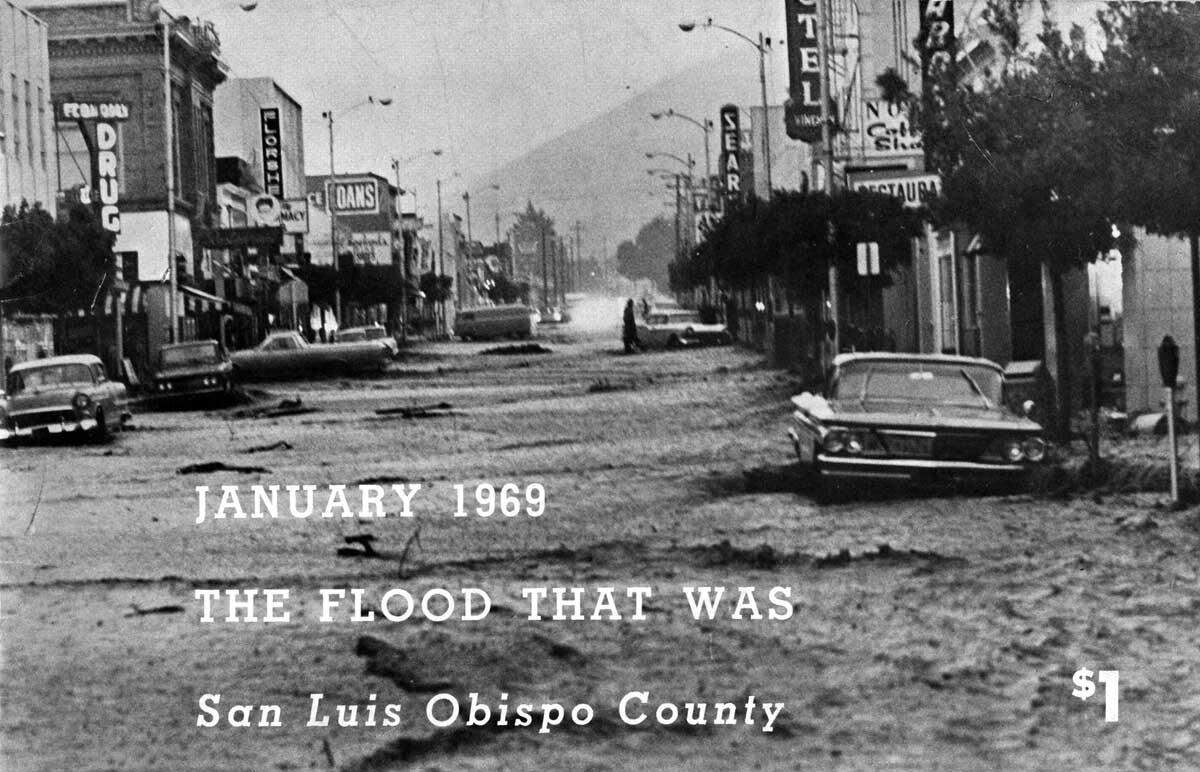
3. Nearly a foot of rain falls on SLO County — in just 2 days
In January 1969, a momentous flooding event occurred that has since served as the hallmark for all preceding SLO County storms: Over a two-day span, 10.53 inches of rain — more than half what the area would usually get in an entire year — fell on the county. At one point near the end of the torrential 48 hours, a full inch of rain fell in just 25 minutes.
Even more outstanding? The rains continued, on and off, for 12 days.
Five county bridges washed out the first day. Raw sewage spilled from Pismo Beach. Residents in Avila Beach used rowboats along First Street. Royal Farms lost 8,000 chickens to drowning. A tide of water injured two radio workers when it rushed through the window of the station. Families in Atascadero tore down a railroad barricade and filled in a road across the train tracks to evacuate themselves and their belongings.
A positive of all this wreckage: Arroyo Grande was largely spared much of the damage, due to the newly constructed Lopez Dam.
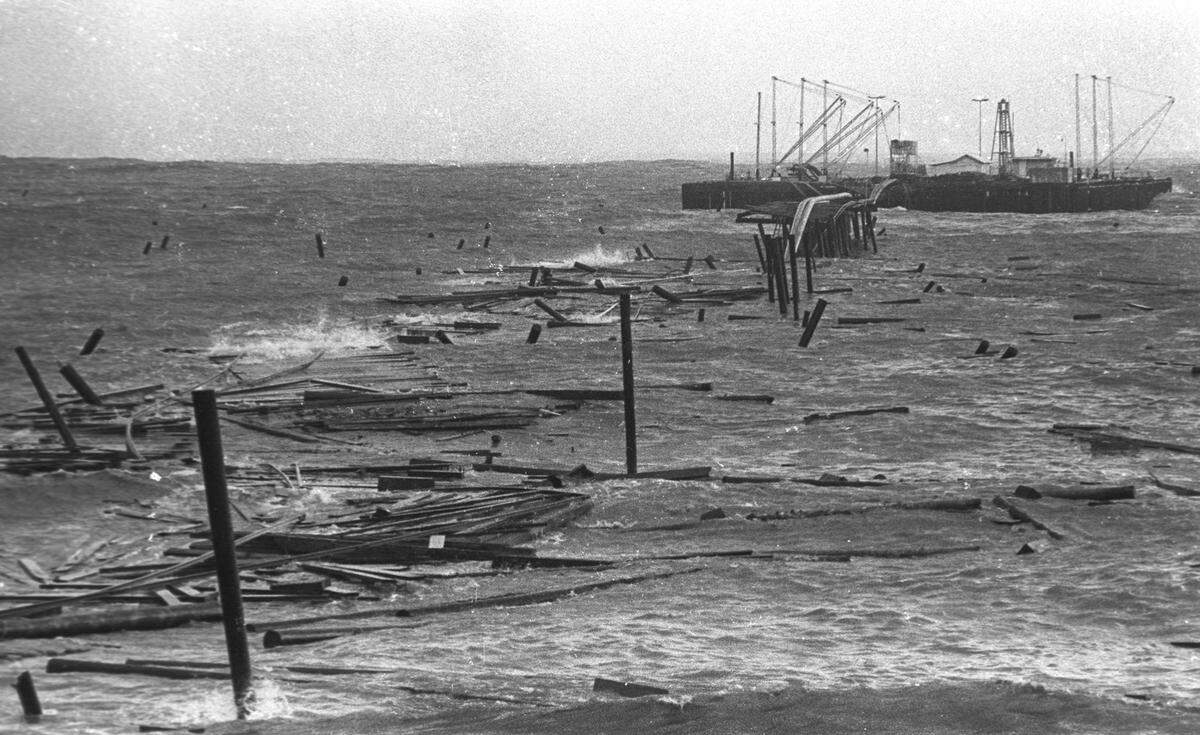
4. Union Pier, schoolchildren and Highway 1 swept into the ocean
Between 1982 and 1983, the Central Coast saw several major weather-related events.
First, a mudslide sent a portion of Highway 1 outside of Big Sur plunging 700 feet down Sycamore Draw into the ocean in March 1982, killing a Morro Bay man who was driving a skip loader along the road. About 2.7 million cubic yards of earth gave way in what was at the time the largest mudslide in California history.
The road wouldn’t reopen until a year later
In February 1983, a wave flipped a 44-foot whale watching boat called the San Mateo in Morro Bay Harbor, sending 32 people, including 23 Flamson Middle School students into the churning water.
All the students were rescued, though two adults later died from injuries they sustained in the accident.
Finally in March 1983, storm waves collapsed the wooden Union Oil Pier (now the Cal Poly Pier) “like a freight elevator,” sending three workers into the water. They were rescued by two men who had been on the beach at Avila looking toward the Union Pier when it went down.
The pier was later rebuilt with steel, but after Union Oil — later known as Unocal — shut down in Avila Beach, it was donated to Cal Poly for marine research.
For more information, check out this story: www.sanluisobispo.com/news/local/news-columns-blogs/photos-from-the-vault/article201872404.html
.png "image001 (12).png")
5. Storm-related deaths, flooding hit SLO County
The last major local flooding event in San Luis Obispo County is generally said to be in 1995 — and that year was one of its more fatal.
That year, four people were killed locally due to storm-related causes. One man hydroplaned and crashed into a culvert. while a woman’s Volkswagen Beetle washed into San Luis Obispo Creek, with her inside, and a homeless man drowned under Marsh Street Bridge, trapped by the floodwaters.
Finally, a San Luis Obispo County Public Works employee was killed when a 60-foot pine fell on his cherry-picker truck while clearing storm damage.
Damage throughout the county was also extensive.
Cambria was one of the hardest hit by the flooding — some reports say the Cambria Fire Department was even using a boat to rescue people along Main Street.
Almost 700 homes and 200 businesses sustained some sort of damage.
San Luis Obispo flooded near Laguna Lake. Atascadero reported about $3 million in damage. The Olive Street hillside in Paso Robles slid into several homes. And the site of James Dean’s 1955 car crash in Cholame was almost entirely underwater.
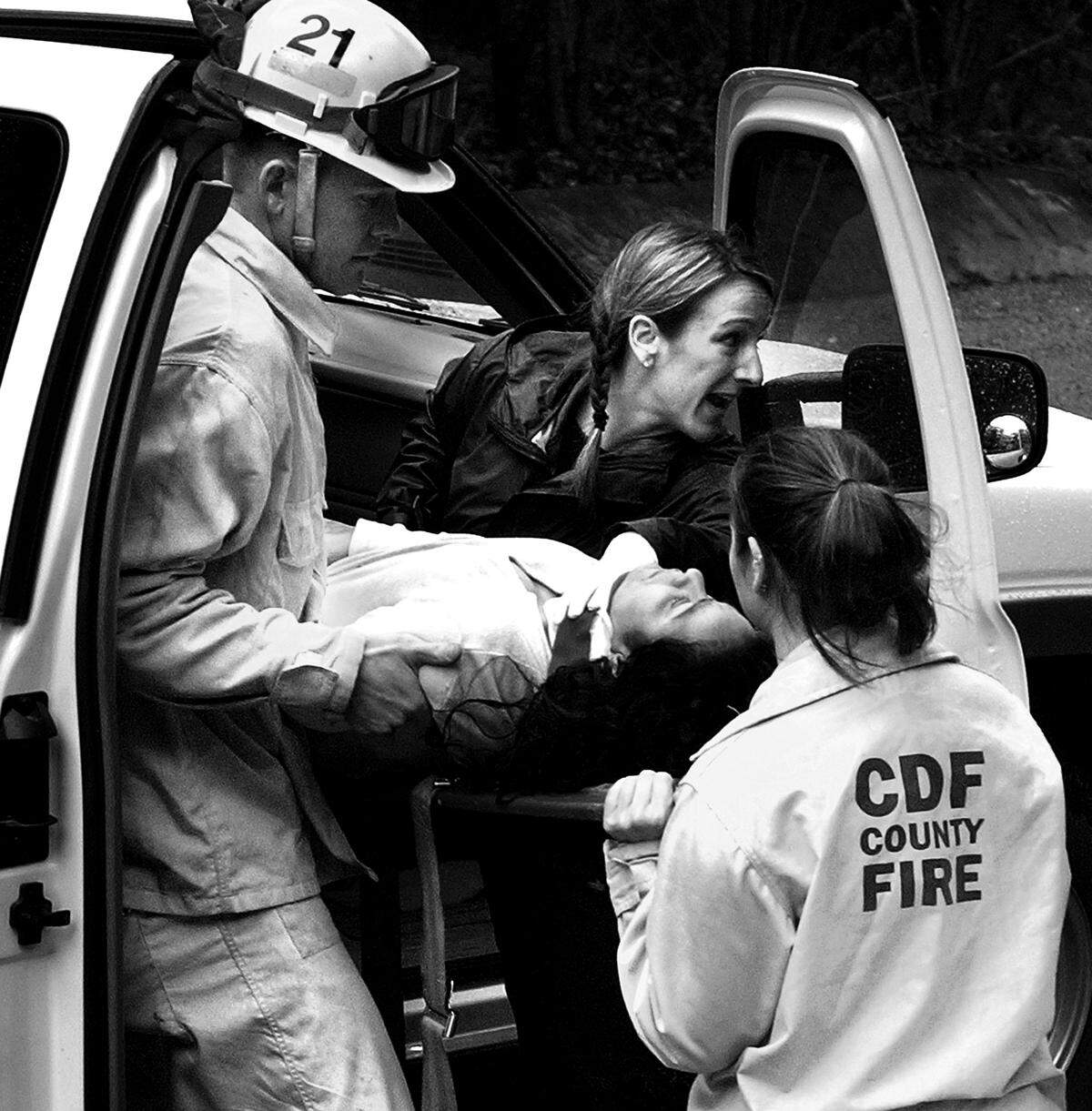
6. Dramatic water rescues at SLO Creek, Lopez Canyon
December 2004 was described as “unusually wet” and numerous areas throughout the county reported large-scale flooding that month.
There were also several reports of people caught up in the swift-moving floodwaters, described in one Tribune article from Dec. 31.
According to the article, a woman clung to a ribbon of fence in the overflowing San Luis Obispo Creek for more than 30 minutes before she could be rescued by firefighters. Firefighters later noted their surprise that she had hung on that long, considering the freezing cold water.
The same day, three people — two women and one man — were stranded in Lopez Canyon after trying to walking to their parked cars from a rural home along Upper Lopez Canyon Creek. Then the man fell into the water was swept downstream, along with one of the women who tried to help him. The second woman was able to get across the water and hike to a neighbor’s house for help.
The first woman was eventually able to extricate herself from the creek and hike to another neighbor’s house, but the man’s body was later discovered at Lopez Lake.
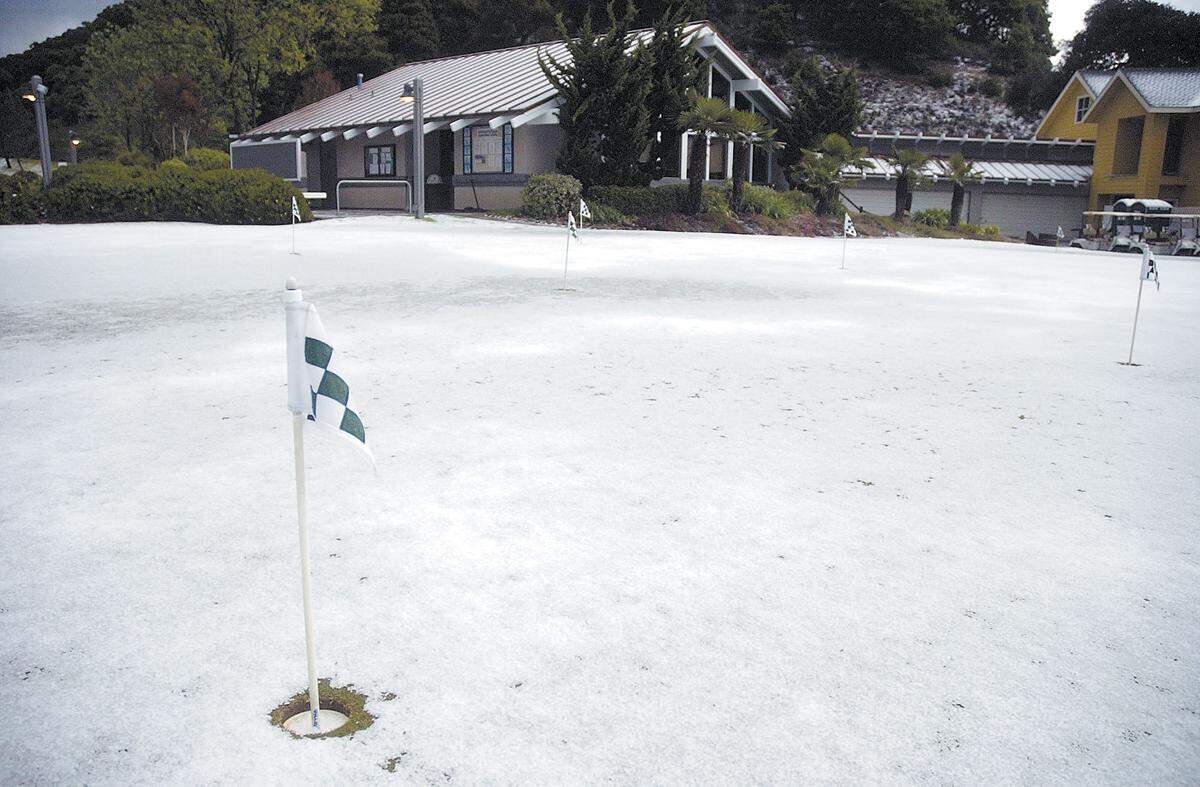
7. Snow falls in Avila Beach
The official stance is that it’s never snowed in San Luis Obispo (or at least never to a recordable level) but snow definitely has fallen on areas of SLO County throughout the years.
Take March 2006 for instance, when a light dusting of that powdery white stuff was reported along the beaches from Pismo to Avila Beach.
At the Avila Beach Golf Resort the practice putting green was a blanket of white after the cold winter storm dropped a combination of snow and hail in the South County before sunrise.
It didn’t last long, however. Most reports say the snow melted almost as fast as it could be photographed.
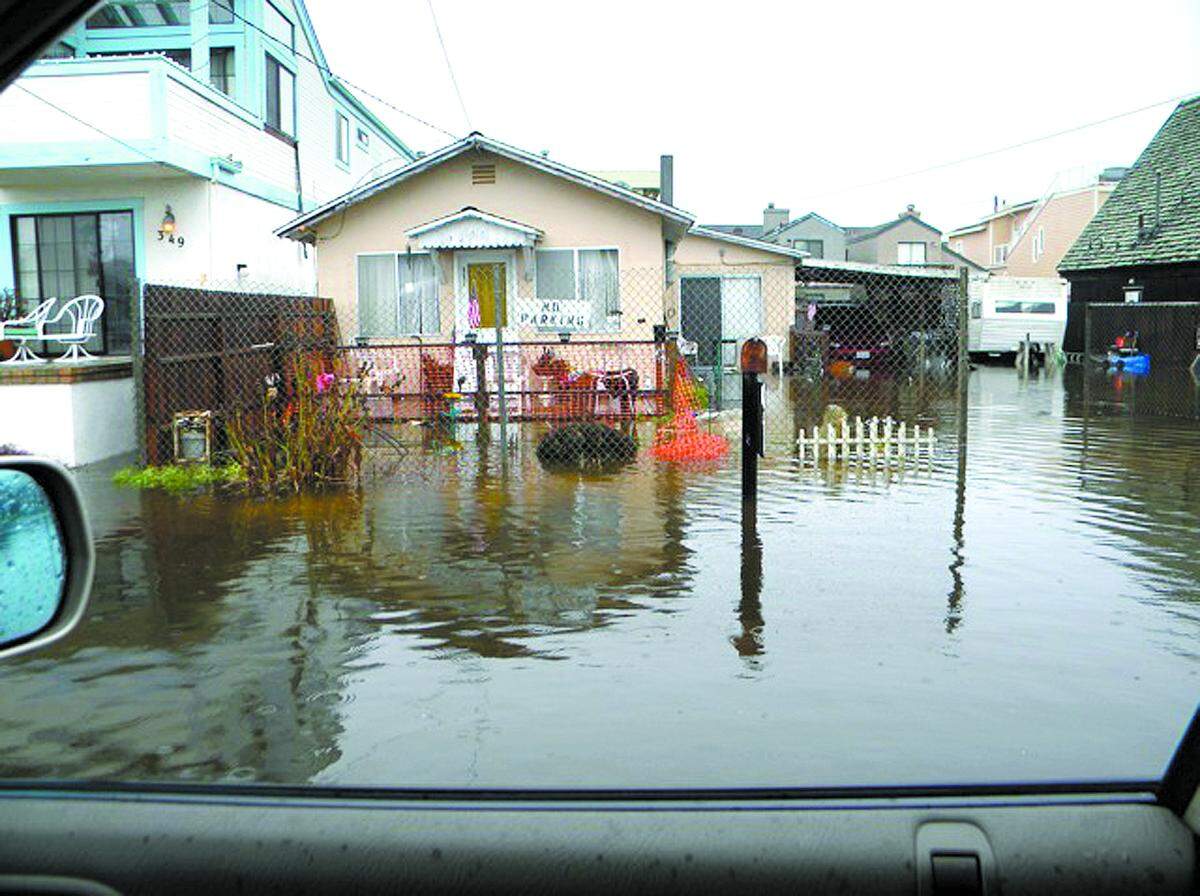
8. Raw sewage released into local creeks
In December 2010, runoff from unusually strong storms overwhelmed many of the county’s sewage systems, and more than 20,000 gallons of raw sewage was released across the county.
First 15,000 gallons were released into San Luis Obispo Creek, followed quickly by smaller spills into the Arroyo Grande Creek, Meadow Creek and Oceano Lagoon. Then another 1,000 gallons spilled into San Luis Creek in SLO, 515 gallons were released in Morro Bay, 750 gallons in Pismo Beach and 2,500 gallons in Avila Beach.
The heavy rains also forced an evacuation of roughly a dozen families in the Oceano Lagoon area, shut down several roads in both North and South County and had part of the Avila Beach Golf Resort’s 18-hole course underwater.
On the sewage front, only the next month, between 160,000 and 180,000 gallons of partially treated sewage would be accidentally released into the ocean at Oceano, starting a years-long legal battle with the state.
For more on the December 2010 storm, go to www.sanluisobispo.com/news/local/article39140265.html.
9. Thunderstorms, lightning shatter July rain record
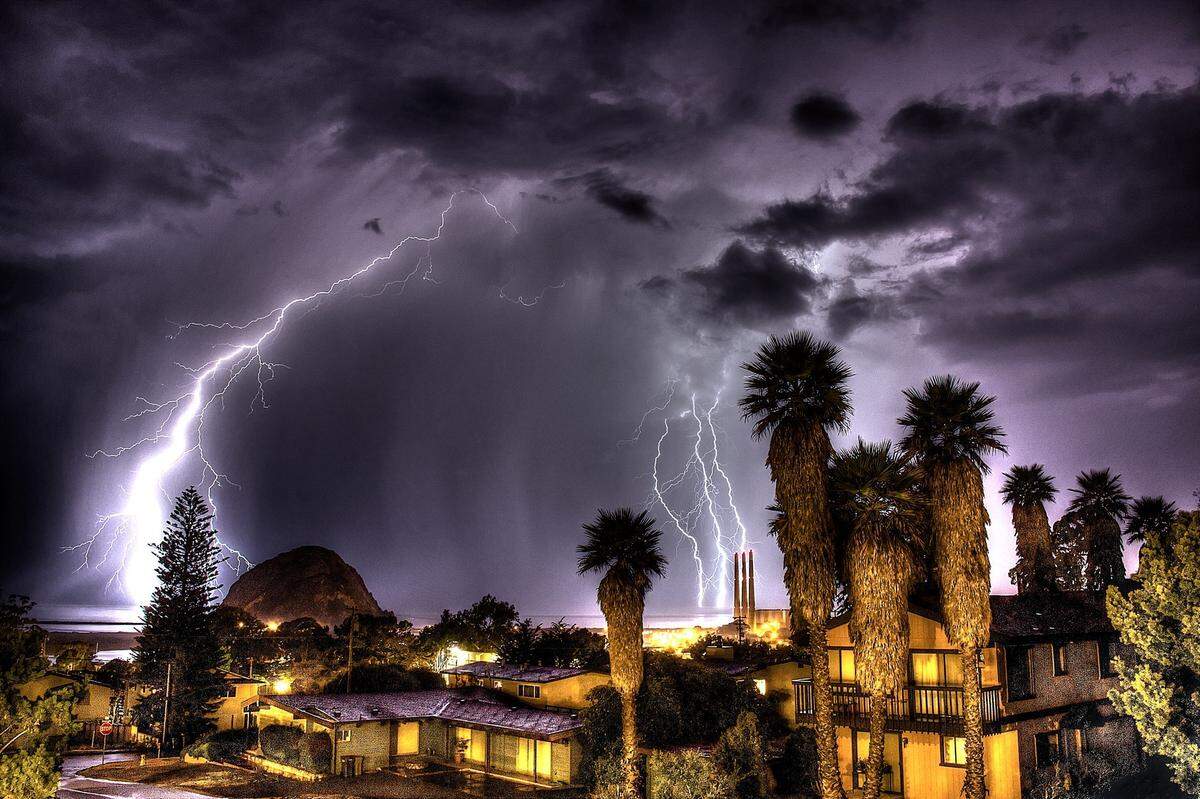
July is typically the driest month around San Luis Obispo County, but in July 2015 a surprising summer storm shattered the previous records in Paso Robles and San Luis Obispo.
Paso Robles tallied 3.55 inches of rain from the storm, a total that destroyed the previous the record for all of July, 0.59 inches in 1950, according to PG&E meteorologist John Lindsey. San Luis Obispo also set a new July record with 0.84 inches, exceeding the previous high of 0.46 inches in 1950.
The storm wasn’t just record-breaking — it was dramatic.
Thunder shook the county as lightning burst overheard; according to reports at that time, lightning strikes knocked out power to more than 10,000 customers. At one point in the morning, SLOweather.com reported as many as 79 lightning strikes a minute across the county.
Summer campers reported a harrowing night with the thunder shaking theirs tents and lightning strikes putting on an intense light show.
To check out the original story, go here: www.sanluisobispo.com/news/local/article39057036.html.
10. Pismo Beach hotel, Bob Jones trail flood
It started with a wet wake-up call at about 8 a.m. on Jan. 20, 2017, when residents at the Seacrest Hotel in Pismo Beach were notified the hotel was flooded. First responders were at the hotel for a minor, unrelated call when they were greeted with a rush of water as their elevator opened on the first floor.
A few hours later, Sycamore Mineral Springs Resort on Avila Beach Drive had to be evacuated as San Luis Obispo Creek began to rise, almost to the level of the stilted buildings.
By mid-afternoon, the flooding had spread to the Bob Jones trail behind the Avila Bay Athletic Club; the trail’s playground area was almost entirely underwater with water flowing at least waist deep across other sections of the trail.
The rains actually continued for the next several weeks, prompting a “State of Emergency” declaration across the county.
That same month, an unidentified mystery surfer cruised down the flooded Grand Avenue in Grover Beach, taking advantage of the rainwater and mini rapids rushing through town.
For the original story, go here: www.sanluisobispo.com/news/local/article127711409.html.
This story was originally published March 21, 2018 at 11:36 PM with the headline "From washed-up skulls to underwater trails, here are SLO County’s 10 most extreme rain stories."