
He was accused of stealing huge amounts of water over 23 years. Here’s why no one noticed
READ MORE
California’s missing water
The shortcomings in California’s water governance have enormous consequences as the state faces the prospect of a fourth straight year of drought in 2023.
Expand All
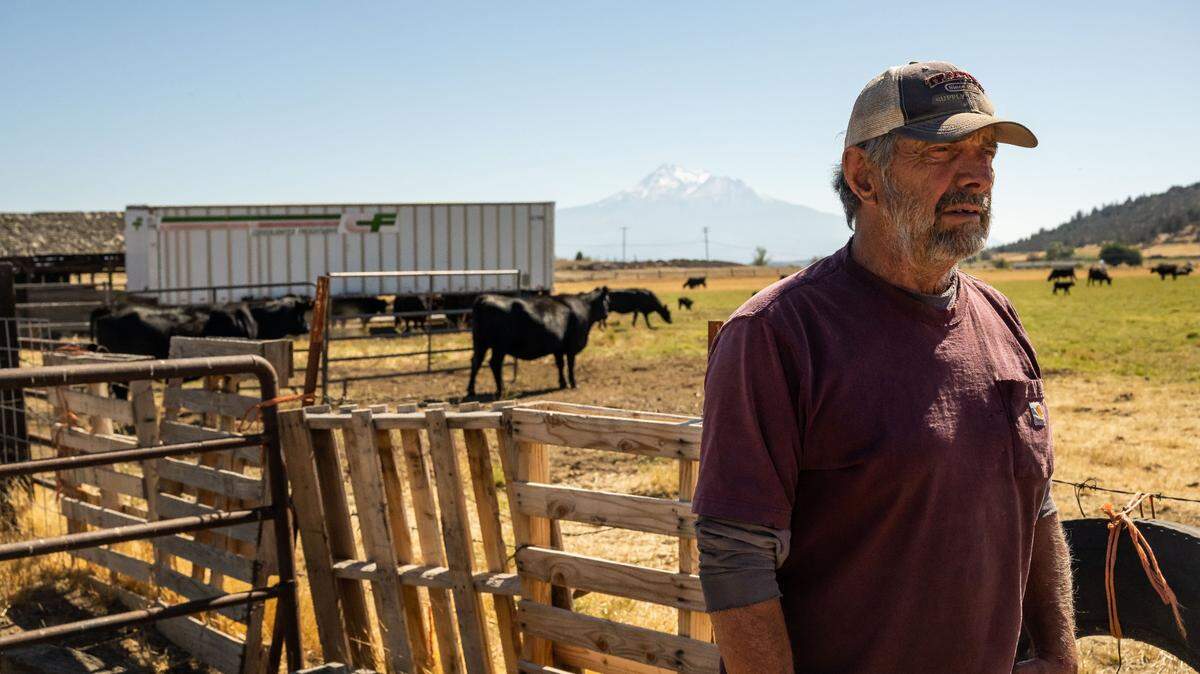
They defied California and drained an important salmon stream. Their fine: $50 per farmer
California should change fishing rules after hundreds of sturgeon die, scientists say
Investigation: Chronic water shortages increase, yet California regulators are unprepared
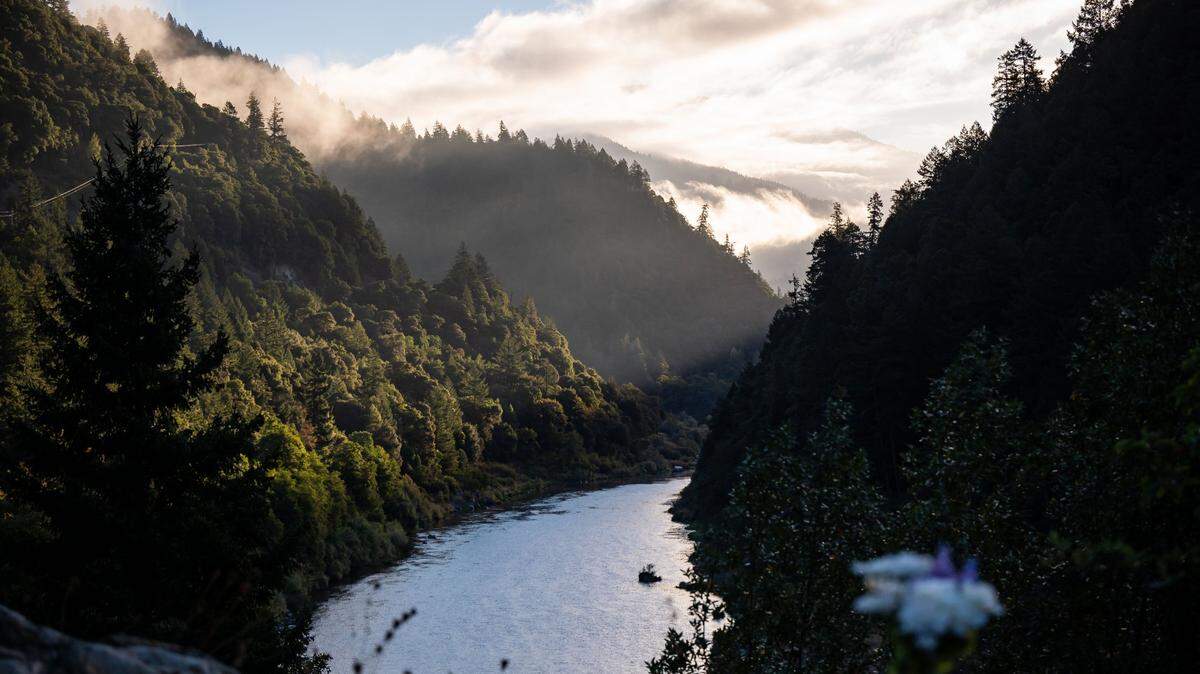
‘Death in the family.’ California tribe anguished as water, sacred fish vanish from rivers
He was accused of stealing huge amounts of water over 23 years. Here’s why no one noticed
California’s water police struggle to track where water is flowing and whether someone is taking more than they’re supposed to.
A criminal case unfolding in the San Joaquin Valley underscores how the federal government seems to have similar problems.
Prosecutors say they uncovered a massive water theft that went on for 23 years without anyone noticing.
Earlier this year a federal grand jury indicted Dennis Falaschi, the former general manager of the Panoche Water District in the western San Joaquin Valley, on charges of conspiracy, theft of government property and filing false tax returns.
Falaschi’s alleged crime stemmed from the federal government’s operation of the Central Valley Project, the system of reservoirs and canals that dates to President Franklin Roosevelt’s administration.
According to prosecutors, Falaschi engineered a brazen scheme to steal $25 million worth of water from the U.S. Bureau of Reclamation, operator of the Central Valley Project. More specifically, Falaschi stands accused of having his underlings siphon water from the Delta-Mendota Canal, the main conduit for delivering federal water to farms along the west side of the San Joaquin Valley and part of Silicon Valley.
He then billed Panoche customers for this stolen water and used the proceeds to pay “himself and other co-conspirators exorbitant salaries, fringe benefits and personal expense reimbursements,” the indictment says.
How Panoche Water District legal trouble started
Falaschi’s legal troubles began in 2017, when the state controller’s office released an audit showing that the financial controls at Panoche were too lax. Among other things, staffers were allowed to use district credit cards to buy Oakland A’s and Raiders season passes, and tickets to a Katy Perry concert.
A month later, Falaschi left Panoche. Then in 2018 the state attorney general’s office charged him and three other former district employees with embezzling $100,000 from Panoche and illegally burying toxic chemicals on district property. Prosecutors said Falaschi allegedly used the embezzled funds to buy a pair of slot machines and some kitchen appliances, among other things. That case is still pending.
The latest indictment covers a scheme that, according to prosecutors, began in 1992 and wasn’t discovered until April 2015 when a canal maintenance worker saw a whirlpool above the equipment that prosecutors say Falaschi had hidden in the canal to siphon off the water.
The theft lasted long enough to enable Falaschi to grab a total of 130,000 acre-feet of water — enough to fill about 13% of Folsom Lake, prosecutors said.
Last year district officials made a civil settlement over the missing water, agreeing to pay $7.5 million to the federal government and another $1 million to an umbrella agency, the San Luis & Delta-Mendota Water Authority, which buys water from the feds.
The indictment came months after the civil settlement. The grand jury says Falaschi had several of his employees install a valve mechanism in the canal — submerged below the water line — near the district’s headquarters in Firebaugh.
Falaschi, who now lives in Aptos, could receive up to 24 years in prison if convicted.
He has pleaded innocent to the criminal charges. In a statement, his Fresno lawyer Marc Days blasted the feds for prosecuting Falaschi “over a leak from the government’s rotted pipe which the government failed to repair,” and for relying on the statements of “unreliable and incompetent witnesses motivated by their own self-interest.”
Days said the amount of water the federal government accuses Falaschi of taking pales in comparison to some of the other leaks from the same canal.
He said area farm districts receive “massive amounts of unmetered water,” including one leak that Days alleges siphons off 200 cubic feet a second, an amount that in a year would surpass the water prosecutors allege Falaschi stole over those two decades. The federal government, Days claims, has known about the problems but fails to do anything to prevent them.
Mary Lee Knecht, a spokeswoman for the Bureau of Reclamation, declined comment because of the pending case.
Why missing water goes undetected
Falaschi’s successor at Panoche, Ara Azhderian, said it’s no secret that water goes missing throughout the Delta-Mendota system. Evaporation alone takes a significant toll, he said.
In fact, Azhderian said Falaschi’s alleged scheme likely went unnoticed for so long due to the sheer size of the Delta-Mendota Canal and the volume of water it delivers.
Two million acre-feet of water moves through the canal in a typical year, and the canal is nearly 117 miles long.
“When you think about the system and how long it is, how big it is,” he said, “… it was such a small amount in the scheme of things as to be undetectable.”
Others say the problems along the canal — whether through massive leaks or by alleged thefts — highlight just how difficult it is to keep tabs on the state’s most precious resource.
“We really don’t know where our water is going,” said Jeffrey Mount, a water expert at the Public Policy Institute of California. “Where it really breaks down for us now is in this ever-tightening water world where we’re having to deal with less. Major chunks of it, we don’t know where it goes and who’s using how much.”
BEHIND THE STORY
MOREWhy did we report this story?
Practically every Californian knows the state is in another drought — and is likely to face chronic water shortages for the foreseeable future. But few Californians understand the multi-layered and convoluted system that governs the state’s most precious resource.
California’s water rules — an amalgam of state and federal laws, court decisions and individual water rights that have been around for decades — have become a kind of straightjacket that makes it increasingly difficult for state officials to regulate usage and crack down on scofflaws. Many water users have senior rights that give them wide latitude to pull as much water from the rivers as they like.
The issues become acute in times of drought, when water is in short supply and every additional drop taken by one person comes at the expense of their neighbor or the environment. With a fourth year of drought looming, The Sacramento Bee decided it was time to look at whether California can police its water system.
Where did the idea come from?
The State Water Resources Control Board was clearly trying to make a statement when, in mid-August, it announced that it was issuing a notice of violation against a group of Siskiyou County ranchers who’d pulled water from the Shasta River in open defiance of a drought-cutback order. Keying off this case, reporters Ryan Sabalow and Dale Kasler spent the next two months examining the effectiveness of California’s efforts to regulate water usage.
How did we report it?
Sabalow and Kasler interviewed more than two dozen water-law experts, environmentalists, lawyers, policy makers and regulators to get a more thorough understanding of how the system works — and how it often falls short.
Sabalow took two separate trips to Siskiyou County to interview ranchers, including one who led the August rebellion. Given a rare glimpse of a world usually sealed off to outsiders, Sabalow and Bee visual journalist Xavier Mascareñas also were allowed to watch Karuk Tribe fishermen pull salmon out of the Klamath River, at one of their most sacred cultural and religious sites. The tribal members explained in detail how they believe unauthorized water diversions are wrecking fish populations and harming the tribe’s livelihood and cultural identity.
Kasler interviewed officials with the state water board and reviewed hundreds of pages of court filings and other documents, plus reams of state data about water diversions. He traveled to the Delta to meet with a farmer whose water district had just won a significant legal victory against the state to protect farmers’ water rights. Kasler also traveled to the San Joaquin River below Friant Dam, northeast of Fresno, to learn how water vanishes from the river, undermining a federal program aimed at restoring salmon populations.
This story was originally published November 1, 2022 at 5:30 AM with the headline "He was accused of stealing huge amounts of water over 23 years. Here’s why no one noticed."