
Investigation: Chronic water shortages increase, yet California regulators are unprepared
READ MORE
California’s missing water
The shortcomings in California’s water governance have enormous consequences as the state faces the prospect of a fourth straight year of drought in 2023.
Expand All
They defied California and drained an important salmon stream. Their fine: $50 per farmer
California should change fishing rules after hundreds of sturgeon die, scientists say
Investigation: Chronic water shortages increase, yet California regulators are unprepared
‘Death in the family.’ California tribe anguished as water, sacred fish vanish from rivers
He was accused of stealing huge amounts of water over 23 years. Here’s why no one noticed
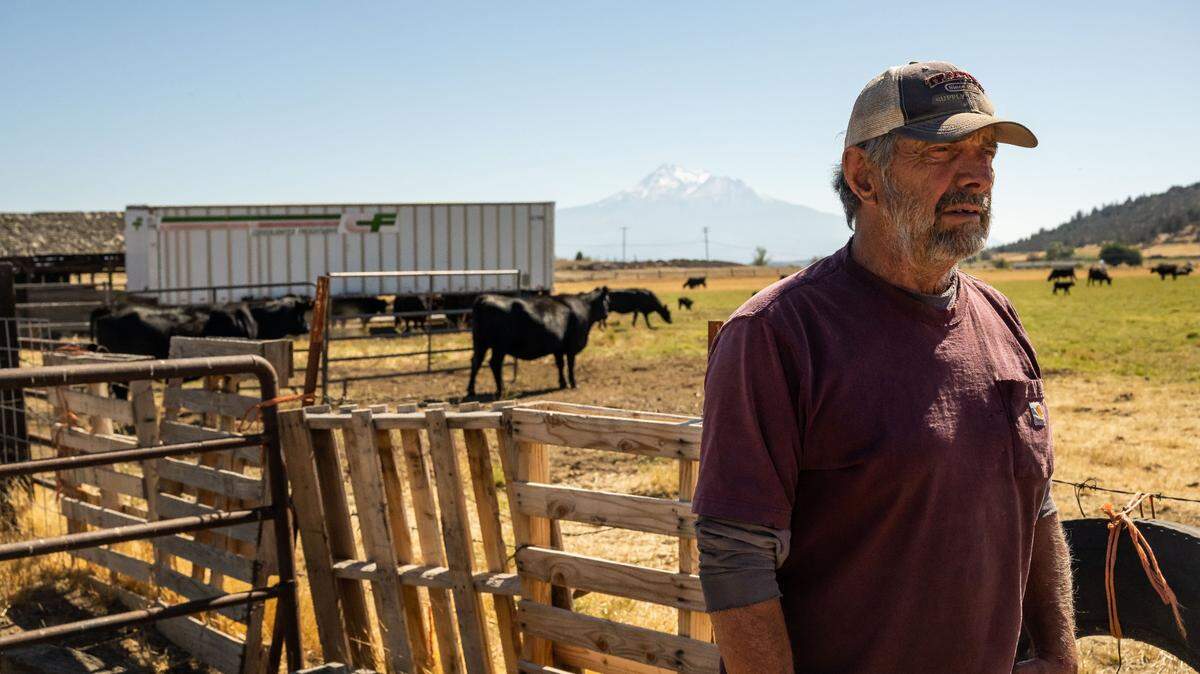
Jim Scala needed the water. So he took it.
As the third devastating summer of drought dragged on, the Siskiyou County rancher knew his irrigation district could be fined up to $10,000 a day if he and his neighbors defied a state cutback order and pumped water from the Shasta River onto their lands east of Yreka.
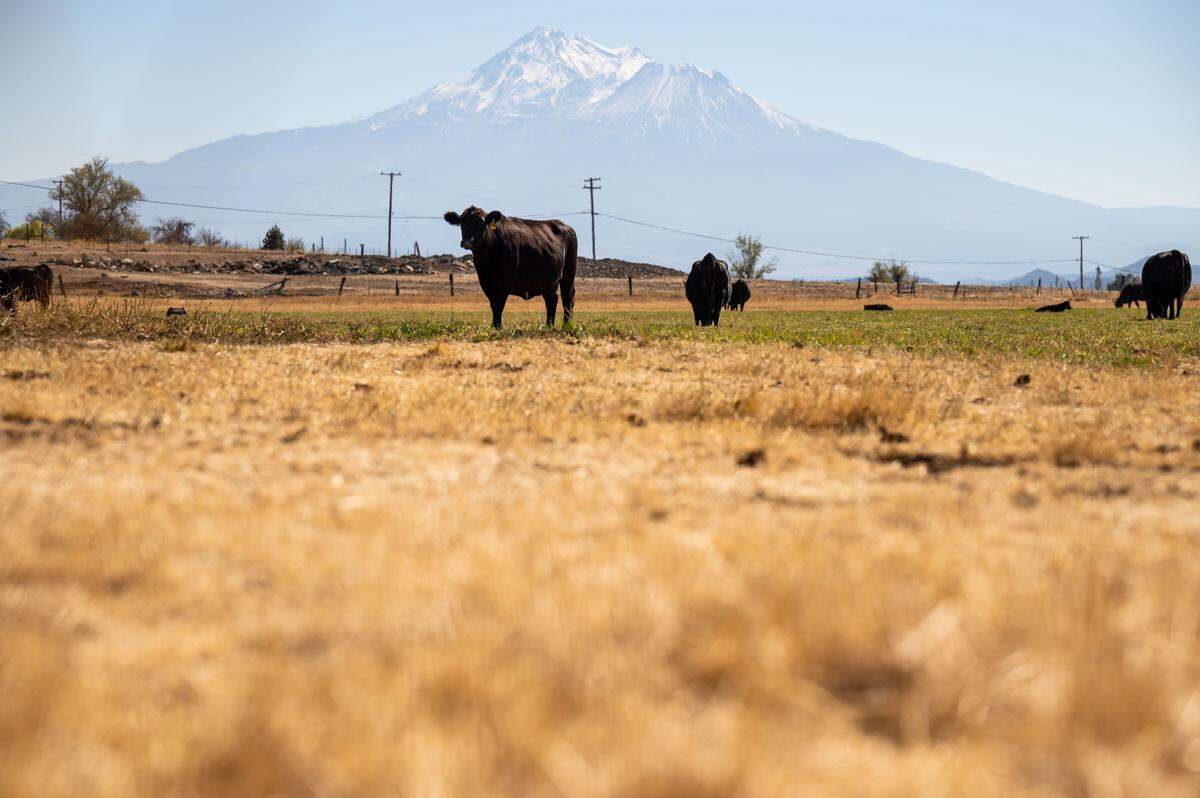
But his green grazing pastures had turned yellow and his well and his ponds had dried up. He’d spent close to $100,000 on hay this year to feed his cattle. Scala, 75, was worried he’d have to sell them off.
“I finally got tired of all this bull----,” said Scala, president of the Shasta River Water Association, a group of about 110 farmers and ranchers near the Oregon border. “And I said, ‘To hell with them. Let’s just start the pumps.’”
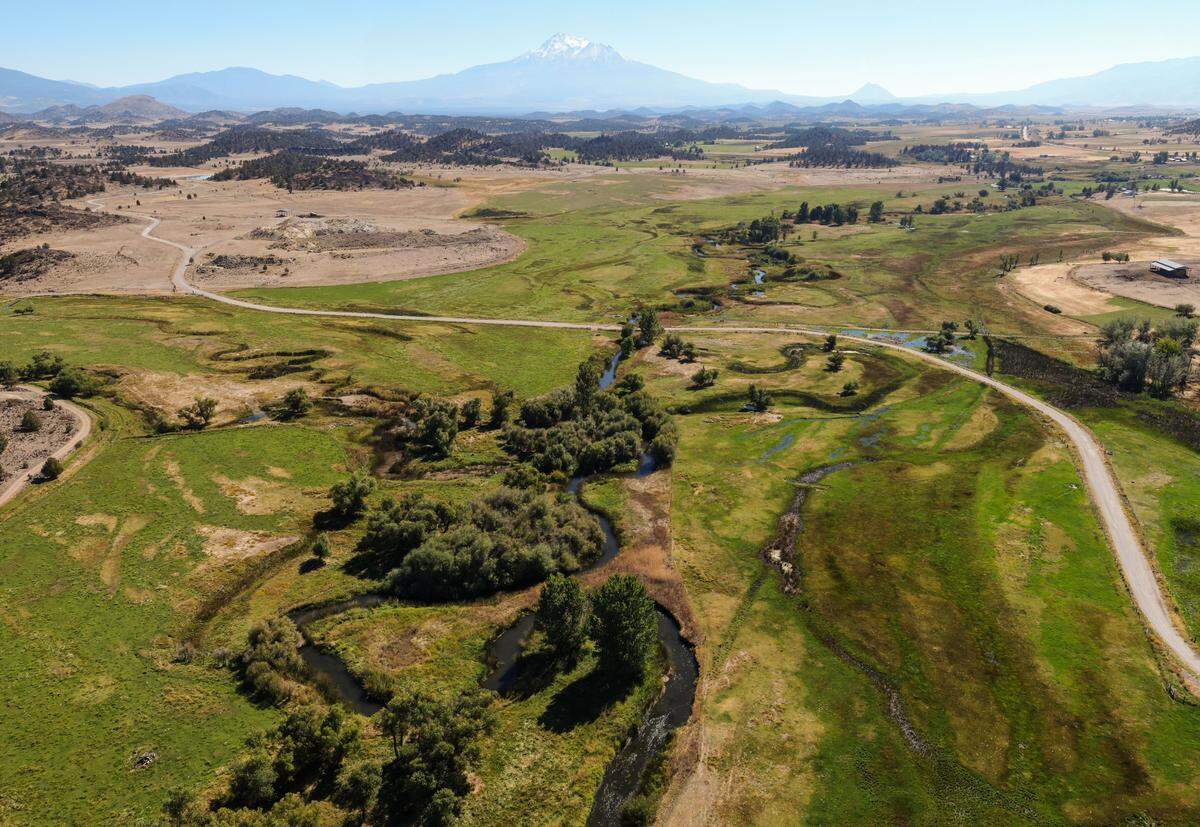
So in mid-August, they turned them on. For roughly a week, they sucked out nearly two-thirds of the water flowing down the Shasta, home to one of California’s few runs of coho salmon.
State biologists said the pumping likely killed coho, which are protected by the state and federal endangered species acts.
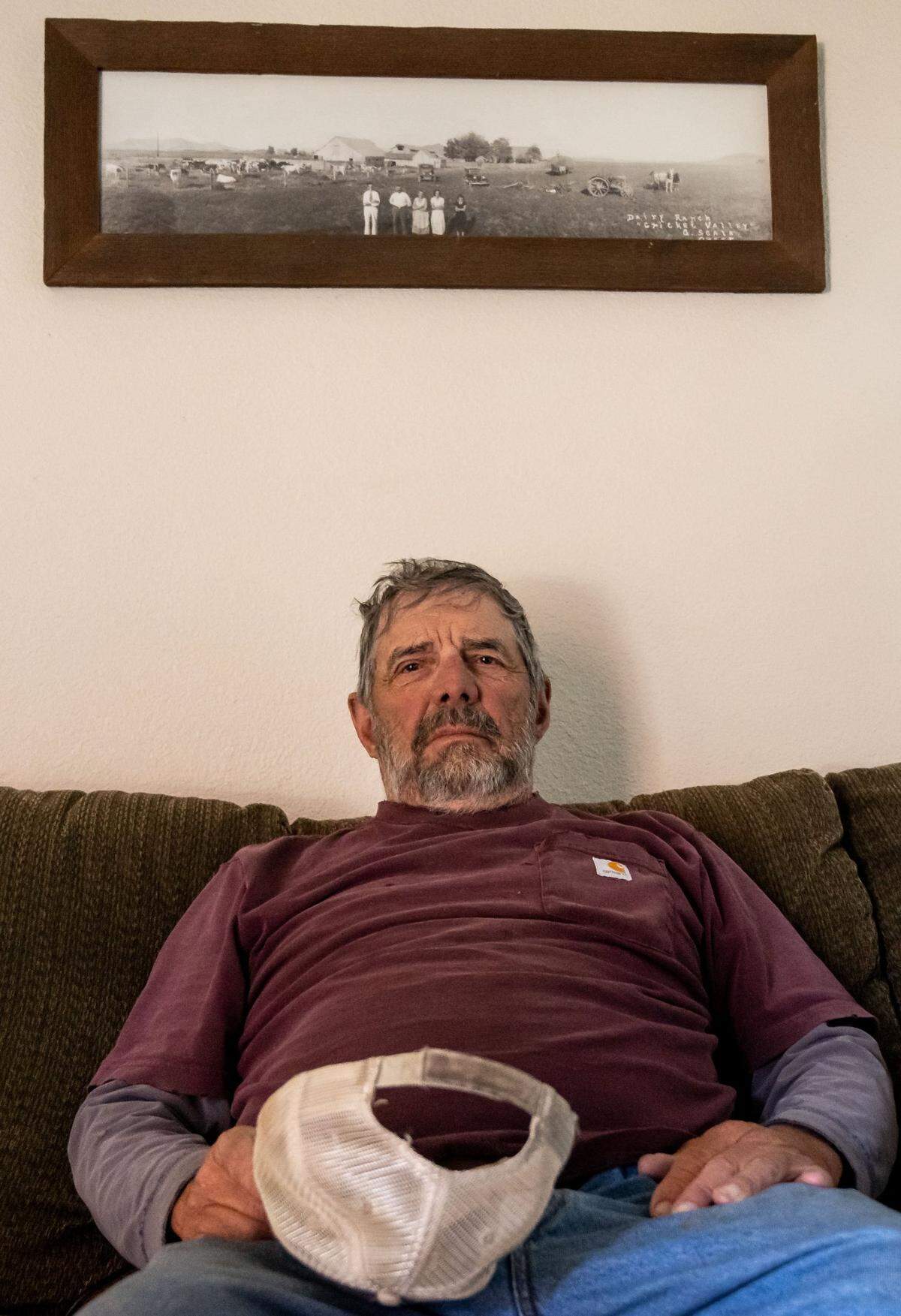
About a month later, Scala had no apologies inside his small manufactured home, where a black and white photo of the original Scala settlers on their homestead in the early 1900s hangs on the living room wall.
“We’ve got to make a stand somewhere,” he said.
While the Shasta River rebellion might have been the most brazen, a Sacramento Bee investigation reveals that farmers and other water users frequently ignore state drought regulations.
The Bee interviewed dozens of farmers, policy experts, American Indian tribal members, environmentalists and regulators. It reviewed hundreds of pages of court rulings, regulatory filings and other public records.
The Bee’s findings reveal a state regulatory system dramatically unprepared to address chronic water shortages and an ecosystem collapse.
▪ On average, just 11% of farms and cities have complied with a 2015 state law requiring them to accurately monitor and report their water use to the State Water Resources Control Board. In the Shasta Valley, where Scala farms, the compliance rate is 7%. Even if compliance were to improve, the state water board lacks the tools to analyze the data properly to determine if unauthorized diversions are taking place.
▪ California’s difficulties in getting a handle on water consumption can lead to poor outcomes for the environment. One glaring example: A federal program to restore salmon on the San Joaquin River has struggled because billions of gallons of water disappear from the river some years. No one can say for sure who exactly is taking it, and whether it’s even legal for them to do so.
▪ California lacks a robust system for metering water flowing through its rivers. There are just 1,000 functioning stream gauges on a river system that’s 189,454 miles long. A recent report by a consortium of state agencies says the shortage of gauges “results in data gaps that hamper effective management of California’s limited water resources.”
▪ Crackdowns on violators are rare. And when penalties are issued, cases can drag on for years in administrative hearings and courtrooms before anyone is actually forced to pay.
The shortcomings in California’s water governance have enormous consequences as the state faces the prospect of a fourth straight year of drought in 2023 — and a future replete with severe water shortages intensified by the effects of climate change.
Wells are going dry in rural communities of the Central Valley. Entire species of fish are under the threat of extinction. Major cities are throwing billions of dollars at recycling, desalination and other efforts to stave off a crisis.
Nevertheless, sweeping changes to the state’s regulatory system may be next to impossible, despite calls from advocates to adopt a modern and more equitable system.
California water is governed by a convoluted web of state and federal laws, decades of court rulings — and multiple layers of legal rights, many dating to the Gold Rush. This polyglot of rules provides thousands of farms and cities with broad power to draw water out of the rivers.
Those with priority rights to river water include major cities such as Sacramento and San Francisco. California’s farmers also represent a $50 billion-a-year industry that grows much of the nation’s food. They employ an army of well-funded and well-connected water lawyers, lobbyists and consultants whose job is to maintain the status quo.
They’d put up a ferocious fight against any suggestion of overhauling California’s water rights system. And if the Legislature did muster the political will, whatever law that’s passed would surely face years of court challenges.
All of which is why advocates for restoring rivers say it’s important for state regulators to have the tools necessary to monitor the state’s water supply, to quickly and aggressively enforce the rules already on the books, and to punish acts of revolt such as what happened in August on the Shasta River.
The day Scala and his neighbors switched on their pumps in defiance of the state’s drought edict, the farmers had their attorney notify the state water board in writing about their plans, arguing they had legal authority to fill their ponds to “to protect the health of livestock, wildlife, and families.”
As pumping started, a gauge maintained by the U.S. Geological Survey detected a nearly two-thirds drop in river flows near Yreka.
A day later, the State Water Resources Control Board issued a “notice of violation” and threatened to fine Scala’s irrigation district $10,000 a day.
The farmers didn’t stop pumping for a week.
The state’s investigation is continuing. Jule Rizzardo, assistant deputy director at the agency, wouldn’t comment in detail on the case but said the incident showed that her agency would undertake “meaningful corrective actions and swift resolutions of any additional violations if they should occur.”
Scala isn’t particularly worried about the district getting fined — at least not anytime soon. And he’s not all that worried about it hurting his bottom line.
Given the glacial pace of California’s water-rights enforcement process, it could take years before he ever has to pay.
And even then, Scala’s pretty sure his water district’s lawyer could work out a perfectly manageable payment plan.
“I decided that instead of paying them (all at once), you know, that we just send them $100 a month or $100 a year,” he said. State regulators acknowledged they sometimes allow violators to spread out payments over time.
Scala’s main regret is that he wished his rebellion had caught on — that everyone up and down the Shasta Valley had opened their canal headgates and switched on their pumps.
“If everybody turned on,” he said, “what the hell they gonna do?”
Water rights system muddies oversight, enforcement
California has 1,400 dams, 400 urban water agencies and 92 agricultural-irrigation districts. It also has thousands of cities, farms, and other property owners entitled to take water from the state’s rivers.
They take plenty of it. In 2019, for instance, farms and municipalities diverted up to 26.6 million acre-feet of water from the Sacramento and San Joaquin river watersheds, according to data supplied by State Water Resources Control Board. That’s the equivalent of Folsom Lake, filled to the brim 27 times over. However, board officials caution the amount is likely much lower, though they acknowledge it’s impossible to say for certain due to the state’s inability to accurately track water use.
Under a legal concept known as the public trust doctrine, nobody actually owns California’s water. The state serves as the trustee that oversees how the resource is shared. The entitlements to the state’s water are governed by various environmental laws and water quality regulations — and a bewildering array of water rights based on historical claims.
The State Water Resources Control Board has the lion’s share of the responsibility for regulating who’s allowed to use California’s water. It has a $1.6 billion annual budget, a staff of 2,600 and considerable authority at its disposal.
It can issue orders during droughts directing farmers and entire cities to stop taking water from rivers and streams. It can issue cease-and-desist orders and levy fines on those who ignore its mandates.
Even two of the mightiest water purveyors in California — the State Water Project and federal Central Valley Project, the dual networks of dams, pumps and canals that move much of California’s water supply around — rely on water rights controlled by the state board.
It works fine, at least in theory.
It’s another matter in practice.
The water board has to contend with an arcane system governing approximately 40,000 different water rights, some of them written on paper and dating to before California became a state in 1850.
Some rights holders are entitled to take just a trickle. Some are entitled to huge gulps. The distinction often depends on how long ago a landowner began pulling water from the river. Rights can be bought or inherited, and the older the right, the stronger and more senior it is.
Senior rights holders are the last to have their rights curtailed in a drought. What’s more, they have broader leeway to pull whatever water they need out of the rivers.
Those owning land along the rivers have what are known as “riparian rights.” Those rights come included with the land and cannot be sold separately.
These riparian rights holders can take as much water as they want so long as they meet a legal standard that says the water is going for “reasonable and beneficial” use. The lack of specificity makes it difficult for state regulators to police their consumption.
“This is obviously a vague and malleable standard,” said Brian Gray, an expert on water rights at the Public Policy Institute of California.
There’s another group of property owners who enjoy senior rights. Their rights aren’t connected to land along the river but their predecessors staked their claims to a river’s water before Dec. 19, 1914 — when the voter initiative establishing the forerunner to the state water board took effect. Unlike riparian rights holders, these landowners aren’t limited to watering land that’s directly adjacent to a river.
Known as pre-1914 rights holders, they also operate under the “reasonable and beneficial” standard, giving them significant authority to use water as they see fit.
At the bottom of the pyramid are those with junior rights — landowners whose predecessors didn’t stake a claim to water until after Dec. 18, 1914. They operate under permits issued by the state board that sets specific limits on how much water they can take. And because of their junior status, they’re first in line to lose water when the board issues curtailment orders during a drought.
In a severe drought like this one, even many senior rights holders have gotten swept up by the curtailment orders — including Scala and the rest of the Shasta River Water Association. The Shasta organization holds rights from 1912, but the state board curtailed rights in that region as far back as 1885.
Most farms and cities have multiple water rights — some senior, some junior. In addition, many have contracts to receive water delivered from the State Water Project or Central Valley Project. Finally, many have access to groundwater — a corner of the water world that’s only recently begun to be regulated by state law.
The end result is a jumble, a system that’s anything but clear cut.
At the same time, the state water board’s record-keeping system is still largely paper based, harkening back to when all it took to secure water from a river in perpetuity was to nail a claim to a tree along a riverbank.
To figure out who is entitled to whatever water is available in a watershed, regulators often must sort through millions of sheets of paper stacked in filing cabinets and vaults inside an office building in Sacramento.
The system’s flaws aren’t as obvious when water is plentiful. But in a time of drought and climate change, California’s struggles with tracking consumption makes it harder for state regulators to police water shortages and enforce the rules.
Water rights holders ignore California orders
In each of the past two summers, the state board sent letters to thousands of farms, cities and property owners, telling them their rights were being curtailed and they couldn’t take water from the rivers. The board can rescind the orders when the rains fall and conditions improve.
Recipients of these letters were required to go to the board’s website and fill out a certification form, acknowledging they received the orders and their water rights were “subject to curtailment.” Generally speaking, they had 10 days to respond.
In the Sacramento-San Joaquin watershed, which covers most of the Central Valley, about 4,000 of the 16,000 water rights holders who received a curtailment letter failed to fill out the form.
Although thousands of users aren’t filling out their paperwork, that doesn’t necessarily mean they’re sucking the rivers dry, said Erik Ekdahl, deputy director of the state board.
The entities that pull the bulk of the water from California rivers have gone online and certified receiving the curtailment notices; in terms of water volume, he said, the compliance rate in the Central Valley has been around 98%.
Still, the fact that thousands of water rights holders won’t even acknowledge receiving curtailment notices reflects a persistent problem in the state board’s efforts to police water usage.
Gray, the expert at the Public Policy Institute of California, said the state board often doesn’t know “who’s using water legally, who’s using water illegally.
“It’s very difficult for the board to get a handle on who’s using how much water and where.”
Board officials acknowledge they sometimes struggle to keep track of water usage, frustrating their efforts to make sure California’s meager supplies are being appropriately shared during dry periods.
“If we don’t have the right information and folks aren’t engaging with us and confirming with us and talking with us, we’re not able to effectively manage this really severe drought,” said Rizzardo, the assistant deputy director at the agency.
To try to get a sense of who’s actually using the state’s water and how much they’re taking, in 2015 the Legislature passed SB 88, which requires water users to install “measuring devices” where they take water from rivers. The law, which covers anyone pulling at least 10 acre-feet of water a year out of a river, requires those users to submit an annual report to the board.
The state board, though, says just 11% of water rights holders who are required to report bother to do so.
The gaps in knowledge can be frustrating.
“It’s a black box,” said Jeffrey Mount, a water expert at the Public Policy Institute of California. “This is why it’s incredibly difficult to enforce water rights. We’re flying blind in many places. I don’t think anyone from the state board would disagree with that.”
Ekdahl, the board’s deputy director, said “we see lower SB 88 compliance than we would like to see.”
Those who fail to comply with SB 88 could face fines of up to $500 a day, but the waterboard rarely fines anyone exclusively for that.
Regardless of how many users comply with the law, the state doesn’t really have the capability to make sense of the information submitted by those who do provide usage data to the state.
“The data we get is of poor quality,” Ekdahl said. “We’re missing many submissions, and even if we did get total compliance with the submissions, we don’t have the technical tools to ingest and interpret this immense amount of data short of asking staff to review each file individually.”
Ekdahl, assured the board is “taking significant steps so that we can make the data useful and accessible on much shorter timelines,” though he acknowledged that any improvement to the data-tracking system is still years away.
A shortage of gauges on California’s rivers
One reason behind California’s data problems: a striking shortage of stream gauges that could deliver vital information to state officials about who’s pulling water from rivers in real time.
Decades ago, California had 3,600 stream gauges that were constantly reporting data to the state. Now, just 1,000 gauges are functioning. Another 1,500 gauges still sit in the rivers but don’t operate.
“Since 1970, the number of stream (gauges) has dwindled to only a fraction of the historical numbers owing to a reduction in available funding sources,” according to a recent report by the state water board and the departments of Water Resources, Conservation and Fish & Wildlife.
The report urged the state to spend millions to reactivate the mothballed gauges and install more devices in order to police California’s 189,454 miles of rivers.
“The lack of comprehensive streamflow information impacts the State’s ability to make the most efficient and effective water management decisions,” the report concluded, “especially during critically dry periods when limited water supplies must be managed to meet multiple needs, such as the protection of senior water rights, water transfers, and threatened and endangered species.”
Contrast California’s struggles with Colorado’s approach.
Although both states employ a seniority system for water rights, based on historical usage, Colorado’s users must obey specific limits, governed by a court decree, on how much they can take.
“You’re entitled to the amount of water that’s in your decree,” said Sarah Klahn, a Denver-area water lawyer.
And if someone takes more than they should, the state finds out quickly. Tiny dams known as weirs and specialized ditches called flumes act as measuring devices along “thousands and thousands” of points on the state’s most heavily-used rivers, enabling the state to know the level of diversions, said Kevin Rein, the Colorado state engineer.
“We know how much water is flowing in the stream; we know the water rights at the various locations,” said Rein, director of the Colorado Division of Water Resources.
The system is augmented by staffers located around the state. “There are 150 people on the ground, in person, administering these water rights, checking these diversion structures,” Rein said.
If it’s a dry year and river flows drop, water users will be notified almost immediately that their rights are being curtailed.
“That happens almost in real time,” Rein said. “Everybody knows it’s the law, and everyone knows (state officials) have the authority to do that curtailment.
“It’s hard to argue with the math.”.
And if there are disputes, they’re resolved in Water Court — an adjunct of the state’s judicial system whose seven judges handle nothing but water-law fights.
Enforcing California’s water rules can take years
In California, the legal process can take years when the state goes after those suspected of violating the water board’s curtailment orders.
The state water board’s staff of 2,600 must wrestle with a myriad of tasks — from regulating contamination in groundwater and drinking water to dispensing grants to struggling rural water systems. Its water rights division is funded to employ more than 350 workers, according to the governor’s latest budget. But the water board’s enforcement staff numbers just 25 to 30, according to Rizzardo. This, in a state with 189,454 miles of rivers.
Depending on the complexity of the case, the state board’s staff might spend months investigating. If staffers believe the allegations have merit, the case goes to the agency’s Administrative Hearing Office.
The office will conduct public hearings in a quasi-judicial setting, with testimony from witnesses — a step that can take weeks or months. When that’s completed, the hearing officer will make a recommendation to the board itself, a collection of five people appointed by the governor. The board can take years to make up its mind.
Take the case of food-products conglomerate Nestle and its Arrowhead bottled-water business.
In 2015 the state board began receiving complaints from environmentalists that Nestle was using more water than authorized from the headwaters of Strawberry Creek in the San Bernardino National Forest. It wasn’t until 2021 that the board issued a preliminary cease-and-desist order against Nestle, which is now known as Blue Triton. The board said the company could face penalties of as much as $10,000 a day, although the board hasn’t yet proposed a specific fine.
That wasn’t the end of the matter. The board’s Administrative Hearings Office conducted 14 days of hearings on the water diversions last spring. The board itself isn’t expected to make a final ruling until “mid to late 2023,” said board spokeswoman Ailene Voisin.
Agency officials wouldn’t discuss the Blue Triton case but acknowledged that their system isn’t equipped to dispense swift justice.
“The process is what the process is,” Ekdahl said. “That’s a process that’s been defined by the California Legislature …. It is not necessarily the fastest response or the fastest pathway, but that is the legal pathway that we have to work with.”
Mount, the PPIC expert, was less charitable in his assessment: “The board has had a history of warning people a lot but not a lot of history of enforcing.”
And when the board does take action, it doesn’t necessarily have final say. A water user can challenge the board’s decisions in court, triggering a separate legal process that can drag out enforcement even longer.
Delta farmers fight state over water
With a craggy face, silver hair and an amiable Labrador named Louie dozing in the back of his pickup, George Biagi Jr. hardly seems like a man on the front lines of a revolt against California’s water regulators.
Biagi is chairman of the Central Delta Water Agency, which oversees water supplies for about 200 farmers across a 120,000-acre region of the Sacramento-San Joaquin Delta.
Agriculture uses about 80% of the water earmarked for human use — so it’s little surprise that farmers are often in the thick of the most contentious water battles with the state. Central Delta, situated about 40 miles south of the Capitol, spends about $100,000 a month on legal fees and other regulatory expenses, said the district’s general counsel Dante Nomellini Sr.
Biagi, who manages a 7,000-acre spread that grows potatoes, grapes and other crops, said his small water district has little choice but to fight state officials.
“They just feel it’s California’s water and not our water,” said Biagi, 77.
To a certain extent, Biagi and his fellow Delta farmers have the courts on their side. They won a significant ruling recently that gives them some added control over the water they use.
The Delta farmers’ recent victory stems from the last drought. The 6th District Court of Appeal ruled that the state board lacked the authority when, in 2015, it ordered farmers belonging to Central Delta and other irrigation districts in the region to stop using water.
The court’s reasoning: The farmers enjoy senior rights, established by their ancestors long before the state board was created by the Legislature in 1914.
“We bought this land 200 years ago,” said Biagi, who farms in the Terminous area of the Delta.
The board was stung by the court’s decision, acknowledging that it could undermine its ability to execute “certain enforcement actions.”
The case isn’t a fatal defeat for the state regulators. The court suggested that the board could use the state’s emergency powers to curb senior rights holders’ water use.
Gov. Gavin Newsom has declared an emergency for the current drought, which could give the board enough leeway to exercise its authority. This is why Biagi and his fellow Delta growers remain on guard and pay huge amounts of money on legal fees to fight the state. Despite their senior rights, Delta farmers worry it’s only a matter of time before California tries to take their water and ship it to farms and cities in the southern half of the state — which has junior rights but a lot more people and political clout.
“It’s not over. They keep coming after us,” Biagi said. “They’re still banging on us, trying to take that water away.
“Instead of going straight at us, they’ll go around us. They’ll never give up.”
Missing river water hurts fish restoration
It’s an idea environmentalists have been championing for years: Restore the San Joaquin River to something resembling its former self. And bring back the fish, too.
Decades of water diversions had all but dried up the San Joaquin and destroyed a salmon run that once numbered in the tens of thousands. After years of legal battles, in 2006 environmentalists cut a deal with farmers and the federal government that required farmers to leave more water in the river and help pay for habitat improvements to try to revive fish populations.
Dubbed the San Joaquin River Restoration Program, the project requires the federal government to release significant new supplies of water from Friant Dam northeast of Fresno in order to replenish 143 miles of the San Joaquin. Backed by an act of Congress, the program has received $500 million in federal and state funds, and it receives about $5 million a year from the farms and cities served by the Friant Water Authority, whose members have already paid at least $250 million.
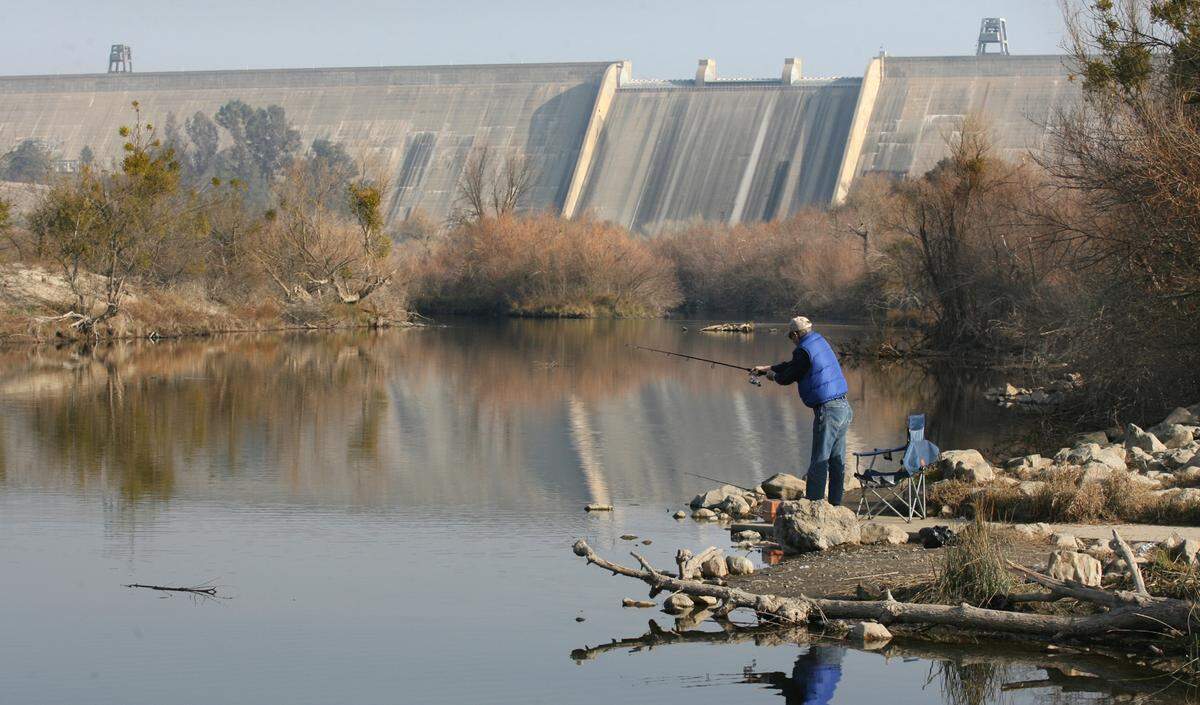
Just one problem, though: Large amounts of water are still vanishing from the river, year after year. And, while a few hundred fish have returned to spawn in recent years, the salmon haven’t bounced back like environmentalists had hoped. This year’s salmon count was a mere 11, said Doug Obegi, a lawyer with the Natural Resources Defense Council, which led the litigation that created the program.
“In the old days, (the fish population was) tens of thousands if not hundreds of thousands,” Obegi said. “It’s not meeting its goals.”
Depending on where along the river the losses occur, the water is taken either from the Restoration Program or the members of the Friant Water Authority. And when the Restoration Program is shorted, Obegi said, the fish suffer.
Last year, the dam released 67,000 acre-feet of water into the river specifically earmarked for the Restoration Program, said Tom Johnson, the program’s restoration manager. Just 27,000 acre-feet made it all the way downstream for the benefit of the fish. The loss totaled about 13 billion gallons. In 2020 the loss was even higher.
Who’s taking it remains a mystery.
In some other states where usage is scrutinized more closely, such as Colorado, it would probably be easier to track who’s taking what. But because California does little to enforce the law requiring landowners to track and report their river diversions, it’s hard to say for sure why water is disappearing from the San Joaquin.
Johnson said there are an estimated 10 to 15 stream gauges, monitoring water flows, to cover the 143 miles of river the program is trying to revive. Water can be pumped out at any point along the way between the gauges.
“One hundred forty-three miles … there’s a lot of places to lose water,” he said. “It’s a Wild West out there.”
Johnson believes some water apparently disappears when landowners pump groundwater immediately adjacent to the San Joaquin — a largely unregulated practice that can reduce river flows.
In other cases, Johnson believes a group of about 200 landowners with special contracts with the federal government appear to be diverting more water from the river than they used to.
The contracts stem from when the federal government built Friant Dam in 1942. The 319-foot-tall dam effectively cut off the landowners’ access to the river. To settle their legal claims, the government promised them “any reasonable beneficial use of the water.”
Although the feds signed the contracts, responsibility for policing how much water stays in the river belongs to the state water board.
During the last drought, the board collected fines of $5,000 apiece from two farms that ignored curtailment notices ordering them to halt diversions from the river.
But additional enforcement efforts ran into pushback from landowners. When the board ordered two-dozen water users in 2014 to cough up information about their diversions, one influential landowner supplied the board with data on its water usage but added that the state had no business interfering with how much water it actually took.
“The United States agreed to supply all the water that could be used reasonably and beneficially on the property, without limitations,” a lawyer for Tesoro Viejo, a major housing development taking shape along the river, said in a letter to the state board. The water board took no action against Tesoro Viejo, said spokeswoman Voisin.
With a new drought bearing down, the state board has issued some curtailment orders for San Joaquin landowners, in an effort to halt their diversions. Voisin declined to say whether the agency has initiated any enforcement actions against those suspected of violating the orders.
In the meantime, environmentalists complain that excessive water diversions are hurting the river.
“We’re years if not decades behind schedule,” Obegi said, lamenting the disappearance of water for the fish. “The program is getting nickeled and dimed to death.”
BEHIND THE STORY
MOREWhy did we report this story?
Practically every Californian knows the state is in another drought — and is likely to face chronic water shortages for the foreseeable future. But few Californians understand the multi-layered and convoluted system that governs the state’s most precious resource.
California’s water rules — an amalgam of state and federal laws, court decisions and individual water rights that have been around for decades — have become a kind of straightjacket that makes it increasingly difficult for state officials to regulate usage and crack down on scofflaws. Many water users have senior rights that give them wide latitude to pull as much water from the rivers as they like.
The issues become acute in times of drought, when water is in short supply and every additional drop taken by one person comes at the expense of their neighbor or the environment. With a fourth year of drought looming, The Sacramento Bee decided it was time to look at whether California can police its water system.
Where did the idea come from?
The State Water Resources Control Board was clearly trying to make a statement when, in mid-August, it announced that it was issuing a notice of violation against a group of Siskiyou County ranchers who’d pulled water from the Shasta River in open defiance of a drought-cutback order. Keying off this case, reporters Ryan Sabalow and Dale Kasler spent the next two months examining the effectiveness of California’s efforts to regulate water usage.
How did we report it?
Sabalow and Kasler interviewed more than two dozen water-law experts, environmentalists, lawyers, policy makers and regulators to get a more thorough understanding of how the system works — and how it often falls short.
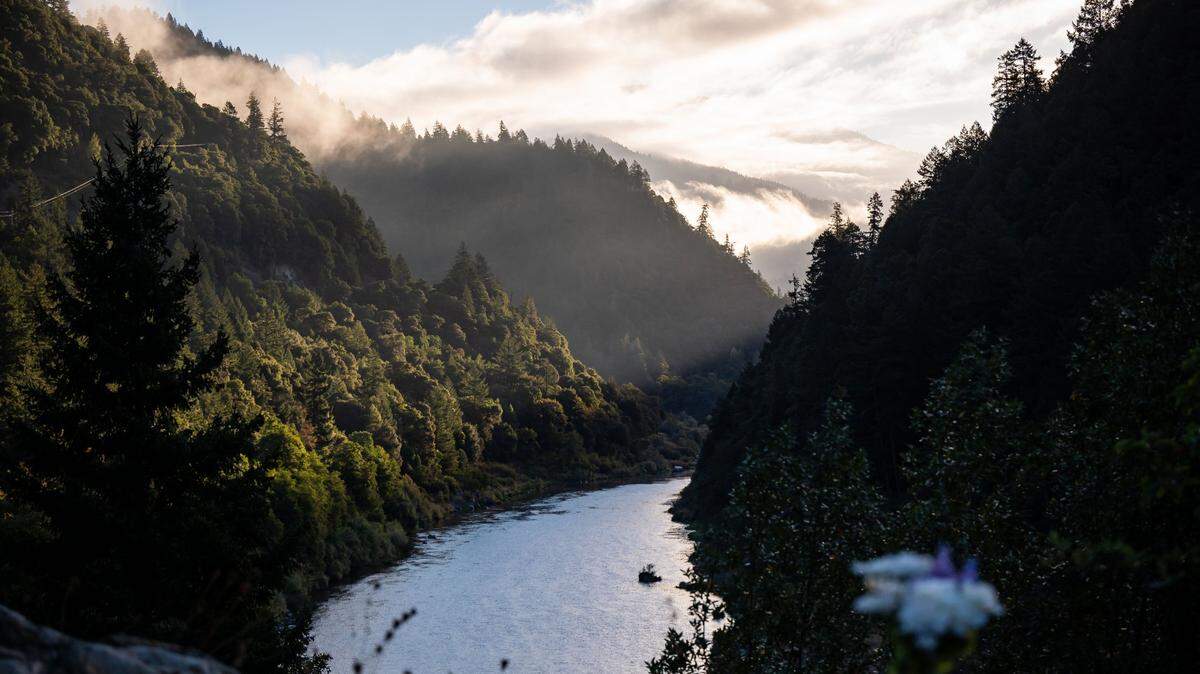
Sabalow took two separate trips to Siskiyou County to interview ranchers, including one who led the August rebellion. Given a rare glimpse of a world usually sealed off to outsiders, Sabalow and Bee visual journalist Xavier Mascareñas also were allowed to watch Karuk Tribe fishermen pull salmon out of the Klamath River, at one of their most sacred cultural and religious sites. The tribal members explained in detail how they believe unauthorized water diversions are wrecking fish populations and harming the tribe’s livelihood and cultural identity.
Kasler interviewed officials with the state water board and reviewed hundreds of pages of court filings and other documents, plus reams of state data about water diversions. He traveled to the Delta to meet with a farmer whose water district had just won a significant legal victory against the state to protect farmers’ water rights. Kasler also traveled to the San Joaquin River below Friant Dam, northeast of Fresno, to learn how water vanishes from the river, undermining a federal program aimed at restoring salmon populations.
This story was originally published November 3, 2022 at 5:30 AM with the headline "Investigation: Chronic water shortages increase, yet California regulators are unprepared."