
What legal marijuana means for SLO County
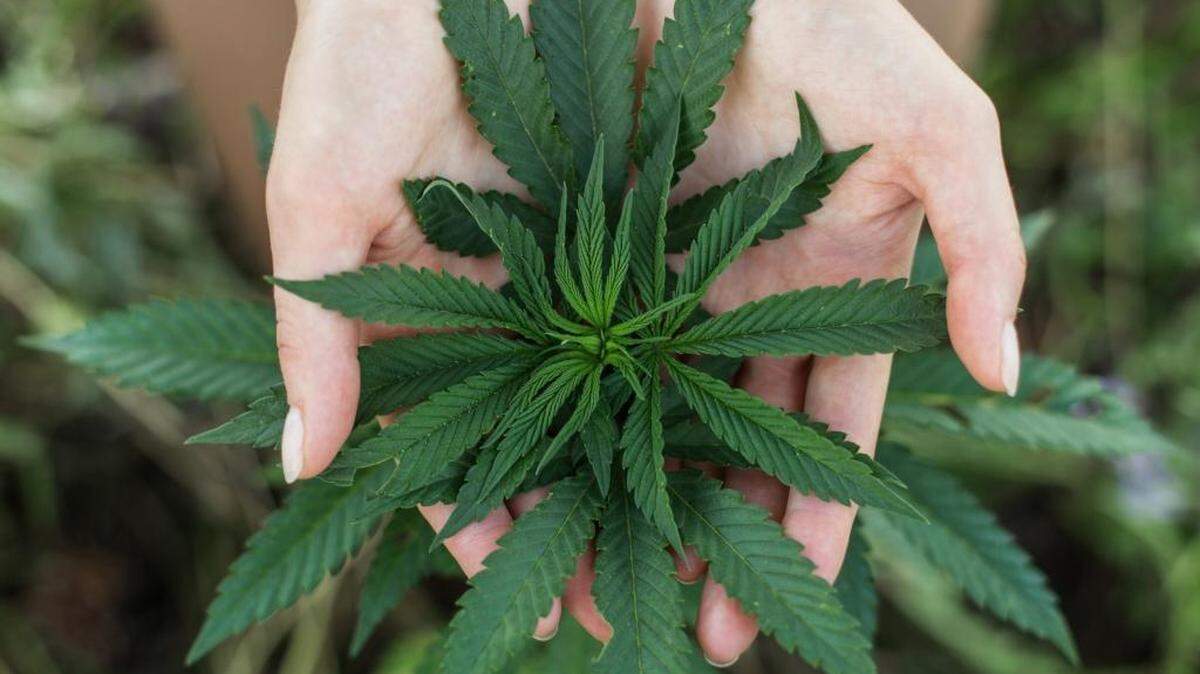
With the passage of Proposition 64 on Tuesday, California legalized recreational marijuana, joining Alaska, Colorado, Oregon, Washington, Maine, Massachusetts and Nevada. On its face, the proposition allows adults 21 and older to possess, buy and share marijuana without having to be a medical marijuana cardholder, as was the case in the past.
But questions still abound: How does this work? Who can buy? Where can they smoke? What about local regulations?
The answer? It all depends.
What is legal now?
First, the basics: Yes, having up to an ounce of marijuana or 8 grams of concentrated cannabis oil is legal now, but buying it is technically still illegal. The proposition requires those selling marijuana to be licensed through the state, and that isn’t expected to happen until 2018 when California finalizes the regulatory framework.
So having is legal, but buying is still illegal, for now.
This has been confusing for some.
Jeannie Wolfsen, of medical marijuana delivery service Green Houz Solutions Inc., said she received six calls Wednesday after Proposition 64 passed from people asking if they could buy product without a medical marijuana card. She turned them down.
“I think it does show there is a huge community of people who uses, and we’ve not had problems,” she said. “They’ve had to be careful. But now are we going to have more problems?”
Wolfsen, who has also been active in local coalitions of cannabis entrepreneurs, said she actually voted against Proposition 64 because of worries that it was too much, too fast.
“I didn’t feel it was really going to be beneficial to the industry,” she said. “I worry it will open the floodgates too fast.”
Wolfsen said the responses she’s heard to the proposition’s passage have been mixed.
“I think people are excited about it for sure, because now this is going to be available. But from other people in the industry, I would say we are cautiously optimistic,” she said. “It’s going to come down to people being responsible for their own actions.”
Also important to note, Proposition 64 doesn’t give you carte blanche to toke up anywhere you like: Smoking in public is still illegal, as is driving under the influence. Essentially, you can only smoke in the privacy of your home.
Adults may also grow up to six plants in their homes, but they cannot grow them outside — so don’t keep your pot plants with your daisies on the front lawn.
What about local regulations?
Though the proposition raises some questions at the state level for how it will implemented, the brunt of the impact will likely be felt at the local level, where cities and San Luis Obispo County will now need to choose whether they attempt to regulate and/or take part in the marijuana business, or if they wish to continue to ban it outright.
Medical marijuana ordinances have been discussed at length throughout the county, with cities passing a range of regulations from bans on dispensaries and nonmedical cultivation (like Morro Bay), setting up a permitting program for medical marijuana delivery services (like they did in Arroyo Grande), to outright banning at-home cultivation of plants, in addition to bans on delivery services and brick-and-mortar dispensaries (the case in Atascadero, until they reversed it in March for a more lenient approach). Most of the bans include prohibitions on commercial cultivation of marijuana.
San Luis Obispo has long held that commercial medical marijuana cultivation is already prohibited under the city’s zoning regulations, because it is not expressly listed as an allowed use. The city does allow some limited at-home cultivation for medical marijuana patients, and has allowed mobile dispensary services to deliver within the city.
(San Luis Obispo’s odor nuisance ordinance could play a roll in the future marijuana debate, especially considering it was first implemented to help negate some of the more unsavory impacts of medical marijuana cultivation at homes — namely the skunky smell.)
But in most instances — with a few recent exceptions — the cities lack rules on the books for recreational marijuana sales, because that has long been prohibited by federal law.
There were some cities, however, that saw the writing on the wall and began discussing how they would address recreational sales in the months before Proposition 64 passed.
Grover Beach, for example, began loosening its historically strict view of marijuana this year, talking about updating its land-use policies to allow for marijuana-related businesses in certain areas, and pushing to set up a taxing plan to capitalize on sales.
The tax, Measure L, was overwhelmingly approved in Tuesday’s election, with 71.4 percent of Grover Beach voters in favor of it.
The tax levies an annual charge on nurseries of $25 per square foot for their first 5,000 square feet of grow, plus $10 per any additional square foot, while separately taxing all other marijuana businesses based on their annual revenue. The tax rate for those would be 5 percent for medical marijuana-related businesses and 10 percent for recreational marijuana businesses.
With that, the city is now poised to theoretically benefit the most from Proposition 64 locally, with an estimated $2 million in tax revenue possibly coming into its coffers in the next few years. No other cities had a marijuana tax measure on the ballot.
Grover Beach staff is now in the process of drafting new land-use ordinances that would allow marijuana-related businesses such as nurseries, manufacturers, research labs and retail dispensaries, a process that is expected to be completed sometime in early 2017.
So in short, Grover Beach likely is going to be one of the first cities in the county to embrace the new marijuana industry.
That’s not the case in Paso Robles, where the City Council voted in October to ban all commercial marijuana cultivation and recreational sales, and restrict at-home cultivation to separate “accessory structures” such as small greenhouses. The council approved the ban as an effort to maintain local control in the event of Proposition 64’s eventual passage, with council members expressing concerns that marijuana businesses would buy up warehouses in town, and the city wouldn’t be able to do anything about it.
Paso Robles cannot ban recreational marijuana use under Proposition 64, however, so residents will still be able to legally smoke in their own homes — they just likely won’t be able to acquire cannabis in the city.
What comes next?
Looking forward, expect several cities to agendize discussions of ordinances regulating recreational marijuana.
Up first is Pismo Beach, which on Tuesday is expected to consider an urgency ordinance prohibiting outdoor cultivation, manufacturing, processing, laboratory testing, labeling, storing and wholesale and retail distribution of cannabis. The ordinance will ban most aspects of recreational marijuana sales until the council has time to delve deeper into how it wants to locally regulate the industry.
If adopted Tuesday, the urgency ordinance would expire 45 days after adoption, or Dec. 30. The council could later vote to extend the ordinance for 10 months and 15 days, and subsequently extend the ordinance for an additional year.
Kaytlyn Leslie: 805-781-7928, @kaytyleslie
What to know about legalized recreational marijuana
- If you are 21 or older, you can have up to an ounce of marijuana, or 8 grams of concentrated cannabis oil.
- Adults (again, 21 or older) can grow up to six plants in their homes.
- Buying marijuana without a medical marijuana card is still illegal until the state releases selling licenses in 2018.
- Even then, your city could choose to prohibit recreational marijuana sales, so keep up to date on your city’s policies.
- Smoking in public is still illegal.
- Driving under the influence is still illegal.
This story was originally published November 13, 2016 at 8:26 PM with the headline "What legal marijuana means for SLO County."