Even as big box stores moved in, downtown Paso Robles thrived. Thank Norma Moye
Can one person cheerlead an ailing downtown into prosperity?
If anyone could, it was the late Norma Moye of Paso Robles.
Word came this week that the longtime advocate for her hometown died at the age of 92.
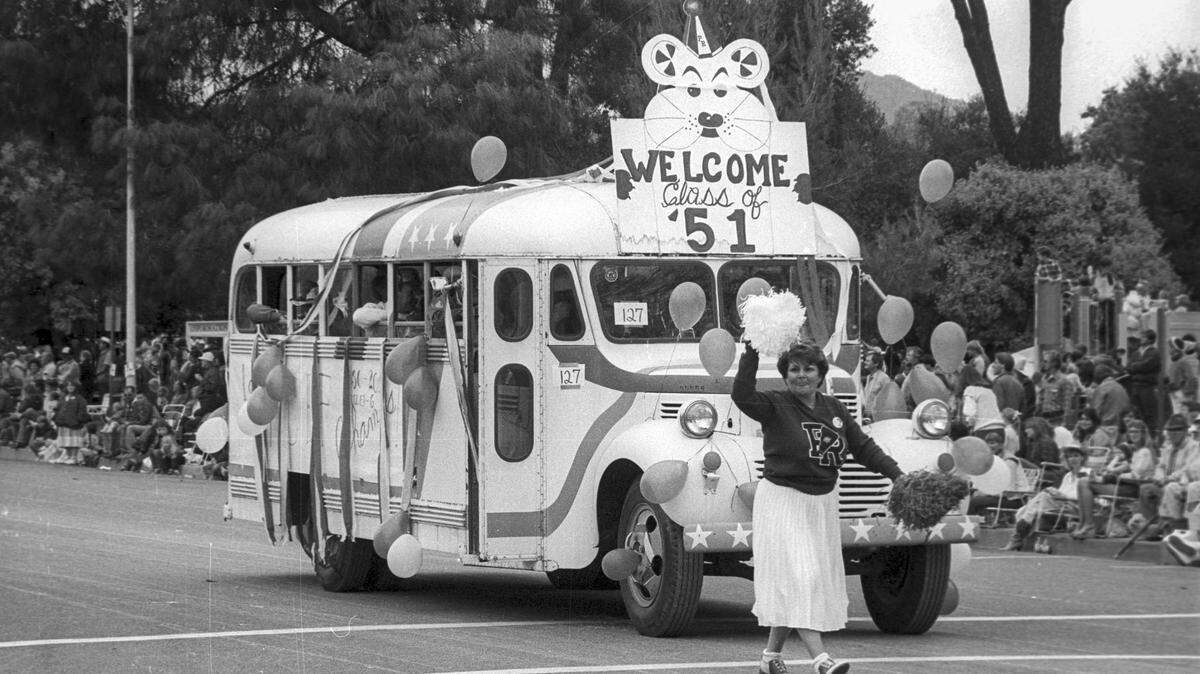
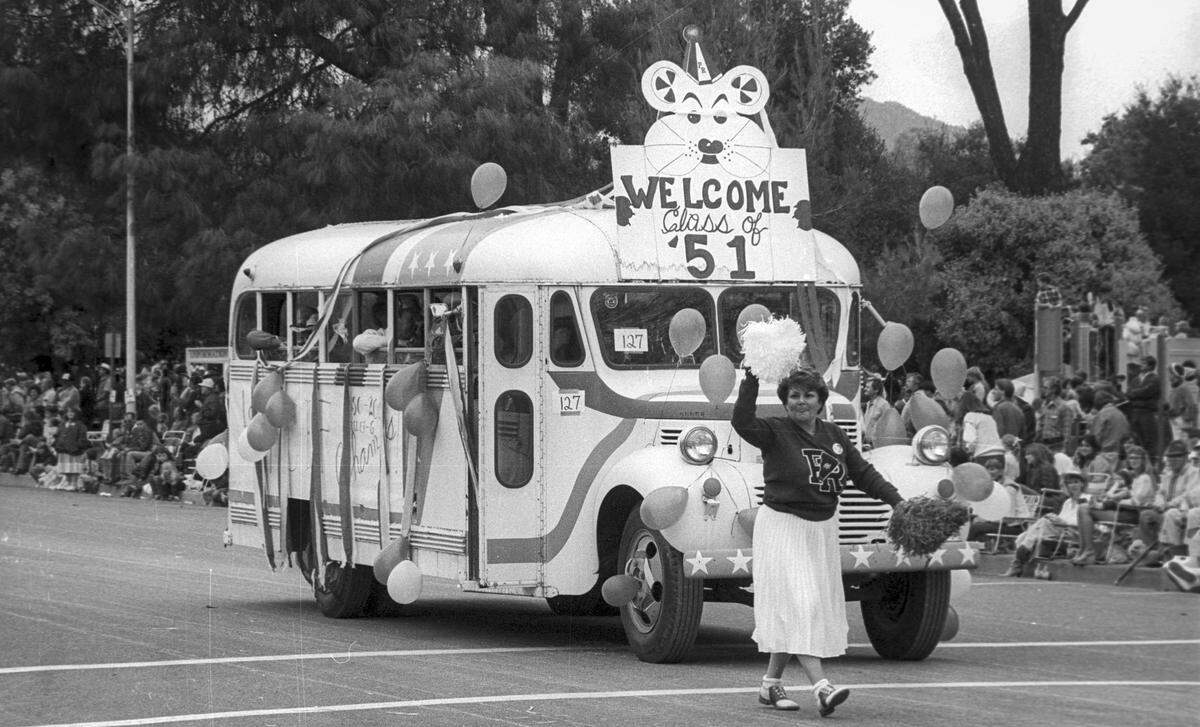
At one point she literally donned a cheerleader outfit leading an entry in the Pioneer Day Parade.
Look at the thriving downtown today, and it is hard to remember that there was a time in the mid-1990s that roughly 25% of downtown commercial space was vacant.
Moye was there when Downtown Paso Robles Main Street Association was founded in 1988.
Next year, Paso Robles committed to a $600,000 refurbishment of City Park and facade improvement.
Downtown had been looking drab. After a vibrant 19th and 20th century that saw the arrival of the railroad, farm supporting granary storehouses and a thriving spa destination, downtown was bypassed by the freeway in the 1950s.
The 1889 Victorian showpiece Paso Robles Inn burned down in 1940 and was rebuilt in a more automobile friendly style. Just in time for the freeway to bypass Spring Street.
New growth was mapped east of downtown, across the Salinas River.
Shopping habits moved to big box stores, sometimes out of the county.
Kmart, then Target and Walmart were drawing shoppers away.
There didn’t seem to be a reason to go downtown anymore.
But Moye was a vocal advocate for having events that drew people downtown.

Moye championed successful events that only happen in Paso Robles, like the Vine Street Victorian Christmas Showcase.
Her longtime participation in the Pioneer Players made her comfortable putting on a costume to create a little visual drama for events.

The costumes and the lighthearted promotional moments were in service of creating a vibrant downtown.
They were ahead of their time. It is a mantra today that downtowns need to be destinations for an experience, with a sense of place, to compete with online shopping.
Moye was named California Main Street Executive of the Year in 2001 and the Paso Robles Main Street Association was recognized by the state for its revitalization accomplishments that year.

The downtown would be put to the test two years later as it would be severely damaged by the 6.6 magnitude San Simeon Earthquake. Two people died when the old Acorn building collapsed.
But because the downtown had been viable, there was a reason for Federal disaster assistance to be released to rebuild.
Before the quake, the city committed to building city hall/library next to City Park and later a police/fire station nearby. The county invested in a courthouse.
The Paso Robles Inn renovated. Park Cinemas built downtown and restaurants flocked to the area around the park.
And recently, the Ava Hotel opened between downtown and the renovated railroad station.
Moye would often deflect praise to property owners, city staff and council and other organizations.
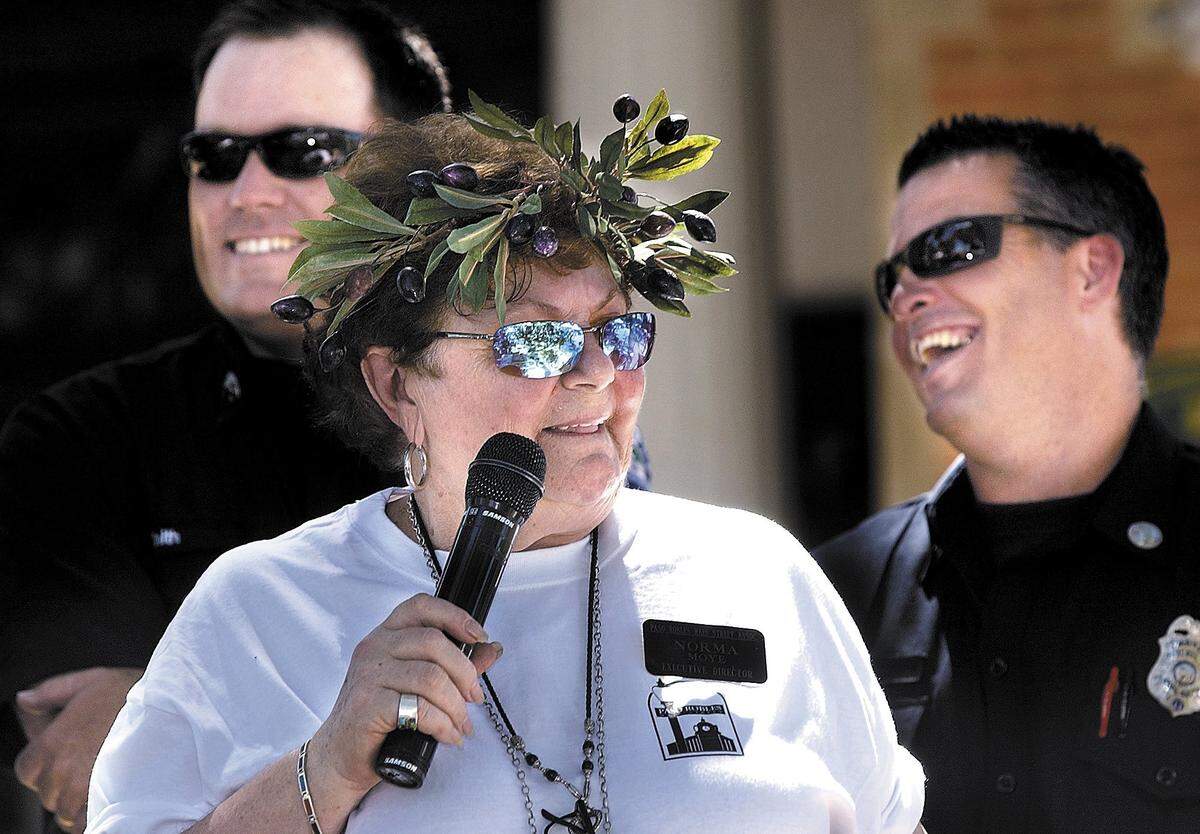
Moye said about awards, “That’s the magic of why we won. Because all these people care about their downtown and have donated their time and talents.”
Downtown businesses were concerned when Walmart came to Paso Robles.
This April 26, 1994, story by Phil Dirkx addressed how the Downtown felt about the future with the retail giant about to open with input from the Downtown association.
Downtown businesses prepare for Wal-Mart
Other centers in the past 12 years have drained business
PASO ROBLES — Downtown merchants put on a stoic face while the gray block walls go up across the river for the huge Wal-Mart store scheduled to open in September.
“Any of us who’ve been around since Kmart opened aren’t worried,” said Nick Sherwin, owner of Pan Jewelers and president of the city’s Main Street board.

His store is in a Victorian-style building at 12th and Park streets. The 102-year old building and its corner clock tower were recently refurbished and repainted.
There were about 10,000 people in the city when Kmart opened, Sherwin said, and now there are 22,000. “The pie has got bigger,” he said.
The downtown has already been altered by the impact of increasing competition inside and outside the city. Kmart opened in 1982 near Highway 101. The Williams Bros. shopping center on Creston Road opened in 1985. And the Albertson’s and the Longs Drug Store center on Niblick Road opened in 1991.
During that period, the downtown area experienced significant changes. Major stores have closed for good, such as Heaton’s, the Mercantile and the J.C. Penney retail store.
The latest sales-tax figures show downtown no longer dominates the city’s retail business. The sales-tax produced by downtown businesses equaled less than 6 percent of the city total.
Those sales tax figures, supplied by the city, are for the third quarter of last year. The downtown taxable sales for that quarter totaled $3,038. That was 25 percent less than the same quarter of 1991.
City Manager Richard Ramirez said one of the major reasons for the downtown retail decline has been competition from shopping centers in San Luis Obispo and Santa Maria. He and many downtown merchants hope the opening of Wal-Mart will help reverse that trend.
“The opening of Wal-Mart will bring a more positive image to the community,” Sherwin said. “Our residents are more likely to shop in the community.”
Millie Finigan, assistant buyer for Redi’s store, said “I’d rather see it (Wal-Mart) here than in Atascadero or San Luis Obispo.”
Finigan, who is secretary of the Main Street board, also said she isn’t concerned about the arrival of Wal-Mart, because Redi’s specializ- (Note: a paste-up error occurred here and part of a sentence was omitted) any business people call and say, “What are we going to do?””
Probably those who are most excited about Wal-Mart opening are the developers and city officials, who have spent the most time and energy getting the project to this point. Halferty, a Pasadena developer who first came to Paso Robles in 1985 looking to build an Albertson’s grocery store, said Wal-Mart became interested in the North County in 1990.
“We talked to Target, Penneys, Sears, Mervyns, Wal-Mart,” Halferty said. “Wal-Mart acted immediately.”
The others weren’t interested in the small market, Halferty said.
While Wal-Mart was ready to move quickly, the permit process was slowed by two court challenges to the city’s environmental review for the project — one from two local residents, the other from a group of Native Americans who said the site was atop a sacred Chumash burial ground.
Halferty conducted archaeological tests at the site and, though he found only two small human bone fragments, agreed to set aside 3 acres of the site for a Chumash memorial.
The other challenge went to Superior Court, where the city and Halferty prevailed. That decision was appealed by the plaintiffs, Tom Rusch and Chris Ivey, and is scheduled to be heard by the state appeals court in Ventura in October.
“Everybody lost here,” Halferty said of the delays.
Halferty said the city stands to make an estimated $300,000 in sales tax annually from Wal-Mart, as well as additional property tax and new jobs for local residents when the store opens.
The other eventual gain for Paso Robles will be the retention of money that has been leaking out of the city. Halferty said North County residents who shop in San Luis Obispo and Santa Maria to get the best prices will now have some of the same opportunities at home.
A market study performed several years ago by economic consultant Stephen Nukes showed that a significant percentage of the Santa Maria Costco membership lives in northern San Luis Obispo County. “If Wal-Mart offers many of the same products as Costco, that may change,” Nukes said.
“Historically, Paso Robles was the commercial center of the North County,” Halferty said. “But the city has not stayed competitive. Downtown lost its edge to larger retailers out of the area.”
Halferty said Wal-Mart opening is the first step in regaining that edge.