Artillery shells kept raining down on Central Coast ranch. ‘Going to kill someone’
Lofty language from the Bill of Rights had an impact on an alfalfa field north of Camp Roberts in 1989.
First some background.
James Madison was convinced that the United States Constitution was a flawed document. It failed to address the conflict for individual rights that were among root causes of the American Revolution.
The Ken Burns film, “American Revolution” is a deep dive into the many complex motivations behind the long conflict.
Madison wrote to Thomas Jefferson on Oct. 17, 1788, “Wherever the real power in a government lies, there is the danger of oppression.”
In the same letter he wrote, “Wherever there is an interest and power to do wrong, wrong will generally be done…”
Both founders and Virginians, would be elected President of the United States.
Madison’s skepticism of power, by a man who wielded power, led him to draft the Bill of Rights, the first ten amendments ratified to the Constitution.
The 13 colonies did not trust the federal government to be a benevolent overlord.
Each of the ten amendments limit and define the power of government and protect the rights of individuals.
Text of the First Amendment reads: “Congress shall make no law respecting an establishment of religion, or prohibiting the free exercise thereof; or abridging the freedom of speech, or of the press; or the right of the people peaceably to assemble, and to petition the government for a redress of grievances.”
Bumpersticker interpretations are: Church and state are separate. Speaking truth to power is protected speech. Peaceful protest is allowed.
Now let’s fast forward over 200 years after Madison’s letter was written.
When a ranch owner along the San Antonio River was being shelled by Camp Roberts, he called the then Telegram-Tribune, among others.
Previous letters to congressional offices and National Guard headquarters in Sacramento failed to resolve the problem.
Worldwide many armies can act without question. In the United States, journalists question leaders, from the Commander in Chief on down.
The role of the press is literally to “seek redress of grievances,” not fawn over those in power.
For this reason, many credible reporters and their media organizations have chosen to turn in their credentials rather than sign a blind allegiance pledge to retain Pentagon credentials.
How are institutions expected to correct if flawed decisions are not brought to light?
To the credit of the Camp Roberts base commander and California National Guard headquarters in Sacramento, action was taken quickly after news reports were published and aired.
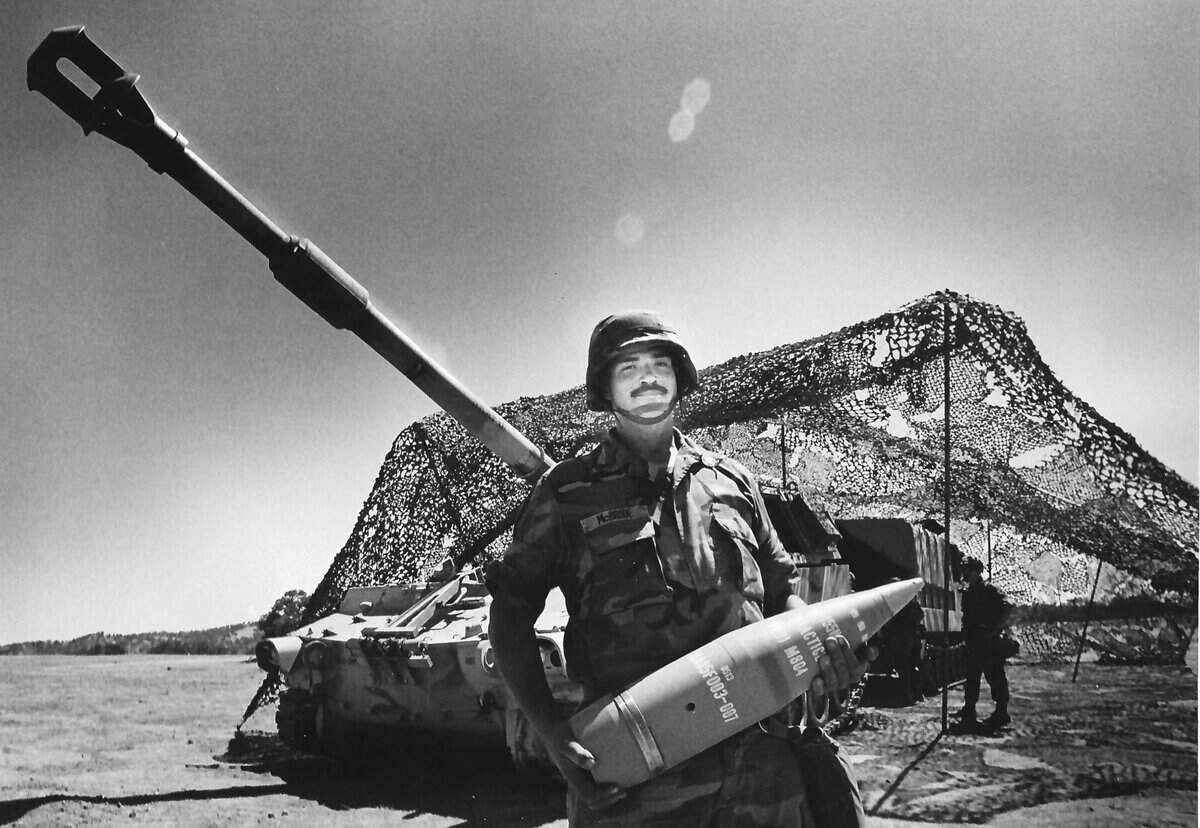
Within two weeks after the first story was published in the Telegram-Tribune, two soldiers were reprimanded, and an entire battalion was placed in a 20-hour safety retraining.
Human errors and the discovery that a shell could skip from the impact area onto private property were determined to be the causes.
Some firing points were closed, launch angles were reexamined and the buffer zone was increased between the impact area and neighboring properties.
It is rare to find property in California where big guns can be unlimbered, and the 42,540 acre Camp Roberts is freeway accessible, making it is a prime training ground.
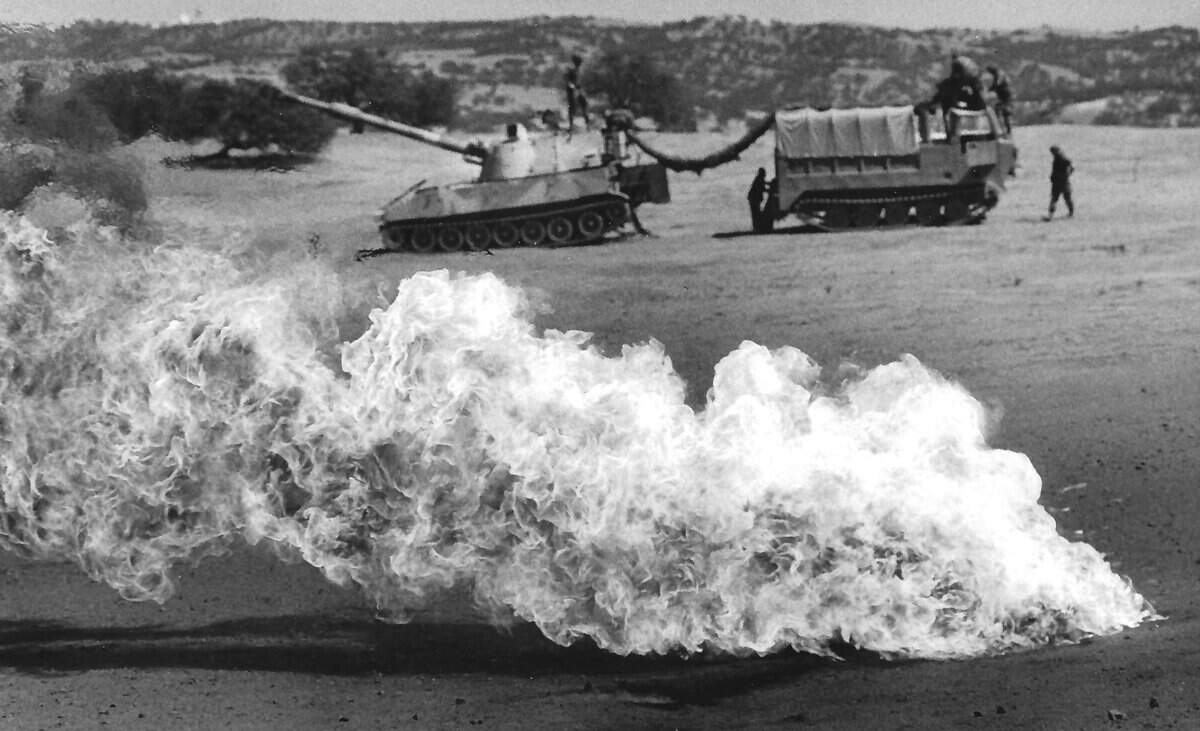
Guns would still be fired, real world training retained and alfalfa fields safe.
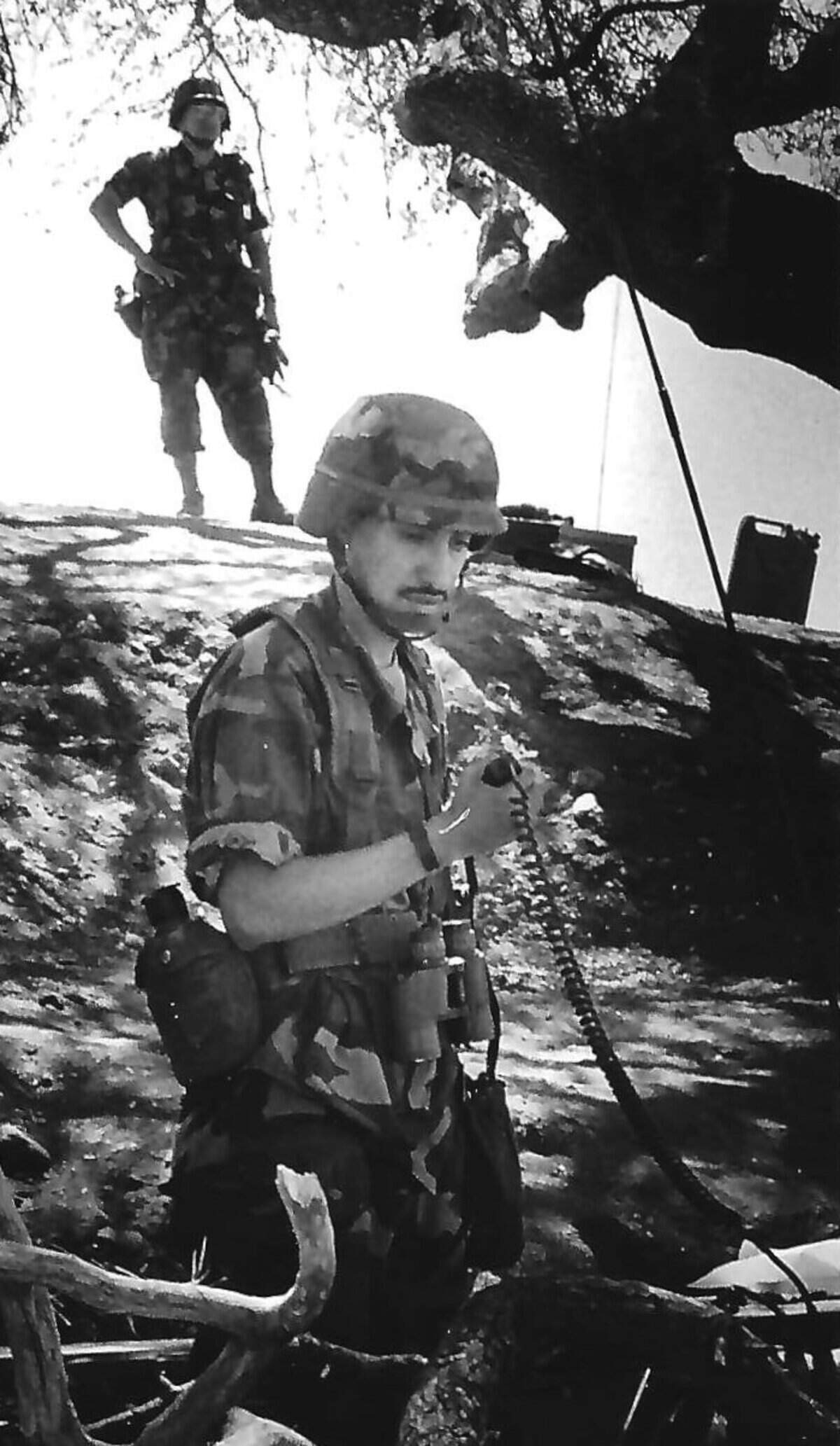
A month after the first story published, in August the camp invited the media to tour the artillery training for a safety demonstration.
The First Amendment was able to stop an artillery shell.
Here is the first story in the series by Phil Dirkx on June 28, 1988.
Ranch besieged by stray shells
Camp Roberts comes under fire for off target artillery practice
Workers on a ranch near Camp Roberts heard an artillery shell pass overhead Tuesday morning and explode in a nearby alfalfa field.
The ranch owner, Stuart A. Bartleson, said this was just one of many shells that have been pelting his property.
“They’re going to kill someone,” he said Tuesday afternoon.
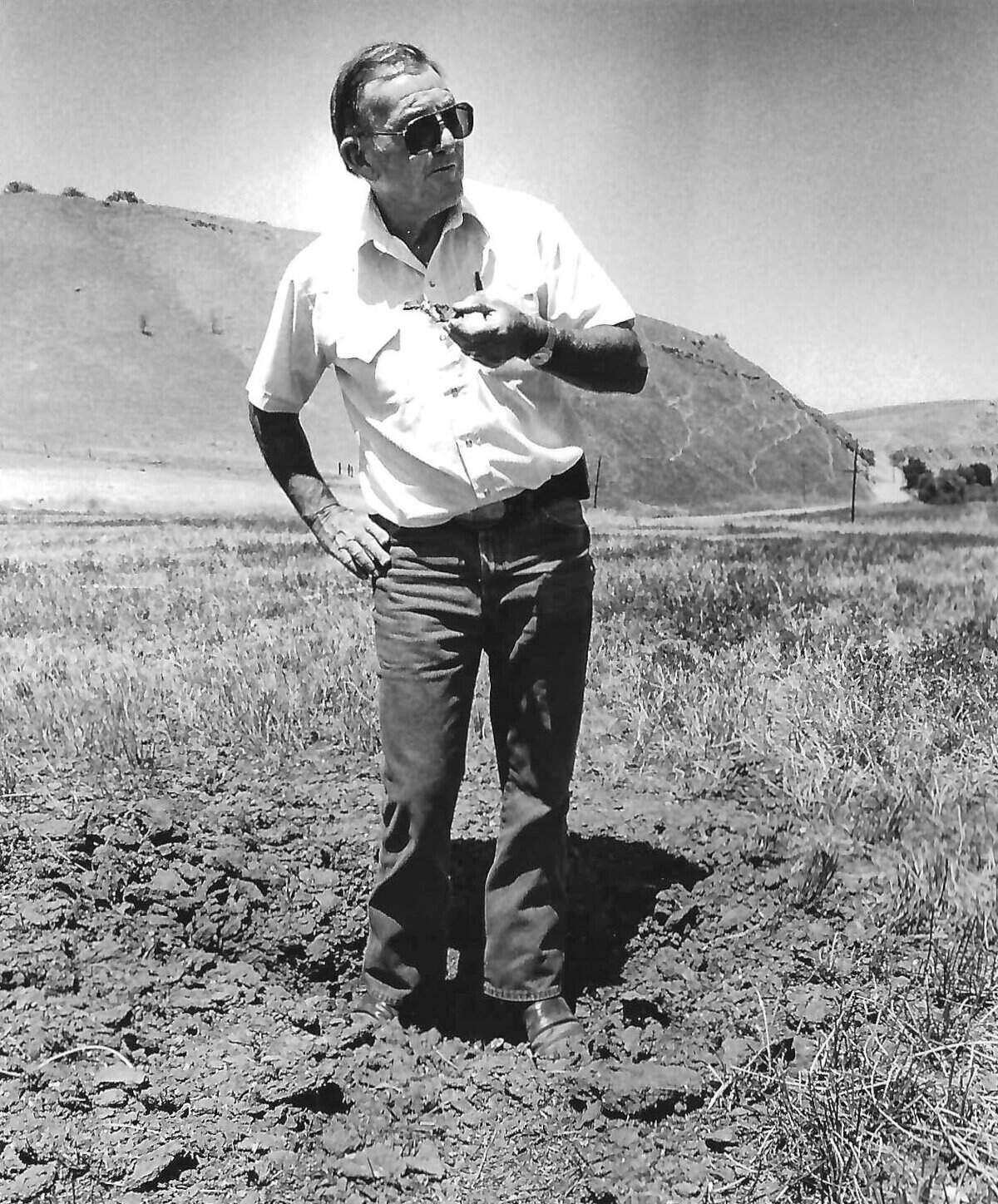
Bartleson’s ranch is in southern Monterey County along the San Antonio River, on the western edge of Camp Roberts.
His farm workers told him the shell passed overhead near their mobile home, he said.
It also passed over the river and Lake Nacimiento Drive before exploding in one of his alfalfa fields at 10:05 a.m., Bartleson said.
People were working in that field just the day before, said ranch manager Keith Johnston.
The shell left a 1½-foot-deep crater and a collection of shell fragments. No one was injured.
It was a 105mm howitzer shell, said Rena Davies in the Fort Ord public affairs office.
The shell was fired by 7th Infantry Division troops from Fort Ord who were training at Camp Roberts, she said.
This was the second shell from Camp Roberts to land on the ranch this month, Bartleson said. The other one hit at 11:45 a.m. June 14.
One of his ranch workers was repairing a fence when he saw that big shell come skipping across the field at high speed. It came to rest without exploding.
A woman was cutting alfalfa in the field at the time, said ranch manager Johnston.
Johnston said one of the officers who came to get the shell said it weighed 200 pounds and would have scattered shrapnel over a football-field-size area had it exploded.
A munitions team from Camp Roberts had originally planned to detonate the shell in the field, but decided it could safely be moved, Johnston said. They rolled the heavy shell out of the field rather than carrying it, he said.
Bartleson, who bought the ranch in June 1988, is owner of Bartleson Development Co. of Santa Maria and owns ranches and other enterprises.
His office in Santa Maria has started to log the shells that land on the ranch. So far, there are 11 entries.
- The first entry on Sept. 23, 1988, indicated eight shells had landed on the ranch that year.
- The next entry said a live shell landed in an alfalfa field on or about May 17, but there was no mention of it exploding.
- A June 14 entry told of the 200-pound shell that skidded across a field and was later removed by people from Camp Roberts.
- The last entry was for the shell that exploded Tuesday morning.
Johnson said three shells also landed and exploded recently on a neighboring ranch. Workers on Bartleson’s ranch also heard those projectiles passing overhead.
Johnston said he recently ran over a shell in a field while cutting hay. It turned out to be a hollow shell from which a flare had been released during night training, he said.
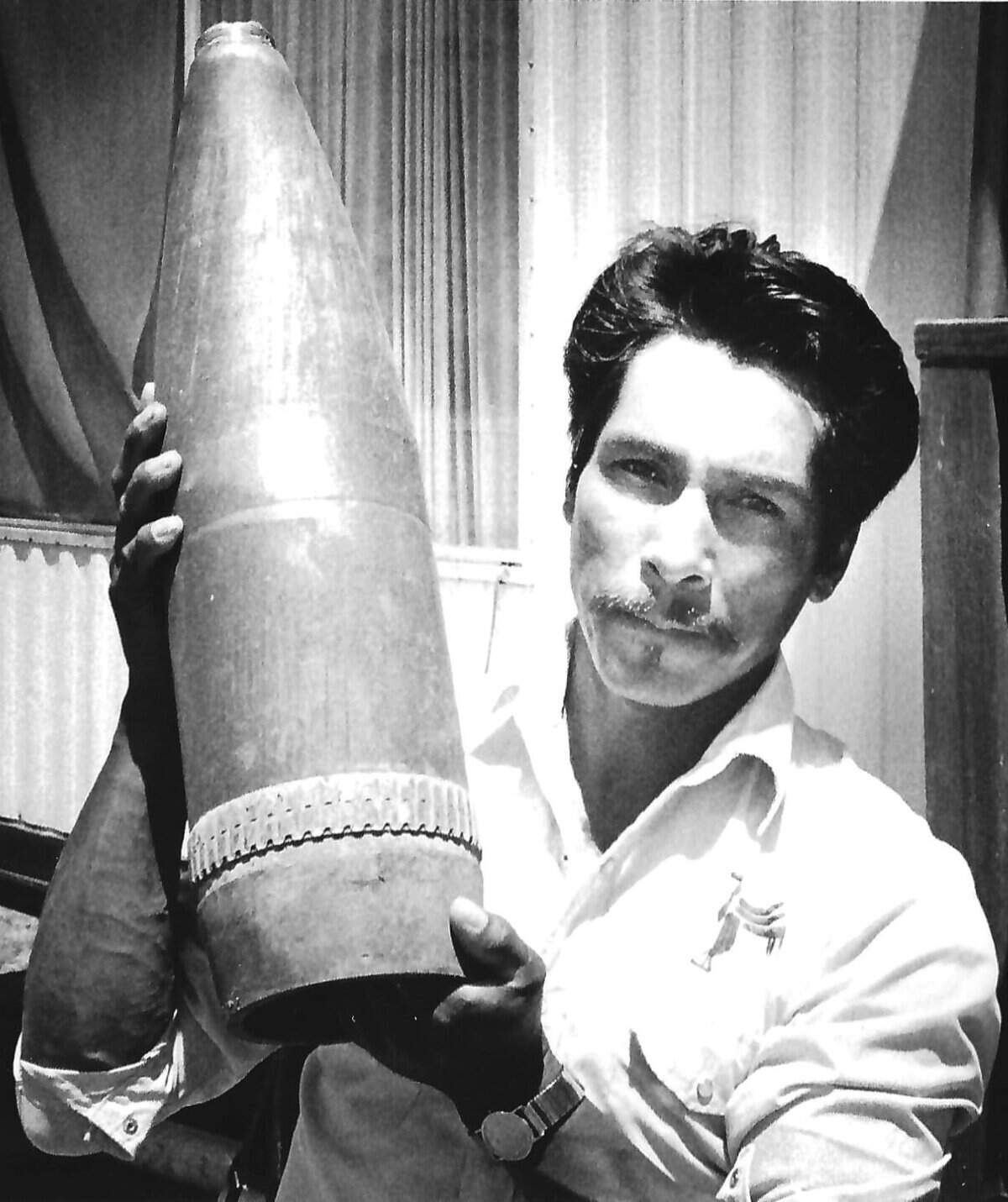
Workers on the ranch use two of these hollow projectiles, about 5½ inches in diameter, as ornaments at each side of the door to their mobile home.
One of the workers, Rafael Aguilar, said they found six or eight of those empty shells in the alfalfa fields last year.
Fort Ord spokeswoman Davies said Tuesday afternoon that Army officials were already investigating that morning’s shelling of Bartleson’s ranch.
She did not know when the investigation will be done, but “they’re taking it very seriously.” She had no information on the earlier stray shells.
Camp Roberts Post Commander Col. John Scully investigated this incident, and issued a statement Wednesday morning. It confirmed there have been accidental shellings.
All but one were the result of “human error,” the statement said.
Scully’s statement said the frequency of the mishaps, when compared to the amount of training that takes place, is “very minimal.” He said artillery troops undergo extensive safety training, and must go through it again if shells land outside the safe area.
Bartleson said he believes shells have been falling on his ranch for several years. He bases that on information and copies of letters he received from the former ranch manager.
The letters include correspondence, dated in November and December 1987, between Congressman Leon Panetta and Col. Ernest R. Zuick of National Guard headquarters in Sacramento.
In one letter, Zuick said there is no simple solution to the shelling problem.
Bartleson said he also has a copy of a letter dated Dec. 8, 1988, to Panetta from Lt. Col. Ezell Ware, also of the National Guard headquarters.
It said both National Guard and regular Army troops have to fire artillery at Camp Roberts, and that programs are taken to prevent accidents.
The letter also said the only absolute solution might be for the federal government to buy Bartleson’s ranch.
Bartleson said he isn’t interested in selling the ranch to the government.
He said he’s asked Camp Roberts authorities to change their artillery range procedures to keep shells off his ranch, “but they haven’t given any indication of doing anything.”
He said he has also contacted Assemblyman Eric Seastrand and State Senator Ken Maddy.
He said he’s now thinking of contacting Gov. George Deukmejian, who Bartleson said has visited his house in Santa Maria.
This story was originally published December 13, 2025 at 5:00 AM.