
SLO County beach town delays decision over grant to research offshore wind
The Avila Beach Community Center was buzzing with activity as about 100 people gathered to discuss a potential offshore wind project proposed for their community.
On Dec. 2, the Port San Luis Harbor District Commission met to discuss whether to accept a $3 million grant from the California Energy Commission to “mature” the design of an offshore wind operations and maintenance terminal proposed to be built in San Luis Bay.
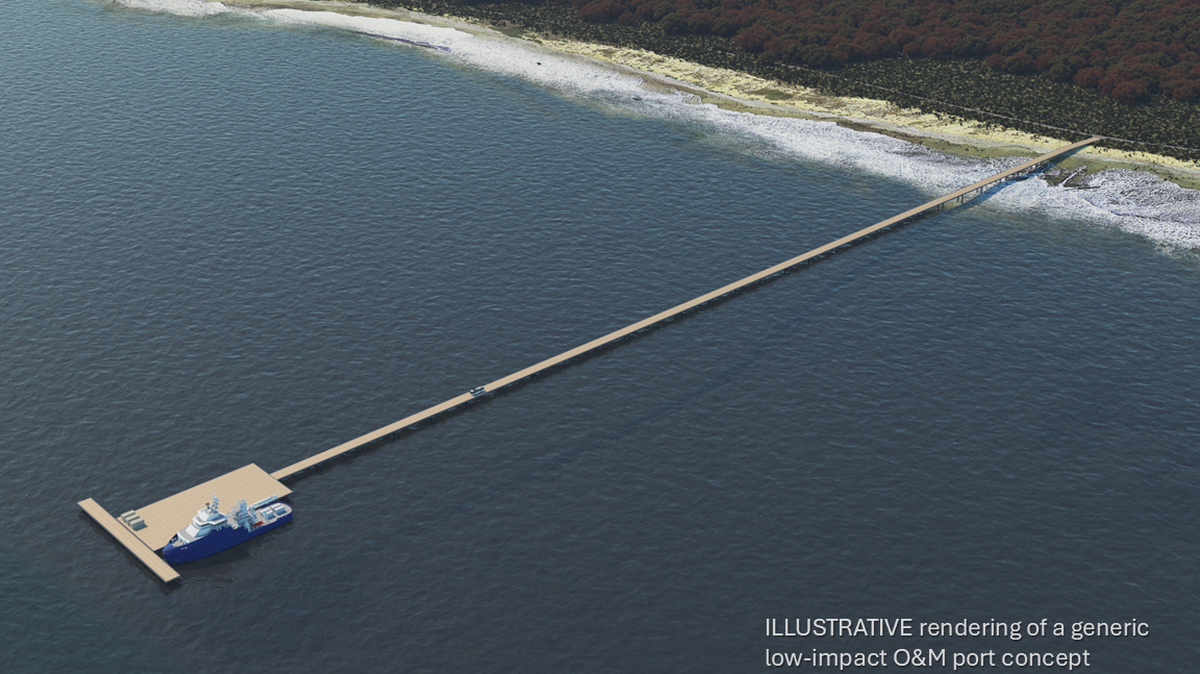
The port would serve as a dock for maintenance vessels traveling to the offshore wind farm proposed to be built in the Morro Bay Wind Energy Area near Cambria.
The meeting was originally scheduled for Nov. 18, but so many people showed up to speak that the room exceeded capacity. The commission rescheduled the meeting to December to host it in a larger room.
Ventura-based company Clean Energy Terminals expressed interest in building the port in 2024, which could require a dock about the length of the Cal Poly Pier, but the company ended its agreement with the Harbor District in December, harbor director Will Friedman said.
No one else has proposed an official design, and the port has not approved any design or permits for the project.
After a lively meeting with 54 speakers at public comment, the commission voted unanimously to postpone the decision about the grant until San Luis Obispo County finished its own operations and maintenance port feasibility study.
In 2024, San Luis Obispo County hired Mott MacDonald to complete a separate, $1 million feasibility study to investigate if an operations and maintenance port should be located at Port San Luis or Morro Bay.
Originally, the county estimated that the Port San Luis portion of the study would be completed within five months, and the Morro Bay portion in nine months — but the Trump administration’s executive order to review all offshore wind projects slowed progress in the Morro Bay Wind Energy Area, San Luis Obispo County Planning and Building Department division manager Susan Strachan told The Tribune. This allowed the county to take more time with the study, she said.
The study should be completed in early 2026, Strachan said.
Now, the Port San Luis Harbor Commission will wait until the results of that study are released to make its decision about the $3 million grant.
“I, too, want to see what the study at San Luis County shows, and then we can go from there,” commission president Drew Brandy said.
Still, he acknowledged that research is necessary for understanding what kind of infrastructure Avila Beach could accommodate.
“We’ve all talked about making the best decision we can with information that we can receive,” he said. “That information is going to take studies.”
Meanwhile, the port needs outside funding in order to conduct public outreach about any proposed project, he said.
“We all want public outreach. This entire board wants public outreach. But, keep in mind, for that public outreach to occur from Nipomo to San Luis Obispo, that takes cash,” Brandy said. “Port San Luis does not have the money to fund public outreach meetings.”
What is the grant?
On Oct. 8, the California Energy Commission offered the Port San Luis Harbor District a $3 million grant to conduct a feasibility study to determine if Avila Beach could host an offshore wind operations and maintenance terminal.
One goal of the grant agreement is to prepare a 30% engineering design for “upgrading port infrastructure,” which would allow the port to apply for permits and start environmental review in the future, the commission staff report said. Other goals include community engagement and developing a plan to train locals to work in offshore wind.
There is no deadline for accepting the grant, Brandy said.
Accepting the $3 million would not require the Harbor District to approve a lease or design for such a port in San Luis Obispo Bay, Friedman said. The Harbor Commission would vote separately on whether to authorize development, he said.
Speakers divided over offshore wind
Neighbors, activists, Cal Poly students, retirees, fishermen and even a dog attended the meeting on Dec. 2. The chairs overflowed, so dozens of people stood along the walls and in the hallway to listen to the discussion.
Of the 54 people who spoke during public comment, there was a fairly even split of people who supported proceeding with the grant and those who urged the commission to reject the grant — or at least postpone the decision until the county completes its first feasibility study.
Shell Beach resident and REACT Alliance treasurer Colette Beach was one of the many people who said that an operations and maintenance port would pollute San Luis Bay and damage the ecosystems there.
“This project will permanently alter Avila, not for the better but forever,” she said. “This is our home, and we are counting on you to safeguard it.”
REACT Alliance is a local nonprofit organization that formed to fight the offshore wind project planned in federal waters offshore Cambria.
REACT Alliance vice president Saro Rizzo agreed that the commission should postpone its decision.
If the county feasibility study shows that a port is not viable for Port San Luis — why spend the money on another study for a project that could risk the health of the environment and Avila Beach’s tourism-based economy, he said.
He said the wind turbines would be towed into Avila Beach before being taken to the wind farm out at sea.
“Look out that window, see that beautiful view — imagine one or two of those big, floating offshore turbines sitting there,” he said.
However, there is no official plan to tow wind turbines through San Luis Obispo Bay.
When Clean Energy Terminals expressed interest in building the port in 2024, it told The Tribune the bay would not be big enough to store or transport wind turbine blades or towers. Such plans would be revealed in an official design.
Rizzo told the commission there’s plenty of information online about the dangers of an operations and maintenance port — making this feasibility study unnecessary. People cheered when he stepped away from the podium.
Other speakers shared concerns about industrializing Avila Beach.
IBEW 639 business manager Mark Simonin, however, said an operations and maintenance port would not disrupt Port San Luis in the way people fear.
“We’re not looking to industrialize Avila Beach,” he said. “The transport of the workforce I represent — that’s not industrialization.”
He urged the commission to accept the grant.
Other speakers noted that accepting the grant doesn’t require the port to build an operations and maintenance port; it simply provides information to support a well-informed decision.
“A planning grant does not commit the port to any future actions,” San Luis Coastal Education Foundation executive director Christine Robertson said. “It simply ensures the decisions about the major leading opportunity are grounded in real data, environmental analysis, labor and workforce projections, and critically, the voices of our community.”
San Luis Obispo Chamber of Commerce government affairs coordinator Rachel Whalen echoed her statements, and urged the commission to accept the grant.
“Much of the public conversation around offshore wind on the Central Coast has been hypothetical,” she said. “It’s in our region’s best interest to get clear, accurate information on where the proposed developments could be located, what they would entail, and what real impacts they may have. Denying these efforts before obtaining definitive data or relying on misinformation does a disservice to our community, our state, and our long-term sustainability as climate impacts intensify.”
Morro Bay resident Marlys McPherson agreed, noting that debating the merits of the project is premature — as there is no official design yet.
“This is not a debate about offshore wind,” she said. “What this is about is whether you want more information about what’s going to happen in this community.”
This story was originally published December 9, 2025 at 12:26 PM.
CORRECTION: A previous version of this story gave incorrect information about Clean Energy Terminals’ ongoing interest in building a port in San Luis Obispo Bay. The company terminated its agreement with the Port San Luis Harbor District in December.