SLO County can release less water from Lopez Dam, court says. Here’s why
San Luis Obispo County can reduce the amount of water it releases from Lopez Dam, a federal court ruled this week.
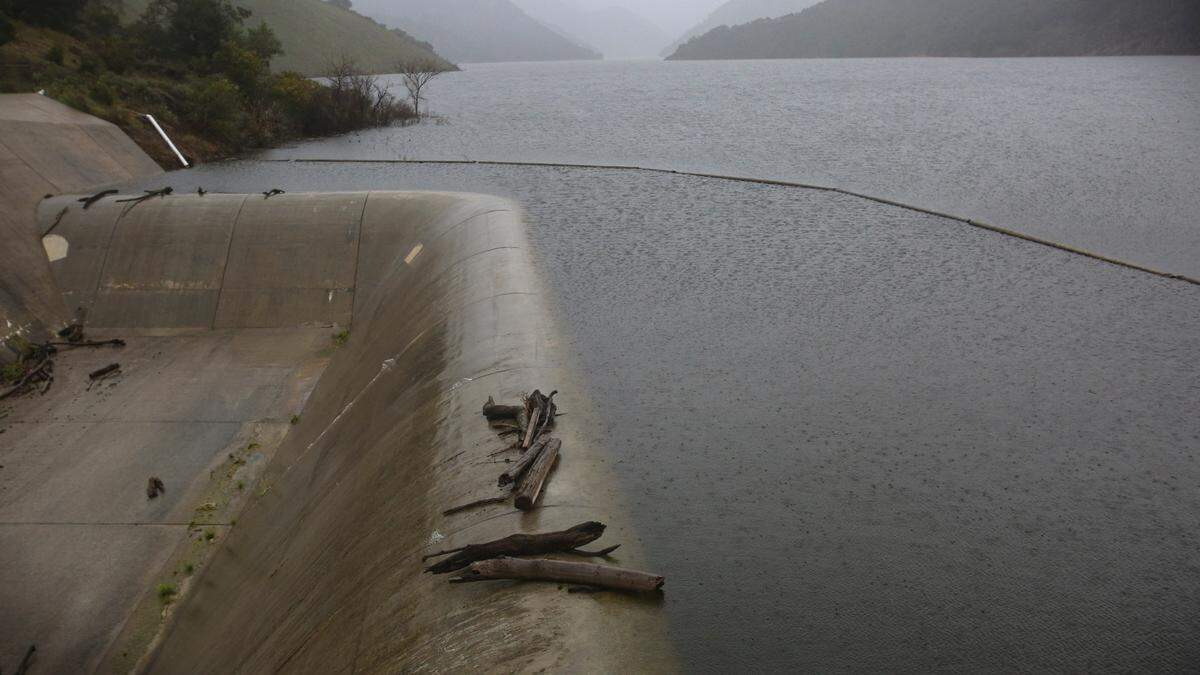
Lopez Lake supplies drinking water to about 50,000 South County residents. Meanwhile, water released from the reservoir into Arroyo Grande Creek provides critical habitat to steelhead trout, which are designated as a threatened species by the Endangered Species Act.
After a coalition of environmental groups sued the county, a U.S. District Court judge ordered the county last year to release more water from Lopez Dam to support steelhead trout migration through Arroyo Grande Creek.
The county appealed the decision on Jan. 24, saying that releasing the prescribed amount of water into the creek would wash away the eggs of two other protected species: the tidewater goby and the California red-legged frog, according to a county news release.
On Wednesday, the U.S. Court of Appeals for the Ninth Circuit said the county can return to its previous, lower-volume water release schedule for Lopez Dam for now.
The higher court sent the case back to the lower court to re-evaluate the water release schedule.
The U.S. Court of Appeals agreed that the increased water release schedule would benefit steelhead trout, but it ordered the lower court to prove that it wouldn’t harm the tidewater goby and California red-legged frog before requiring the county to implement it.
San Luis Obispo County Supervisor Jimmy Paulding applauded the decision.
“The county has always been committed to balancing protection of the creek’s natural habitat with maintaining a vital water resource for the communities it serves,” he said in a news release. “This ruling underscores the complexity of the creek system and the importance of relying on the appropriate regulatory agencies rather than the courts. We recognize the frustration this situation has caused our South County communities, and we remain committed to working together to reach a resolution.”
Christopher Sproul, the attorney for the environmental groups, maintains that the water release schedule wouldn’t harm the tidewater goby, and it was unlikely to harm the California red-legged frog.
He represents the San Luis Obispo Coastkeeper, California Coastkeeper Alliance, Los Padres ForestWatch and the Ecological Rights Foundation, the groups who filed the original lawsuit.
While the flows could wash away a handful of goby and frog eggs when it is first implemented, increasing the amount of water in the creek will eventually improve the habitat for the tidewater goby and red-legged frog — whose populations will increase over time, Sproul said.
“In the long run, more water — even if it washes out some of the eggs — it will create more habitat,” he said.
While he sees the ruling reducing the water release as a temporary setback for the steelhead trout, he said it’s an ultimate victory for the environment.
Before, he said, the county had a court order to protect steelhead trout in the Arroyo Grande Creek Watershed. Now, the county has a court order to protect steelhead trout, the tidewater goby and the California red-legged frog.
“It’s not like they’ve gotten out of any environmental obligations,” Sproul said of the county. “Their court-ordered environmental obligations have just become more complex and more robust.”
What’s more important, drinking water or habitat?
In the appeal, the county asked the court to give equal weight to the drinking water needs of the community and the habitat needs of endangered species in the creek.
The reservoir supplies drinking water to more than 50,000 county residents in Pismo Beach, Arroyo Grande, Grover Beach, Oceano and Avila Beach.
According to the county, the court-ordered water release schedule would cause Lopez Lake to run out of water during a drought, preventing the county from supplying drinking water to the community.
The court, however, agreed with existing law, which says that the needs of the endangered species carried more weight than other public matters, like the quality of the drinking water supply.
The U.S. Court of Appeals sent the case back to the district court to protect the tidewater goby and the California red-legged frog, but not to protect the drinking water supply.
What’s next?
The environmental groups have 14 days from Dec. 3 to request a re-hearing or appeal the case to the U.S. Supreme Court. If they take no further legal action, the decision will be made official.
As of Friday, the environmental groups were still considering their options, Sproul said.