Steelhead trout ruling may force SLO County to release more water from Lopez Lake
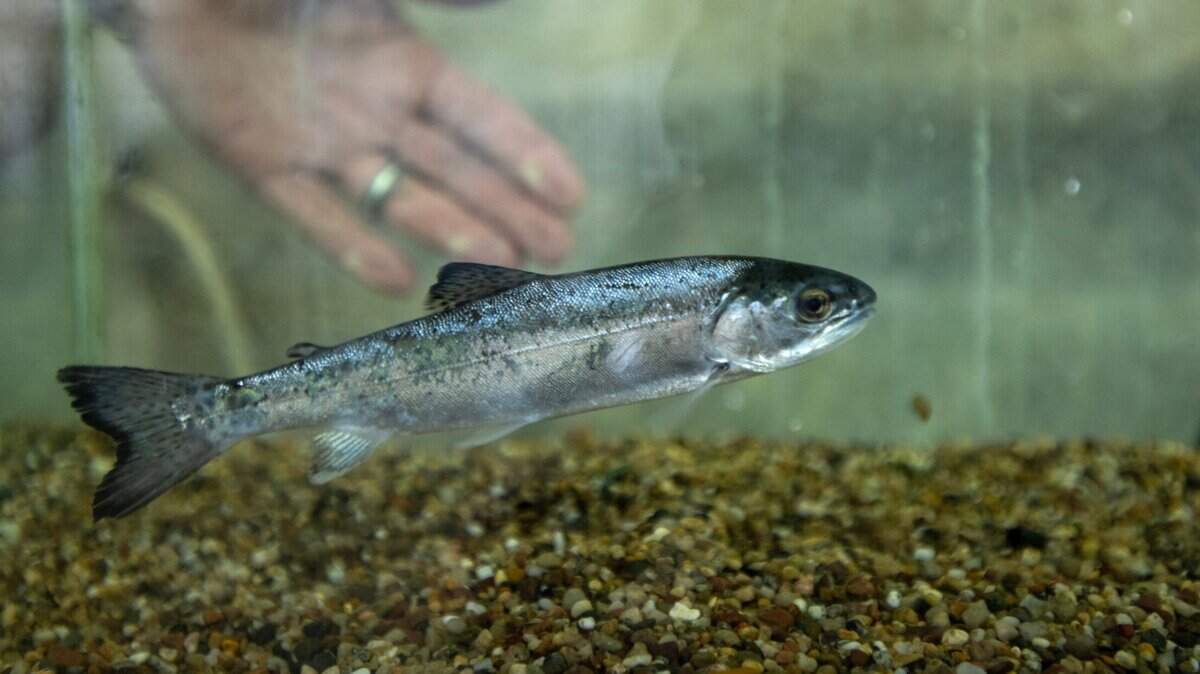
San Luis Obispo County may soon need to release more water from Lopez Dam to support a silver, speckled fish living in Arroyo Grande Creek.
U. S. District Judge Sherilyn Peace Garnett ruled that the county’s operation of the dam prevented steelhead trout from accessing critical spawning habitat in Arroyo Grande Creek and blocked the fish from their migration route — threatening the local species with extinction, according to her decision filed on Nov. 27.
She ordered the county to develop a water release plan for the dam that better supports steelhead trout and other threatened species in the creek, Environmental Advocates attorney Christopher Sproul said.
Steelhead trout are designated as a threatened species by the Endangered Species Act.
“This is a landmark ruling for the county of San Luis Obispo and protection of the steelhead,” he told The Tribune on Wednesday.
The judge ordered the county to develop and implement multiple other plans to support the trout, including habitat conservation and restoration plans, the court document said. The National Marine Fisheries Service will review and approve the plans.
The decision follows a lawsuit filed on Aug. 14 by San Luis Obispo Coastkeeper, California Coastkeeper Alliance, Los Padres ForestWatch and the Ecological Rights Foundation alleging that the county violated the U.S. Endangered Species Act by damaging steelhead trout habitat.
“For far too long, county operations at Lopez Dam have jeopardized steelhead and other vital wildlife,” Los Padres ForestWatch director of advocacy Benjamin Pitterle said in a news release. “This decision represents not only a win for this incredible species but also an opportunity for local leaders to ensure a sustainable balance between human and ecological needs.”
While the environmental groups celebrated the ruling, the county was “seriously considering” appealing the decision, assistant county counsel Jon Ansolabehere said in an email to The Tribune.
“The decision is an oversimplification of a complex issue that the county and other resource agencies have been attempting to meaningfully address for many years,” he wrote. “While the county shares the goal of protection of endangered and protected species within the Arroyo Grande Creek and watershed, it is unfortunate that the individuals who filed this lawsuit chose to use the judicial system as a means of hijacking the regulatory process that the county was already going through with the various resource agencies at the expense of the South County community.”
Lopez Dam harms steelhead trout, judge said
Steelhead trout are an adventurous species.
Born in rivers and lakes, they live in freshwater for one to two years then migrate to the ocean for up to three years to mature. The fish then return to freshwater to spawn, according to the Center for Biological Diversity. They are the same species as rainbow trout, the difference being rainbows live their entire lives in freshwater.
The National Marine Fisheries Service designated Arroyo Grande Creek as “critical habitat” that supports spawning, growth and migration of steelhead trout, the ruling said.
In her decision, Garnett said the environmental groups presented compelling evidence to prove that the county’s operations of the dam harmed steelhead trout habitat and migration.
Lopez Dam blocks steelhead trout in the lower creek from accessing prime spawning habitat above the dam. Additionally, juvenile trout born above the dam can’t migrate out to sea.
Meanwhile, the county’s water release schedule is not ideal for trout. A larger volume of water is released into Arroyo Grande Creek from July to November, but trout migrate between December and June — so they need water in the creek at that time, the ruling said.
On multiple occasions, the National Marine Fisheries Service said water diversions from the dam reduced steelhead trout habitat and migration opportunities, causing the fish population to decline, the judge said.
“The available record overwhelmingly displays the harmful effects from defendant’s activity, such that the Arroyo Grande Creek steelhead population may be in peril,” Garnett wrote in her decision.
Garnett said the county did not present enough evidence to prove that the dam’s operations did not harm steelhead trout.
“The record reflects that defendant’s conduct hinders steelhead’s ability to migrate, spawn and rear in their high-quality historical habitat — all of which, according to experts and agencies, stunt the species’ recovery.”
Will county release more water from Lopez Dam?
Lopez Dam blocked Arroyo Grande Creek to create Lopez Lake, a reservoir in Arroyo Grande that provides drinking water to about 48,000 county residents.
Right now, the county releases water from the dam seasonally according to an Interim Downstream Release Schedule. The schedule orders the county to release at least 3 cubic feet of water per second during the wet season, and up to 7 cubic feet of water per second during the dry season — which is about 4.5 million gallons of water per day for the dry season, according to Ansolabehere.
The amount of water released into the creek varies depending on “visual monitoring of the creek,” he said in an email to The Tribune.
“The complexity of water releases at the Lopez Dam cannot be overstated,” he wrote.
The judge ordered the county and environmental groups to meet and develop a new water release schedule for the dam.
“The county does not believe that we will come to an agreement with the plaintiffs for a new release schedule,” Ansolabehere wrote. “Instead, the county is proposing one taking into consideration the judge’s ruling and based on known science and hydrology of the creek to date.”
Sproul, however, was confident the judge would select his client’s water release plan.
Their plan would require the county to release an amount of water “sufficient to create a minimum depth of 0.7 feet over 25% of all critical riffle cross-sections for at least 24 hours and such longer duration as shown by qualified experts retained by the county to be necessary to provide steelhead with a sufficient migratory timeframe,” the court document said.
Their proposed plan also offers an alternative schedule, which calls for managed releases based on the amount of water in the creek, according to the court document.
The key is to release a consistent amount of water at a high enough volume to signal to steelhead trout in the ocean to return to the creek to spawn, Sproul said.
During a dry year, his client called for the release on 20 cubic feet of water per second on the first and second day of the managed release, and 10 cubic feet of water released per second on the third day.
During a wet water year, the county would release 30 cubic feet of water per second on the first day, followed by 50, 40, 30, 20 and 10 cubic feet of water released per second on each subsequent day.
“The critical thing is that the flow gets sustained long enough for them to make it,” Sproul said. “But it can gradually decrease it because that’s what would happen naturally.”
The county and the environmental groups must submit their water release plans to the judge by Wednesday, and she will select one for the county to implement.