Looking for wildflowers in SLO County? Here’s where you can find them
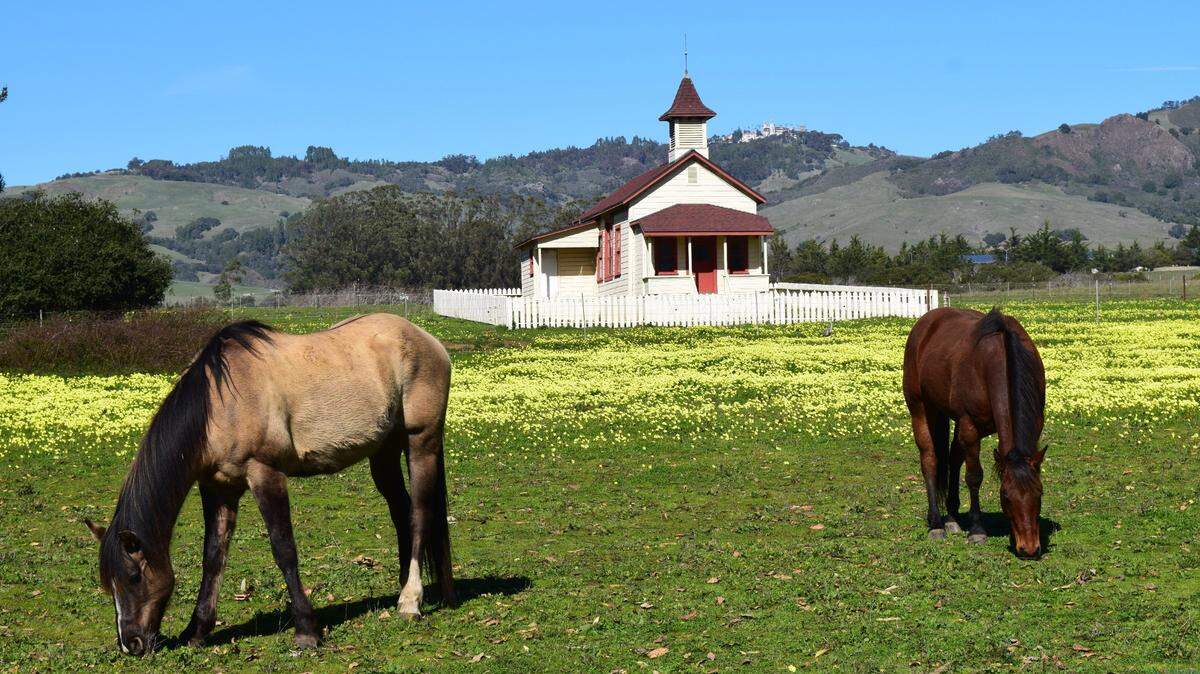
It has been a dry winter and spring in San Luis Obispo County, which means that the region won’t see another legendary wildflower super bloom this year.
The lack of wildflower blooms is an indicator of the moderate drought conditions much of the county is experiencing.
Wildflowers require consistent and substantial rainy seasons to properly germinate and then bloom in the late winter and spring, according to Melissa Mooney, president of the San Luis Obispo chapter of the California Native Plant Society.
“We really need it to start raining in the fall and be rather continuous for the annual flowers to get a foothold,” she said. “And that just didn’t happen this year.”
The last time San Luis Obispo County saw a super bloom was in the spring of 2019. From July 2018 through March 2019, the county saw an average total of about 20.6 inches of rain, according to the National Oceanic and Atmospheric Administration Climate Engine.
This rainy season, however, the county has seen an average total of 9.8 inches, according to the NOAA Climate Engine.
Despite the lack of rain in the county, there are still plenty of spots where you can view wildflowers.
Chocolate lilies, Johnny-jump-ups, shooting stars, California poppies, goldfields and wild blue lupines are among the wildflower varieties blooming across the county.
Small smatterings of color have been reported in the fields off Shell Creek Road and Highway 58 east of Santa Margarita, though they’re not nearly as vibrant as in previous years.
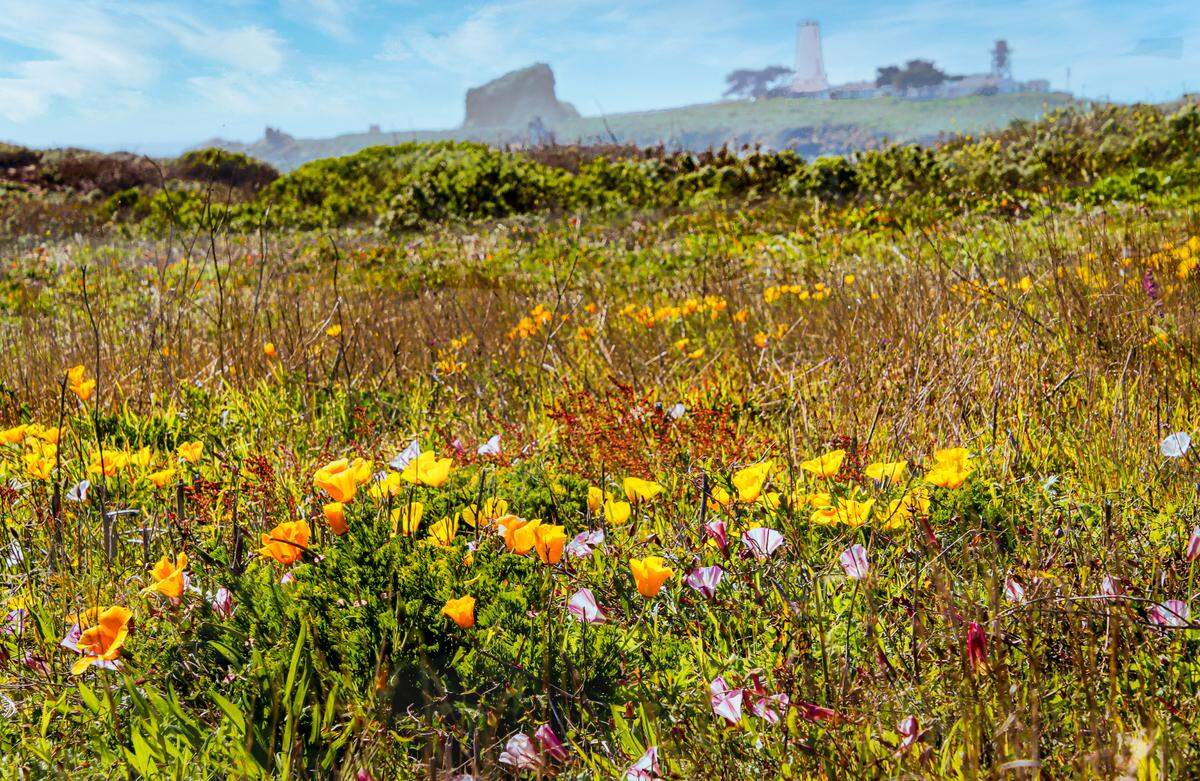
The South Hills, Johnson Ranch, Irish Hills and Rancho El Chorro areas of San Luis Obispo have some flowers as well, according to David Chipping of the California Native Plant Society.
After the fire burned much of South Hills Open Space, some wildflowers are growing along the recovering hillsides.
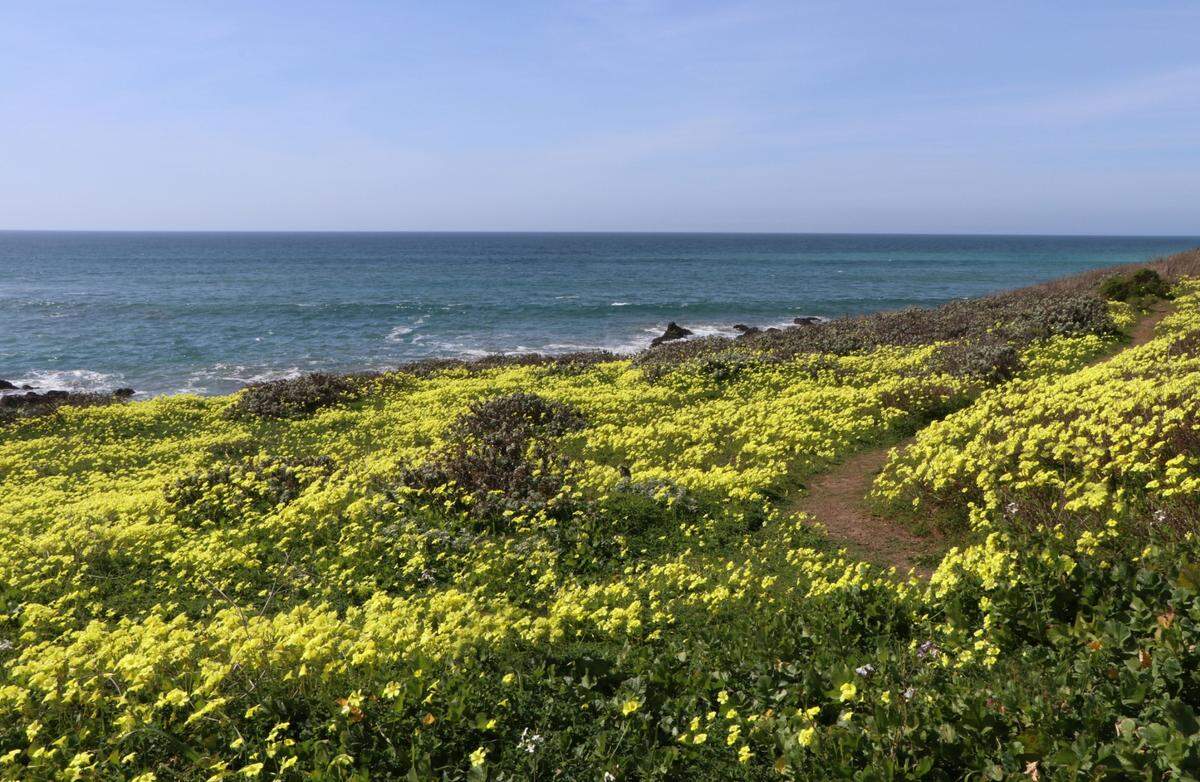
Other areas, such as Oso Flaco Lake Natural Area near Nipomo, San Simeon State Park, Fiscalini Ranch Preserve in Cambria and Estero Bluffs near Cayucos, are showing small numbers of wildflowers this year.
Carrizo Plain National Monument, which received very little rain this season, is currently at or near its wildflower peak, according to Neil Havlik of the Carrizo Plain Conservancy.
Patches of goldfields, phacelia and fiddleneck can be spotted in the Carrizo Plain and surrounding areas, he wrote in an email conservancy newsletter.
“I think this display may be at or near its peak and will fade quickly,” Havlik wrote in the newsletter. “So folks, if you want to see wildflowers in Carrizo Plain, you should go soon.”
Overall, the experts say if you want to see wildflowers blooming in San Luis Obispo County, you have to search for them.
“It’s all super scattered this year,” Mooney said. “You have to get out on the trails to really see any wildflowers.”
Why are wildflowers important?
Wildflowers are important food sources for pollinators such as bees, butterflies, bats, hummingbirds and moths.
A University of California Davis study published in 2015 found that climate change — which has caused drier conditions across California — resulted in declining wildflower diversity.
Without a diverse and large array of wildflowers, there is less food for pollinators, according to the National Research Council of the U.S. Academies of Sciences, Engineering, and Medicine.
The National Research Council suggests that, in the absence of large natural wildflower blooms, homeowners could contribute to the conservation of pollinators by planting wildflowers.
If you want to plant wildflowers in your yard to help support pollinators, the U.S. Forest Service suggests finding native, drought-resistant flowers.
You can find more information on which native Californian plants to use at the California Native Plants Society’s website, cnpsslo.org/resources.
This story was originally published April 6, 2021 at 5:00 AM.