Latinos in SLO County are twice as likely to get COVID as other ethnic groups. Here’s why
The coronavirus pandemic has been devastating for many San Luis Obispo County residents, but Latinos — who’ve contracted the disease at more than double the rate of any other racial or ethnic group — have borne the brunt of the disease.
The Latino community makes up only about 23% of the county’s population but more than 33% of local coronavirus cases. As of Tuesday, 10% of the Hispanic and Latino population in SLO County had tested positive for coronavirus.
Black and African-American SLO County residents have the second-highest rate of coronavirus infections at 4.4%. Only about 3.9% of white residents have contracted COVID-19 — even though they make up the biggest share of the population by far.
Latino community leaders say the high infection rates can be attributed to crowded multifamily households, economic insecurity that prompts breadwinners to work through illness and a lack of Spanish- and indigenous-language resources.
“There’s a lot of lessons to be learned,” said Yessenia Echevarria, a North County community organizer. “This COVID (pandemic) is a result of issues that we haven’t tackled as Californians, as a country. And what’s heartbreaking to me is I’m seeing my community being impacted.”
Why is the Latino community more vulnerable to COVID?
The coronavirus has had a significant impact on Latinos throughout the country because they’re more likely to live in large households and work in industries not set up for remote work or social distancing, according to a January study from UCLA’s Center for the Study of Latino Health and Culture.
“Latinos have the highest labor force participation of any group and large, big supportive families, but crammed into very small households,” Dr. David E. Hayes-Bautista, an author of the study, told the Sacramento Bee. “COVID is just loving this. It’s very opportunistic.”
Latino households throughout the country have 1.6 wage earners per household on average, while non-Hispanic white households have 1.2 wage earners, according to the study.
“This means that Latino households have more adults leaving the house every day, who are then often exposed to coronavirus-positive clients and co-workers during work hours,” the study said.
High housing costs and a lack of affordable housing push multiple low-income Latino families to live together in crowded households to save money, the Sacramento Bee reported. Multigenerational families are also more common in this community, the Bee’s story said.
This holds true in SLO County, where Latino households are likely to be more crowded than white households, U.S. Census data shows. Housing units are considered overcrowded when they have more than one occupant per room.
About 1.5% of white households in the county have 1.01 or more people per room. However nearly 12% of Latino or Hispanic households have 1.01 or more people per room.
Zip code areas that have seen higher rates of COVID-19, like San Miguel and Oceano, also tend to be places where overcrowded Latino households are more common. In San Miguel, about 39% of Latino-occupied homes are overcrowded, and the same is true of about 21% of Latino-occupied homes in Oceano.
‘They don’t want to lose their job if they have COVID’
Financial circumstances have also contributed to home and work conditions that may put some Latino families at higher risk of contracting COVID-19, said Erica Ruvalcaba-Heredia, director of the Promotores Collaborative of SLO County, part of the Center for Family Strengthening.
This is because many Latinos in the area are employees in industries like agriculture, which frequently won’t pay them for sick time if they don’t show up to work because they test positive for the coronavirus.
“Even though they are aware they have COVID, they still go to work, because they said, ‘If I don’t go to work, no one is going to pay me for that time off,’” Ruvalcaba-Heredia said.
Educators in San Miguel — where 47% of residents identify as Hispanic or Latino and many farmworkers and their families live — see this trend first hand. The community had 1,252 COVID-19 cases per 10,000 people, as of Tuesday.
San Miguel’s coronavirus positivity rate is likely even higher than reported, as sick workers want to continue going to their jobs, said Karen Grandoli principal of Lillian Larsen Elementary School and superintendent of San Miguel Joint Union School District.
“A lot of farmworkers don’t want to get tested,” she said.
The closest testing site is also in Paso Robles, which is not far away but challenging to reach for people without vehicles, Grandoli said.
Ruvalcaba-Heredia said the Promotores — volunteer health educators who connect the Latino community with resources — also hear from people who know about the dangers of the coronavirus pandemic but have to make difficult choices to house and feed their families.
“It’s not just that they’re not aware,” she said. “I think there’s more behind those stories. They need the money — they don’t want to lose their job if they say they have COVID. They really want that paycheck, because they need it to pay their rent. So I think it’s more than what we hear: ‘Oh no, it’s that they’re not taking care of themselves.’ No, it’s (that) they live with other families and then they have to work.”
How do SLO County Spanish-speakers get their COVID information?
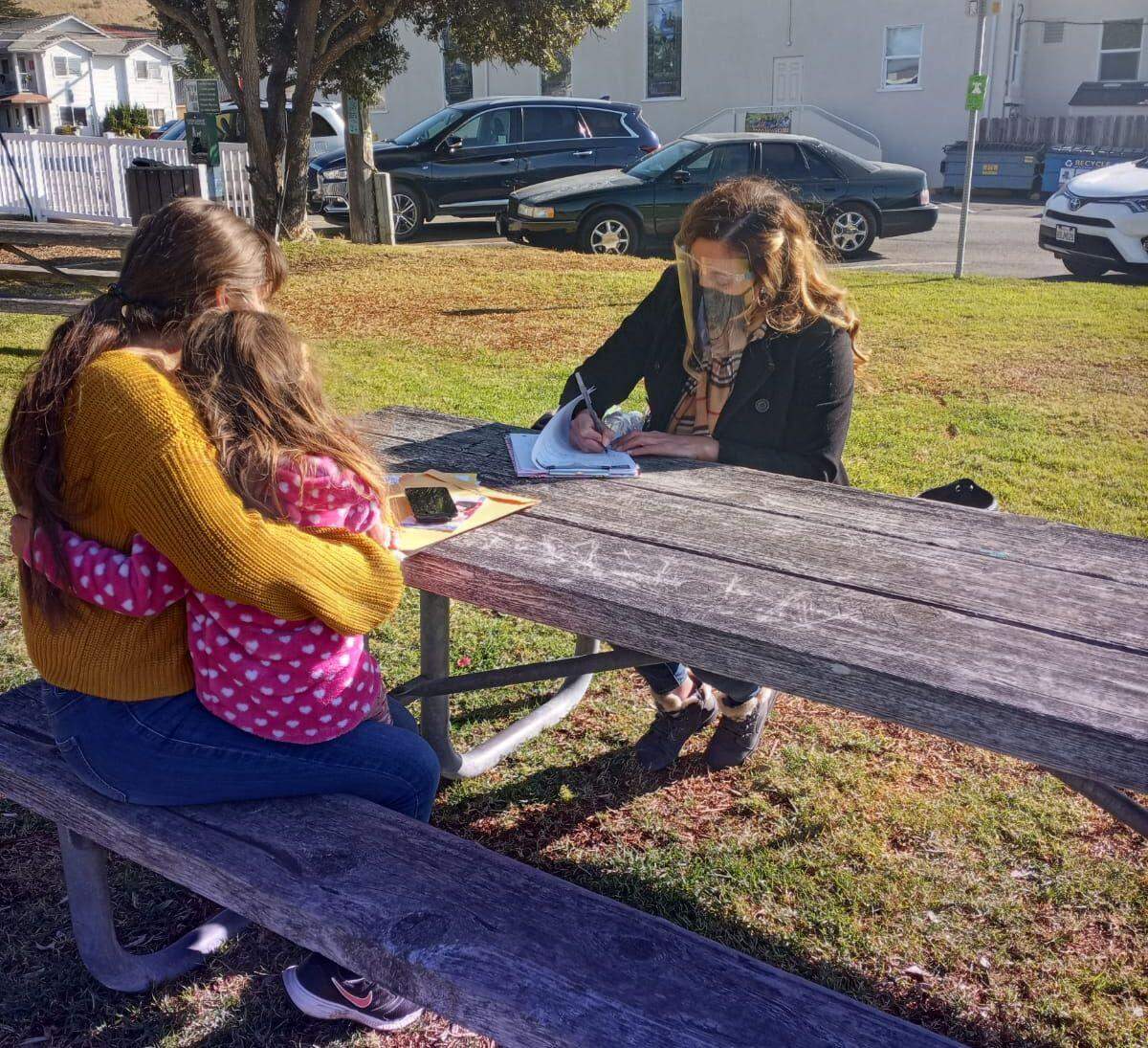
The Tribune surveyed Latino and Hispanic residents in February — specifically in Paso Robles and San Miguel — about how and where they receive coronavirus information. The North County has seen the highest coronavirus case rates of any region in the county.
Four of the 17 respondents said they do not feel as though they have received adequate coronavirus information in their primary language.
Two said they’ve received some but not all information in their primary language and 11 said they did feel adequately informed in their primary language.
All but three who responded answered the survey in Spanish.
Many people said they received coronavirus information from their child’s school or their work. Some also said they turned to social media and news outlets for information. A few people said they’d been evicted from their rental housing or lost work as a result of the pandemic.
Residents who speak indigenous languages have an especially difficult time getting coronavirus information.
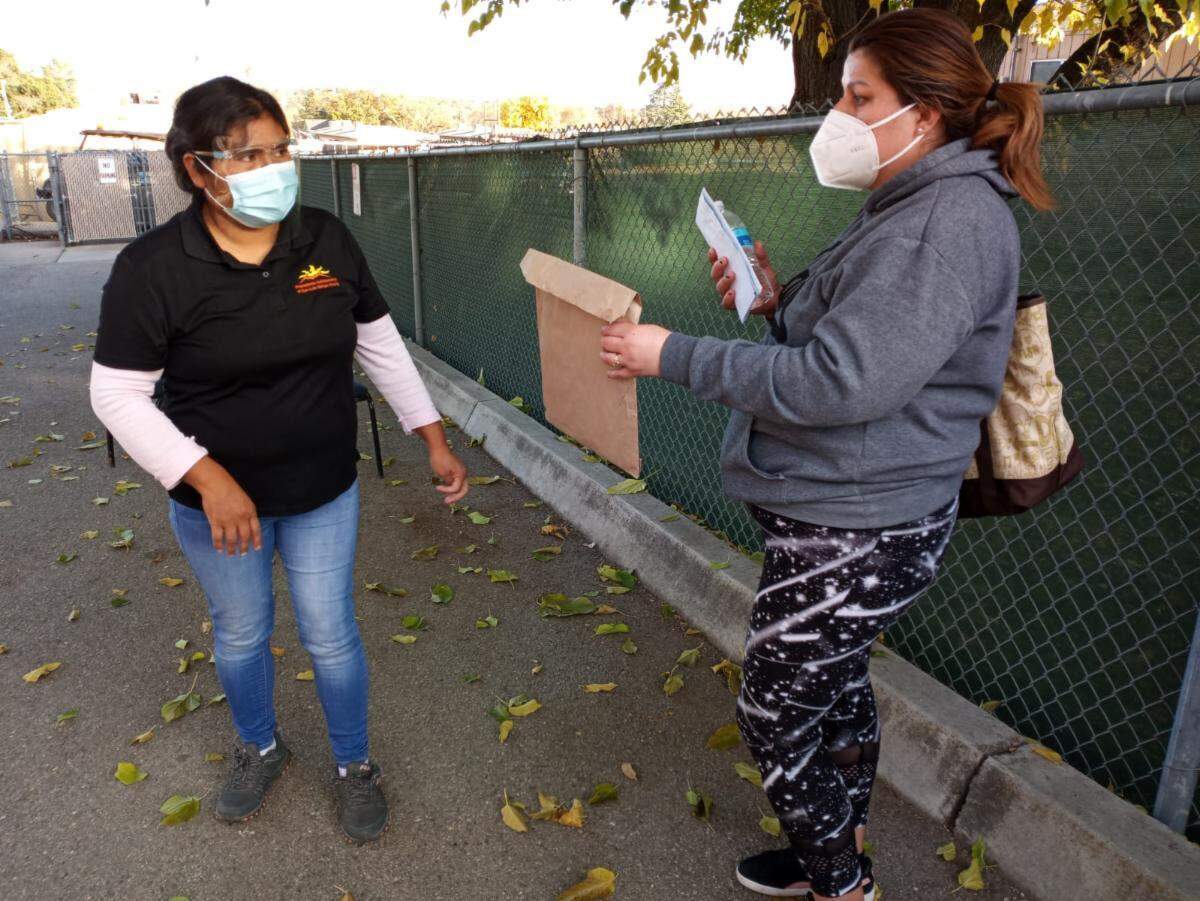
A growing number of people in the North County, especially in San Miguel and Paso Robles, speak Mixteco, a language indigenous to regions of Mexico. These communities were already vulnerable and isolated even before the pandemic because of the language barrier they face, said Arcenio López, executive director of Mixteco/Indígena Community Organizing Project (MICOP).
Some Mixteco speakers understand a limited amount of Spanish, but they feel most comfortable speaking their own language, López said.
“We need to recognize the diversity of this country and the languages that exist,” he said.
MICOP has secured funding to hire a Mixteco-speaking community organizer to work in the North County to help distribute information about COVID-19 and the vaccine. López said the indigenous community has been “severely impacted” by the coronavirus, yet far more white residents have been able to get the vaccine.
Many Mixteco speakers are undocumented and have hesitations about accessing health benefits, López said. They also have work schedules that may prevent them from accessing vaccines and other resources during the day.
“They’re just learning where to go and how to get the vaccine,” he said. “There’s all these challenges and all this need.”
Coronavirus outreach challenges
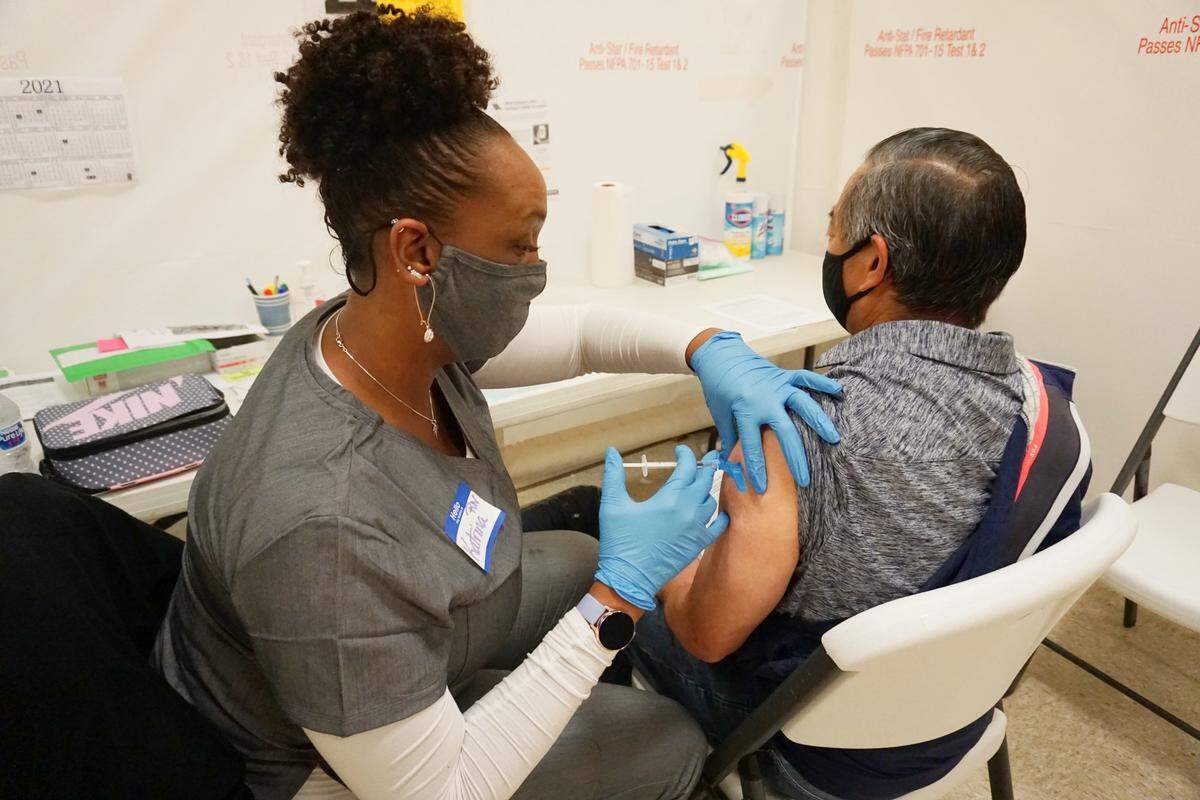
The county Public Health Department and cities like Paso Robles have been relying on community organizations that have worked with the Latino community even before the pandemic and have earned their trust.
The Promotores Collaborative has a contract with the county Public Health Department to distribute coronavirus materials through in-person outreach in communities throughout the county.
Michelle Shoresman, a Public Health spokeswoman, said in an email that the county has been working with Spanish- and Mixteco-language media to share coronavirus information and has created a Farm Worker Outreach Task Force to figure out how to best serve the communities.
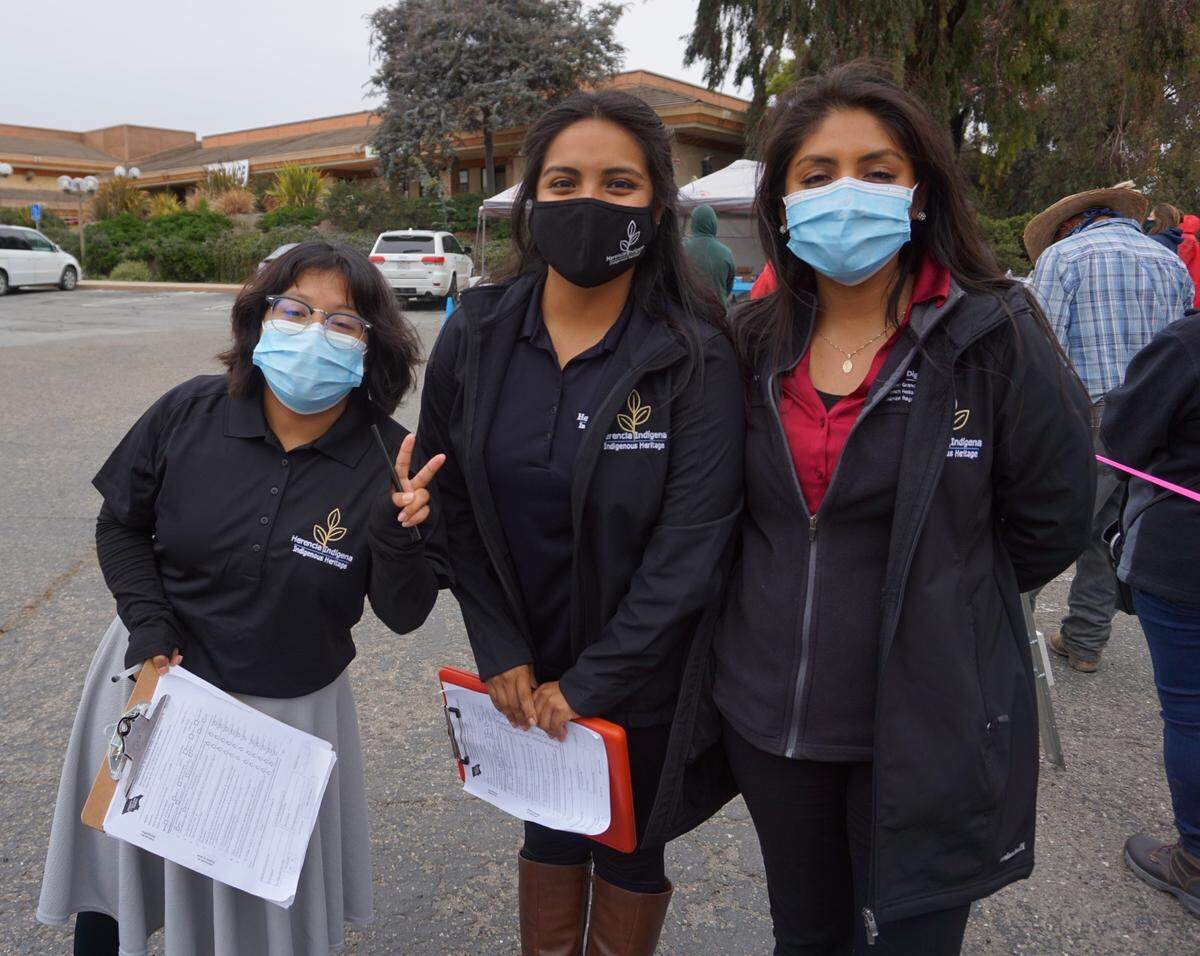
“We also regularly connect with service providers who work with Spanish-speaking and Mixteco-speaking residents (schools, childcare providers, healthcare providers, First 5, Department of Social Services, CAPSLO, Mexican Consulate, farm labor employers, etc.) to share COVID-19 prevention and testing resources and now vaccine information and resources,” she said.
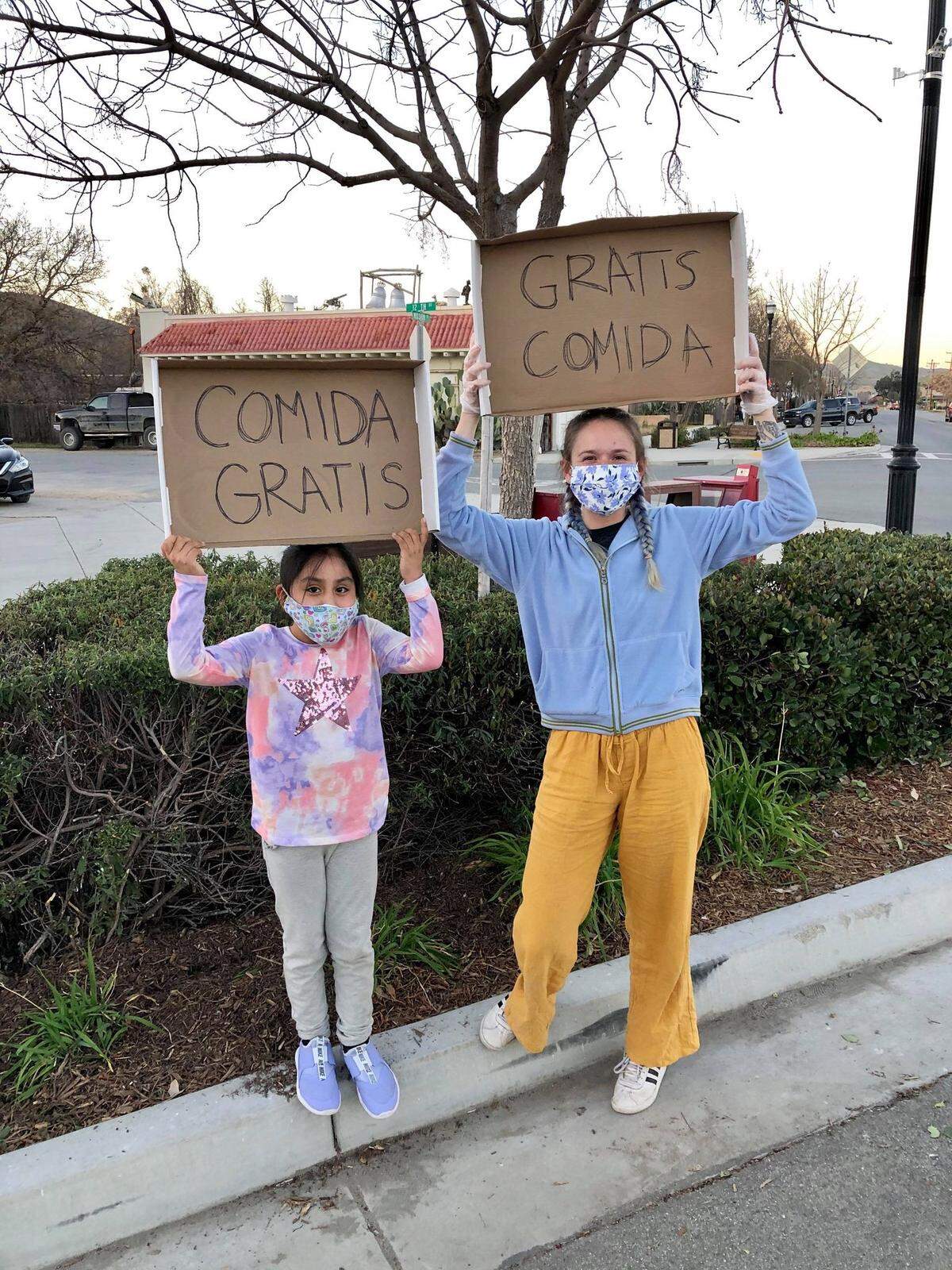
Echevarria, the North County community organizer, has been distributing food, masks and coronavirus information through her mutual aid group, Mujeres de Acción. She also created the Información COVID-19/Condado de San Luis Obispo Spanish-language Facebook group to share resources and news online.
The Paso Robles resident said she’s been frustrated by the city’s outreach to Latino residents. She said her organization had partnered with the city, but she’s unhappy with the lack of funding and support they’ve offered.
“Mujeres de Acción did have a ‘partnership,’ but I am no longer OK with being partners until the city is invested in creating impact and measurable real results,” Echevarria said in a Facebook message. “More than ever, the city of Paso Robles is out of touch with the Hispanic community.”
This dynamic is not new in Paso Robles. The city’s school board has repeatedly made meetings challenging for Spanish-speaking parents by asking commenters to “speak in a language that we understand.”
Sarah Johnson-Rios, assistant city manager, said county Public Health takes the lead on coronavirus information distribution, but the city has worked with the Farm Worker Outreach Task Force and has connected the Paso Robles Wine Country Alliance with the group.
The city has also tried to provide better translation services in Spanish and is partnering with Cuesta College to hire bilingual interns to help with COVID-19 outreach, she said.
“To target Spanish-speaking residents, we have worked to develop relationships with community members who are leaders in the Spanish-speaking community, whether as individuals and/or as organizations,” Johnson-Rios said in an email. “We regularly share information with them regarding COVID-19 and request that they in turn share it with their memberships and connections.”
She said community partners have been sharing information voluntarily, but the City Council could “consider specific proposals as part of this year’s budget development process” to potentially fund more bilingual outreach in the city.
But Echevarria said she’s called into City Council meetings before to ask about funding and hasn’t felt heard.
“All we ask is for transparency,” she said. “I know the city can’t do it alone. I also know nonprofits, local grassroots organizations shouldn’t take on all the responsibility and outreach. If we have ‘partnerships’ we need the city to invest money and measure real impact.”
This story was originally published March 26, 2021 at 5:00 AM.