
COVID has hit SLO County Latinos hard. Here’s how community groups have rallied to help
The coronavirus pandemic has impacted San Luis Obispo County Latinos more than any other community — and local health educators and organizers have stepped up to help connect residents with Spanish-language resources, food and economic aid.
County residents who identify as Hispanic or Latino make up about 23% of the population, but they’ve accounted for 33% of all COVID-19 cases, county Public Health data shows. A Tribune data analysis showed at least 10% of the county’s Latino population had tested positive for COVID-19 as of March 23.
Communities like Paso Robles, San Miguel, Shandon and Oceano have the most COVID-19 cases per 10,000 people — and the largest populations of residents who identify as Hispanic or Latino and speak Spanish at home, U.S. Census Bureau data shows.
These residents are in need of coronavirus resources from trusted community members who can provide them with information that is culturally relevant and in a language they understand.
Organizations like the Promotores Collaborative of San Luis Obispo County and Mujeres de Acción have been stepping up to fill this need.
“This is not going to go away,” said Yessenia Echevarria, founder of Mujeres de Acción. “I think there were some ugly truths that came out of COVID, and it’s heartbreaking when you see that it’s impacting Hispanic and Black (people).
Promotores, parent leaders provide resources, emotional support
The Promotores Collaborative, part of the Center for Family Strengthening, trains volunteer community members and parent leaders to help provide Spanish-language resources and support.
The organization has been providing virtual parenting classes, passing out information about the coronavirus, helping residents sign up for Medi-Cal and providing emotional support to families during the pandemic.
“We feel very blessed that the Promotores, in spite of the pandemic, they say, ‘OK, we’re going to wear our masks and we’re going to go,’” said Erica Ruvalcaba-Heredia, Promotores director. “They have been so brave enough to go back to their community and provide information and provide resources, and receiving those phone calls from the community, and just trying their best to give the resources and the phone numbers that the community needs.”
The Promotores have a contract with the county Public Health Department to conduct coronavirus outreach in Spanish-speaking neighborhoods. Through the partnership, they meet regularly with a doctor and a nurse so they can answer questions they hear from community members.
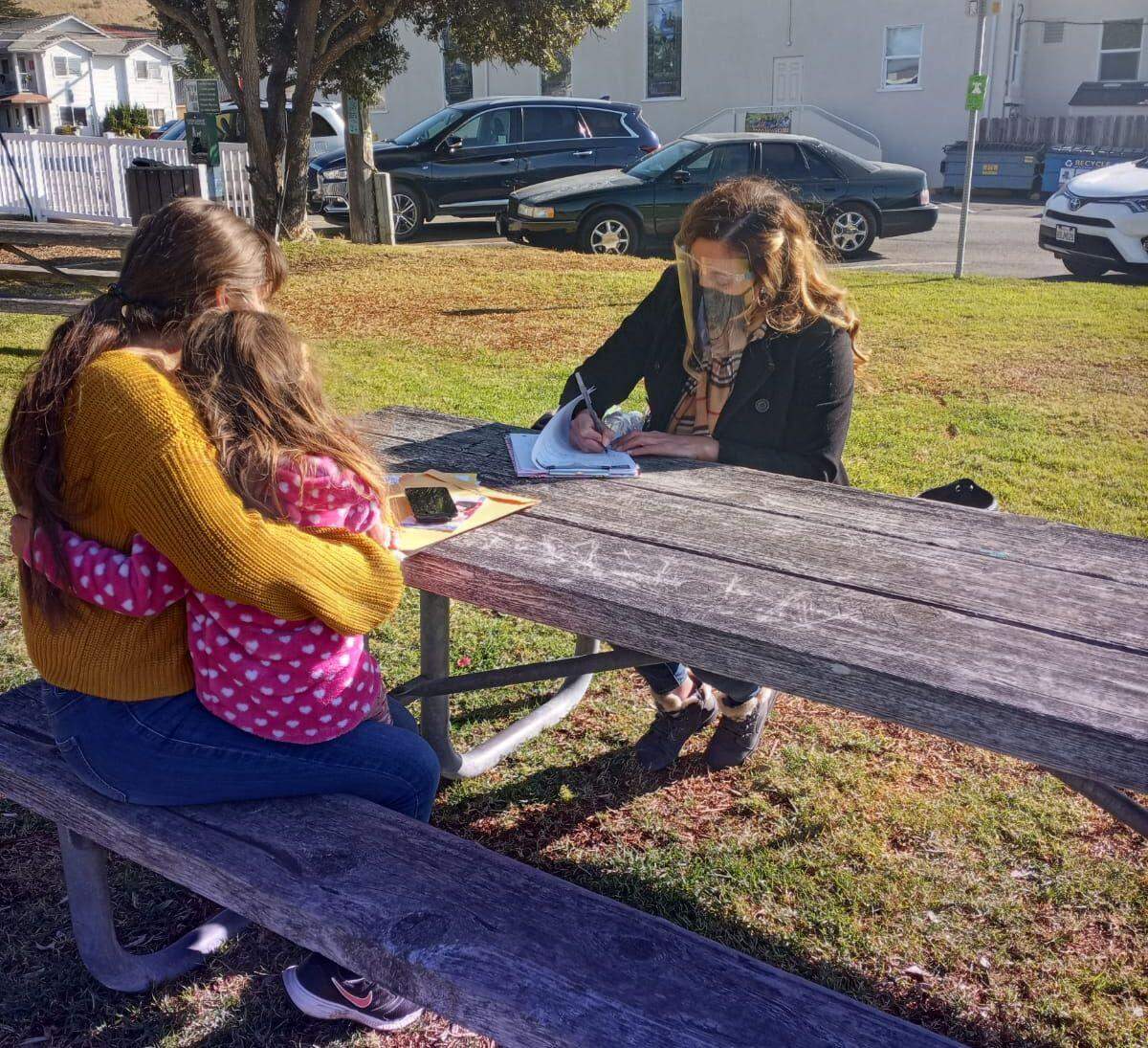
They also connect community members with agencies and organizations that can help them access aid, such as the Community Partnership of San Luis Obispo County (CAPSLO) and the LINK Family Resource Center. The Promotores are sensitive to the fact that some of the residents they’re working with may be undocumented and may be afraid to seek help.
“They’re dealing with fear of their immigration status, they have fear about the virus, they have lost their job, so they are dealing with just a lot right now,” Ruvalcaba-Heredia said.
Last month, the Promotores recognized their parent leaders for sharing resources and showing care for those around them during a very challenging time.
“They are very compassionate about providing resources,” Ruvalcaba-Heredia said. “I mean, it’s just great — their experiences being out in the community, and then they come back ... sharing some stories how sometimes people (are) like crying, saying ‘Oh my gosh, thank you for providing this. Oh, thank you for giving me this resource. I was able to pay my rent because you referred me to the LINK, or you referred me to CAPSLO.’”
The Promotores also received special training on how to provide emotional support for families, which is especially necessary during the pandemic.
“It’s very important, because families are dealing with a lot of different emotions,” Ruvalcaba-Heredia said. “We have seen families that are working half-time. We have seen families that have lost their job. They have to move to another house — we’re talking about multi-family homes.”
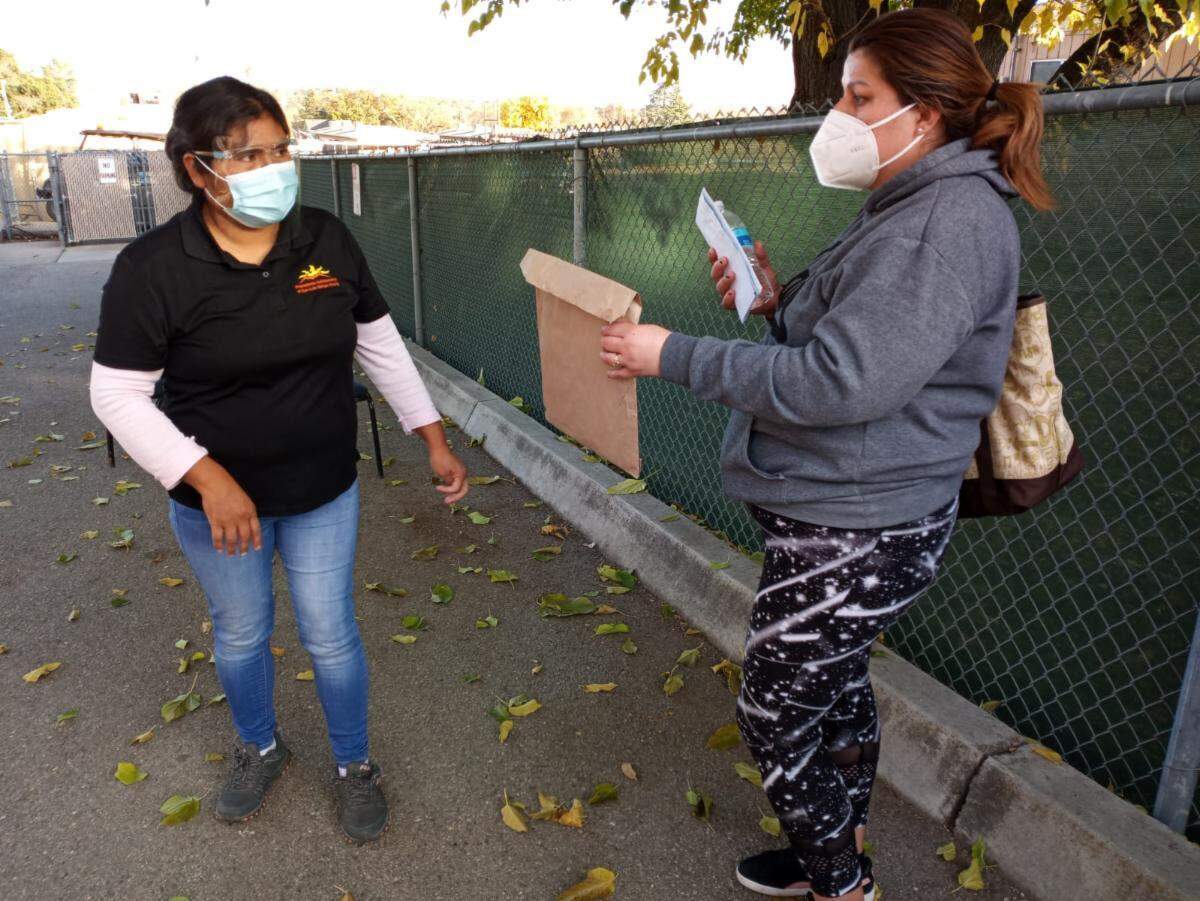
“Besides losing their job right now, or having less money right now with their budget, they have lost some members due to the pandemic, because of the virus,” she added.
The Promotores focus on listening to community members’ stories, not giving advice but offering to help them find the resources they need.
Ruvalcaba-Heredia said one Promotora shared a story about a man who broke down crying during a conversation at an outreach session.
“A man was saying, ‘I don’t have money. I lost my job and I can’t work,’” Ruvalcaba-Heredia said. “For that coming from a Latino who is male and crying with the Promotor, is just, oh my gosh. He has too much on his plate, and because she got that training, she was able to provide first, emotional support, then the resources.”
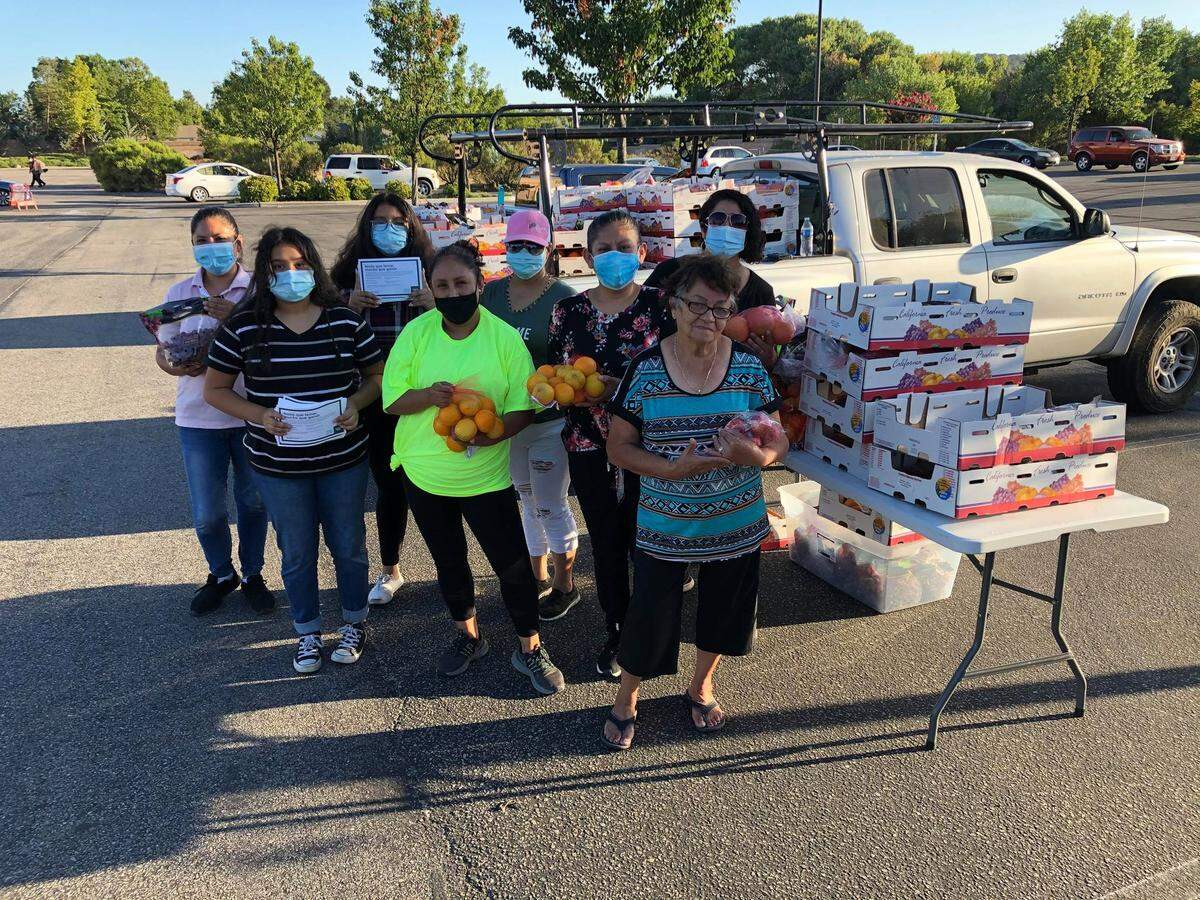
Mujeres de Acción distributes food, Spanish-language information at a grassroots level
From the beginning of the coronavirus pandemic, Yessenia Echevarria saw that North County residents who speak Spanish or Mixteco, a language indigenous to regions of Mexico, were getting their information more slowly than English speakers.
“What we started realizing was that the news outlet was not moving at that same rate in Spanish,” said Echevarria, who lives in Paso Robles. “Locally, once the county started deciding stuff, we really didn’t see things being translated either quickly enough or effectively.”
Echevarria started an Información COVID-19/Condado de San Luis Obispo group in late March to share information about COVID-19 in Spanish. More than a year later, the group has 744 members who share daily coronavirus case counts and information about vaccines, food distributions, business grants and more.
“So Google Translate is great, but I think with anything, the demographic of language is just so diverse,” Echevarria said. “We need to not only be effective in translating, but we need to know our audience. And one step further is such a huge indigenous population whose first language is not Spanish. These are folks who don’t even speak Spanish, and so the need to tap into those communities is even (greater).”
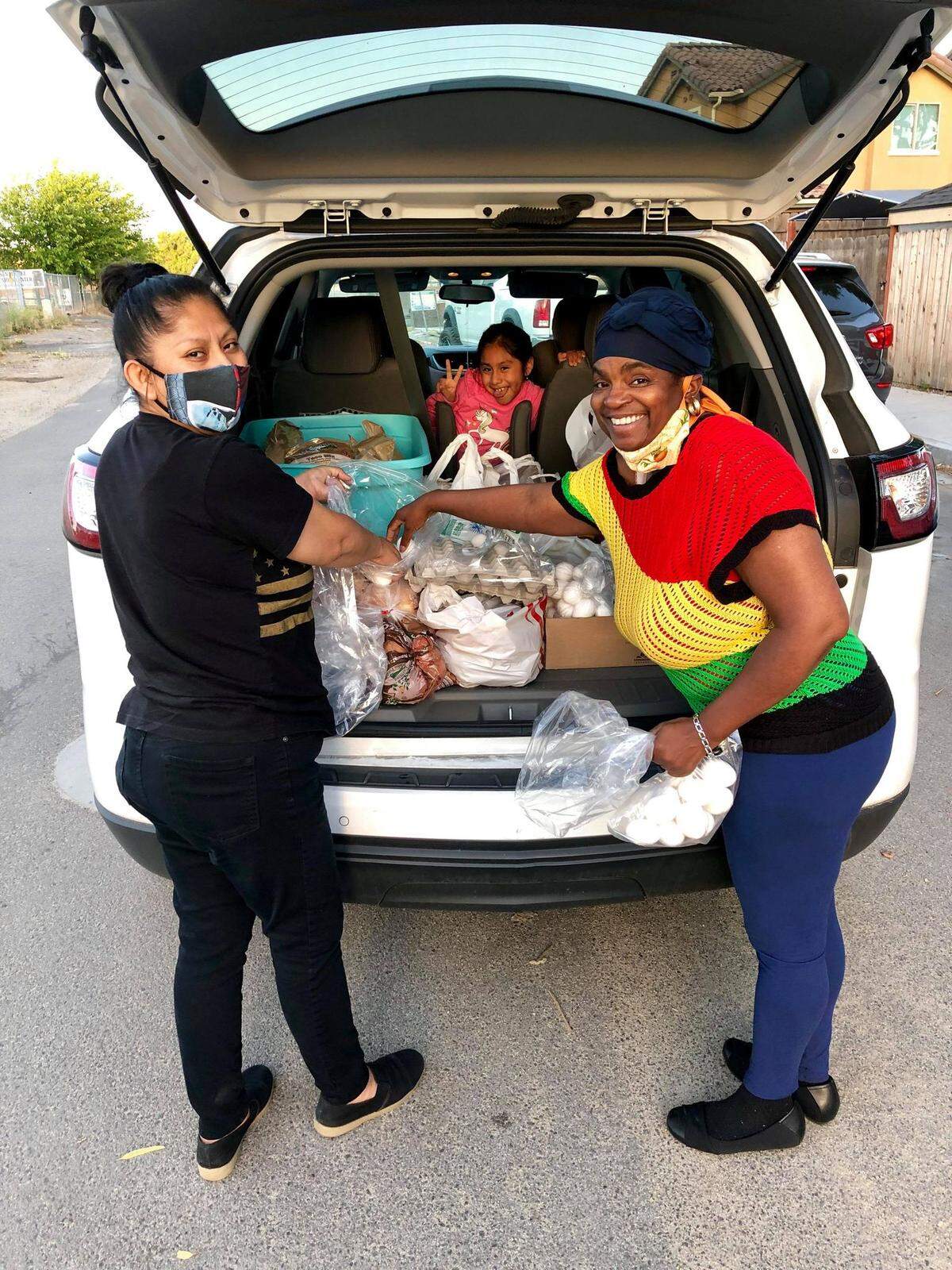
Echevarria’s community organization, Mujeres de Acción, which she started in 2014 to promote breast cancer awareness, has also been active during the pandemic. Members have shared information on Facebook and distributed food to more than 1,600 families.
Volunteers have also given out hundreds of cloth and disposable face masks and now are shifting focus to share information about the coronavirus vaccine.
Over the years, Echevarria’s organization has built relationships with the community, which has allowed her to help people effectively during the pandemic. She said Mujeres de Acción is seeking fiscal sponsors and is working toward becoming a nonprofit.
“People move around trust,” she said. “It needs to come from someone that understands them, is genuinely interested in wanting to help. We have undocumented folks that didn’t feel safe getting any sort of assistance because they fear this is going to affect their legal status, if one day they have the opportunity to apply for legal status.”
This story was originally published March 26, 2021 at 5:00 AM.