
This SLO County group is giving thousands of dollars to undocumented immigrants. Here’s why
Among the many groups facing burdensome economic and health impacts from coronavirus, San Luis Obispo County’s immigrant community is one of the hardest hit, according to a group of community leaders that’s formed a financial relief program.
SLO County UndocuSupport was formed in April by a network of local nonprofit organizations, churches, public sector leaders and community volunteers.
So far the program has distributed over $143,000 thus far raised through various philanthropic grants and donations, giving between $300 and $500 to undocumented individuals and up to $599 per family.
Thus far, the funds have helped hundreds of households and families, including many children.
Program coordinators say many of the estimated 9,000 undocumented San Luis Obispo County residents are battling coronavirus infections or trying to avoid people around them who are sick — and others are losing income and struggling to cover rent and bills.
They’re using the money from UndocuSupport to help cover rent costs, utility bills, medical expenses, clothes, diapers, baby formula and more.
UndocuSupport also helps connect immigrant families to community resources offering health and food support.
Undocumented immigrants weren’t eligible for the national $2 trillion federal stimulus relief package.
And some local families have yet to receive money from California’s $75 million Disaster Relief Fund supporting undocumented people impacted by COVID-19, UndocuSupport leaders say, due to difficulties accessing the funding and other factors community leaders also have helped immigrant families work through.
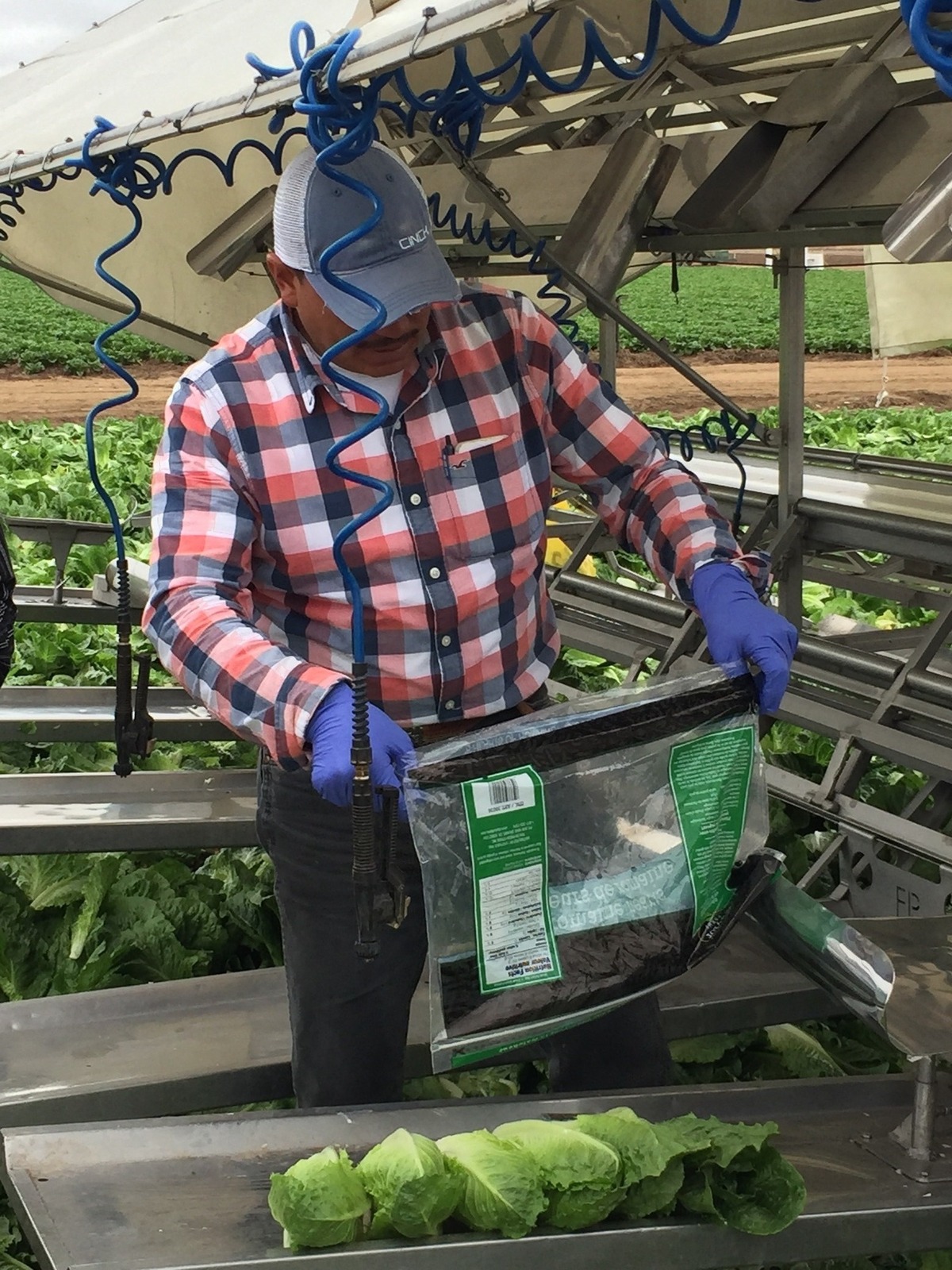
UndocuSupport coordinators say immigrants serve key roles in San Luis Obispo County’s agriculture industry, which contributed $2.5 billion overall to the local economy, according to a 2019 county Farm Bureau report.
In California, undocumented people represent 10% of the workforce, and paid approximately $2.5 billion in state and local taxes in 2019, according to the relief program’s website.
“There are many challenges the community of farm workers, hotel, child care and restaurant workers face right now,” said Erica Ruvalcaba-Heredia, one of the UndocuSupport coordinators. “Because so many are getting their hours cut or they’ve lose their jobs entirely, rent has become one of the biggest issues. And in some cases, families are sharing the same housing and crowding together and that’s increasing the risk of getting sick.”
SLO County undocumented immigrants face COVID-19 challenges
Socorro Ramirez, a family advocate with the Community Action Partnership of San Luis Obispo County (CAPSLO), receives many of the intake calls in Spanish from immigrant families for UndocuSupport.
Ramirez said that she has spoken on the phone with people infected with COVID-19, often callers with groggy voices stricken by illness.
“If one parent has it, that affects their family means to work and it can be hard to quarantine if they’re sharing small living spaces or live in a garage,” Ramirez said. “I think a lot of people are fearful, and this has been hard on people. But there’s also a lot of faith in the community. And people are grateful for the support.”
Ruvalcaba-Heredia said people who test positive for coronavirus must also contend with the cost of medication and the loss of ability to work. Some are faced with considering going back to work while sick, and not telling anyone, because they need the money.
Mary Lynn Crandall — a volunteer with UndocuSupport with the group Allies for Immigration Justice — said the challenges faced by immigrant families highlight social inequities.
“If you don’t have access to the safety net, you are in the most desperate situation of all,” Crandall said.
Crandall said that may include “no job protection, working paycheck to paycheck, no paid time off, no sick leave, no health insurance, and no access to unemployment.”
“The pandemic underscores that much more needs to be done to protect immigrant families in our county who are suffering the economic and health impacts of COVID-19,” Crandall said.
Paso Robles family must choose between work, safety
Cheli, a Paso Robles mother of five, said that, after the COVID-19 pandemic hit, she decided not to go back to work as a farm laborer with a U.S. work permit.
That’s because her children, who range in age from 1 to 15, needed her at home and she feared getting sick.
The Tribune is not using Cheli’s full name to protect her privacy at the request of the UndocuSupport program.
Cheli’s husband is still working as a farm laborer at a North County vineyard. But he has lost roughly 20 hours of work per week due to impacts of COVID-19, Cheli said.
Many of their friends and fellow workers are getting sick with coronavirus and Cheli said she doesn’t want to risk exposure to the virus. Cheli said she is healthy so far, but COVID-19 is a constant concern— even going to the store or walking around town.
Left without her usual childcare options, including her sister and a neighbor, Cheli had to put work on hold.
“Money is tight right now, but I made the choice to try to stay healthy and safe,” Cheli said in Spanish. “My younger kids especially need me home. But that makes it harder to have enough to live on.”
Cheli got connected to local funding resources for funding from the local Promotores Collaborative, which consists of Spanish-speaking volunteers dedicated to local support efforts. The group partners with UndocuSupport.
In addition, Cheli, a Spanish speaker who also communicates in Mixtecan languages used by people of indigenous southern Mexican descent, is reaching out to other families to inform them of ways they can get help.
“A lot of undocumented people are proud and it can be embarrassing to get help like this,” Cheli said. “But I’m helping people connect to resources because it’s needed.”
Coronavirus grants designated for farm workers
Two philanthropic organizations have issued multiple grants to help UndocuSupport — the California Immigrant Resilience Fund and Community Foundation of San Luis Obispo County.
Two local nonprofit organizations, Center for Family Strengthening (CFS) and CAPSLO re designated to handle applications for grant funds and to distribute the grant monies they receive directly to eligible immigrant families countywide.
“They are our neighbors, co-workers, friends and fellow students,” said Gina Whitaker, an UndocuSupport outreach advocate. “The virus does not discriminate — it doesn’t care about race, class, or wealth. Our response to this crisis should not discriminate either.”
No family has received more than $599 total, the funding cap for the program, to help spread out the money as much as possible, according to Elizabeth “Biz” Steinberg, CAPSLO’s CEO.
Steinberg said each family’s eligibility is closely reviewed and funds are carefully tracked to award money.
Several undocumented immigrants seeking the state’s $75 million in coronavirus aid encountered busy phone lines accessing those funds. But Steinberg said her organization also has helped many to connect to state aid with the help of agency partners.
Steinberg said the immigrant community plays a vital role in San Luis Obispo County’s economy and culture.
“We all eat the fruit and veggies these folks are picking,” Steinberg said. “So many of the pickers saw hours reduced. And hours of jobs at restaurants and hotels, all that was reduced...it’s an extremely challenging situation with need for help.”
Rev. Rod Richards of Unitarian Universalists San Luis Obispo said that he believes in the “inherent worth and dignity of every person” and that marginalized communities are often dismissed, forgotten and left out of benefits and assistance that’s offered to others.
“We are all in this together,” Richards said.
For more information about UndocuSupport, including how to donate, go to https://sloundocusupport.org/.
This story was originally published August 4, 2020 at 5:00 AM.
CORRECTION: This story has been corrected to clarify the amount of money distributed to undocumented families through UndocuSupport.
%20Cropped.jpg)