Paso Robles builds a city-run tent camp as it prepares to clear homeless from riverbed
Paso Robles is building a temporary homeless camp to allow the city to clean up large encampments and makeshift shelters in the Salinas Riverbed that leaders say pose fire and public health risks.
City Council members recently directed staff to construct the facility — which will feature tents, portable toilets, lighting and showers — at the 10-acre Borkey Flats site north of the 24th Street Bridge, east of the Salinas River and directly adjacent to River Road.
The city will then oversee a comprehensive cleanup of large encampments in the riverbed. Recent case law requires leaders to create a shelter for the city’s homeless residents if they forbid camping in the riverbed.
That means that Paso Robles — which has no permanent homeless shelter — will have to hastily create one.
The El Camino Real Homeless Organization (ECHO) in Atascadero has been involved in helping Paso Robles leaders plan the city-sanctioned camp. However, the nonprofit’s leaders have openly said creating the temporary facility is not what they would suggest during the coronavirus outbreak.
The Centers for Disease Control and Prevention (CDC) advises against clearing homeless camps during the pandemic, as doing so could make it more challenging for residents to access service providers and may contribute to disease spread.
“This is not our first choice,” said Jeff Al-Mashat, ECHO’s Paso Robles homeless services director, at a July 21 City Council meeting. “This is not what we would recommend, but we’re ready to step in and help.”
Riverbed cleanup and fire prevention
Paso Robles leaders have recently stepped up efforts to deal with fire risks in the riverbed.
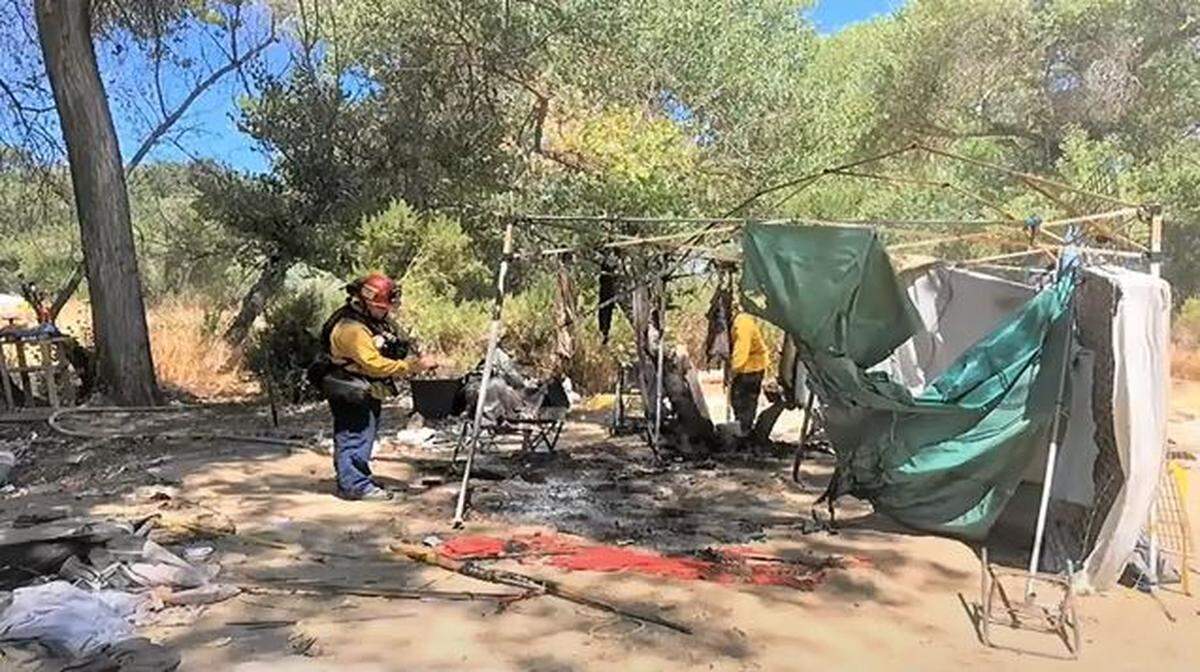
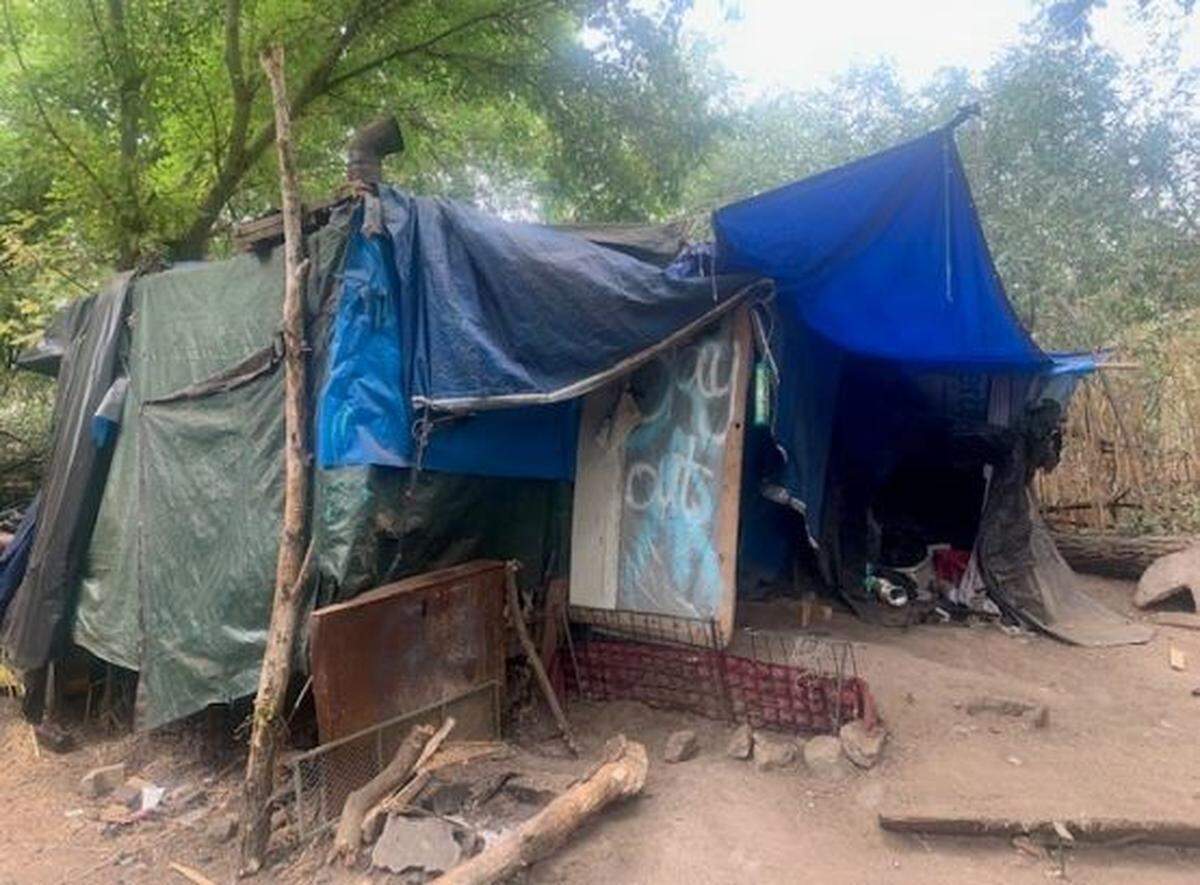
Without any other place to go in the city, homeless residents have made the waterway their de facto shelter. They live in the riverbed and build makeshift campsites, complete with fires and toilets.
Officials say the encampments pose a public health hazard. Campfires can ignite nearby vegetation, and waste can leach through the sandy riverbed and into the city’s groundwater, leaders said at a July 14 City Council meeting.
The city has urgently been trying to remove vegetation from the riverbed since a June 22 fire that started there and spread to other areas of the city, destroying two homes and damaging nine others.
Since 2017, the Fire Department has responded to 474 fires within city limits, 303 of which originated in the riverbed, Fire Chief Jonathan Stornetta said on July 14.
The June fire was caused by weed abatement and was not related to the homeless encampments, according to a Paso Robles news release.
The City Council on July 14 voted 5-0 in favor of a plan that will involve spending $278,000 to clear fire-prone areas of overgrown brush and hazardous materials. In addition, homeless residents will be forced to leave the riverbed permanently, and crews will clean up the encampments.
Council decides to create city homeless camp
City leaders and ECHO have been in the process of using state funds to construct a homeless shelter, although they haven’t yet selected a location for the new facility after plans for a previous site fell through.
Until there’s a permanent shelter, the city will need to give homeless residents a place to go once they’re no longer allowed to camp in the riverbed.
City Council members on July 21 discussed different options for locations to house the homeless, including potentially using the El Paso de Robles Youth Correctional Facility — also known as the Boys’ School — as well as the Frontier Pavilion at the Paso Robles Event Center and area hotels.
Paso Robles has been trying for years to acquire the state-owned youth correctional facility, which closed in 2008. But bureaucratic red tape continues to stymie that effort, City Manager Tom Frutchey said.
Leaders also decided the hotel option would cost about the same amount as an outdoor camp and may not be a good option for homeless residents who wouldn’t want to be in a hotel setting.
Housing residents indoors at the Event Center would also create a congregate living facility, which the San Luis Obispo County Public Health Department likely wouldn’t approve, Frutchey said.
City staff also relied on feedback from the police Community Action Team (CAT) — created by the city last year — to select a site for the camp, Frutchey said.
“They do believe the majority of the homeless that will be impacted by the vegetation clearing efforts are not, in general, likely to feel comfortable in a building,” Frutchey said. “They, for a variety of good and bad reasons, prefer living outdoors, prefer living not in close supervision, and would probably be most likely to take advantage of the services we can offer and the housing we can provide if it’s a tent-based opportunity fairly close to where they already live.”
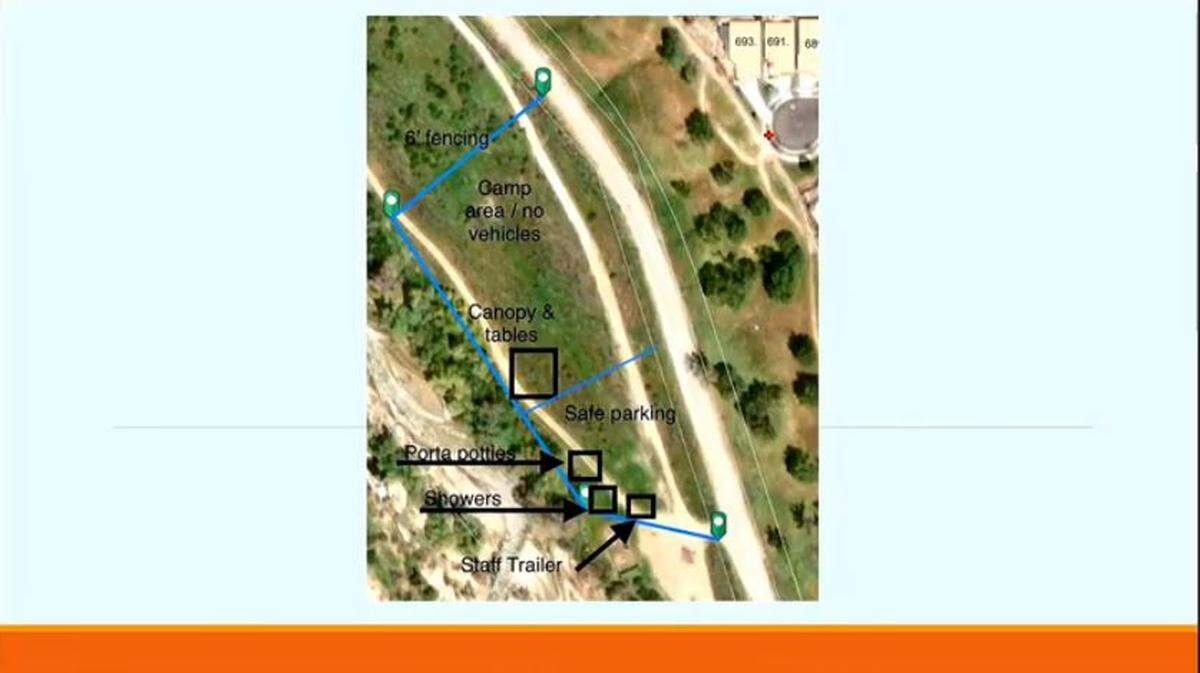
The Borkey Flats site would be fenced-off and would feature a paved area for safe parking, space for tents, a shower facility and portable toilets.
Initial estimates called for using around-the-clock ECHO staff, with site setup priced at $35,000 and operations at $65,000 a month for labor and facilities. Frutchey estimated the site would need to operate for six months to a year, until the permanent shelter is up and running.
The cost estimates assume 50 people will come live at the camp. The county’s 2019 point-in-time homeless census estimated there are about 221 people living unsheltered in Paso Robles.
“Once we assume a responsibility for people, we’ve assumed a responsibility,” Frutchey said. “Until there’s a long-term solution, we can’t just end that responsibility.”
Some council members said they wanted to provide only a place for homeless residents to set up their own encampments away from the riverbed. However, the city is obligated to provide sanitation facilities — such as portable toilets and handwashing stations — especially during the coronavirus pandemic, said Kimberly Hood, interim city attorney.
“I’m not understanding why we have to do so much more than what is not being done currently, anyway, other than finding a location,” Councilman John Hamon said.
When asked if homeless residents could be cited for returning to the riverbed, Police Chief Ty Lewis said tickets aren’t the best penalty, as offenders don’t usually have the resources to pay fines. The county District Attorney’s Office also doesn’t typically prosecute people for illegal camping, Lewis said.
The Police Department would need at least nine officers patrolling the riverbed to prevent homeless residents from coming back to the area, Lewis said.
Councilman Fred Strong was unimpressed by the proposal and said he thinks the council is “putting on a really good show for the middle- and upper-class citizens of our community.” He suggested seeking out leaders among the homeless to talk to them about potential solutions.
“I don’t think they want handouts,” Strong said. “I don’t think they want a lot of stuff from us. I think they want to live a pretty free lifestyle that doesn’t fit us, that doesn’t fit the normal person in our society today, and that’s part of our problem.”
Mayor Steve Martin said it’s important to spend money on fire prevention measures instead of “(hoping) the town doesn’t burn down.”
“It’s going to be a very expensive proposition, but I can only ask, how expensive will it be if another fire starts up, and it is started by the homeless and it does burn down homes and it does kill people?” Martin said. “I just don’t think that we have much of a middle road to walk here.”
What will the city homeless camp look like?
Ultimately the council directed staff to create a no-frills camp on the Borkey Flats site, although the direction included few specifics. It’s currently unclear when homeless residents will be required to leave the riverbed or when the new city camp will be completed.
Stornetta told The Tribune he expects the camp will be finished by the end of the week of Aug. 2, although there’s not currently a set date for the encampment cleanup.
By July 30, the city had mowed and graded the Borkey Flats camp site, and crews had poured asphalt for the parking area. The site is very hot and sunny during the day, and drivers on River Road can see existing homeless encampments in the shady riverbed nearby.
Following the meeting, the city — concerned about spending so much money on ECHO staffing — instead opted to hire a private security company and rely on volunteers and CAT officers, Stornetta said.
By doing so, he predicted the camp would cost $20,000 to $40,000 per month, with $20,000 for initial set-up, well below other estimates. The city will not provide laundry service for the showers. The rental companies will be responsible for cleaning the portable toilet and shower facilities, Stornetta said.
Each resident will receive a tent, although the city isn’t yet sure how many people will take advantage of the site, Stornetta said.
So far, ECHO and Paso Cares — a nonprofit dedicated to helping the city’s homeless population — have only been asked to provide a daily meal, said Al-Mashat and Tony Ritter, president of Paso Cares.
Paso Cares and ECHO currently serve meals five nights per week at the corner of Riverside Avenue and 24th Street. The nonprofits will serve their first meal at Borkey Flats next Wednesday, Ritter said.
Concerns about city homeless camp
The county’s Public Health Department is aware of the city’s camp, Dr. Penny Borenstein, public health officer, told The Tribune. Borenstein said she’s not concerned about coronavirus spread after the riverbed cleanup, as homeless residents will be moving from one camp to another.
However, Al-Mashat remains concerned about the city camp and thinks there should be more ECHO-involved planning. He also wants ECHO case workers to be able to notify residents about the cleanup.
“We imagine this is going to be very traumatic for people,” Al-Mashat said. “They’ve been in the riverbed for a while.”
There hasn’t been much COVID-19 transmission among residents of outdoor homeless encampments, but that could change if people are forced to move onto the same site, Al-Mashat said.
Paso Robles’ homeless residents are also mobile, which means they could spread the virus into the community, he said.
ECHO’s main priority is to provide a long-term shelter with case management, Al-Mashat said.
“Going to another camp doesn’t necessarily accomplish that,” he said. “It moves people from one location to another.”
This story was originally published August 3, 2020 at 5:00 AM.