
From Diablo to Cal Poly protests, these are the biggest SLO County stories of the decade
A decade already?
For anyone suffering a bit of whiplash at the speed that the past 10 years flew by — we feel you. But as we get ready to head into an entirely new decade, it’s useful to look back and see what local issues defined the 2010s for us here in San Luis Obispo County.
From housing unaffordability and homelessness to the ongoing decommissioning of Diablo Canyon nuclear power plant, many of the decade’s top stories are set to define the upcoming decade as well.
So as we welcome to 2020, here’s your look back at our top stories of the 2010s.
10. SLO County named one of most unaffordable in the United States
Remember back in 2016 when nobody was surprised to learn that SLO County was among one of the most unaffordable places to live in the country — but we also couldn’t stop talking about it?
National real estate firm RealtyTrac released a survey that year that ranked San Luis Obispo County as the sixth-most unaffordable place to live in the United States, behind notoriously expensive areas like Brooklyn, New York; Marin County; Santa Cruz; San Francisco; and Maui, Hawaii.
The survey analyzed average weekly wages and the cost of buying a home to compile its list. What it found? More than 90 percent of average weekly wages were needed to buy a median-priced home in SLO County.
Since then, the county has popped up on various similar lists — most recently in February 2019 when the National Association of Home Builders named SLO County the 7th least affordable place to buy a home in the United States, followed almost immediately by USA Today upping the ante and designating the county’s housing market as the 5th least affordable.
That screeching sound you hear? That’s your wallet.
9. Death of Matthew Frank, aka SLOStringer, surprises and saddens county
On the rainy morning of March 21, 2017, 30-year-old Matthew Frank was driving north just over the Cuesta Grade when his 2009 Chevrolet Tahoe went off the road, down an embankment and crashed roof-first into a tree.
Frank was pronounced dead at the scene.
The news came as a shock to the thousands of San Luis Obispo County residents who knew Frank by his alias, SLOStringer.
As SLOStringer, Frank photographed breaking news incidents across the Central Coast, building up a following of loyal and devoted online fans as he shared information from the front lines of car crashes, fires, arrests and more.
Hundreds attended his memorial service, which was also featured on “Shot in the Dark,” a Netflix original that followed the lives of fellow stringers.
Since his death, Frank has had a stretch of Highway 101 between San Luis Obispo and Pismo Beach named after him, and his family has donated thousands of dollars in his name to local emergency responders.
“My wish is that he is not forgotten as long as possible,” Steven Frank told The Tribune in August, more than two years after his son’s death.
8. Chimney Fire destroys homes and threatens Hearst Castle
Unlike our neighbors, it’s been a while since SLO County had a big wildfire.
The last major blaze was in August 2016 when amid 100-degree heat, the Chimney Fire erupted near Lake Nacimiento, destroying homes and quickly growing to thousands of acres.
As thick smoke clogged the skies, hundreds of residents in the area were forced to flee their lakeside homes in Christmas Cove, Oak Shores, South Shore Village, Cal Shasta and Ranchos Del Lago.
The fire even made a beeline toward Hearst Castle, prompting an emergency response to protect the landmark and its valuable artwork inside.
After 24 days, the final tally was 46,433 acres burned, 49 homes and 21 buildings destroyed, and eight structures damaged. At its height, the fire was fought by close to 4,000 personnel from across the state.
In March 2017, Cal Fire determined that the fire was started when a vehicle ignited dry grasses near a dirt road.

7. Protests erupt after Cal Poly student photographed in blackface
First a Lambda Chi Alpha fraternity member was photographed wearing blackface to a party. Then more photos surfaced showing members of the same fraternity throwing gang signs while dressed as gangster stereotypes.
For several weeks in the spring of 2018, a series of high-profile incidents brought to light longstanding issues with diversity at Cal Poly — which was also ranked one of the worst public schools in California for black students in a USC report.
Hundreds of students aired their concerns at an emergency town hall meeting soon after the photos emerged in early April 2018, and protests took over the university’s Open House that same weekend.
The incident raised uncomfortable questions for the administration, including freedom of speech and racist behavior among members of Cal Poly’s Greek Life.
After new racially insensitive photos emerged featuring members of another fraternity, Cal Poly temporarily suspended all of its Interfraternity Council fraternities and Panhellenic Council sororities while it investigated the photos.
Since then, administration has taken steps to create a more inclusive campus climate — including paying a nationally recognized expert on diversity $243,000 to consult on the issue — though a photo did emerge in October of this year showing Cal Poly students appearing to mock undocumented immigrants.
6. Paso’s groundwater basin going dry
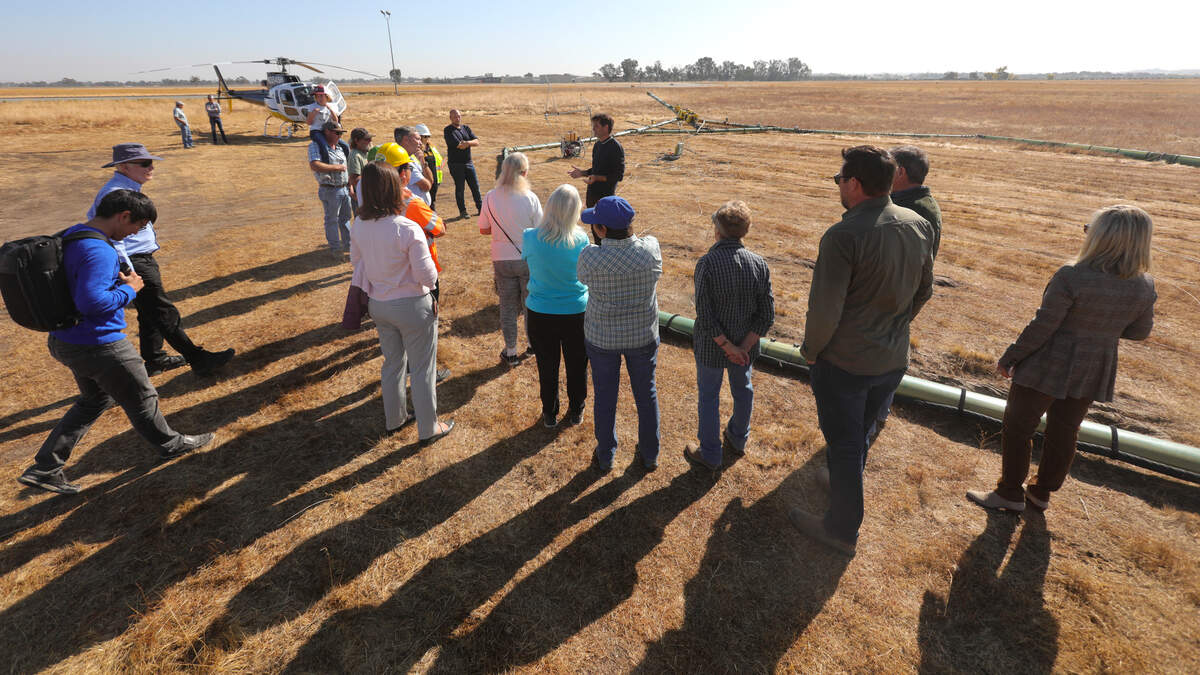
Here’s one of the longest-running issues in SLO County: The Paso Robles groundwater basin.
The Tribune has been following this one since at least 2011, when dramatically dropping water levels and wells going dry sparked heated debates about management of the basin and whether agriculture (namely wine-grape growers) were to blame for its decline.
A study in 2014 found that the basin was losing an average of 2,400 acre-feet of water a year, but more recent studies have estimated that the aquifer will lose about 14,000 acre-feet a year from 2020 to 2040 if no action is taken to manage the basin.
How exactly the basin could be sustainably managed has been the topic of numerous meetings and debates over the years, especially as the January 2020 deadline for a state-mandated groundwater sustainability plan loomed.
The Paso Basin Cooperative Committee, the group tasked with the basin’s management, released a draft version of its plan this fall that called for cuts to pumping.
The committee appears ready to submit that plan to the state, though some grape growers have criticized the plan, saying they were cut out of the planning process.
5. That time SLO County went through a dry spell ... for five years
At the same time that Paso’s groundwater basin was running low, much of California was in the midst of its own water nightmare: drought.
For five years, much of the state toiled under extreme drought conditions, with cities and CSDs enacting harsh water restrictions as water resources disappeared. Laguna Lake and Atascadero Lake dried up and their fish died. Lopez Lake — the chief source of water for part of South County — got so low officials couldn’t measure it.
Meanwhile local ag suffered, with ranchers reducing their herds because of lack of feed and growers chopping down trees because they could no longer afford to irrigate them.
By January 2017, much of the drought had disappeared in California, including in SLO County where the region had its rainiest January in 20 years.
Though we’ve hopped back and forth between drought conditions since then, California is far from the dried up desert it was for much of the decade.
4. Murder of 15-year-old Dystiny Myers shocks SLO County
Though numerous murders have shocked SLO County over the decade, the grisly fate of 15-year-old Dystiny Myers is decidedly among the most well-known.
The details of the upsetting murder, as well as the ensuing long trial, gripped much of SLO County for the first part of the decade, and still pops up on true crime TV shows from time to time.
Myers’ charred body was found early in the morning by firefighters responding to a brush fire in a grass field near Santa Margarita in September 2010. That same day, police followed a trail of potential witnesses and suspects to a home in the South County where they would locate four of the five people involved in the case.
Myers, who ran away from a group home in 2010, was living at the Nipomo home of Rhonda Wisto, a meth dealer with gang connections. According to trial testimony, Wisto ordered Myers to be killed because she was disrespectful.
At the trial, one of her attackers said Myers’ final words were for them to tell her mother she loved her.
One of the men convicted of the crime, Cody Lane Miller, died by suicide in June 2016 in his cell at the California Correctional Institution in Tehachapi. Wisto, her son Jacob York and Ty Michael Hill were sentenced to life in prison without parole. Jason Adam Greenwell, who testified against Wisto and York, was sentenced to 15 years to life in prison.
3. Video of Andrew Holland in SLO County Jail restraint chair surfaces
Though Atascadero resident Andrew Holland died in San Luis Obispo County Jail custody in January 2017, The Tribune in March 2018 released surveillance video showing how he was held in a restraint chair for more than 46 hours leading up to his death.
The video, which showed that the Sheriff’s Office’s version of events was inaccurate and misleading, garnered national attention and led to calls for Sheriff Ian Parkinson to resign or drop out of his re-election bid in June of that year. (Parkinson won the race over challenger Greg Clayton.)
Though Parkinson and county administrators have implemented reforms in how medical and mental health services are provided, one inmate died in jail custody in 2018 and the county continues to face several lawsuits for alleged mistreatment of inmates.
Three years after his death, the Holland family created a nonprofit organization in his name that aims to fight for better treatment of those with mental illness.
2. Deaths, air quality concerns at the Oceano Dunes
Though its timeline stretches back farther than just this decade, one of the biggest issues of the 2010s in SLO County was undoubtedly the Oceano Dunes.
The state vehicular recreation area — one of the last in California where people can drive on sand dunes — has been the topic of conversation since its creation, but throughout the past decade the debate over the health issues associated with the park has risen to a fever pitch.
In 2018, State Parks agreed to reduce dust coming from the park by 50 percent, but later said that that plan was infeasible.
Some say the park is a health hazard, citing both the dust cloud that blows onto the Nipomo Mesa on bad air quality days and the large number of deaths at the park in recent years as reasons for it to be shuttered or at least more closely regulated.
Meanwhile, advocates of off-roading banded together to defend what they call a way of life and fight against the ever-shrinking size of the riding areas of the park over the years.
Notably in 2019, this issue came to a head when the state’s Coastal Commission mulled phasing-out off-roading at the park, citing numerous environmental concerns. Facing intense pushback from the riding community, the Commission ultimately decided to not go through with that plan.
Recently, State Parks closed a 48-acre area near the shoreline to camping as part of its push to reduce dust emissions.
And for the top story of the decade:
1. PG&E announces plans to close Diablo Canyon
No surprise, the shuttering of Diablo Canyon nuclear power plant is The Tribune’s top story of the decade.
PG&E announced in June 2016 that it would not seek re-licensing for its two nuclear reactors when they expire in 2024 and 2025.
Closing Diablo Canyon will mean the end of an era in nuclear power in California. Diablo is the last nuclear power plant operating in the state, after the 2012 shutdown of San Onofre Nuclear Generating Station south of San Clemente.
The closure was part of an agreement with labor and environmental organizations in which the utility agrees to increase investment in energy efficiency, renewable power and electricity storage to offset the power that will no longer be produced by the nuclear plant.
The closure will permanently change the local economy: Diablo Canyon employs nearly 1,500 workers and has a huge impact on the local economy. It is San Luis Obispo County’s largest private industry employer, with an average annual salary of $157,000 in 2014, according to PG&E.
Beside the loss of jobs, several local agencies dependent on the utility for everything from property taxes to emergency service aid petitioned for more support from PG&E through the closure.
PG&E has since agreed to pay $85 million to seven local cities, San Luis Coastal Unified School District and San Luis Obispo County to support those agencies. In addition, the utility will pay between $37.5 million and $62.5 million for emergency planning efforts over the next 15 to 25 years.
Meanwhile, the Central Coast has been focused on how to fill the hole sure to be left behind once the plant closes: some have suggested making the region a renewable energy hub with wind farms and other forms of renewable energy, while others have pushed for more development and investment at Vandenberg Air Force Base as space interest heats up again.
Though the utility company is in the midst of bankruptcy, it is simultaneously pursing the first steps of its decommissioning plan that will stretch through much of the next decade in SLO County.
Honorable mention:
It’s impossible to include all of the stories that captured readers’ attention across the past 10 years, but here are some other highlights that didn’t make the top-10 list.
- SLO’s homeless crisis gets worse.
- Highway 1 closed after massive mudslide.
- Phillips 66 oil-by-rail proposal denied.
- Cal Poly picks a new president.
- Oprah names SLO as ‘Happiest City in America.’
%20Cropped.jpg)