Sacramento, Central Valley felt earthquake longer and stronger than others. Here’s why
READ MORE
More earthquake coverage
Read more coverage of Thursday’s earthquakes that shook Central and Northern California, and the Sierra Nevada:
Expand All
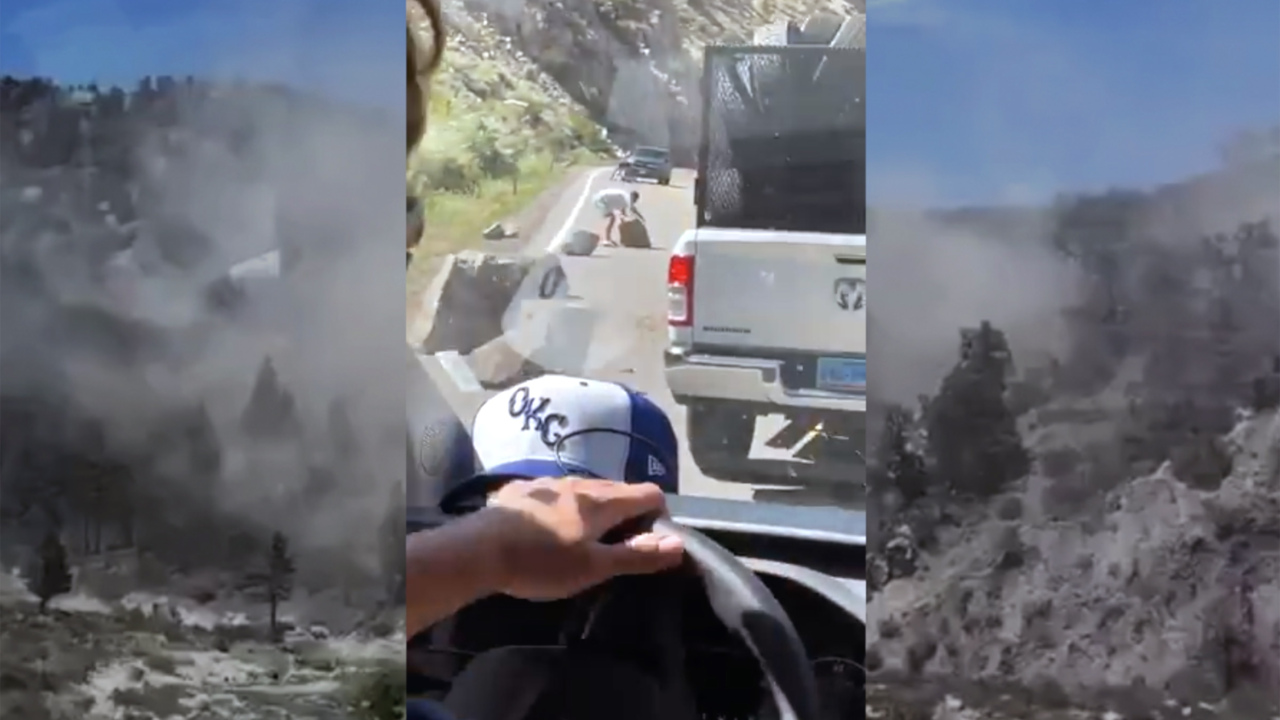
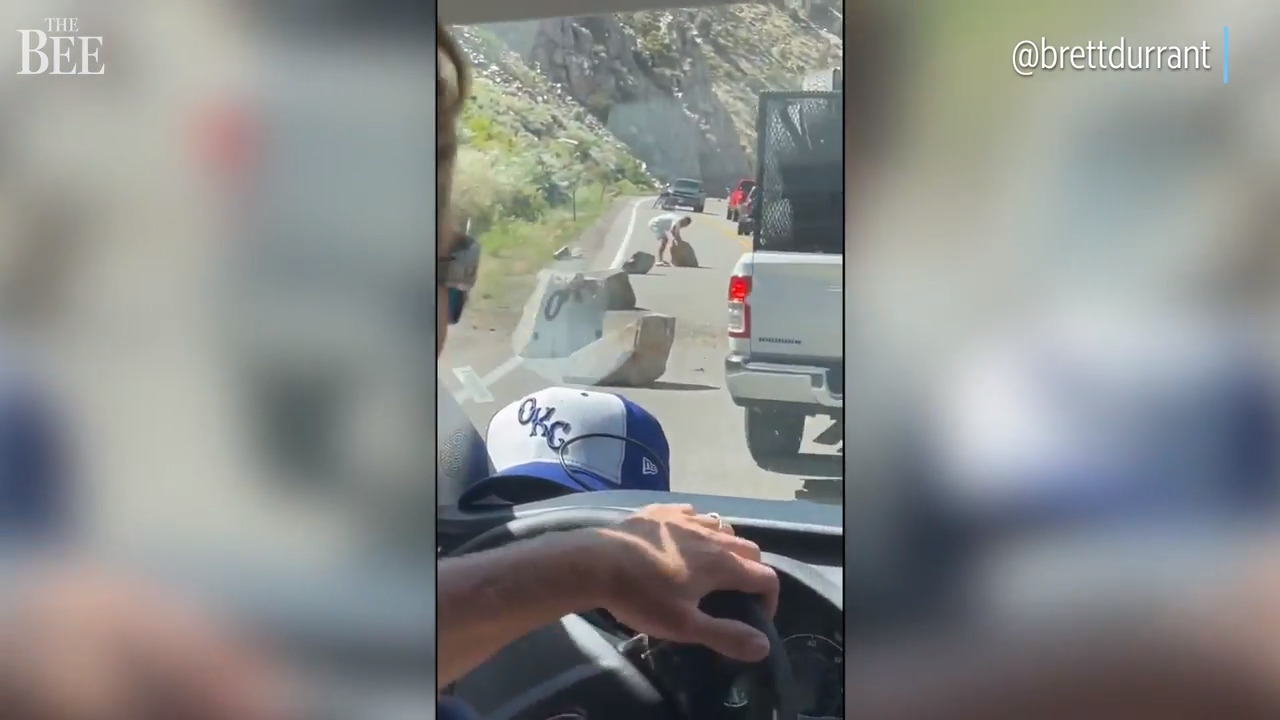
Thursday’s magnitude-6.0 earthquake in Central California appeared to many residents to be stronger and last longer than others in past years, but the quake was not unusual or necessarily a sign of bigger things to come, California’s acting state geologist said.
“The earthquake was relatively deep, not exceptionally deep, but it was on the deep side,” Steve Bohlen said in an interview with The Sacramento Bee. “An earthquake at this size at a depth of 10 kilometers (6 miles) is going to cause light to moderate shaking over a broad area.
“Earthquake energy is focused and dissipated by the geology of the local area as well as the area in which it occurs. So it is possible, even likely, that given the location of the earthquake and the geology between its origin and Sacramento it just happened to focus the earthquake energy in a way that it was felt more strongly in the Sacramento area than it it might have otherwise.”
Bohlen said the quake, dubbed the Antelope Valley Earthquake, was felt over “a fairly broad area,” with U.S. Geological Survey maps showing it extending as far south to Monterey Bay, north to the far northern reaches of the Central Valley and into Nevada. Self-reported data to the USGS showed residents of Bakersfield, Los Angeles, Reno and Grass Valley also felt shaking.
Bohlen said he had not heard any reports of damage from the quake, which struck in a rural area along the Antelope Valley fault that runs up the west side of Antelope Valley from the California line and into Nevada.
“We know that area is sparsely populated, and therefore the most intense shaking probably did not cause much damage,” he said.
Residents across the Sacramento region reported feeling the shaking for as long as a minute, with social media users posting video of ceiling lamps swaying and pool water sloshing.
What fault did the earthquake come from?
The earthquake emanated from the Walker Lane Seismic Zone, and Bohlen said the occurrence was not unusual.
“This is a seismically active area,” he said. “This zone has been fairly seismically active over the last year or so, and we’re seeing quite a number of earthquakes.”
Thursday’s quake was what geologists term a “normal fault,” which means that “one side of the fault moved up relative to the other,” Bohlen said.
The U.S. Geological Survey said the quake struck at the margin of the “stable Sierra Nevada microplate and the Walker Lane, a zone of distributed shear.”
“The Sierra Nevada microplate moves at about 12 mm/yr to the northwest relative to the North American plate,” the USGS reported. “The Sierra Nevada microplate is a part of the broader Pacific-North America plate boundary system of California, and roughly 25% of the 5 cm/yr total plate boundary motion occurs east of the Sierra Nevada. Earthquakes in the vicinity of the July 8 earthquake include both normal faulting earthquakes and strike-slip earthquakes.
Is there a potential for a stronger quake?
That type of quake is far different from those centered along the west side of California and the San Andreas fault, where “strike slip” quakes occur when “one side moves laterally against the other,” Bohlen said.
“These are geologically different kinds of regions and different kinds of activity,” he said. “This earthquake doesn’t necessarily say anything about something worse happening farther to the west, because the style of the earthquake is very different.”
Bohlen, who was in Sonoma and did not feel the shaking, also said there is no way to predict whether Thursday’s earthquake signals the potential for a larger one.
“Can’t say, earthquake prediction is, we don’t do that,” he said. “We can’t do that.”
But, he added, “much more likely is that there will be a number of aftershocks that will decrease over time.”
This story was originally published July 8, 2021 at 6:19 PM with the headline "Sacramento, Central Valley felt earthquake longer and stronger than others. Here’s why."
.png)