Ex-employee sued bankrupt SLO County hospice group 3 times. Here’s why
AI-generated summary reviewed by our newsroom.
- Former employee filed three lawsuits alleging wage violations and wrongful firing.
- Third suit adds gender discrimination and retaliation claims tied to pay talks.
- Bankruptcy triggered automatic stay that may halt lawsuits.
A former employee of Wilshire Health and Community Services filed three lawsuits against the organization in the past two years, accusing the now-bankrupt nonprofit of violating numerous labor laws including using unfair pay practices, gender-based discrimination and wrongful and retaliatory termination.
Thomas Garrett worked for Hospice Partners — a nonprofit subsidiary of Wilshire — as a receptionist starting in June 2018, according to court records. He was promoted to medical records coordinator in June of 2021, a job which he worked until he was fired on July 21, 2023.
Court records show Garrett filed two lawsuits against Wilshire in 2024 and another in 2025.
The first two lawsuits accused Wilshire of a myriad of California Labor Code violations, including failing to accurately pay overtime or minimum wages to Garrett and other employees for at least four years.
In his third lawsuit in July 2025, Garrett accused Wilshire of discrimination based on his gender, wrongful termination and retaliation for discussing his pay with colleagues.
The complaint asserted Garrett was “subjected to unequal pay and unequal treatment” and that Wilshire did so “deliberately, intentionally, oppressively, fraudulently, maliciously and in conscious disregard for (Garrett’s) rights and safety.”
The lawsuits also allege Wilshire’s executive employees used the company’s funds for personal gain.
The litigation came as Wilshire faced years of steady financial decline made worse by a $750,000 Medicare settlement with the Department of Justice that eventually led to its recent closure and bankruptcy.
In total, the lawsuits seek a minimum of $115,000 from Wilshire — but the actual reward could be much higher — and if the lawsuits continue, Wilshire’s leadership could be found personally liable for the costs.
When reached for comment by The Tribune, Garrett said his lawyers advised him not to speak on the topic at this time and declined to speak on the lawsuits. Attempts to reach Garrett’s lawyers for comment went unreturned.
Wilshire’s lawyers also did not respond to The Tribune’s multiple requests to comment.
Ex-employee sued Wilshire 3 times before bankruptcy
Garrett first took legal action on July 18, 2024 — nearly a year to the date from when he was fired.
Garrett initially filed a class action complaint on behalf of himself and all current or former employees alleging unfair compensation, including failure to pay overtime or minimum wages, having employees to work off-the-clock during meal and rest breaks and failing to give employees breaks at the required times.
The lawsuit also alleged Wilshire at times failed to pay Garrett and other employees on time or in full, manipulated time cards, failed to pay them for their cell phone usage for work purposes and during paid time off. He alleged Wilshire failed to pay employees the full amount of their final paycheck upon leaving the company, including overtime and vacation accruals.
Garrett sought backpay for all the wages he alleged to be owed to himself and other employees, exceeding $35,000.
Garrett then sued Wilshire again two months later on Sept. 20, 2024.
His second lawsuit alleged that Wilshire violated numerous provisions of the California Labor Code, including all the allegations in the first lawsuit as well as failure to reimburse business expenses or provide paid sick leave, suitable seating in the workplace or adequate sanitation facilities.
It also alleged Wilshire conducted unlawful background checks that considered conviction history and inquired about past salaries. The lawsuit claimed Wilshire prevented employees from disclosing these violations to managers or lawyers.
Garrett filed the labor lawsuit as a proxy for the California Labor and Workforce Development Agency, essentially stepping into the shoes of the state to enforce labor laws. As a proxy, he could be eligible for a quarter of the penalties earned from the lawsuit, with the rest going to the state of California, but he decided to forgo his personal share, instead seeking only damages for the state and other employees. The damages were expected to exceed $35,000.
Garrett’s final lawsuit — a gender discrimination and wrongful and retaliatory termination complaint — was filed on July 18, exactly one year after his first lawsuit.
As the only male working in his department, Garrett believed he was subject to unequal pay and unequal treatment, according to the complaint.
The complaint said when Garrett talked about salaries with his coworkers, he was reprimanded by Wilshire for doing so and was told not to. Thus, he believed he was fired based on his gender and for disclosing and discussing wages with his colleagues — a protected activity under state labor laws.
As a result of being fired, Garrett lost substantial earnings and benefits and suffered “severe emotional distress, humiliation, mental and physical pain and anguish,” the lawsuit said.
The lawsuit assertsed that Wilshire’s “conduct was willful, malicious, oppressive and carried out with conscious disregard for (Garrett’s) rights.”
The third suit also sought more than $35,000 in damages.

All three lawsuits use alter ego argument
All three lawsuits were filed against Hospice Partners, the branch of Wilshire that Garrett worked for, but argue that the entirety of Wilshire and its leadership should be held accountable as the companies were run under one roof — potentially leaving the nonprofit’s executives personally liable for damages.
All in all, the Wilshire Foundation is made up three nonprofits — Wilshire Health and Community Services Inc., Hospice Partners Inc. and Wilshire Community Services — and two for-profit corporations — Wilshire Management Services and Wilshire Connected Care.
All the lawsuits asserted that Wilshire’s corporate structures and leaders were “alter egos” of each other and that the nonprofit’s leaders used the companies for their own benefit and failed to keep business and personal affairs separate.
Garrett’s first lawsuit alleged that Wilshire Health and Community Services, Hospice Partners and the entities’ executive leadership, “while really one and the same, were segregated to appear as though separate and distinct for purposes of perpetrating a fraud, circumventing a statute or accomplishing some other wrongful or inequitable purpose.”
The 2025 complaint similarly alleged that the executives used Wilshire and its branches “as conduits for personal gain, including using company funds for personal expenses and deriving substantial financial benefit from the unlawful conduct described in this complaint.”
The “alter ego” argument is commonly used in labor lawsuits like this one to convince the court to pierce the corporate veil and hold a company’s leaders personally responsible for alleged labor violations.
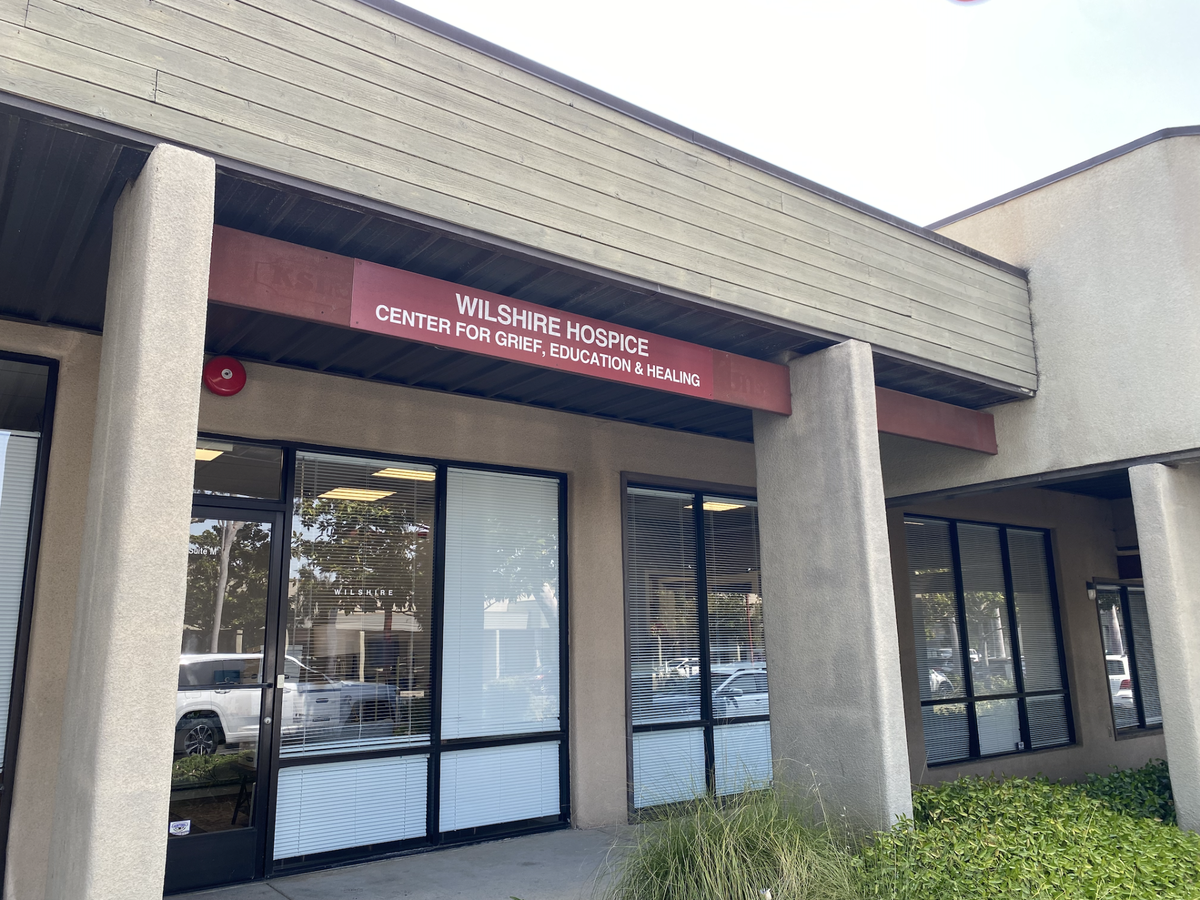
What comes next for the former employee?
Now that Wilshire is under a bankruptcy estate, the status of Garrett’s lawsuits are unclear.
When a company files for bankruptcy, an automatic stay is typically placed on lawsuits seeking financial damages from the bankrupt entity. It immediately stops any further action to be taken against the bankrupt entity, essentially ending the lawsuit.
Vaughn Taus, a former San Luis Obispo bankruptcy lawyer for 40 years, described the automatic stay as “the A-bomb of law.”
“In bankruptcy law, the massive power of all bankruptcies, not just chapter 7 bankruptcies, is the automatic stay,” Taus told The Tribune. “It’s an amazingly powerful tool.”
It is rare for stays to be lifted in bankruptcies, Taus said, and typically only applies to certain family law actions like divorces or custody proceedings, criminal proceedings or evictions.
But in most cases — like Garrett’s — once the entity being sued files for bankruptcy, “there is nothing he or she can do,” Taus said.
Garrett has continued to have case management meetings scheduled for all three lawsuits since Wilshire filed for bankruptcy in August, according to court records.
Additionally, a legal representative for Garrett was present at Wilshire’s first meeting of the creditors, a routine bankruptcy court proceeding, on Aug. 28.
The next meeting of the creditors will be held online via Zoom on Oct. 24 at 11:30 a.m.