Decades-old SLO County hospice nonprofit suddenly collapsed. What happened?
AI-generated summary reviewed by our newsroom.
- Wilshire abruptly closed in June 2025 after 80 years, citing financial collapse.
- Federal Medicare settlement, failed acquisition and revenue loss triggered shutdown.
- Vendors allege deception; Wilshire may now face lawsuits, debts and bankruptcy filings.
A beloved San Luis Obispo-based home health and hospice care nonprofit suddenly closed its doors last month after nearly 80 years of service, leaving many in the community wondering what went wrong.
For decades, Wilshire Health and Community Services offered clinical hospice care, home health and other vital community services to SLO County’s ill and aging.
Just over a month before its permanent closure, Wilshire had a booth set up at the California Association for Health Services at Home Annual Conference and Expo in Rancho Mirage from May 19 to 22. The organization had started making plans for its annual fundraiser held at the Hearst Ranch Dairy Barn in August and was still accepting donations.
Business appeared to be booming.
Now, Wilshire’s offices are emptied out, its website has been taken down, its Hospice Hope Chest thrift store has shut down for good and the once-thriving organization is in the process of filing for bankruptcy.
So, how did things go south so quickly?
What the public wasn’t seeing was years of financial decline leading up to Wilshire’s closure, exacerbated by a federal settlement to pay back Medicare overcharges made by the nonprofit for long-term hospice patients’ overstays.
Amid its financial troubles, Wilshire continued on with business as usual, paying its top executives high salaries and continuing to expense travel, board retreats and the lease for a house in Texas where a new office was being set up.
According to CEO Tricia Smith, this was because she had a plan to save the day.
Wilshire was up for sale, and a buyer was in place. The deal would’ve saved the hospice care company by pawning off its failing branches and using the profits from the sale to pay off its liabilities and debts to the government.
But the night before the purchase was set to be finalized, the buyer pulled out.
Left with no other options at the eleventh hour, Wilshire was forced to close its doors.
“It’s horrible,” Smith told The Tribune through tears. “I worked and tried to do everything I possibly could to avoid this outcome.”
Wilshire’s nonprofits had at least 225 employees by 2024, according to its 990 tax filings from that year.
While many of those employees were subsequently hired by Dignity Health — which even maintained their accrued vacation time, Smith said — nearly 100 others were laid off without severance.
The closure was especially problematic for some vendors, including one who spoke to The Tribune on the condition of anonymity.
For over a year leading up to the company’s closure, the vendor was going without pay or justification as to why.
That vendor is now owed substantial amounts of money in excess of $200,000, they said — and they are not the only ones who say they are owed significant debts.
Having received no communication from Wilshire since its closure, the vendor is now suing the nonprofit for debt by deception, they said.
“Anytime we said anything, it literally went on deaf ears,” the vendor told The Tribune.
In an email to Wilshire that the vendor quoted in part to The Tribune, the vendor said, “You willfully deceived our company, a small business, while allowing us to accumulate debt and liabilities including forcing our organization to take out loans to cover payroll for staff and services that were directly related to Wilshire and Wilshire’s enrichment. Your emails and activities demonstrate willful neglect and a serious level of deliberate deception.”
Wilshire did not respond to the message, the vendor said.
Smith told The Tribune on July 11 that her last communication from the vendor — who she characterized as “very disgruntled” — was on July 2, and she “communicated the status regularly prior to that.”
She added that the vendor’s response was “explosive and included significant accusations that are untrue.”
Now, all communication is being handled by Wilshire’s lawyers, she said.
The vendor’s experience was not unique.
Pacific Medical Equipment in Oxnard, a Wilshire vendor since 2020, is owed more than $47,000, owner Rob Marion told The Tribune.
Prior to Wilshire shutting down, Marion said he had no idea the nonprofit was in trouble, and has not heard from the organization since he was informed of its closure.
“I am appalled at how they closed their business, giving vendors such as myself next-to-no notification,” Marion told The Tribune. “They have not communicated as to how they will pay us.”
To Smith, the closure of the company she led for more than 20 years was a great tragedy and loss, not just for herself, but for the patients, vendors and employees who have been left behind.
“It put everybody into a horrible situation,” Smith said. “Our primary focus was making sure that our patients were safe and our staff were at least paid.”
But to the vendor owed over $200,000, the sudden closure was indicative of something larger and more nefarious at play.
“I absolutely feel that all branches of state and federal government should look into what happened here,” the vendor said. “State and federal authorities should be looking into how this charity bankrupted so quickly and what leadership allowed it to be defunded so abruptly.”
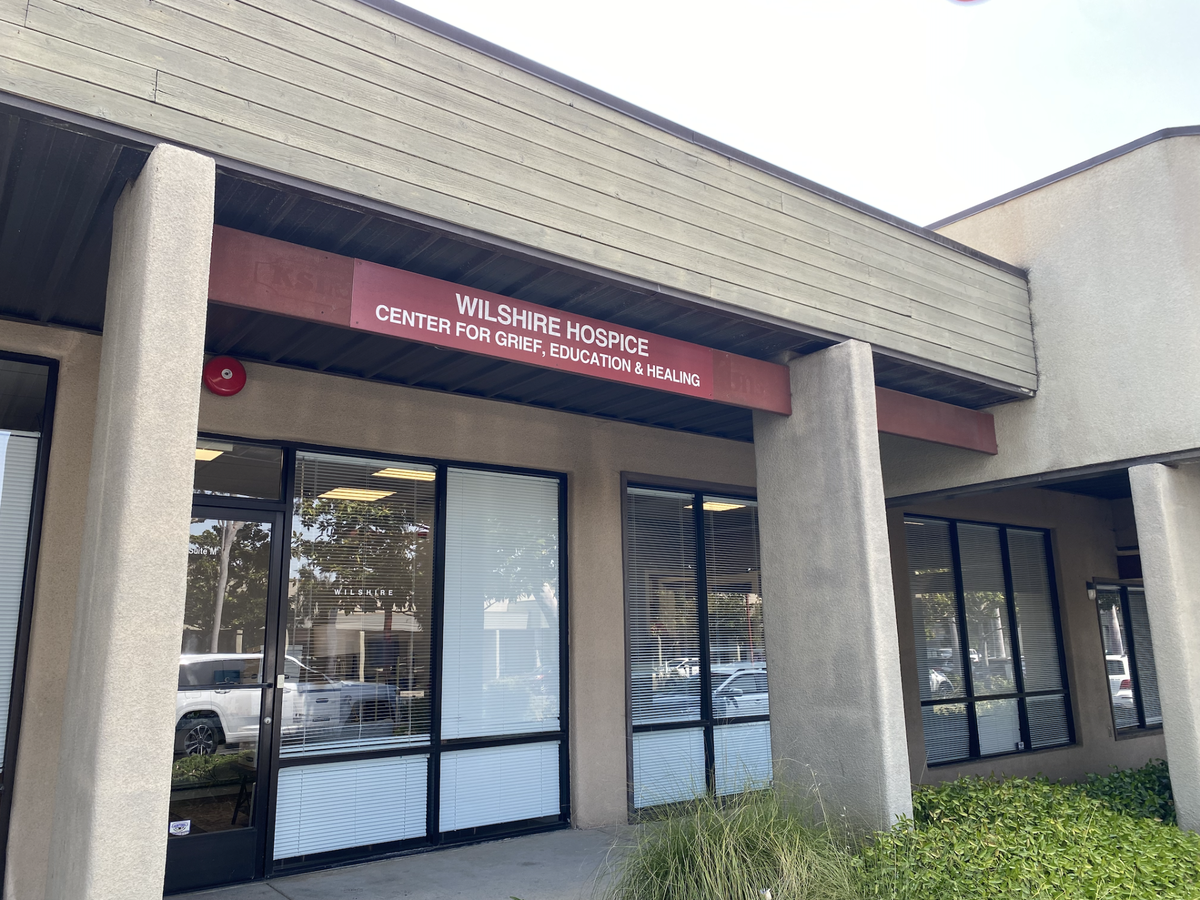
What is Wilshire?
First started as a hospital in Los Angeles nearly 80 years ago, Wilshire’s legacy long outdates its history in SLO County.
Midway Hospital, now Olympia Medical Center, was founded in 1947 by David Alpert — the father of Wilshire’s former longtime CEO and then board member Ira Alpert — and Leon Tiber, the grandfather of Wilshire board member Ted Greenberg.
“This company was founded by families,” Smith said. “It’s part of who we are.”
Over the years, Wilshire took on many different forms, transitioning first into a skilled nursing and assisted living center in the late 1980s and then later adopting its final form as a home health and hospice service.
The company grew, eventually opening offices in Santa Monica, Camarillo, Hanford, Fresno, Santa Maria, San Luis Obispo and most recently Texas.
The structure of the organization also adapted over time, expanding from one organization into five different nonprofit and for-profit entities that all fell under the Wilshire umbrella.
Under that umbrella were three nonprofits — Wilshire Health and Community Services Inc., Hospice Partners Inc. and Wilshire Community Services — and two for-profit corporations — Wilshire Management Services and Wilshire Connected Care.
Part of the motivation to break Wilshire into three different nonprofits was to allow each organization to qualify for small business grants, Smith said.
Wilshire’s for-profit branches came later, one in the mid-1990s and the other in 2018.
Wilshire Management Services was founded in 1996 to handle business services that were not related to the mission of their nonprofit, such as billing and management, Smith said. Wilshire Connected Care was a primary care practice where physicians made at-home visits to senior living facilities.
The idea was that the profits from these businesses would go back into the nonprofits to supplement their revenue stream, Smith said.
To streamline accounting, all billing for the five entities was funneled through two of the nonprofits: Wilshire Health and Community Services and Hospice Partners.
Based on a Tribune analysis of cash transactions between Wilshire’s for- and nonprofit arms from 2009 to 2024, money generally flowed from Wilshire’s for-profits to its main nonprofit arm, Wilshire Health and Community Services, almost every year, with the exception of 2023.
That year, Wilshire Health and Community Services instead ended up paying a net total of over $1 million to its for-profit Wilshire Connected Care.
That same year, roughly the same amount of money moved from Wilshire’s other for-profit, Wilshire Management Services, to Wilshire Health and Community Services.
Smith said it was typical for money to move between the entities.
“Wilshire Health provided staffing and management agreement to operate Wilshire Connected Care,” she said. “All expenses and accounting was done according to those agreements and under the review of outside auditors.”
Tricia Smith started at Wilshire in 2001 doing sales and marketing, a few years after her mother, Laurie Smith, had joined the company.
A Santa Maria local, Tricia Smith is an alum of Righetti High School and later Cal Poly, where she studied veterinary medicine. Coming from a maternal line of women in the medical field, Tricia had been working in and around healthcare and skilled nursing since the time she was 14, she said.
A year into Smith’s marketing career at Wilshire, she asked Alpert — then the CEO — to move her to operations, where she felt she could better serve the company. That was when Alpert offered her the role of being his successor as executive director upon his retirement, she said.
The pair spent the next six years in a succession plan, with Alpert mentoring Smith in preparation for her taking control of the organization. She became a board member in 2006 and CEO in 2008, when Alpert retired but remained on the board.
According to Wilshire’s 2009 tax filings, Alpert retired with a $2 million pension that Smith said has been paid out to him in $9,000 checks every month since 2008.
Alpert did not respond to The Tribune’s attempts to reach him for comment.
Smith has been both board president and CEO of Wilshire since she stepped into the leadership role, but she is not the only executive employee who also sat on the Board of Directors.
David Oliver, Wilshire’s vice president of human resources since at least 2015, also sat on the board.
According to the California Secretary of State business filings, Greenberg — the grandson of Wilshire’s co-founder — was the secretary of Wilshire Management Services while being a sitting nonprofit board member. Both Oliver and Greenberg also served as chief financial officer at different times for a number of years, according to Wilshire’s 990 tax returns available through ProPublica’s Nonprofit Explorer.
Smith said it was typical for there to be inside officers as well as external directors on the board, as Wilshire’s policy was that no more than 49% of the board be inside directors.
But not all of Wilshire’s employees or vendors saw this as fair.
“They might’ve voted that into their bylaws, but any way you look at it it’s a conflict of interest,” Marion, the owner of Pacific Medical Equipment, said.
These executives — a few of whom were board members, too — were also pulling sizable salaries.
In the past five years, the company paid its four highest-paid executives a total of about $6.2 million — roughly a quarter of what it paid to all other employees during the same time span.
As CEO, Smith consistently had the highest salary, which topped out at $485,231 in 2023. Smith said her last pay raise was in 2022 — before Wilshire dove into financial decline. Her salary jumped by $109,500 that year — nearly 30%.
In 2023, Wilshire’s chief medical director and second-highest-paid employee, Kevin Parzych, was paid $345,215. Oliver, an executive employee and board director, was paid $251,743 that year.
A Tribune analysis of Wilshire’s top employees’ salaries compared to its average employee pay showed that all salaries increased slightly from 2022 to 2023, with Smith receiving the most significant raise.
Salaries then dipped again from 2023 to 2024, though less dramatically than the prior year’s increase.

Some of Wilshire’s other work relationships were even closer to home than on the board.
Tricia and her mother did not work directly together within Wilshire, and didn’t want to: When Alpert hired Tricia, her response was “as long as I don’t have to work for my mother,” she said.
When Tricia took over as CEO, Laurie transitioned to a different role that did not report directly to her daughter to avoid a conflict of interest, Tricia said. Laurie worked as an administrator and as the vice president of Home Health and Hospice, according to Wilshire’s 990 tax forms.
But Laurie was not the only member of Tricia’s family who worked for Wilshire. Over the next two decades, Wilshire would also employ the CEO’s brother, father and two daughters in various capacities.
Tricia’s father, Warren Smith, was occasionally contracted as a handyman to do work on Wilshire’s facilities, she said.
Tricia’s brother, Jaysen, was hired as sales director at Wilshire in 2019 and worked there until its closure, according to his LinkedIn profile. In 2023, his salary was reported at $110,200. He did not report directly to Tricia until last year, she said.
“We try to discourage family members from having those direct reports, but by changes in operations, sometimes that was inevitable,” Tricia said.
According to their LinkedIn profiles, both of Tricia’s daughters went to school in Lubbock, Texas, where Wilshire opened up an office to manage their business clients under the name Wilshire Business Partners.
Tricia’s eldest daughter, Lauren Ritchie, came on as a project assistant during the COVID-19 pandemic “and had minimal time with us,” but she was kept on the books in Texas to help open the new office by being on-site to receive packages, Tricia said.
“Other than that, she didn’t really do much, and she was a minimum-wage employee,” Tricia said. “It wasn’t anything substantial.”
Her youngest daughter, Riley Ritchie, did only part-time social media and outreach work from January until May. A LinkedIn post from four months ago announced Riley’s new role as a travel and outreach coordinator for Wilshire Business Partners. The page has since been taken down but is available to view on the Internet Archive Wayback Machine.
“We had sisters working together, other mothers and daughters throughout the company, multiple family members of other folks, not related to just me, but that was kind of our family culture,” Tricia said. “That’s not something that was abnormal.”
Wilshire also attracted some large donors over the years, including the Hearst family, which hosted the organization’s annual fundraising event at the Hearst Ranch Dairy Barn every year since 2003, save for the pandemic, Steve Hearst told The Tribune.
The Hearst family also donated over $275,000 to Wilshire since 2004 and awarded two grants through the Hearst Foundation for $200,000 and $250,000 in 2007 and 2011, respectively, a spokesperson for the family told The Tribune.
Steve Hearst, vice president and general manager of Hearst’s western properties, said he never heard directly from Wilshire about the closure, nor that the August fundraiser was canceled.
Smith, however, said she had canceled the event and contacted any donors to issue refunds.
What went wrong? ‘We had no other alternative,’ CEO says
For years, Wilshire ran a successful, multi-faceted organization made up of many different arms and services.
That all changed after the pandemic.
Smith said 80% of Wilshire’s funding came from Medicare, state Medi-Cal and private insurance. Faced with worsening Medicare reimbursement rates, the revenue of Wilshire’s main nonprofit, Wilshire Health and Community Services, began to decline after 2020, but the losses were still balanced out by Wilshire’s other arms, she said.
As a result of Wilshire’s increasing revenue losses, Smith focused her efforts on growing Wilshire Business Partners in an effort to supplement the nonprofit losses with extra earnings.
Smith opened an office in Texas — where both her daughters lived or had gone to college — in order to serve their clients across the country in different time zones more easily, she said.
Smith and four other executives regularly traveled back and forth to Texas to help set up the new office, she said. To offset hotel costs, she signed a lease on a home in Texas.
The approximately $2,300 monthly rent was expensed to Wilshire’s for-profit division for around two years, Smith said. The lease was terminated prior to Wilshire’s closure, she said.
By the time of closure, Wilshire Business Partners had about eight employees total across its California and Texas offices.
By the beginning of 2023, they were still optimistic and in a “strategic planning growth mode,” Smith said. At around that time, the board even held its 75th annual retreat at the Skyview hotel in Los Alamos, a luxury desert getaway rated in the Michelin Guide.
They wouldn’t be back the next year.
“At the beginning of 2023, I would not have thought we would be where we were the following year,” she said, noting Wilshire did not host a board retreat in 2024.
Later that year in 2023, things took a turn for the worse.
Wilshire experienced a dramatic and unexpected drop in its hospice census from 150 to 75 patients.
“That’s half of the revenue,” Smith said. “I mean, that’s an abrupt cut.”
By summer, cash reserves were running out.
Around the same time, Wilshire received a voluntary inquiry from the U.S. Department of Justice asking for information on long-term hospice patients who had overstayed their allotted time.
Medicare regulations cap end-of-life care at six months, meaning to qualify for hospice under Medicare, patients must be told by a doctor they have six months or less to live.
However, prognoses are only predictions, and sometimes patients can live longer than expected and require ongoing hospice care, Smith said. Hospice patients can sometimes receive repeated six-month prognoses.
At one point, Wilshire had eight patients that had been in hospice stays over a year, Smith said.
Smith said the patients were “definitely needing service, even to the point where there was no other agency out there providing any service to them.”
“To abandon these patients, regardless of worry, of scrutiny from the government, knowing that we’ve done something right? I am 100% behind our team to make sure that we don’t abandon care,” Smith said.
However, the federal government did not agree.
In order to avoid further fees and a formal investigation, Smith said she complied with the request, brought in outside consultants to audit Wilshire and provide the Department of Justice with information about long-term hospice overstays. Wilshire ultimately agreed to settle without admitting any wrongdoing, she said.
“We still stand behind the fact that we are correct and accurate,” Smith said. “We know Wilshire is a quality provider. … There are other agencies that are not necessarily in the same light, and there’s a lot of fraud and abuse in our industry, and that’s why compliance is such an important part of what we do, because those bad apples out there are the ones that make it difficult for all of us trying to do good.”
The Tribune filed a Freedom of Information Act request with the U.S. Department of Justice but has not received a response. The California Attorney General’s Office responded that it had no records related to Wilshire.
Smith did not disclose the settlement amount and said it was not a reason for Wilshire’s closure, but that it “contributed to the decline.”
It was during this time, at the beginning of 2024, that Smith made the decision to sell Wilshire.
She received multiple offers, including from a private equity-backed corporation that she turned down, and said she was in talks with Dignity at one point to acquire Wilshire’s home health and hospice arms — which were the ones losing money — but ultimately the acquisition didn’t work out.
Finally, they found a buyer, and Wilshire entered an exclusive letter of intent with them.
Almost everyone working at Wilshire would’ve been offered a position under the new owners, she said.
Then, the day before they were supposed to sign the final documents, the buyer pulled out.
Smith declined to disclose the name of the buyer to The Tribune, but the vendor who spoke to The Tribune on the condition of anonymity said they heard it was Pennant Group, which recently bought a different Southern California hospice care organization.
Pennant Group did not respond to The Tribune’s request for confirmation.
At that point, it was too late to keep Wilshire going long enough to find another buyer and close on a deal. That was when Wilshire announced its closure.
“We had no other alternative,” Smith said.
Their government settlement, however, was contingent on Wilshire being sold and the new owner adopting liability for those costs.
Since the sale fell through, Wilshire no longer has a settlement agreement in place, Smith said. As Wilshire was forced into closure and now seemingly bankruptcy, the future of its debts are uncertain.
Wilshire’s vendors owed at least $250,000, they say
The failed sale also left Wilshire responsible for the debts it owes to its vendors and no way to pay them.
Marion, the owner of Pacific Medical Equipment, said his company received no pay from Wilshire for six months leading up to the closure. He also did not receive any indication they were in trouble, he said.
For six years, Pacific Medical Equipment supplied Wilshire with the equipment for its hospice patients, such as oxygen, hospital beds and wheelchairs.
On June 24, Marion received an email from Wilshire saying it would be within a matter of days.
The email, obtained by The Tribune, was sent with the simple subject line: “Wilshire Closing.”
“Hopefully you are already aware that Wilshire is closing its doors effective June 30,” the email from Franziska Castello, Wilshire’s director of hospice patient care services, said. “… I understand that (Pacific Medical Equipment) is contracted with Dignity also so we will need to switch the billing accordingly. Not sure how best to do this as this is a new area for me, I will need your guidance, please.”
That was the first Marion had heard of the closure, and the last communication he received from Wilshire, he said.
The day he received the notice of the closure, he immediately called Wilshire but could only reach a receptionist.
He said he even drove to Wilshire’s offices in San Luis Obispo from Oxnard to find someone to speak to.
The doors of the office were locked. At first, no one answered. Marion waited until a FedEx delivery driver appeared and told Marion he was delivering paychecks. Tricia Smith answered the door and took the package.
“She tried to close the door, but I grabbed the handle,” Marion said. “I identified myself and told her that I needed to know how we were going to get paid. She gave me an email address, which we have sent messages to. We have had no response so far.”
From Smith’s recollection, she and a few other employees were in the process of boxing things up and closing down the offices when Marion arrived. At that point, they had been “cautioned about dealing directly with creditors,” she said.
When Smith answered the door, she said he was upset and demanding pay.
“The staff were equally uneasy about him showing at the door in that fashion,” she said. “ I explained that Wilshire was in the process of closing and provided an email address to send invoices.”
However, Wilshire’s computer network system and email access were cut off by its IT provider shortly after that interaction, Smith said.
“We still have access to our regular mail and invoices can still be sent to our published main office address,” Smith said. “All invoices received will be provided given to the trustee once assigned.”
At this point, Marion has contacted a lawyer to figure out how to proceed.
“Considering she is not only the CEO but also one of the Board of Directors, I find her actions here questionable,” Marion said of Smith. “I can’t say that I’ve ever seen a CEO also serve on the board for the company they are working for. It’s a conflict of interest. Certainly, it appears that she maintained paying herself (a) more than decent salary, hired family members, while running the business into the ground. And if it turns that she did this at the cost of not paying vendors such as us, it doesn’t bode well for her.”
The other vendor who spoke with The Tribune had a similar experience.
That vendor said they were not paid for nearly a year from February 2024 to January 2025. Starting in January, they received only partial payments every other week. Then, on June 16, the payments ended and Wilshire went radio silent, the vendor said.
During the time, the vendor’s CEO said there was a “serious lack of communications and transparency” while Wilshire “forced” their company into debt.
While the vendor’s company was going underpaid and took out a loan to cover the gaps, the vendor said they still attended Wilshire’s annual Hearst fundraiser and made a personal donation, all the while being kept in the dark about the financial state of their employer.
“People were providing donations that were potentially going off to cover bad debt,” the vendor said.
The vendor said after-the-fact that they were aware of at least six different potential buyers who had entered discussions to potentially purchase Wilshire, all of whom discovered Wilshire’s finances and Medicare billings were “in shambles.”
“Each one of them, upon doing due diligence, immediately walked away from all discussions,” the vendor said.
The lack of payment for nearly a year caused layoffs at the vendor’s company, they said. Now over $200,000 in the hole, the vendor is concerned about covering those losses without tremendous sacrifices or even going out of business.
“How did a business like ours allow them to go that far into past due? Call it compassion and believing a client we have had for so many years,” the vendor said.
The vendor is now taking legal action against Wilshire to correct the damages.
Over many years working closely with Smith, the vendor said they observed certain patterns in her leadership that ultimately led to them losing faith in the CEO.
“Anyone who was there long enough knew it was her way or the highway, and so they complied,” the vendor said. “She wanted people who were 100% going to be on her side.”
The vendor also claimed Smith used Wilshire’s nonprofit arms as her “own personal bank account,” and that the board would’ve “had to be on board with this.”
“I just don’t know how a board of directors could operate not knowing some of this stuff,” the vendor said.
Smith said that claim was “absolutely false and untrue.”
“Wilshire had systems and processes in place that would prevent anything like that from happening, including regular external audits,” she said.
She also refuted the vendor’s claim about her leadership style.
“Having different perspectives and different ways of doing things is what really makes for the best possible team,” she said. “Staff did disagree with my thoughts, ideas or decisions, and many weren’t afraid to express that, much of whom were still employed the day we closed. Those disagreements sometimes changed the outcome of our decision, sometimes it did not. However, these were always respectful, and I always respected staff opinion and ideas.”
Ultimately, the vendor said they felt “deceived.”
“She gave up, never looked for alternatives, and absolutely lacked the spine to actually run the charity like she should’ve,” the vendor said.
Smith holds that she fought tooth and nail to save Wilshire from closure, including forgoing an “at risk” portion of her $485,000 salary in 2023 and 2024. She still received her base pay of $428,000 both years. Her full salary also included benefits.
“I can emphatically say I didn’t give up,” Smith said. “I worked on alternatives up until the very end.”
As far as Wilshire’s assets, the organization leased all its offices, and aside from furniture, does not own any physical property, Smith said. Most of their assets were cash assets that were absorbed by the losses from its other agencies, she said.
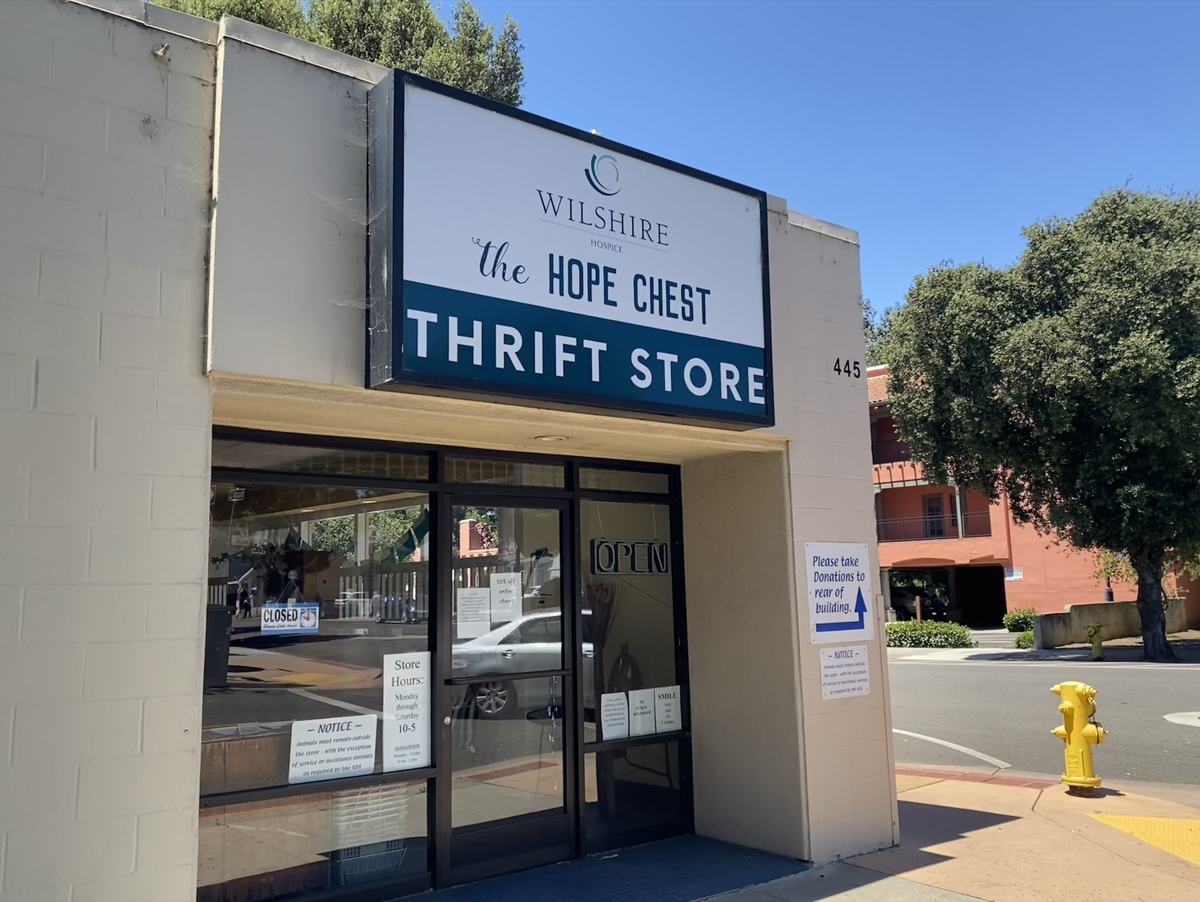
The Wilshire-owned Hope Chest Thrift Store, located at 445 Higuera St. in downtown San Luis Obispo, was one of the company’s only remaining assets, though the storefront was also leased, not owned.
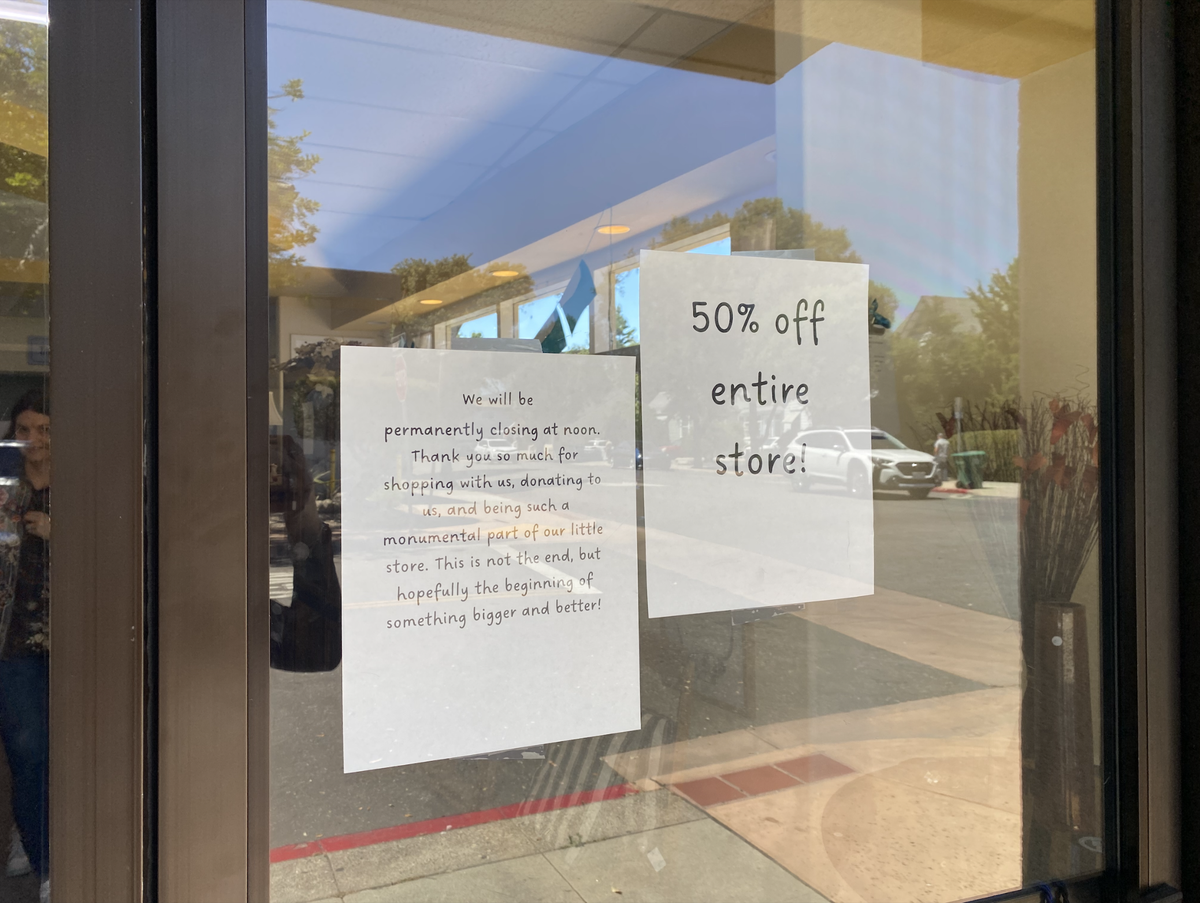
Following the closure, Smith attempted to sell Hope Chest and its donated inventory to other interested local nonprofits for $100,000, but no sale went through. Hope Chest closed its doors on July 11.
A paper sign that hung on the thrift store’s door on July 11 read: “This is not the end, but hopefully the beginning of something bigger and better!”
It is unclear what comes next for Wilshire, its debts with the government and the money owed to vendors.
As of July 11, Smith has engaged in bankruptcy counsel, she said.
“I wish we could have made good on all of that, because our vendors are just important to us too,” Smith said. “No one’s untouched by this. It’s never the outcome I would have ever hoped for or wished. It’s awful for everybody.”
This story was originally published July 27, 2025 at 5:00 AM with the headline "Decades-old SLO County hospice nonprofit suddenly collapsed. What happened?."
CORRECTION: This story has been updated to reflect that the sale of Wilshire’s failing branches would’ve produced enough profit for the company to pay off its debts to vendors and the government.