Probation officer claims mental illness contributed to $160,000 theft from union
AI-generated summary reviewed by our newsroom.
- Defense claims mental health diagnosis drove impulsive embezzlement acts.
- Prosecution cites budget patterns and timing as evidence of calculated thefts.
- Judge to decide on mental health diversion eligibility by July 28, 2025.
The former probation officer who allegedly took at least $160,000 from the probation department’s union over an 18-month period said her “head was so buried in the sand” that she “couldn’t function properly,” according to a recorded phone call played in court Tuesday.
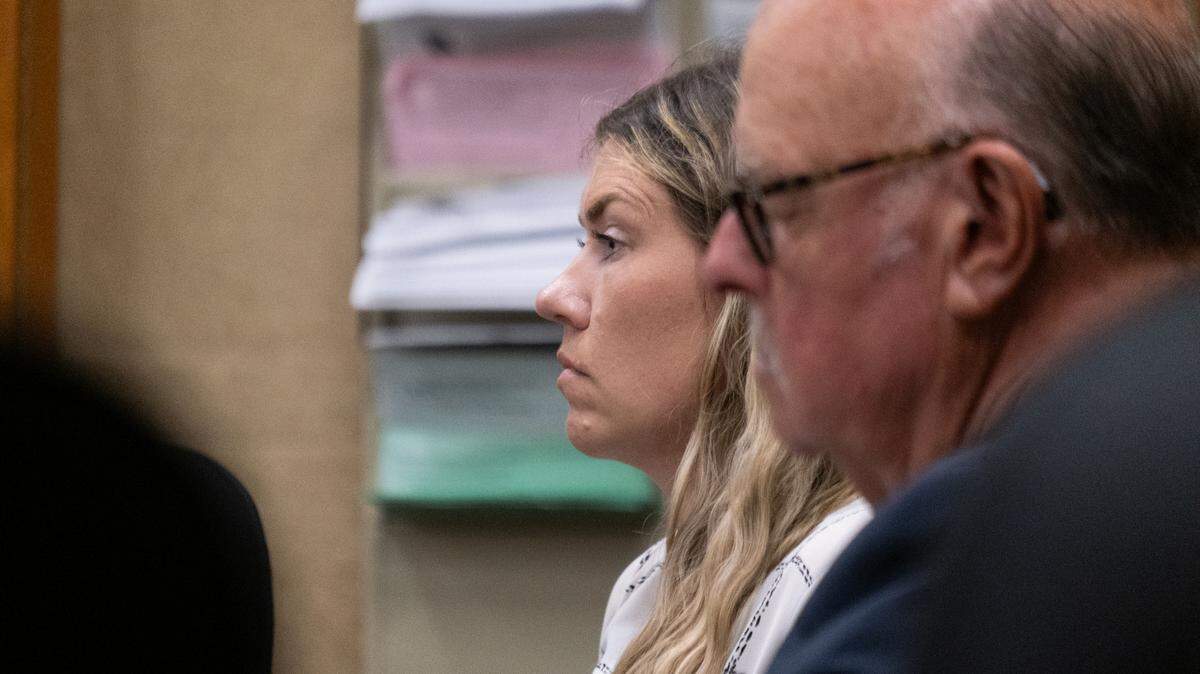
Fallyn Rollins, 31, was charged with nine felony counts of grand theft by embezzlement in February. The former probation officer is accused of stealing funds while she was acting as treasurer for the agency’s union.
The question at the heart of the arguments for both the defense and prosecution was whether Rollins actions were an impulsive symptom of her mental health diagnosis — bipolar II — or whether it was a calculated and thought-out plan.
“This was a ridiculous plan to write checks to yourself in your own name and sign them from the trust account for all this money and expect somehow nobody can figure that out,” her attorney, Robert Sanger, argued. “That is impulsivity, just on the face of it.”
Sanger argued in court Tuesday that Rollinsshould have the opportunity to participate in mental health diversion court, which would allow her to receive mental health treatment and, if completed, have the charges dismissed from her record.
San Luis Obispo County Deputy District Attorney Ben Blumenthal, however, argued that Rollins taking just under $10,000 around the first of each month and her expenses showing she was mostly paying bills show the acts were not impulsive.
“She’s simply not making enough money to raise a family, and that’s sad, that’s unfortunate, but it doesn’t mean that this was manic behavior,” Blumenthal argued.

Mental health diagnosis was ‘substantial’ factor in embezzlement, defense argues
Sanger argued Rollins’ bipolar diagnosis, which can sometimes includeimpulsivity with spending during hypomanic episodes, impeded her decision-making and erratic behavior.
Dr. Carolyn Murphy, a forensic psychiatrist, analyzed and diagnosed Rollins with bipolar II but said she also met the criteria for bipolar I, which includes more severe manic episodes.
Murphy told the court that Rollins’ mental health issues date back to 2011, 12 years before Rollins’ 18-month long embezzlement of the union.
“It’s a cyclical illness, symptoms ebb and flow,” Murphy said. “What was described to me was patterns of severe depression alternating with some episodes of increased risk-taking, distractibility, impulsivity, irritability and spending patterns that had started long before this.”
In taking over $160,000 from the union, Rollins would write out checks to herself, an act which Sanger called “not sophisticated and ridiculous.”
“This was something that was impulsive and was obviously leading to failure,” Sanger said. “There was some point somebody was going to see those checks and see she’s writing checks to herself. That’s impulsive, that’s not even considering the consequences.”
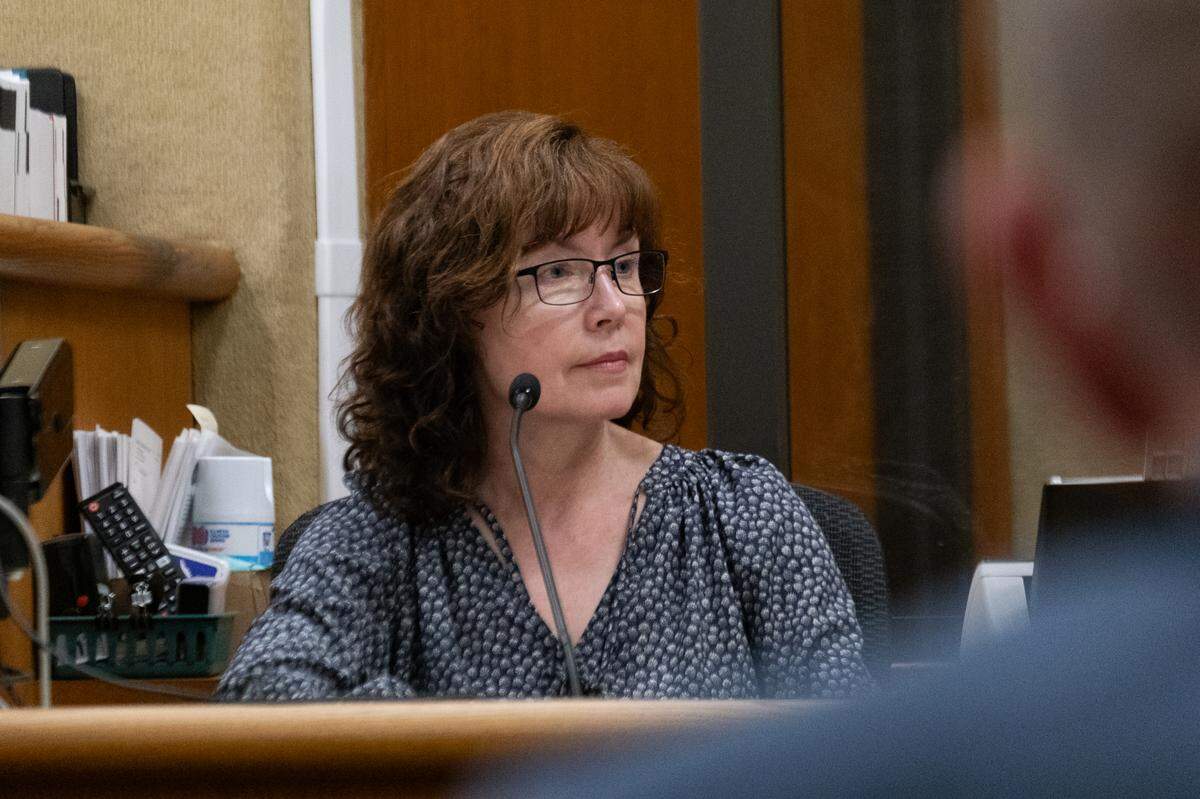
Murphy testified that manic episodes, hypomania and depression were all symptoms that Rollins exhibited, and agreed with Sanger that the diagnosis was a “substantial factor in the condition of the current offense.”
For someone to be accepted into mental health diversion court, their mental illness must be a substantial factor that contributed to the alleged crime committed.
“What I know of the illness is that it can impede impulse control, decision-making and judgment,” she said.
Murphy said she found no evidence of another cause, such as antisocial borderline personality disorder, drug addiction or gambling addiction that could have influenced Rollins’ embezzlement
In the recorded call played in court between Rollins and her significant other, who was also a probation officer, Rollins said her “head was so buried in the sand I couldn’t function properly.”
“There was no more hiding and lying, I couldn’t do it anymore,” Rollins said in the recording. “There was no way out of it, there was no plan, I did it and it got to the point where I couldn’t undo it.”
Sanger told the court that with Rollins’ diagnosis, he does not see any reason why mental health diversion should be denied.
Murphy said her opinion on whether Rollins’ mental health diagnosis was a significant factor in her spending patterns and alleged embezzlement also didn’t change after listening to San Luis Obispo Police Department Det. Jeffrey Koznek’s testimony.
Histestimony showed Rollins took money around the same time each month and several of Rollins purchases during that time were for household items.
“The evidence before this court is overwhelming,” Sanger said. “This kind of behavior — spending, not looking at consequences, being impulsive is absolutely consistent with the offense.”
Prosecution: Ex probation officer’s financial statements show she was ‘calculated’
Blumenthal argued Rollins’ crimes were too “logical and reasonable” for there to be a direct connection between the mental health diagnosis and her actions.
“There may have been times over the last 18 months, two years, when the defendant was impulsive, where she was irritable, where she was erratic,” Blumenthal said. “I don’t know, but what I can tell the court is that the state of the evidence is that when she committed these actual offenses, there was nothing impulsive about them.”
Blumenthal asserted that Rollins was aware of her financial situation, citing her financial statements and a written monthly budget found during a search warrant.
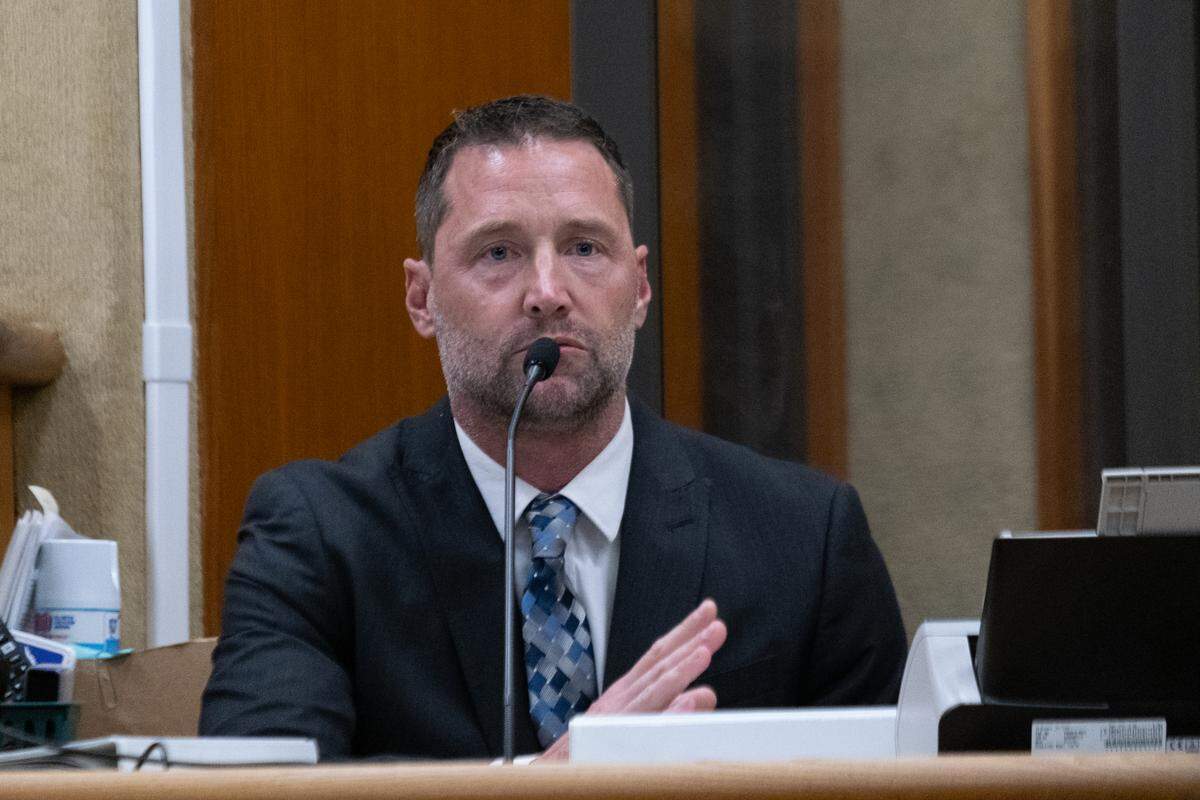
Koznek, who led the investigation into Rollins, testified shewould take just under $10,000 around the first of each month — the same time bills are typically due.
The majority of the transactions in Rollins’ account were regular purchases, such as childcare, mortgage payments, groceries and gas, according to Koznek’s testimony. She also settled more than $17,000 of credit card debt for around $13,000 — something Sanger argued was accrued as a result of impulsive spending.
Rollins spent hundreds — possibly more than $1,000 — on groceries each month and in at least one month spent nearly $1,000 on gas for her vehicle, Blumenthal said.
Rollins’ purchase of a Tesla — one of her largest purchases — was also not impulsive, Blumenthal argued.
Records show she planned the purchase, first reserving the car for a few hundred dollars, then purchasing Tesla insurance a week or two later, then wrote herself an $8,000 check from the probation department union, then paid $8,000 at the Tesla dealership, Blumenthal said.
“This is not something that was on a whim. This was something she had been planning for weeks,” Blumenthal said. “This is the exact opposite of impulsivity.”
Rollins had access to over $200,000 from the union’s account, meaning could have taken more money than she did, but she didn’t, Blumenthal told the court. She only took the money she needed for bills and specific purchases, he said.
While there were some purchases such as trips to Miami and Las Vegas and charges from clothing stores including Nordstrom Rack and Marshalls, Blumenthal argued most of the charges and budget were for basic household necessities.
“This was very consistent. This was very regular. This was very well thought out,” Blumenthal said.
He also argued that Rollins applying for student loan consolidation and eventually the SAVE plan as soon as COVID-19 emergency relief was lifted in October 2023 shows she was thinking thoughtfully about her finances.
The deputy district attorney toldthe court her actions were not impulsive because she committed the offense “multiple times over the course of multiple months in a very calculated way.”
In a recorded phone call between Rollins and her significant other and father of her child, Rollins explained how she never wanted him to be involved and didn’t want to include him on her “path of destruction.”
She told him that “it was never meant to include you,” which Blumenthal argued showed she “considered the consequences to herself and others.”
“The People’s argument is there’s nothing about the actual mechanism of the thefts, in this case, which points towards impulsivity or erratic conduct,” Blumenthal said.
San Luis Obispo Superior Court Judge Rita Federman said she plans to have a decision on whether Rollins qualifies for mental health diversion on July 28.
This story was originally published July 16, 2025 at 2:13 PM.