
San Luis Obispo has a plan to pipe reclaimed water to Edna Valley. What’s the holdup?
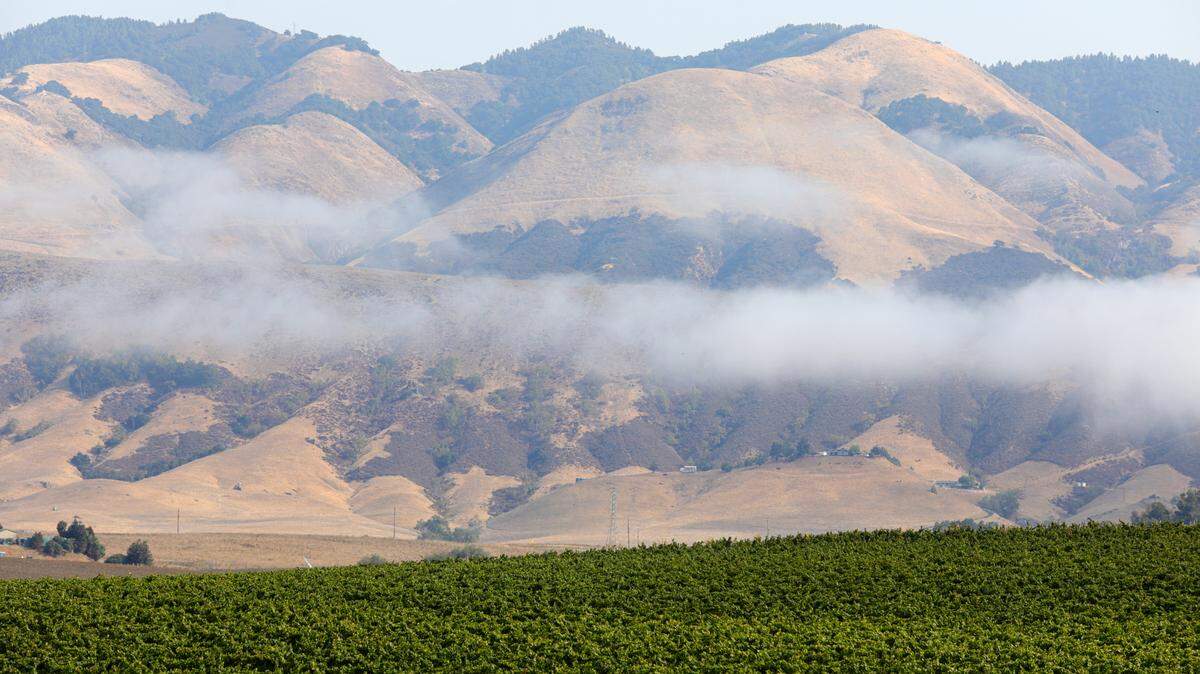
A water project that would generate revenue, make wise use of reclaimed water and preserve large tracts of open space in the city of San Luis Obispo was first made public over 10 years ago.
Since then, the city has made no progress on the proposal to allow Edna Valley landowners to reuse some of the city’s treated wastewater to irrigate vineyards and other agricultural crops.
Surplus water already could be assisting growers in Edna Valley, which is an important part of the city’s greenbelt.
Instead, excess water is being discharged into San Luis Obispo Creek.
Since the proposal was made, the San Luis Obispo Basin and Edna Valley Sub-Basin have been designated high priority by the California Department of Water Resources (DWR) under California’s Sustainable Ground Water Management Act (SGMA).
SGMA requires that a Ground Water Management Plan develop measures to improve the health of basins in jeopardy of being overdrafted.
Edna Valley growers have committed to establishing robust water conservation measures and they support using supplemental water sources, such as recycled water from the city of San Luis Obispo, to offset ground water pumping.
Several years ago, the city of San Luis Obispo applied to the California Water Resources Control Board for a low-interest loan to upgrade its wastewater treatment plant, increase its recycled water capacity and improve treatment quality. The justification cited benefits of increased, high-quality recycled water for the city and local agriculture.
A multi-million-dollar loan and additional grant was approved and the city Water Resource Recovery Facility is due for completion in 2024.
Meanwhile, the plant currently treats and and discharges 4.5 million gallons of water every day. Approximately 1.75 million gallons a day are discharged into San Luis Obispo Creek for in-stream beneficial purposes.
On average, the remaining 2.75 million gallons a day are partially used by the city. During off-summer peak season, the majority is discharged into the creek and the ocean.
This unused water amounts to over 800 acre feet, or 260,690,000 gallons, per year.
Despite focused efforts toward recycling water for beneficial uses, support from regulatory agencies and lengthy discussions between Edna Valley growers and city staff, commitments from the city have languished for several years.
This proposal is of great advantage to the city for the following reasons:
- It would legally preserve open space in Edna Valley by restricting lands using this water to open space and agricultural uses.
- Legal requirements would prohibit any switching, such as using the treated wastewater for irrigation and using other groundwater pumping to support home building in Edna Valley.
- It would cost the city nothing other than staff time. The growers would extend the necessary “purple pipe” system from its current end at Islay Hill Park into Edna Valley for distribution at their expense.
- Growers would pay for the water, and revenue generated could offset the cost of water and wastewater utility staff.
- In the event of a declared drought emergency, the city could halt this flow if needed
- Environmental regulations on diversion of water from San Luis Obispo Creek already protect creek flow all year around. Excess discharge would only be diverted during times of low city irrigation needs, October to April.
As the city’s natural resources manager for 17 years, I oversaw the establishment and growth of the city’s greenbelt program, which protected lands in fee ownership for habitat conservation and recreation and protected important farming and agricultural lands around the city with conservation easements.
The city spent millions of dollars on this effort, and obtained millions more in grants. The city also made agreements to preserve lands as part of permitted development, such as the Irish Hills and the Bowden Ranch near Lizzie Street.
We never seriously pursued projects in Edna Valley because the cost of land conservation was very high, and allowing some development there in exchange for other conservation was not desirable. Thus, the water-for-open-space concept proved very attractive when first broached by the growers.
So here we are, over 10 years later, with the main details of an agreement worked out long ago, and the proposal just sitting there, for unknown reasons.
The citizens of San Luis Obispo have consistently shown their commitment to open space conservation, including digging into their own pockets to provide tax monies for those efforts. The state has financially contributed toward recycled water and requires addressing long-term sustainability solutions for the basin.
It is past time for the city to show its commitment to innovative forms of open space conservation. The proposal for Edna Valley is a perfect case in point. What is the city waiting for?
Neil Havlik served as San Luis Obispo’s natural resources manager from 1996 to 2012.