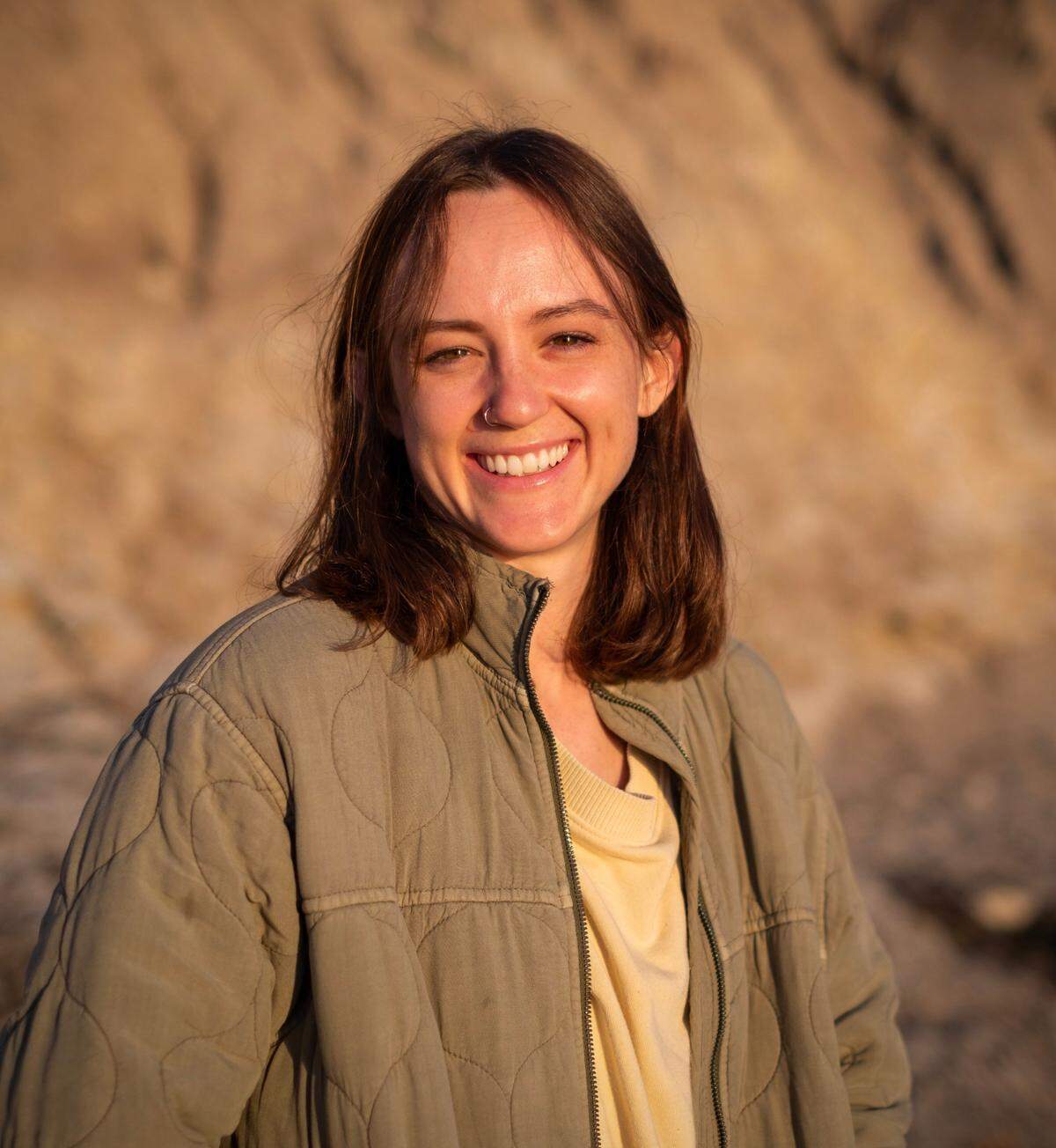
‘We can’t do life without water.’ SLO County photographer highlights crisis in new film
If you ask San Luis Obispo County photographer Brittany App, there’s an inescapable issue facing humanity today: the water crisis.
A report App worked on with Dig Deep and the U.S. Water Alliance found that least 2 million people living in the United States without access to clean running water. If you are from a Black or Latinx community, you are twice as likely as those living in white communities to lack indoor plumbing, App said.
Native American households are 19 times more likely than white households to not have access to running water, App added.
“So, I feel like it’s all of our responsibility to solve this problem, right?” App asked The Tribune. “Water is — or if it’s not, should be — considered a human right. We can’t do life without water.”
App, a professional photographer who lives in a small community near Carrizo Plain National Monument in southeastern San Luis Obispo County, decided she’d do what she could to bring attention to the water crisis.
Her first documentary film, “Where There Once Was Water,” will be screened for U.S. audiences for the first time on Sunday as part of the San Luis Obispo International Film Festival. The film premiered at the Transitions Film Festival in Melbourne, Australia, in February. on Feb. 26.
The community-funded film highlights the often strained relationship between humans and water, and presents viable solutions to conserving and protecting that resource.
App directed, wrote and produced “Where There Once Was Water.” The film was edited by Garrett “Gar” Russell with original music by Brandon Maahs.
“I am hopeful that (the film) speaks to people,” App said. “This is my baby, and it does feel like I am sending her out into the world. I hope she does well for herself.”
Drought inspired SLO County photographer’s new documentary
The original impetus for “Where There Once Was Water” came when App spent time sailing around the world with study abroad program Semester at Sea in 2008, she said.
App saw little girls in India and African countries haul water to their homes because they didn’t have any plumbing. She learned just how detrimental lack of water access was on far-away communities.
When App returned home to California, she discovered that the same issues were happening in the richest nation on the planet: the United States.
Then, in 2014, a massive drought struck California — drying up streams, draining lakes and sparking massive wildfires.
“I remember looking across the street and seeing my neighbor power washing his boat in his driveway,” she said. “I thought, ‘Well, if I can photograph the disappearing bodies of water in our state as a photo essay, maybe that will help people realize how bad it really is.’”
About two years into that photography project, App said, she realized that it was impossible to capture disappearing groundwater through still photos.
So, App picked up her camera, switched it to video mode and embarked on what would be a five-year filmmaking journey — supported completely by community funding.
Her first Kickstarter campaign raised more than $32,000 for the “Where There Once Was Water” project.
“When I ran out of Kickstarter money, I would do another fundraiser; when I ran out of that, I would do another fundraiser,” App said. “I would not have been able to do this at all without all of the support from the community. So that’s been pretty radical and amazing.”
App, a Cuesta College graduate, said she “learned everything about filmmaking while I was doing it.”
She made plenty of mistakes along the way, she said, from not properly adjusting the white balance of her camera during interviews — causing subjects to turn blue, then yellow or green as the lighting changed — to figuring out the best way to ask questions to water experts.
How filmmaker captured water crisis on film
Figuring out just what she would include in “Where There Once Was Water” was another massive challenge, App said.
“I had a grandiose and vague and somewhat naive, simplified idea of what I thought this would be,” she said. “And through educating myself around the issues of water and the vastness of the topic, I was able to hone the story in as I went on what piece of this giant water story it was that I actually wanted to try and tell.”
Everyone has a different story about what their access to water looks like, App said.
“The way for each of us to get involved is going to look different,” she said. “What we can do to form a relationship with water, and then begin to heal our own relationship and our broader relationship as a species with water if we want to stay on this planet, that’s going to look different for everybody.”
App said she listened to the original caretakers of the land — Native Americans — to learn more about their knowledge of humankind’s connection with water and their battles to protect the precious resource. She also studied the changing landscape of agriculture and learned how some farmers are turning toward regenerative agriculture to restore the land and its water supply, rather than deplete or pollute it.
She spoke with water experts ranging from lawyers to policy gurus, water treatment plant operators to tree experts and beaver advocates. All had a similar desire to conserve water and fight for solutions to the water crisis.
Documentary intended as a call to action
“Where There Once Was Water” highlights solutions that are practicable for all, which App said was the most important part of the project.
“I want to be helpful to this planet that I live on, as opposed to harmful,” she said. “As a storyteller, if I can share solutions, then that feels like the right spot for me to be.”
During her work on the film, App said she came face-to-face with the realization of just how little time humanity has to live on a habitable planet as groundwater continues to be depleted.
“Surprisingly, most people were still hopeful — or they were at least on good days,” she said. “And that’s important, right? Because if we’re beyond all hope, then why bother?
“We all have days where we feel like that like, ‘Are we going to figure this out? Are we going to actually do something? Or are we going to just keep spiraling downward?’ ”
App said she hopes her film will be a call to action.
“We are a species that has normalized all of these ways of being and doing that are unsustainable,” she said. “And until something shakes us to our core, we won’t change. And that’s where we are right now.”
“Where There Once Was Water” will be screened virtually as the closing film at the San Luis Obispo film festival starting at 9 a.m. Sunday. It will be available online to ticketholders through March 17.
A live panel discussion about “Where There Once Was Water” will be held after the film festival’s award presentations, which start at 5 p.m. Sunday.
App will speak alongside Kandi (Mossett) White, Native Energy and Climate campaign coordinator with the Indigenous Environmental Network; Kate Lundquist, co-director of the Water Institute and the “Bring Back the Beaver” campaign with Occidental Arts & Ecology Center, and Jason Haas, a partner and the general manager of Tablas Creek Vineyard in Paso Robles.
Tickets cost $12 for students or Film Society members and $15 for all others, and can be purchased at slofilmfest.org.
For more information about “Where There Once Was Water,” go to wherethereoncewaswater.com