
Love the sound or hate it, Central Coast foghorns kept sailors safe in dangerous waters
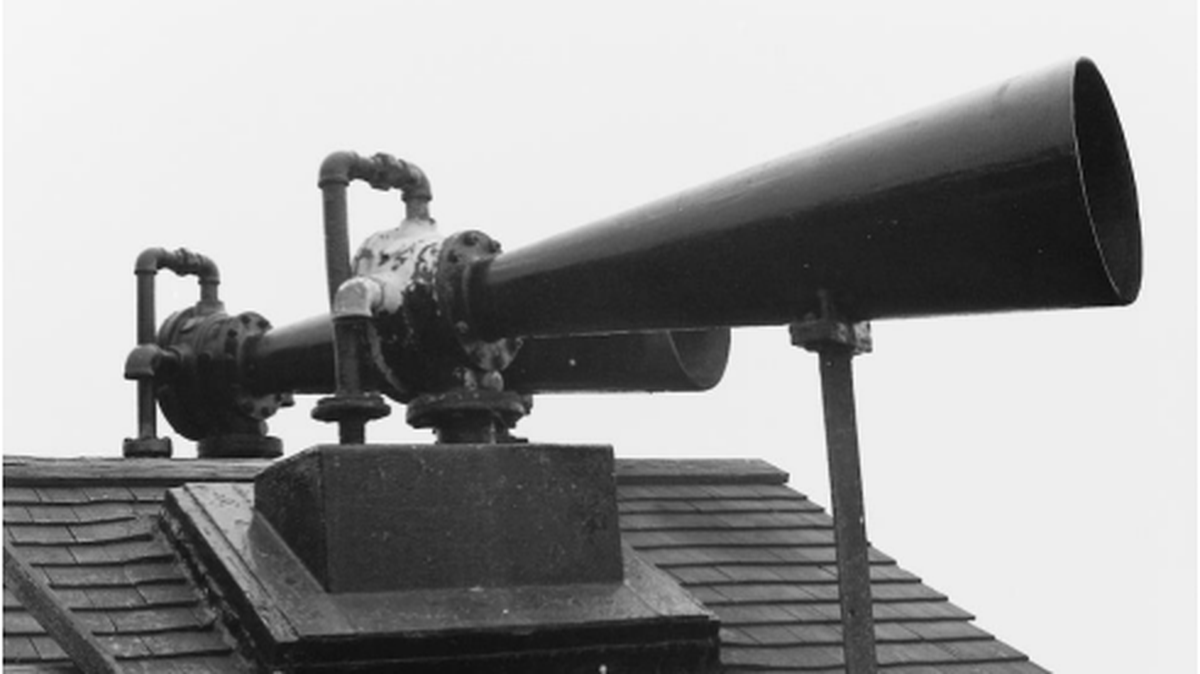
The Point San Luis Lighthouse was founded in 1890 and has served as a beacon for 130 years.
Not only did it shine a light at night, but it also sounded its foghorn in low visibility conditions.
You see, navigating the waters along the Central Coast in dense fog is a challenge, despite the adoption of modern navigation equipment.
In the early 1900s, it was a nightmare; over the years, the wall of gray off our rugged coastline has caused numerous ships to run aground.
Carson Porter — who’s been commercially diving the Central Coast waters longer than I’ve been alive — shared numerous stories of tragic shipwrecks, such as the time seven U.S. Navy destroyers smashed on the rocks off an isolated headland locally known as Honda Point, north of Point Arguello, on Sept. 9, 1923.
Twenty-three sailors lost their lives that night in the fog as it blanketed the coastline west of Lompoc. I often think about them.
Over the years, this rocky shore has claimed many ships. And no wonder, without any visual references on the sea or in the air while in dense fog, you can develop vertigo related to the overwhelming feeling that you’ve lost all sense of direction.
In moments like this, I was always reassured to hear the foghorn of the navigation buoy near the Point San Luis Lighthouse when sailing these waters, even when I couldn’t see its beacon.
In 2014, the foghorn at the light station was removed by the U.S. Coast Guard due to continuous malfunctioning, turning on during clear days, and not sounding in foggy conditions.
Interviews from Keepers with the U.S. Lighthouse Service and later service members with the U.S. Coast Guard who keep the Point San Luis Light Station’s Fresnel lens shining and the foghorn sounding over the decades recall that despite the tooth-rattling volume of the horn, many of them got used to the noise on foggy days and nights. They learned to speak to each other in between horn blasts.
However, it was a challenge.
Petty Officer 3rd Class George Homenko lived at Point San Luis with his new bride, Joyce, from 1969 until 1971.
“One of the major things about living at the light was the horn,” the engineman said. “It was everywhere. There was no escape.”
Morro Bay foghorn out of commission after wave event
North of the Point San Luis Lighthouse, another foghorn located at the end of the north jetty in Morro Bay has been quiet since a significant wave event in December.
I’ve received numerous emails from concerned readers, such as this one from Kathleen Howell of Los Osos:
“I am wondering if you know what’s happened to the foghorn by Morro Bay,” she wrote. “I live in Los Osos, and I haven’t heard it in weeks. I miss hearing its comforting sound. Often, it would lull me back to sleep on some of those early morning hours.”
At first, I thought the lack of fog for much of this year was the reason for not hearing the horn, but I was mistaken.
According to Morro Bay Harbor Director Eric Endersby, the foghorn is, in fact, non-operable. Typically, big wave events will break the foghorn, he said.
He went on to tell me that the U.S. Coast Guard’s Federal Aids to Navigation (ATON) group from Sector Los Angeles-Long Beach is scheduled to repair the foghorn Feb. 24, if oceanographic conditions allow.
Along with foghorns, ATON maintains lighted and unlighted buoys, lighted and unlighted fixed structures such as day beacons and lights, ranges, and lighthouses.
“When the foghorn is repaired after an extended outage, it’s an even 50/50 split between people who are happy to hear it back in operation and those who can’t stand the noise,” Endersby said.
PG&E searching for Diablo Canyon decommissioning panel members
Have ideas for the future of Diablo Canyon? Join the engagement panel.
New members are being sought to fill expiring terms on the Decommissioning Engagement Panel. Applications are being accepted through March 8. Please visit diablocanyonpanel.org
This story was originally published February 22, 2022 at 5:00 AM with the headline "Love the sound or hate it, Central Coast foghorns kept sailors safe in dangerous waters."