It’s been 27 days since it rained in SLO County. Is that normal? Are we in a drought?
San Luis Obispo County is experiencing one of its driest Januarys on record as La Niña brings extreme weather shifts to California.
As of Wednesday, the county had received zero rain for 27 days straight, according to Ryan Kittell, a meteorologist for the National Weather Service.
The last day the county received any significant rainfall was Dec. 27, when 1.6 inches of rain fell at San Luis Obispo County Regional Airport.
Is it normal for SLO County to experience such a prolonged dry spell? Could rain return to the region by the end of the month?
Here’s what weather experts say:
How normal is a dry January in SLO County?
Extended periods with little rainfall during the winter months are not unheard of on the Central Coast, the National Weather Service said.
So far, the San Luis Obispo region has received 3.94 inches of rain this rain season, which lasts from October through September, Kittell said.
Local meteorologist John Lindsey said the lack of rain means the county’s La Niña winter is well underway, bringing with it warmer winds and drier conditions.
La Niña weather conditions occur when cooler than normal ocean surface temperatures push the jet stream northward, Lindsey said.
During a La Niña-influenced weather pattern, the Pacific Northwest and Northern California experience cooler, wetter conditions while the Central Coast and Southern California tend to be drier, warmer and sunnier than usual.
Is this the driest rain year on record?
National Weather Service records show there have been 11 years when the SLO area received less than four inches of rainfall by this point in the rain year, Kittell said.
The agency’s data goes back to 1893, but there are several gaps in the first three decades of weather records, he said.
January 2024 could rank among the top 15 driest Januarys on record, Kittell said.
According to Cal Poly precipitation data, the last time San Luis Obispo experienced a completely dry January was in 2022.
That year, the area received no rain for all of January and February, the data showed.
Will it rain in January in SLO?
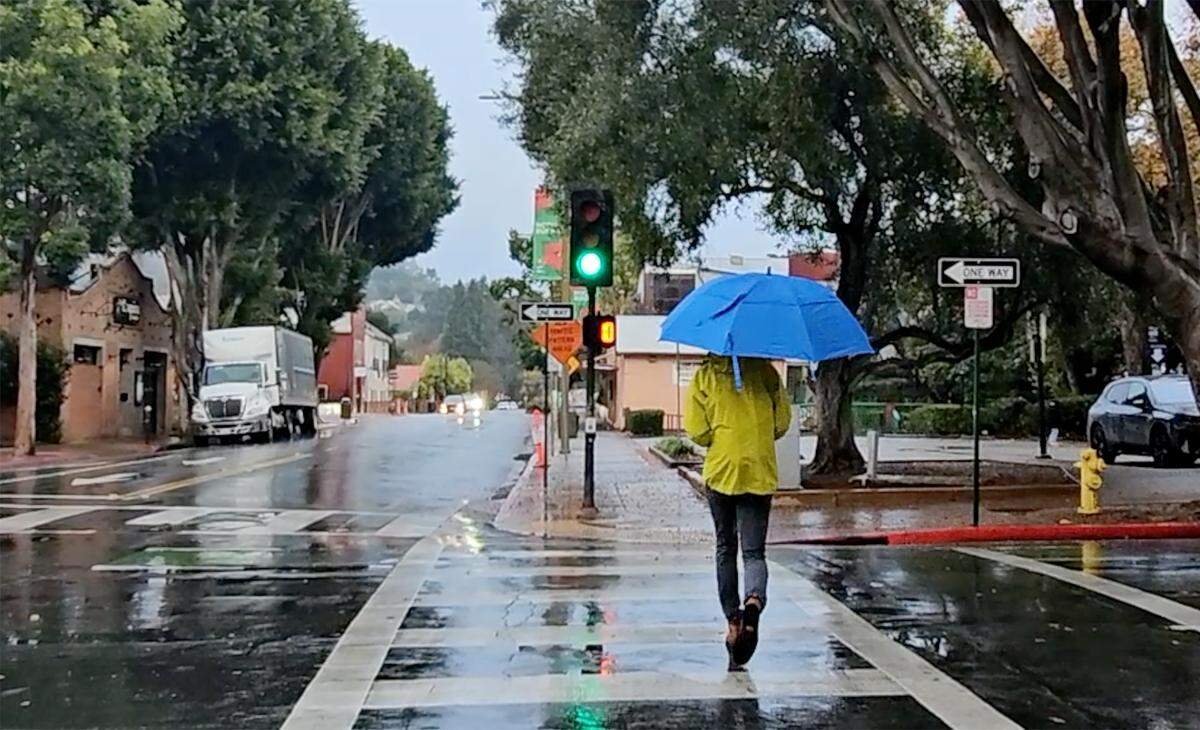
According to the National Weather Service’s seven-day forecast, there is a chance of rain in San Luis Obispo this weekend.
On Saturday night, the sky will be mostly cloudy with a 50% chance of rain, the forecast said.
On Sunday, there’s a 30% chance of rain in the morning and “a slight chance of rain in the afternoon,” the Weather Service said.
If rain does fall in SLO County this weekend, it’s unlikely to be a downpour.
“It’s not going be a lot,” Kittell said. “Most likely it’s going to be under a half of an inch.”
Is SLO County experiencing a drought?
Dry winter weather has not yet resulted in drought conditions in San Luis Obispo County, according to the U.S. Drought Monitor.
As of Wednesday, 53% of SLO County was abnormally dry, the U.S. Drought Monitor said.
The drought monitor defines a region under abnormally dry conditions as one that’s “going into or coming out of drought,” leading to parched soil, stunted crop germination and the start of the active fire season.
Even though a majority of the county was classified as abnormally dry as of Wednesday, it’s “not necessarily trending towards drought conditions,” Kittell said.
How dangerous are dry conditions?
Intensely dry conditions in January mean greater wildfire risks across SLO County, meteorologists said.
“The risk is abnormally high for this time of the year for large fires if it gets started in the wrong spot,” Kittell said.
Lindsey said the lack of rain, paired with higher- than-normal temperatures, have made vegetation drier and more susceptible to burning.
Although wildfire season in California typically starts in May and ends in November, according to the Western Fire Chiefs Association, it’s becoming more likely to see wildland fires at other times of year as climate change and drought conditions shift environmental norms.
“There used to be a fire season, and now that’s no longer the case,” Lindsey said. “It’s just year-round.”
This story was originally published January 23, 2025 at 9:00 AM.