SLO County will hold a special election over CA redistricting in 75 days. How?
AI-generated summary reviewed by our newsroom.
- SLO County must conduct a statewide special election with only 75 days’ notice.
- The Nov. 4 vote will decide on Democrat-leaning redistricting for U.S. House seats.
- Election costs remain unfunded upfront, potentially leaving counties to cover expenses initially.
San Luis Obispo County’s elections office wasn’t expecting to host another election until 2026. Now, with 75 days notice, the county has to prepare for a vote this November, too.
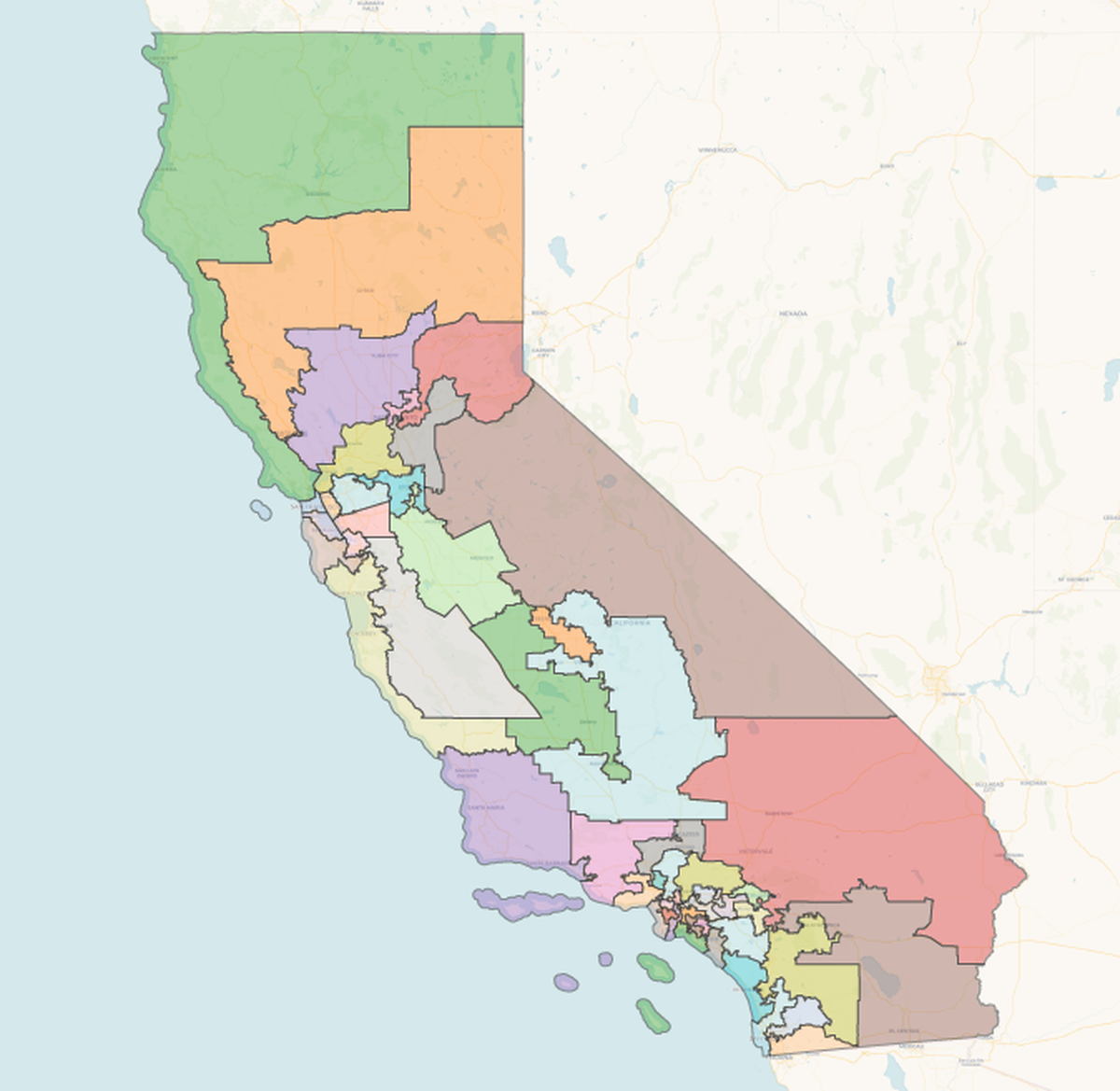
In response to Texas lawmakers pushing forward a new electoral map that favors Republican candidates, California Gov. Gavin Newsom signed a bill Thursday afternoon calling for a statewide special election on Nov. 4 for Californians to vote on new Democrat-leaning congressional districts.
“It’s on, Texas,” Newsom posted on X on Wednesday night.
The reactionary redistricting effort aims to flip five of California’s GOP-held congressional seats blue in the 2026 midterms — to match the number of seats in Texas that will presumably turn red. The new map only pertain to the U.S. House of Representatives districts.
Newsom previously stipulated that California would only move forward with its gerrymandered map if Texas or another state did, but unlike Texas, the final decision in California is left up to the voters — and the burden to facilitate that vote is up to county election workers during an off-year.
Typically, the county would have a year and a half to prepare for a regular election, Cano said. Now, her office has three months.
“Having 75 days to conduct a countywide, statewide election is incredibly difficult,” SLO County Clerk-Recorder Elaina Cano told The Tribune. “It’s not impossible, but it is very challenging for us to do.”
Between now and Nov. 4, the county must print and mail out ballots, secure polling locations, recruit election workers and complete security tests on all of its election equipment.
But Cano said her office is already getting ahead of the grueling work to come.
“Regardless if there is enough time or not, it will get done,” she said. “Rest assured to our voters in San Luis Obispo County that we will still conduct this election with the accuracy and transparency and the trust that they’re used to.”
What do we know about the special election in SLO County?
The SLO County elections staff has their work cut out for them in the coming months.
With its contracts still in place from the last election, the county will use the same ballot printing vendor — ProVoteSolutions — and the elections office has already sent out a call to former poll workers for volunteers. Additionally, with only one question on the ballot, the printing and proofing process will be much quicker than a regular election year.
But the county can’t start printing ballots without a state-approved ballot question, and the number of poll workers needed cannot be fully known without securing polling locations first.
“The biggest hurdle is going to be obtaining polling place locations for three days ... in such a short notice,” Cano said, noting that voting would only take place for one day on Nov. 4, not all three days the locations would be needed for operations.
Due to the quick turnaround, Cano said there will be fewer voting precincts than in a regular election. In 2024, SLO County had 67 polling locations.
“I am going to highly, highly, highly encourage our voters to be sure that they know where they are assigned if they want to return their ballots at a polling location on election day, because we’re not going to have as many as we’ve had in the past,” Cano said.
Those who go to a polling location different from their assigned precinct on election day will still be able to vote, but they will have to cast a provisional ballot, which takes longer and more work for the elections office to confirm on the back end, slowing the reporting of elections results. People may also cast their vote by mail up or drop box until Nov. 4.
With such a quick turnaround, Cano encouraged all voters to check their voter registration status and make sure their information is up to date ahead of Nov. 4.
“The more accurate their voter registration information is, the quicker that these folks can get their ballots (and) make sure that they have a plan to vote,” she said.
Ballots must be sent out in the mail to every registered voter in SLO County 29 days ahead of the election, and military and overseas ballots need to be sent within 45 days of the election.
Voters with questions or concerns can contact the SLO County Clerk-Recorder’s Office or the Secretary of State’s Office for additional information.
Anyone interested in being a poll worker can visit slovote.com for more information and a link to apply.
“As with every election, our role is not to advocate for against any of the measures, but to ensure that the process is fair, accessible and secure,” Cano said.
How much will the election cost, and who is paying the bill?
Newsom has promised the state will cover the cost of the election but has yet to determine how much that price tag will be or how it will be funded. Assembly Republicans have estimated the special election could cost $235.5 million.
Cano estimated the election will cost SLO County $1.9 million, which she has provided to the Secretary of State’s office. This compares to California’s last special election in 2021, which cost around $1.4 million, she said.
“The governor has said that they are paying for it, which is fantastic,” Cano said.
However, it is still unclear if the election will be funded ahead of time or if costs will be reimbursed after the fact.
“This is an expense that is completely unexpected, and so it’s always better if we could get payment in advance, so that we don’t impact any of the funding that’s going out to the county’s other programs,” Cano said.
The California State Association of Counties wrote a letter to Newsom and the Legislature requesting election funding in advance.
“While cities, special districts, and schools cover their share of costs for regularly scheduled elections, the additional expenses tied to a statewide special election would fall almost entirely on counties — imposing a significant and unfunded financial burden on already strained local budgets,” the letter said.
Voters are getting riled up over redistricting vote
Newsom’s new strategy to combat the Trump administration — which was directly responsible for Texas’ Republican-favored redistricting — is to “meet fire with fire.” This is the logic underpinning his Democratic-leaning redistricting push in California.
“California will not sit idle as Trump and his Republican lapdogs shred our country’s democracy before our very eyes,” Newsom said in a news release announcing the bill package. “In just six months, Trump’s unchecked power has cost Americans billions and taken an ax to the greatest democracy we’ve ever known. This moment calls for urgency and action — that is what we are putting before voters this November, a chance to fight back against his anti-American ways.”
But some SLO County residents have already taken to campaigning against the redistricting effort.
“This is a gross bringing of an election,” SLO County resident Gary Kirkland said during public comment at the Board of Supervisors meeting on Tuesday, noting that both California and SLO County voted to have independent redistricting commissions.
The three-bill package establishes that the new congressional districts would only take effect until the 2030 election, after which California would return to its regular once-a-decade redistricting led by its Independent Citizens Redistricting Commission at the new census.
Even so, Protect Voters First — a group that’s urging a no vote on the measure — already sent out flyers encouraging people to oppose against the redistricting effort in November.
“We cannot save democracy by burning it down in California,” the flyer said. “Vote NO on partisan gerrymandering.”
.jpg "IMG_1825 (1).jpg")
This story was originally published August 21, 2025 at 5:18 PM.