Would Newsom’s CA redistricting effort affect SLO County? See the leaked maps
AI-generated summary reviewed by our newsroom.
- California Democrats propose redrawing nine districts to flip five GOP seats.
- SLO County districts remain unchanged under leaked redistricting maps.
- Special election in November will decide fate of mid-decade district changes.
California Gov. Gavin Newsom launched an effort Friday to thwart Republican gerrymandering in Texas by redrawing California’s own voting districts to favor Democratic congressional candidates in certain districts for the next three election cycles — but San Luis Obispo County’s district lines would not change.
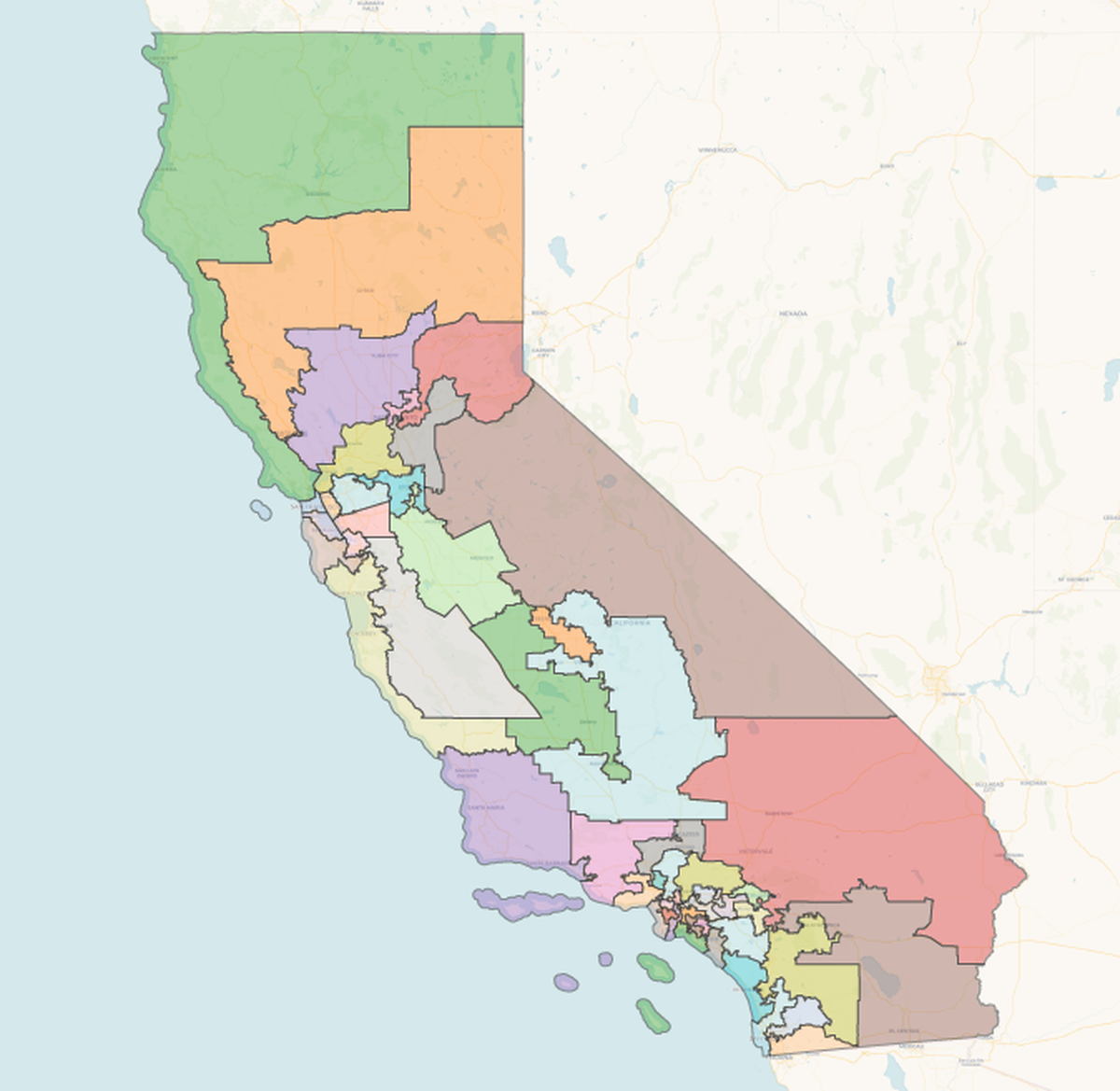
The proposed maps were designed to flip five currently Republican seats in the northeastern corner of California, along the eastern state border from Plumas National Forest past Death Valley, in San Diego and in and around Los Angeles.
According to leaked drafts of the new maps, neither of SLO County’s congressional districts, safely held by Democrats, would be substantially affected.
Typically, redistricting in California happens at the turn of the decade in concert with the census and is led by an independent citizens commission made up of Republicans, Democrats and non-party-affiliated members. The next regular redistricting is expected in 2030.
But Newsom’s mid-decade push to redraw congressional district lines, led by lawmakers, is not typical. It is a direct challenge to Texas’ attempt, instigated by the Trump administration, to add as many as five GOP seats to the U.S. House of Representatives — in which Republicans have a razor-thin advantage — ahead of the midterm elections to preserve the Republican advantage for the second half of Trump’s term.
California’s gerrymandered maps would aim to flip the same number of seats blue, zeroing out the net balance of seat changes in 2026.
“Texas is taking away the voice of the people,” Assemblymember Dawn Addis, who represents SLO County in the Legislature, told The Tribune. “California is giving it back.”
To Addis, the redistricting effort is about enfranchising California’s minority voting communities while Texas disenfranchises its own with what she called an “outright attack on underrepresented communities.”
Unlike Texas, California’s redistricting process would leave the decision up to the voters.
Upon returning from summer break next week, the Legislature will vote on three bills in a legislative package dubbed the Election Rigging Response Act. to introduce the new maps, set a special election for Nov. 4 to vote on their adoption, and proposed a budget package to fund the special election.
The package also includes a trigger clause that would cause the new district lines to go into effect only if Texas or other states follow through on redrawing their districts in favor of Republican voters.
If passed, the maps would take effect for the next three elections in 2026, 2028 and 2030. California would return to its regular independent redistricting procedure for 2032.
“We’re in a position where we have to fight,” Addis said.
SLO County not impacted by redistricting
SLO County is split between two congressional districts — Districts 24 and 19, represented by Democrats Salud Carbajal and Jimmy Panetta, respectively.
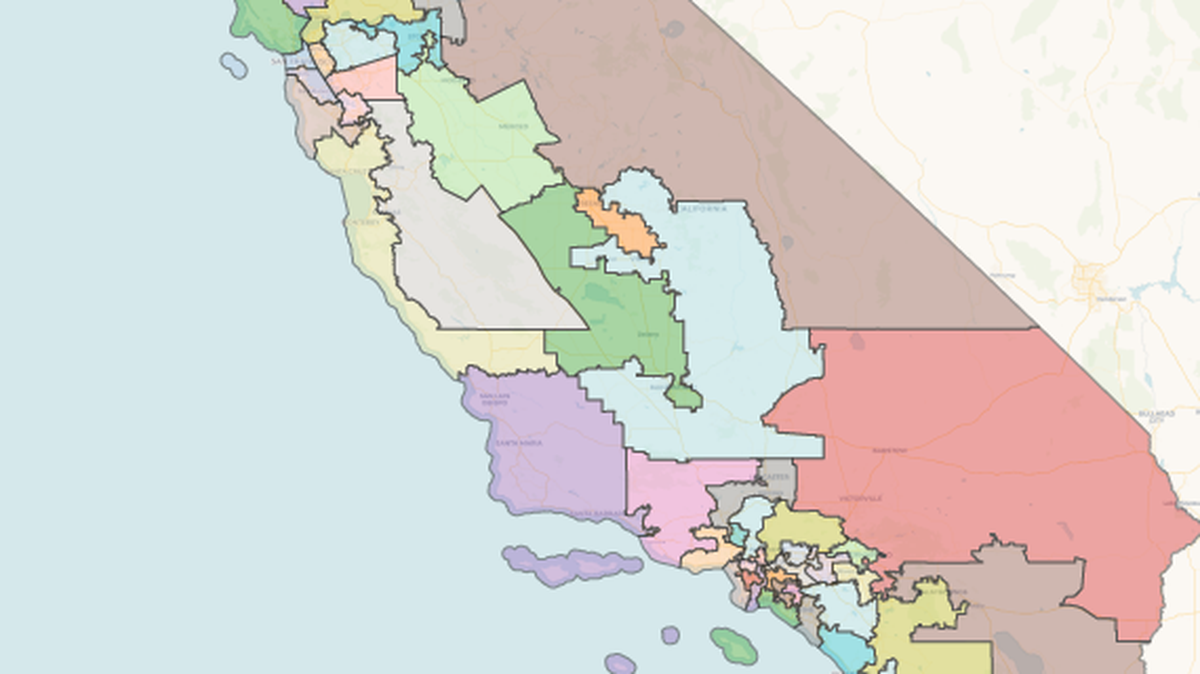
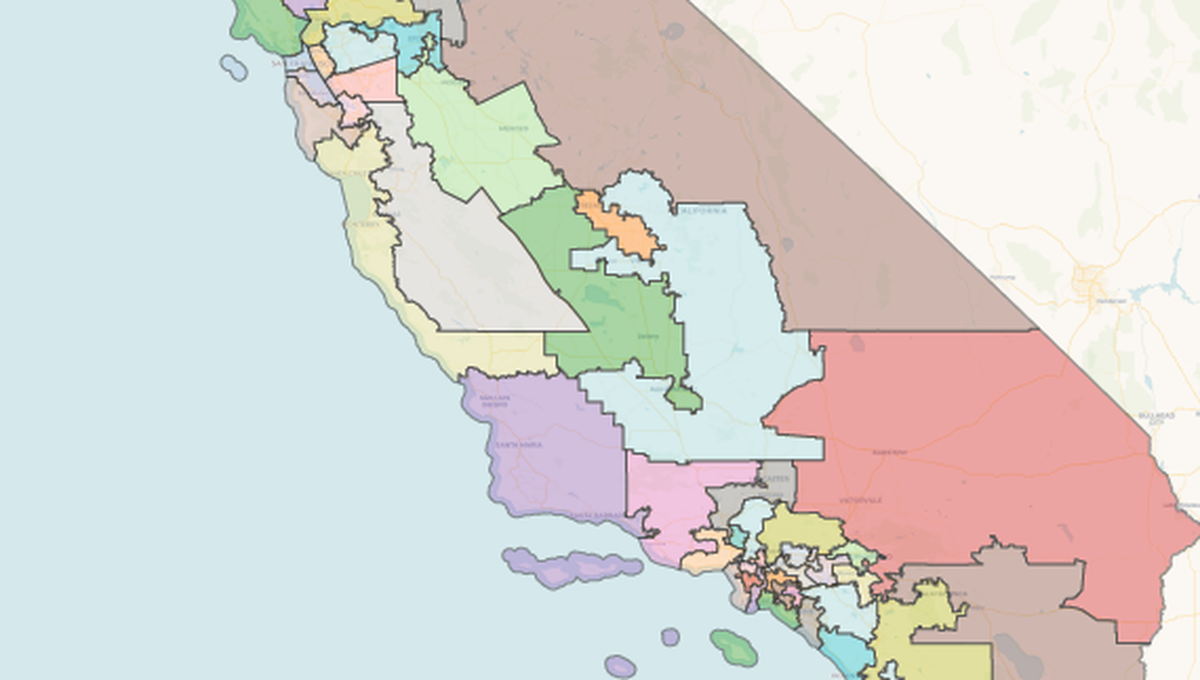
According to draft versions of the redistricted maps leaked to KCRA 3 on Friday afternoon ahead of the official release, SLO County would remain in its two current Central Coast congressional districts.
It appears the borders of the two districts would be tweaked slightly, but not in SLO County.
According to data from Redistricting Partners, which created the maps working with California Democrats, the number of potential voters would shift slightly under the new maps, with District 24 going from 539,100 to 540,894 and District 19 going from 535,195 to 532,407.
Redistricting Partners is the same firm that previously drew SLO County’s Board of Supervisors district lines.
“Trump and the Republicans know their policies, such as the tariff-taxes, Big Beautiful Bill and immigration raids, are unpopular, so they are trying to steal enough congressional seats to stay in power,” Carbajal told The Tribune in a statement, “I fully support Gov. Newsom’s efforts to protect our democracy, and the will of the American people, from this unprecedented power grab.”
Addis said local voters should think beyond SLO County when casting their vote in November.
“I can’t emphasize how important this special election is,” she said. “We’re willing to stand up for the whole nation and defend democracy.”
Even though the Election Rigging Response Act breaks procedure and gerrymanders California in favor of Democrats, Addis applauded the Legislature for taking a democratic approach to the unusual redistricting process, allowing voters to have the final say.
“We’re completely committed to do it in a transparent way, unlike Texas,” she said, adding that “we’d prefer to wait for redistricting,” in 2030.
The state-led redistricting comes after SLO County created its own independent redistricting committee in September in reaction to the 2021 Board of Supervisors approving a radically redrawn district map that favored Republicans, according to a Tribune analysis.
“SLO County has really stood up for voter rights,” she said. “The same thing (happened) where the Republicans in SLO County tried to disenfranchise voters through gerrymandering.”
What California congressional districts would change?
The leaked drafts confirmed that Democrats are targeting five Republican districts in the nothern reaches of the state, the Central Valley and Southern California, while hoping to shore up other competitive districts to make them easier for party candidates to win.
The California Republicans whose districts Democrats are targeting are Reps. Kevin Kiley, David Valadao, Ken Calvert, Doug LaMalfa and Darrell Issa.
If successful, the effort would net Democrats 48 of the state’s 52 congressional seats; the party currently controls 43. Other districts that Democrats have narrowly won would also be consolidated into friendlier terrain.
Political data scientist Paul Mitchell, a redistricting veteran, drafted the maps.
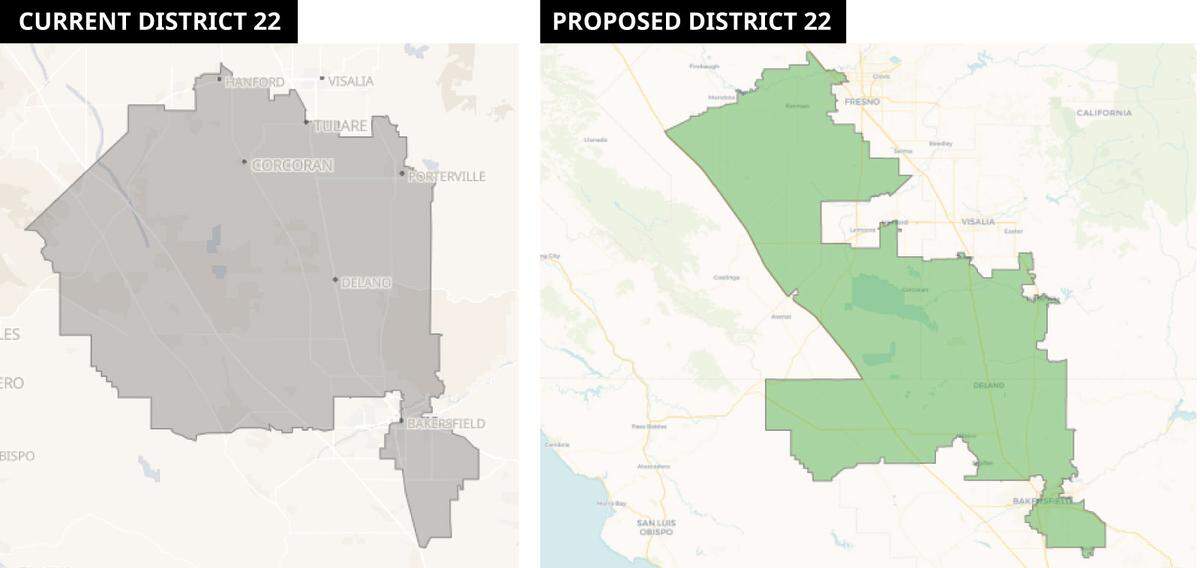
“Our proposed map was created using traditional redistricting criteria, consistent with guidelines laid out by the California’s Citizen Redistricting Commission,” according to a cover letter from Julie Merz of the Democratic Congressional Campaign Committee included with the map.
“It allows for more compact districts than in the current Commission-drawn map, keeps more communities and neighborhoods together, splits fewer cities, and makes minimal disruptions to the Commission-drawn map so as to impact as few residents as possible,” Merz wrote.
“This is a striking contrast from Texas’ proposed gerrymander, which redrew all but one of their 38 congressional districts to minimize the state’s growing minority voting strength.”
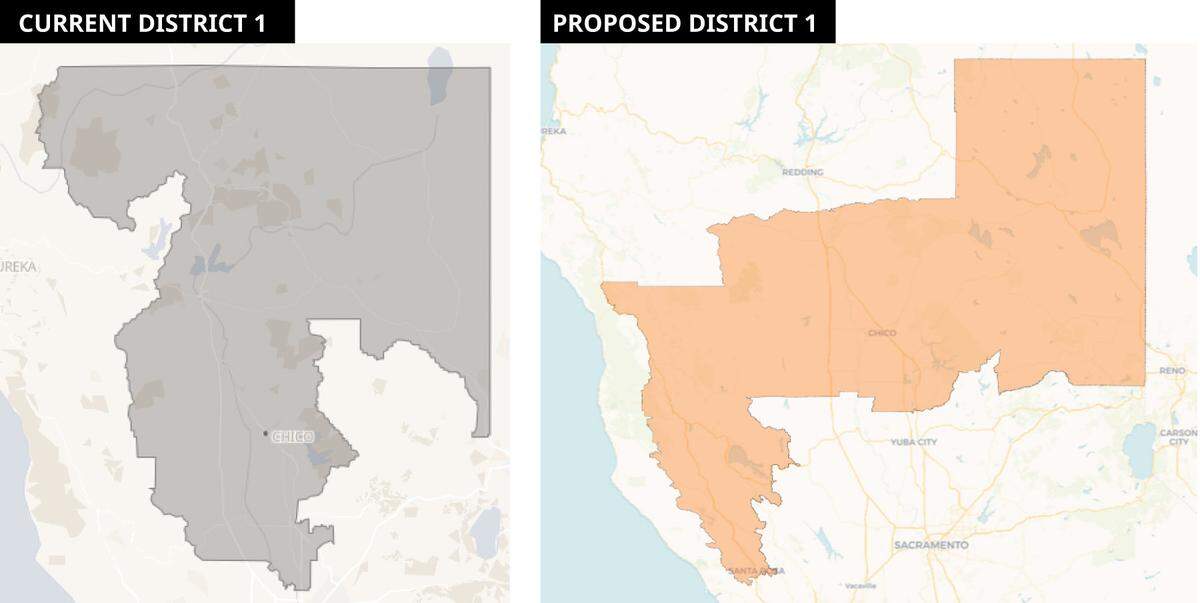
The draft maps, which leaked online ahead of their official release Friday, would shrink most Republican districts. It would shift much of the state’s northernmost region into the coastal 2nd Congressional District seat currently held by Democratic Rep. Jared Huffman while including parts of northern Marin and Sonoma counties.
Kiley’s district would also shrink and encompass part of the greater Sacramento area, shift the bulk of voters to Republican Rep. Tom McClintock’s district and remove a broad section of the eastern Sierra Nevada.
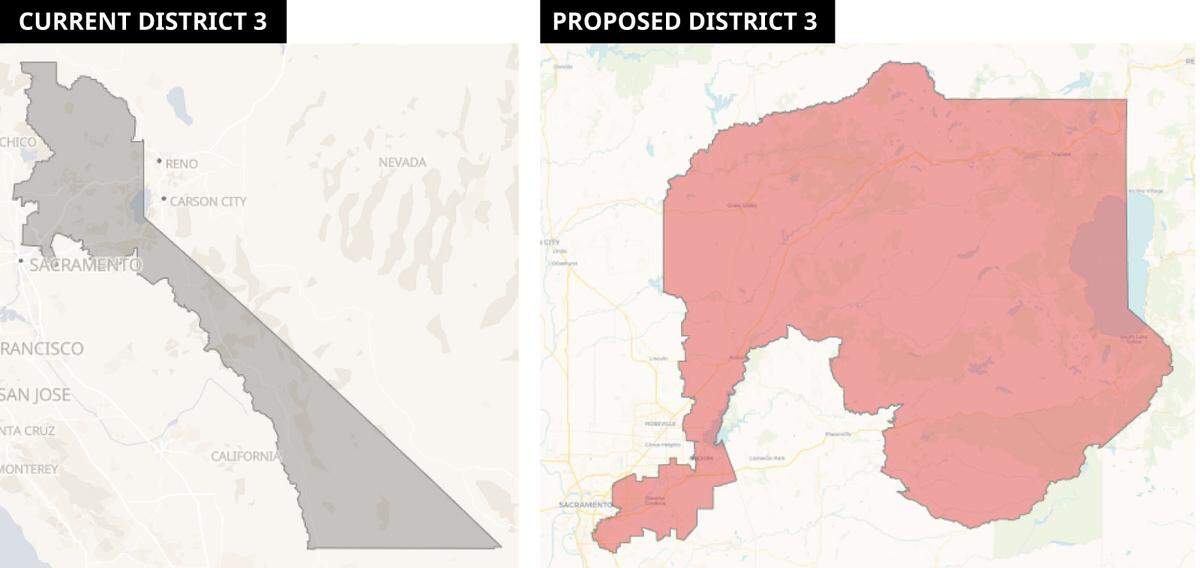
Valadao’s district would also shrink, as would that of Issa, who trumped his Democratic opponent in 2024 by almost 19 points to be reelected to his San Diego-area seat.
According to a chart that leaked Thursday, all of those districts would shift from being “safely” Republican to either lean Democrat, or be considered safe for any Democratic candidate if voters approve them in November.
Calvert and Issa currently represent parts of Riverside and San Diego counties, and Valadao represents a Central Valley district. LaMalfa currently represents much of the north from Yuba City to the Oregon border. Kiley, arguably Newsom’s arch rival within the state, currently represents much of the northern Sacramento suburbs, northern Sierra Nevada, and the Nevada border down to Death Valley.
This story was originally published August 15, 2025 at 5:50 PM.