SLO County homeless organization is getting rid of walk-in, nightly shelter beds
AI-generated summary reviewed by our newsroom.
- ECHO ended its walk-in shelter beds in Paso Robles to expand its 90-day program.
- New strategy focuses on long-term housing outcomes with a 60% success rate.
- No immediate shelter beds remain in SLO County for nightly homeless walk-ins.
The nonprofit that provides one of the only nightly shelter programs for homeless individuals in northern San Luis Obispo County is changing its approach to how its beds will be distributed.
Since it opened in 2008, the El Camino Homeless Organization’s Paso Robles shelter has offered beds to homeless individuals seeking immediate shelter — but on Tuesday, the shelter ended its night-by-night bed program in favor of a new approach that has become the standard across all San Luis Obispo County shelters.
Previously, ECHO’s Paso Robles shelter maintained five beds that would be available to individuals seeking a safe place to sleep alongside a set of 65 beds that are a part of the shelter’s 90-day program, which gets participants connected with housing navigators.
At Tuesday’s Paso Robles City Council meeting, the City Council voted unanimously to approve a new memorandum of understanding between the city and ECHO, which provided ECHO with around $110,000 and called for the five night-by-night beds to be reallocated to the 90-day program as the shelter reorients itself to fully focus on housing outcomes for clients.
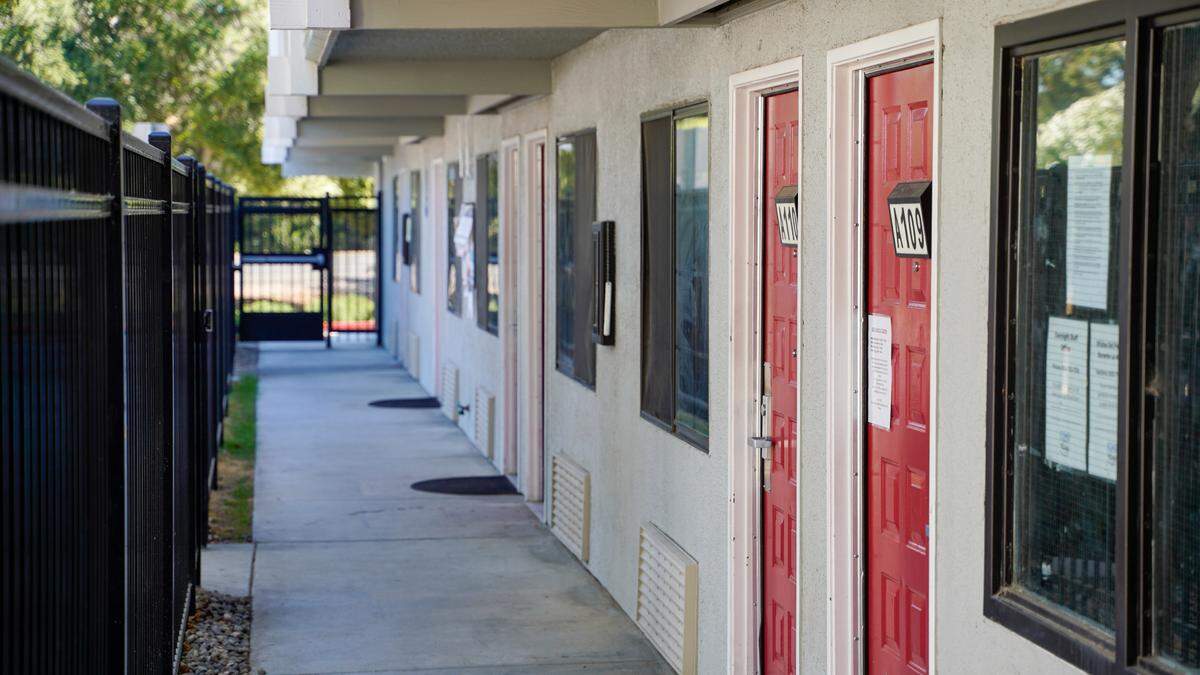
ECHO CEO Wendy Lewis said the switch to a full 90-day program has been coming for a few years, dating back to the October 2023 opening of the Homekey project in the former Motel 6 on Black Oak Drive.
Lewis said that though it’s not easy to discontinue the night-by-night bed program, the change will allow ECHO to focus on programming that’s more effective at resolving an individual’s homelessness.
“With the night-by-night program, it’s providing a safe place for someone to be for that evening, but for the long-term outcome of getting someone back into housing — which is our goal for everybody we serve — about 10% of those night-by-night participants were successfully placed back into housing,” Lewis said.
Meanwhile, participants who stay for more than 30 days in ECHO’s 90-day programs in Atascadero and Paso Robles have attained housing at around a 60% rate, Lewis said.
“It’s hard to, as a person who is really seeking that service, to then find out you didn’t get a room, and it’s just not a very consistent way to offer resources,” Lewis said. “The second part of that is it's also the most challenging for our team to administer, because they’re the ones who are absorbing all of the feedback and emotions when someone isn’t chosen.”
No night-by-night beds open to homeless North County residents anymore
Lewis said with the night-by-night shelter program wrapping up, any homeless individuals who come to ECHO’s Paso Robles shelter will now be offered a 90-day program application and have a case manager assigned for future visits.
Typically, around 20 to 25 homeless individuals come to ECHO’s Paso Robles shelter each night seeking shelter, Lewis said.
During the winter months, when shelter services are most critically needed, anyone seeking a shelter bed at ECHO will be directed to ECHO’s 10-bed warming center, which recently gained additional funding from the county that will allow it to open as needed during the six-month winter season, Lewis said.
With the night-by-night program’s discontinuation, there are no shelter beds in North County that are just open to individuals seeking a place to sleep for the night and not be enrolled in further services.
“With the amount of people seeking services and the current bed count throughout the county, unfortunately, we’re telling people ‘no’ on a nightly basis,” Lewis said. “ECHO has worked super hard to increase the amount of beds, continue to grow, continue to try to offer even more opportunities, but that is a big question for our entire system throughout the county.”
While many of San Luis Obispo County’s shelters have moved many or all of their beds over to a 90-day model, there are still a handful of available nightly beds.
According to 40 Prado Homeless Services Center director Jack Lahey, the Community Action Partnership of San Luis Obispo’s shelter still offers between 10 and 40 emergency walk-in beds each night depending on availability, with the goal of providing stability to the most vulnerable people seeking help.
Lahey said 40 Prado kept its walk-in beds available even as it shifted most beds to a 90-day model due to wait times for a 90-day bed that can last up to three months.
“We still have to turn away approximately 10 people per night based on our capacity,” Lahey said. “These beds are also allocated for the hospital and emergency services systems to make referrals to our shelter program so people discharging from the hospital or jail systems have a place to stay that night.”
Paso Robles City Council approves strategy change
At Tuesday’s meeting, several residents said they felt that ECHO’s move to roll back night-by-night beds wasn’t the right approach for Paso Robles.
Business owner and Templeton resident Wendy Richardson said removing the remaining walk-in beds will worsen the effects of homeless people in the area of ECHO’s Paso Robles shelter.
Richardson, who owns the Bubble & Squeak car wash on Riverside Avenue, said already, homeless individuals have caused issues by stealing car wash water overnight, sleeping on the business’ property and parking recreational vehicles along the road.
“Not only is that road horrible, you’d think you were in a Third World country going down Black Oak,” Richardson said. “I mean, you’ve got a beautiful hotel there, and the homeless are not good for them either, so we really need to pay attention to other than what goes on inside.”
Former City Council candidate Linda C. George also spoke against the change of strategy, calling it “lipstick on a pig.”
“I don’t think this is what the city intended for this to be,” George said. “The people in the riverbed already feel like they’re second-class citizens to the way ECHO is set up.”
Those concerns were not shared by the City Council, with several members stepping forward to voice support for a full 90-day program.
Councilmember Chris Bausch praised the change as a better method for resolving some individuals’ homelessness, though it’s not a one-size-fits all solution for the problem.
“I think the transition from an overnight program to a 90-day long-term program has seen positive benefits, and yes, that was intentional,” Bausch said. “That’s a good program. ECHO is not a city of Paso Robles program only. It’s a cooperation from multiple agencies.”
Councilmember Fred Strong referred to many individuals living in the riverbed as acting “like the hobos of yesteryear,” but said they still had rights as citizens to not be moved to a camp away from town, as some commenters suggested.
“Without ECHO, it would be a lot worse than it is now,” Strong said. “As far as their hanging out in certain places and things like that, yes, that has to somehow be addressed by somebody other than ECHO, but where can they go?”
“That’s another question, because they’re going to go somewhere,” Strong continued. “They can’t just cease to exist.”